AIA UK recently welcomed Jonathan Watts, Director at Hopkins Architects, for a presentation on one of the UK's most ambitious academic buildings — the Schwarzman Centre for the Humanities at Oxford. The timing was apt: the project had just been confirmed as the largest Passive House certified building in the UK and the first Passive House concert hall in the world.
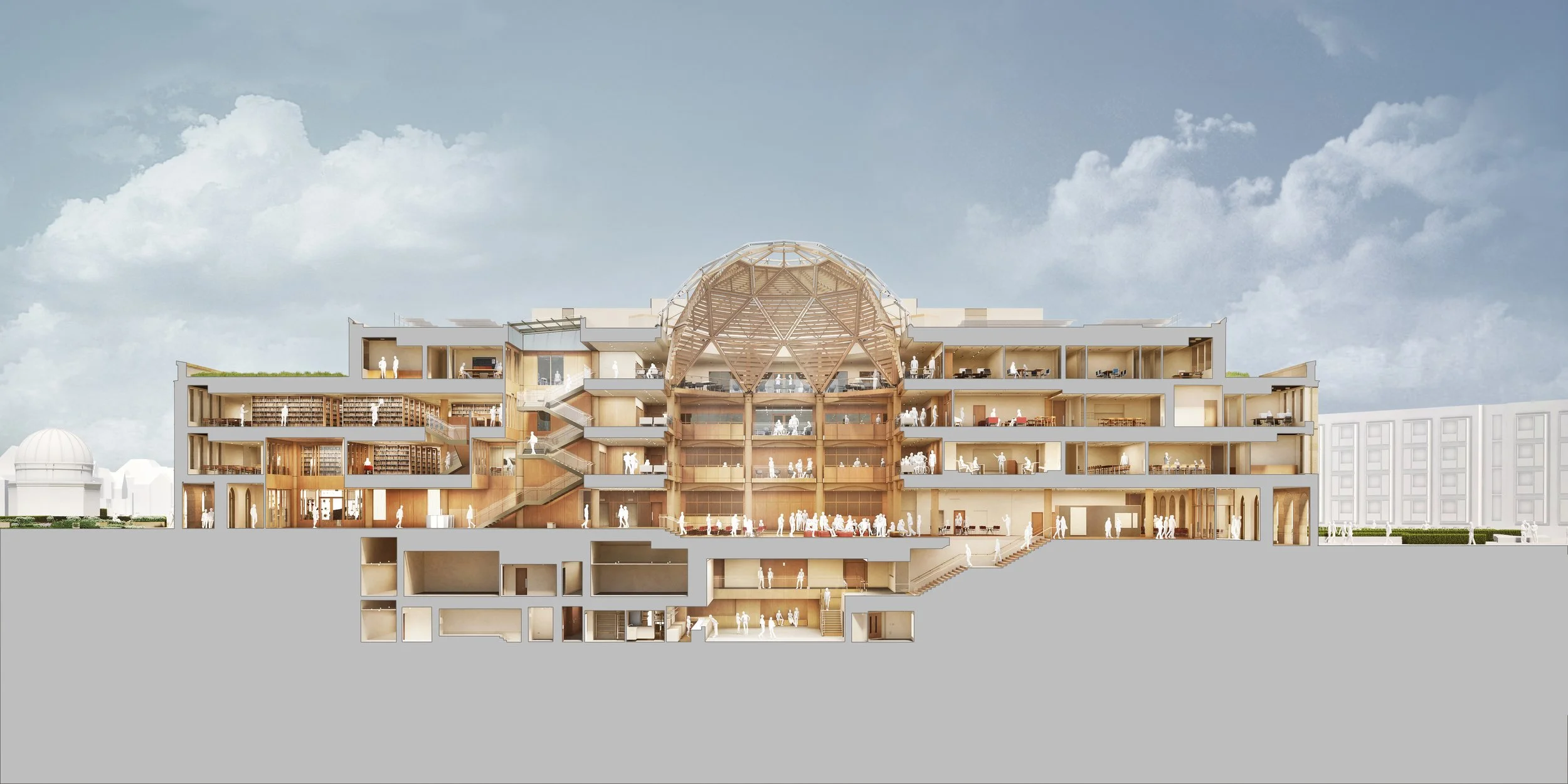
Funded by a gift from philanthropist Stephen Schwarzman, the Centre consolidates seven of Oxford's humanities faculties — previously scattered across 26 buildings — into a single new quarter on the city's northwest edge. Alongside faculty offices and seven libraries, the building houses a rich programme of public performance venues: a 500-seat concert hall, a 250-seat flexible lecture theatre, a recital hall, and a black box experimental performance lab. Perhaps most significantly, it is the first building Oxford University has ever intentionally designed as a public facility from day one — a deliberate inversion of the inward-looking college typology the University is famous for.
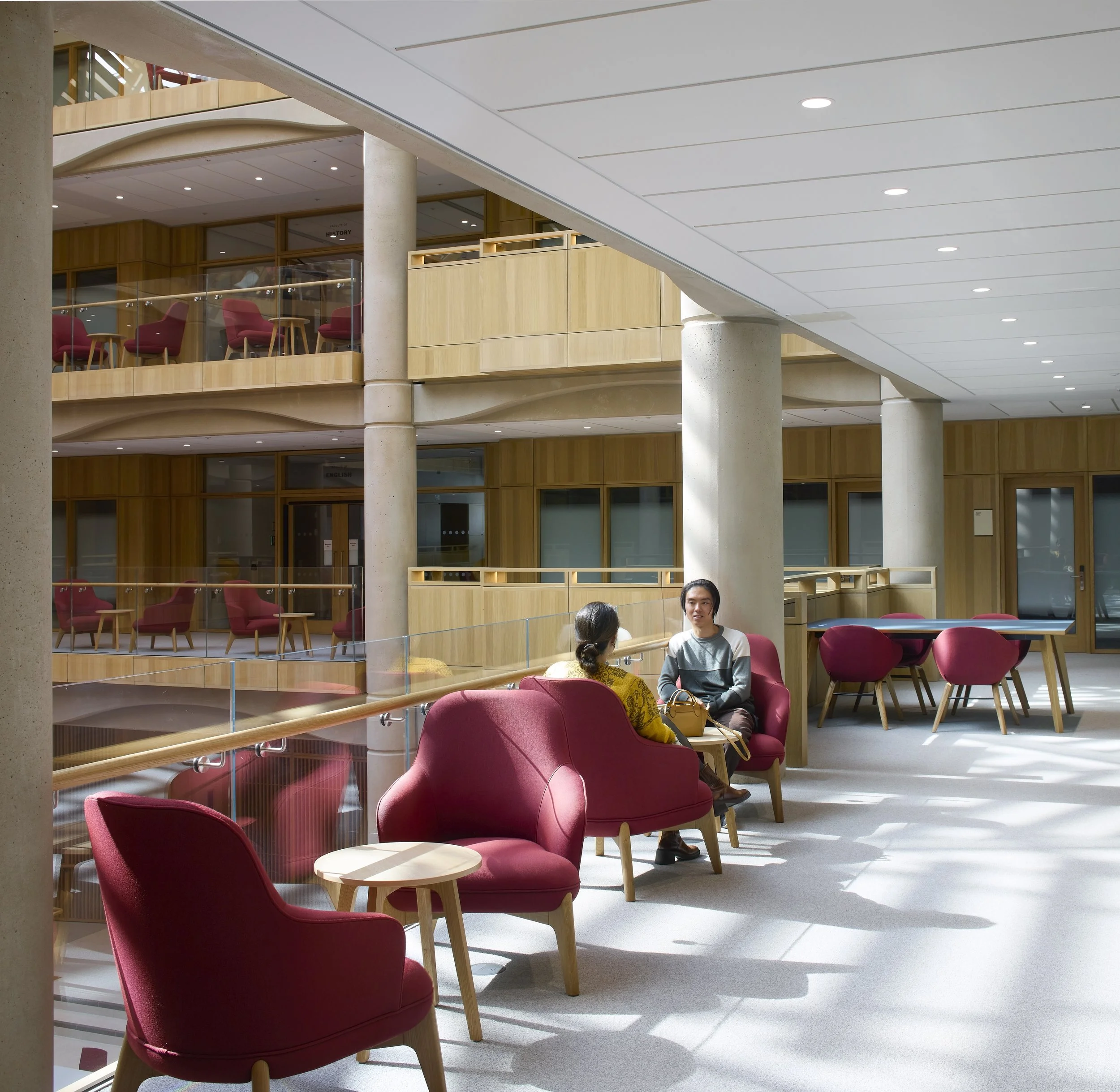
Watts took us through the full arc of the project, from the original 2019 competition through planning submission in March 2022 and breaking ground in January 2023. Much of the early design work, including intensive stakeholder engagement across seven faculties, happened remotely during COVID — a process he described as surprisingly effective. At the heart of the design is a top-lit Great Hall atrium that holds the building together while giving each faculty its own identity and presence onto a shared internal forum. It's clearly well-loved already; Watts noted that finding a seat there since students moved in has become something of a challenge.
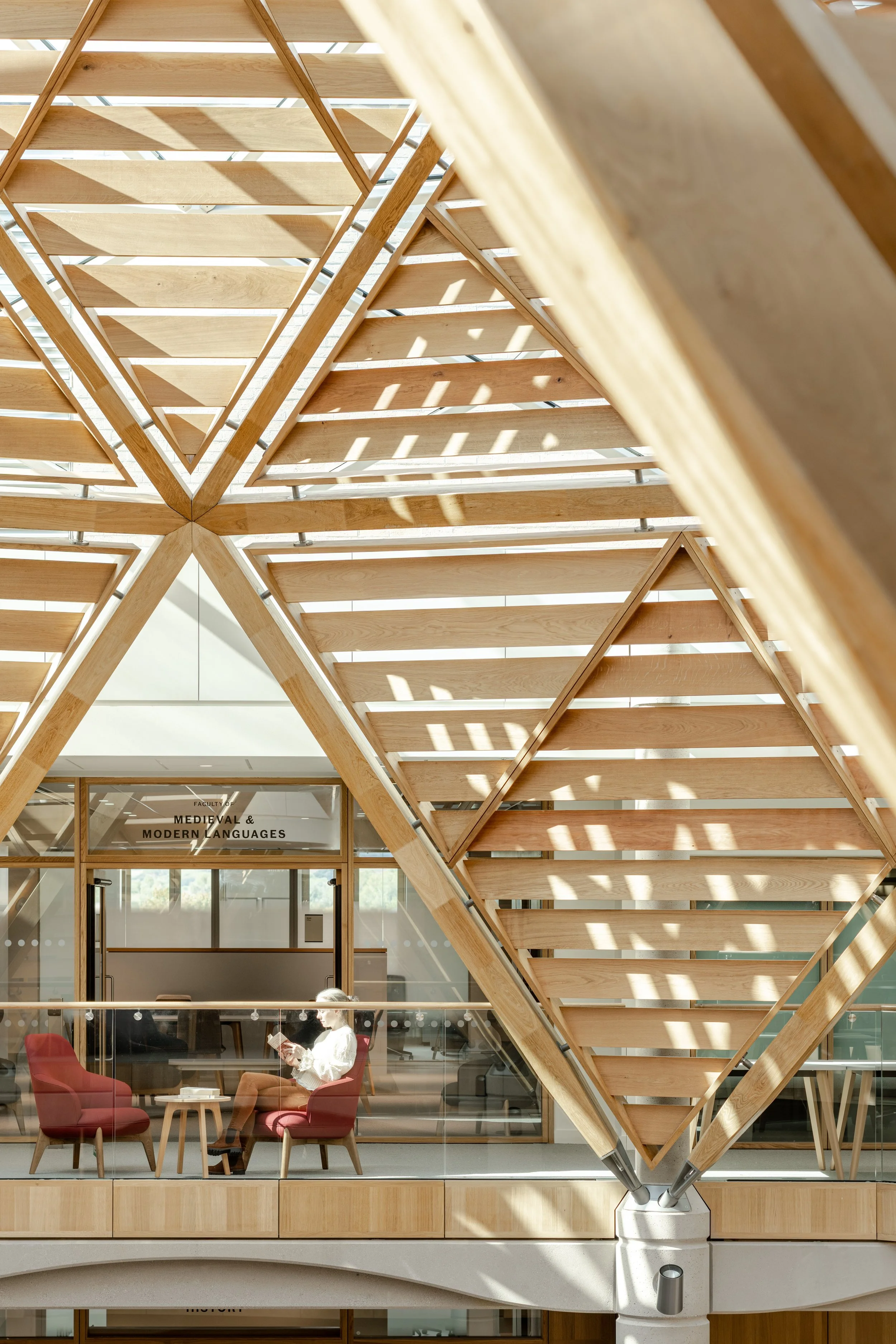
The presentation also gave real depth to the technical delivery. Much of the building was prefabricated — 152 individually designed facade panels in Clipsham stone and buff brick — allowing the frame to be topped out by May 2024 at roughly a floor a month. The performance venues use box-in-box acoustic isolation throughout, with the concert hall's 25-tonne roof trusses requiring one of Europe's largest mobile cranes to install.
On Passive House, the ambition was initially framed as designing to "Passive House principles" rather than pushing for full certification — a deliberate choice that kept stakeholders from getting risk-averse too early. The outcome, a weighted average U-value of 0.12 W/m²K and airtightness of 0.66, more than vindicates the approach.
For AIA UK members, the project speaks to so much that is front of mind right now: managing complex multi-stakeholder briefs, meeting high-performance sustainability targets, and leveraging prefabrication to deliver on demanding programmes. The public programme opens in April 2026 — well worth putting on the radar for a visit.
Written by Taylor Rogers, AIA