AIA UK Tech Lecture - Existing Masonry Identification and Defects
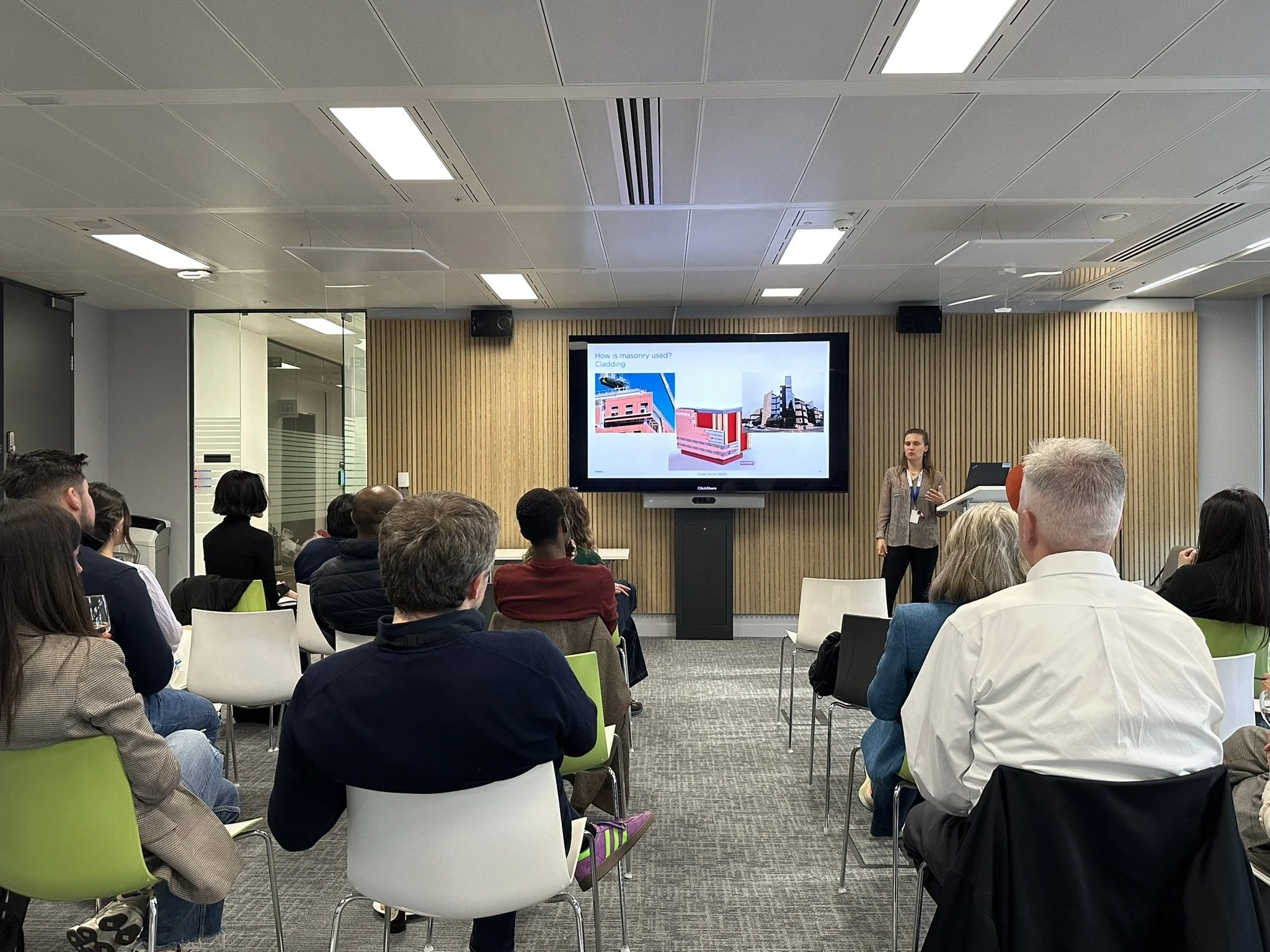
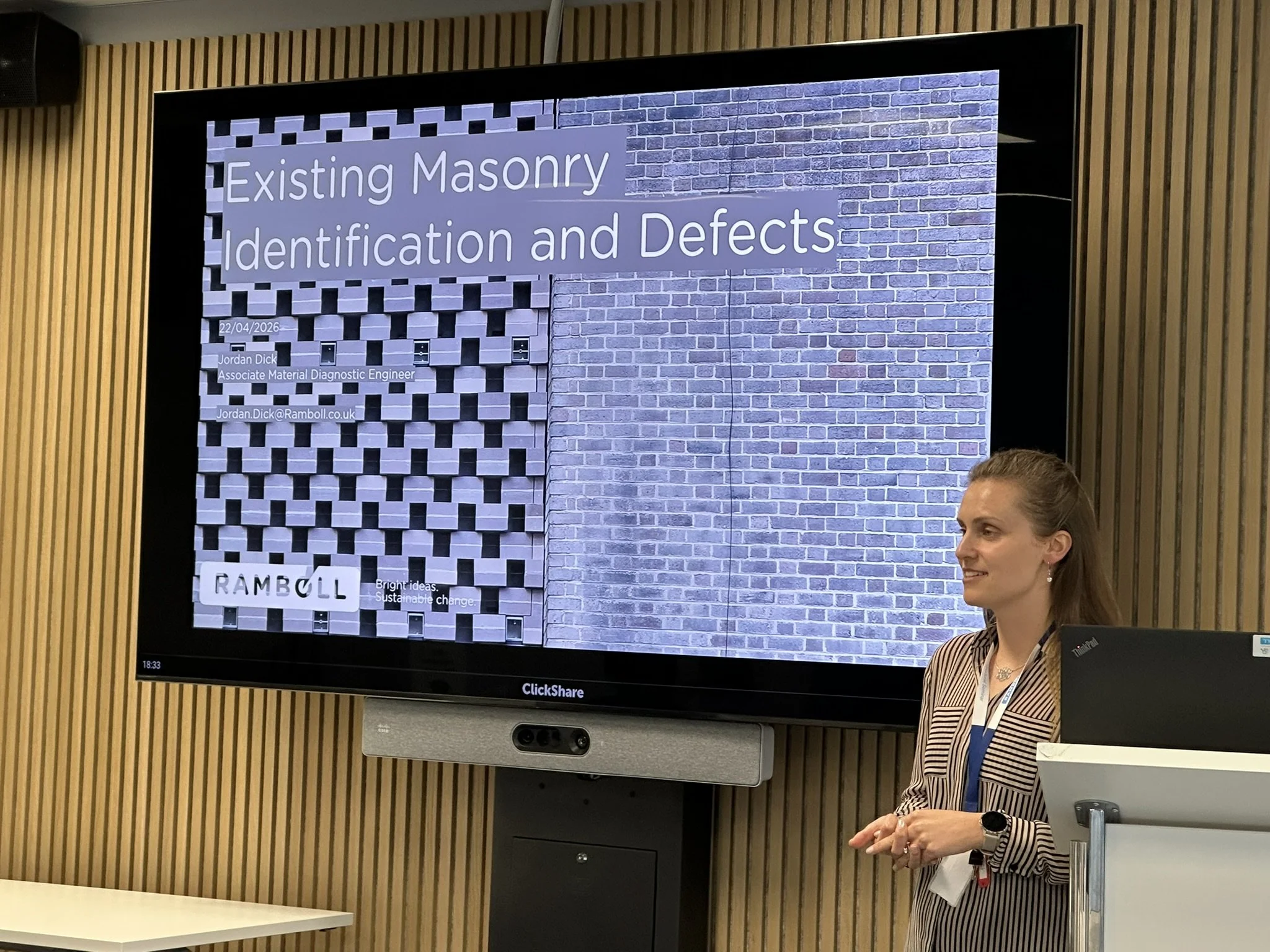
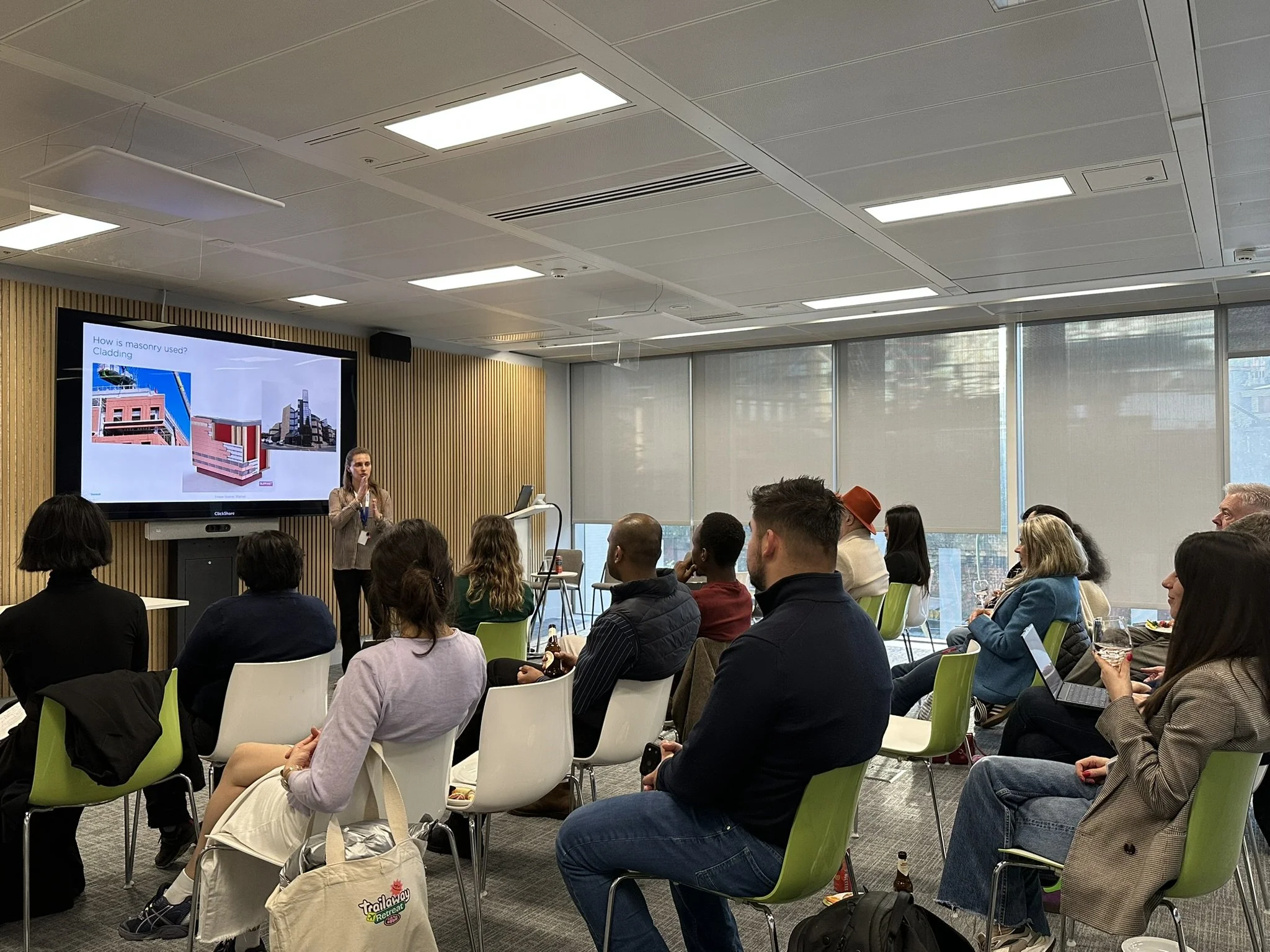
Last month, AIA UK hosted the technical lecture “Existing Masonry Identification and Defects”, presented by Jordan Dick, P.E. The session offered a practical introduction to the history, construction, identification, and diagnosis of masonry buildings — a topic relevant to architects, engineers, conservation specialists, façade consultants, and anyone working with existing buildings.
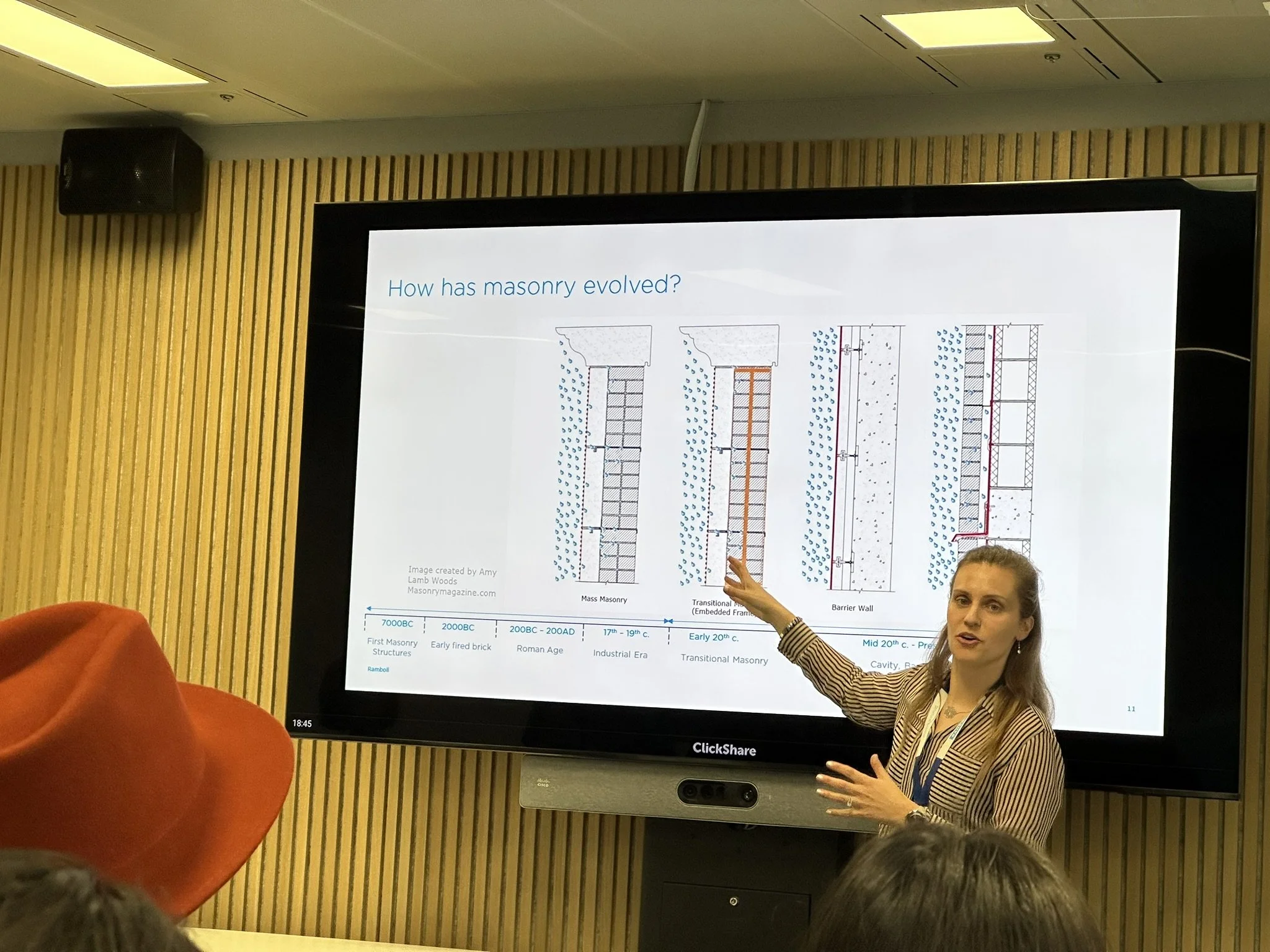
Jordan walked attendees through the evolution of masonry construction, from historic mass masonry walls to modern cavity and veneer wall systems. A key message was that masonry is not a single construction type, but a broad family of materials and assemblies, each shaped by its period of construction, local practice, material availability, and performance expectations.
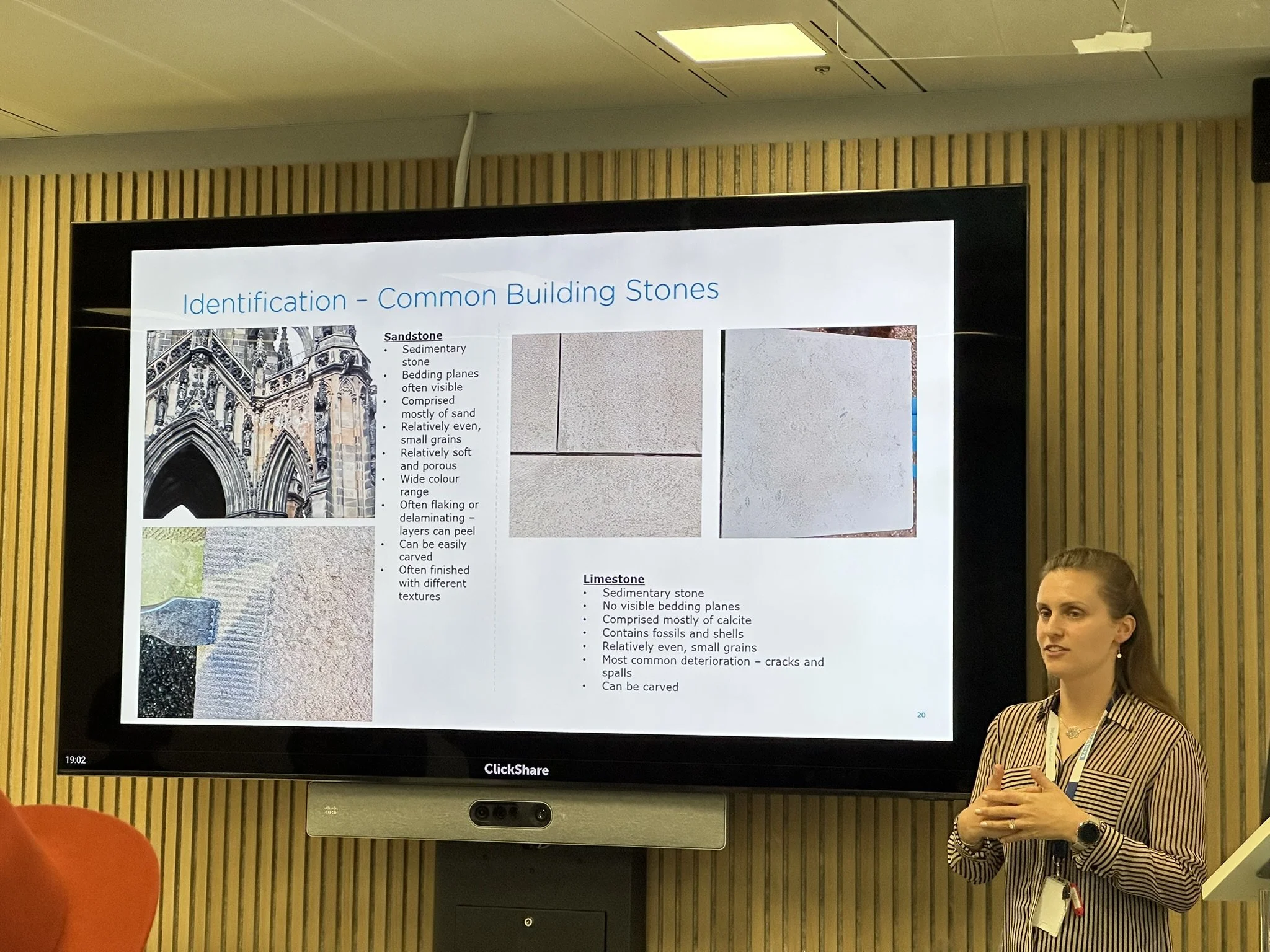
One of the most useful parts of the lecture was the interactive identification exercise. Attendees were invited to look closely at different masonry building types and consider what could be inferred from visible clues such as bond patterns, wall thickness, openings, mortar, detailing, and construction era.
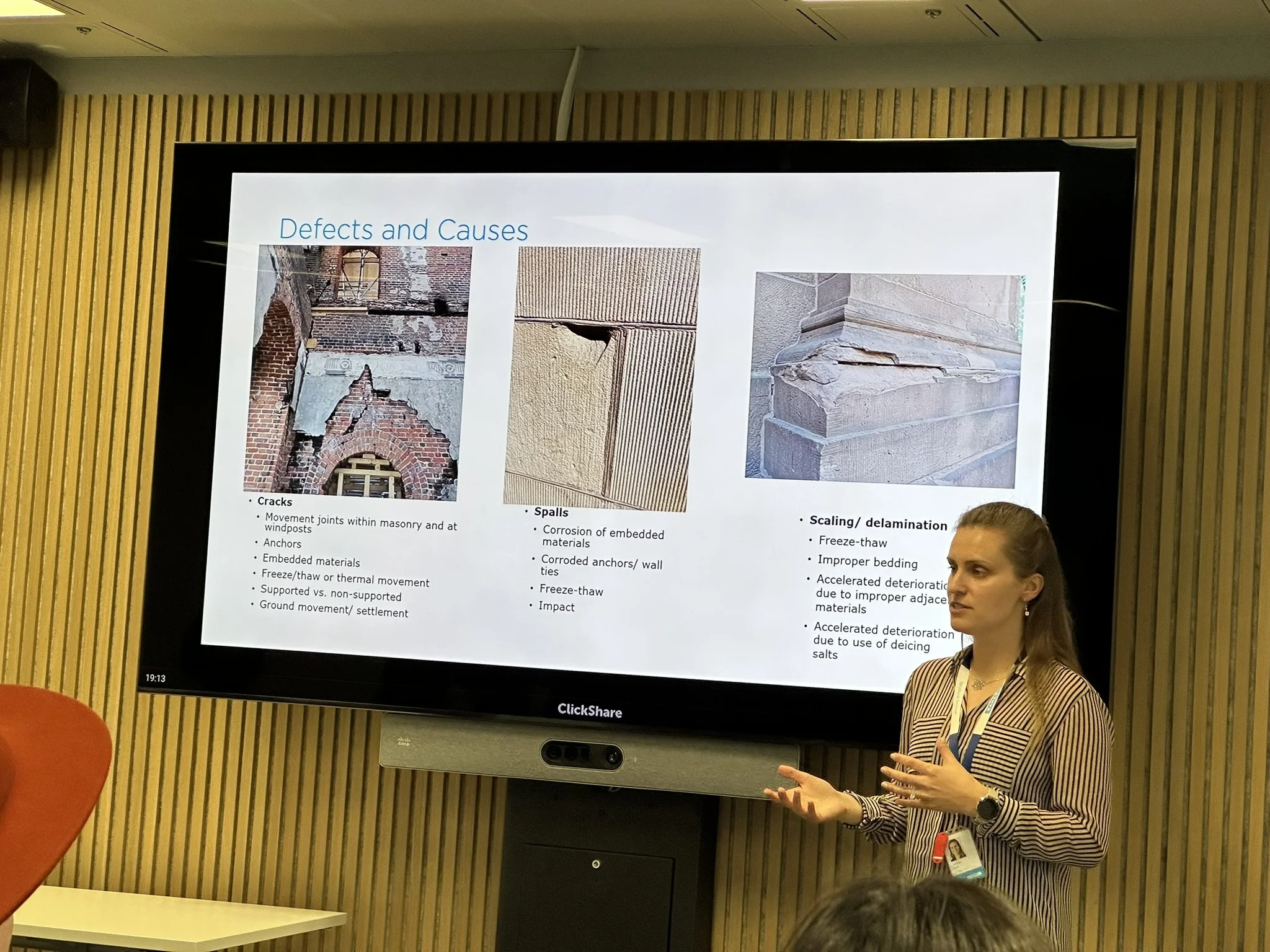
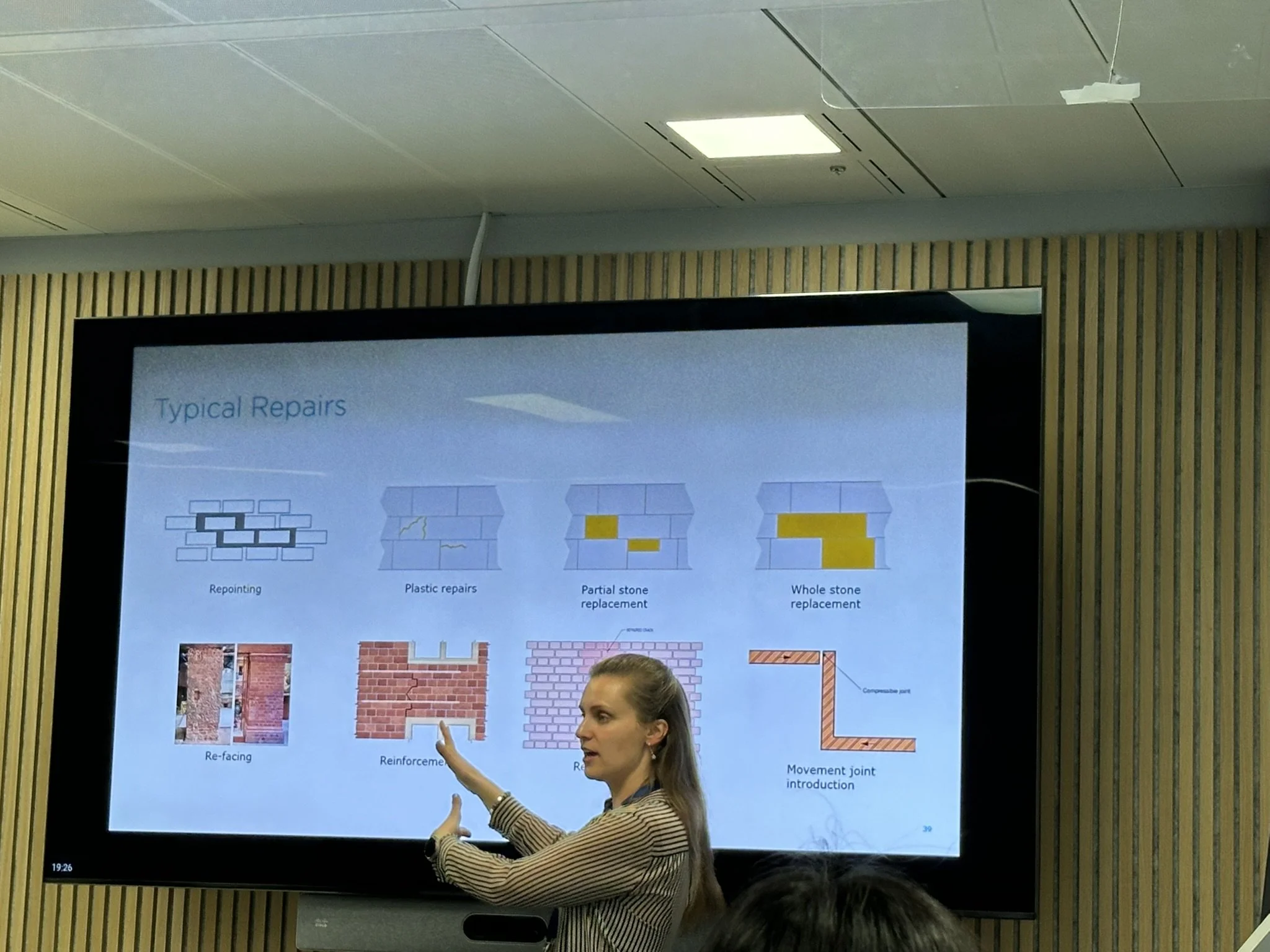
The lecture also explored common masonry defects and deterioration mechanisms, including how visible distress may relate to moisture, movement, weathering, restraint, incompatible repairs, or concealed construction conditions. This diagnostic approach reinforced the importance of understanding the underlying wall type before developing repair strategies.
AIA UK would like to thank Jordan Dick for an insightful and engaging lecture, Ramboll for hosting the event, and everyone who attended and contributed to the discussion.
Written by Andrea Hellerman, AIA