
AIA UK Excellence in Design Awards Winners 2026
The American Institute of Architects UK Chapter hosted the 2026 Excellence in Design Awards Ceremony at the Royal College of Physicians on 28 May 2026, thanks to our generous headline sponsor MillerKnoll.
The awards were judged on design achievement and intention, contribution to the built environment, innovation, and sustainability, in accordance with the AIA Framework for Design Excellence.
Our thanks go out to our jury panel:
Mouzhan Majidi, FAIA, Chief Executive Officer, Zaha Hadid Architects
Elie Gamburg, AIA, Principal, KPF
Natalia Uribe, Cities Director, BDP
Mina Hasman, FRIBA, Sustainability Director, SOM
Dr Paolo Zaide, Assistant Head of School, University of Westminster
The 2026 programme placed particular emphasis on the AIA Framework for Design Excellence, encouraging submissions that address climate resilience, community wellbeing, equity, sustainability, and long-term value through design. Reflecting the increasingly international nature of the built environment profession, this year's awards welcomed submissions from practices and designers working across the UK, Europe, the Middle East, and Africa.
The 2026 Design Award categories were:
Excellence in UK Design
Excellence in Global Design
Excellence in Interior Architecture and Design Innovation
Excellence in Urban Design and Environmental Stewardship
Noel Hill Student Research Award.
Within each category, the jury awarded recognition across three tiers — Citation, Merit, and Excellence — each representing a distinct standard of achievement. These tiers are not hierarchical steps on a ladder but independent benchmarks, and the jury exercised full discretion in determining whether any submission met the standard for a given tier and category.
Awards
A huge congratulations to our winners!
Excellence in UK Design
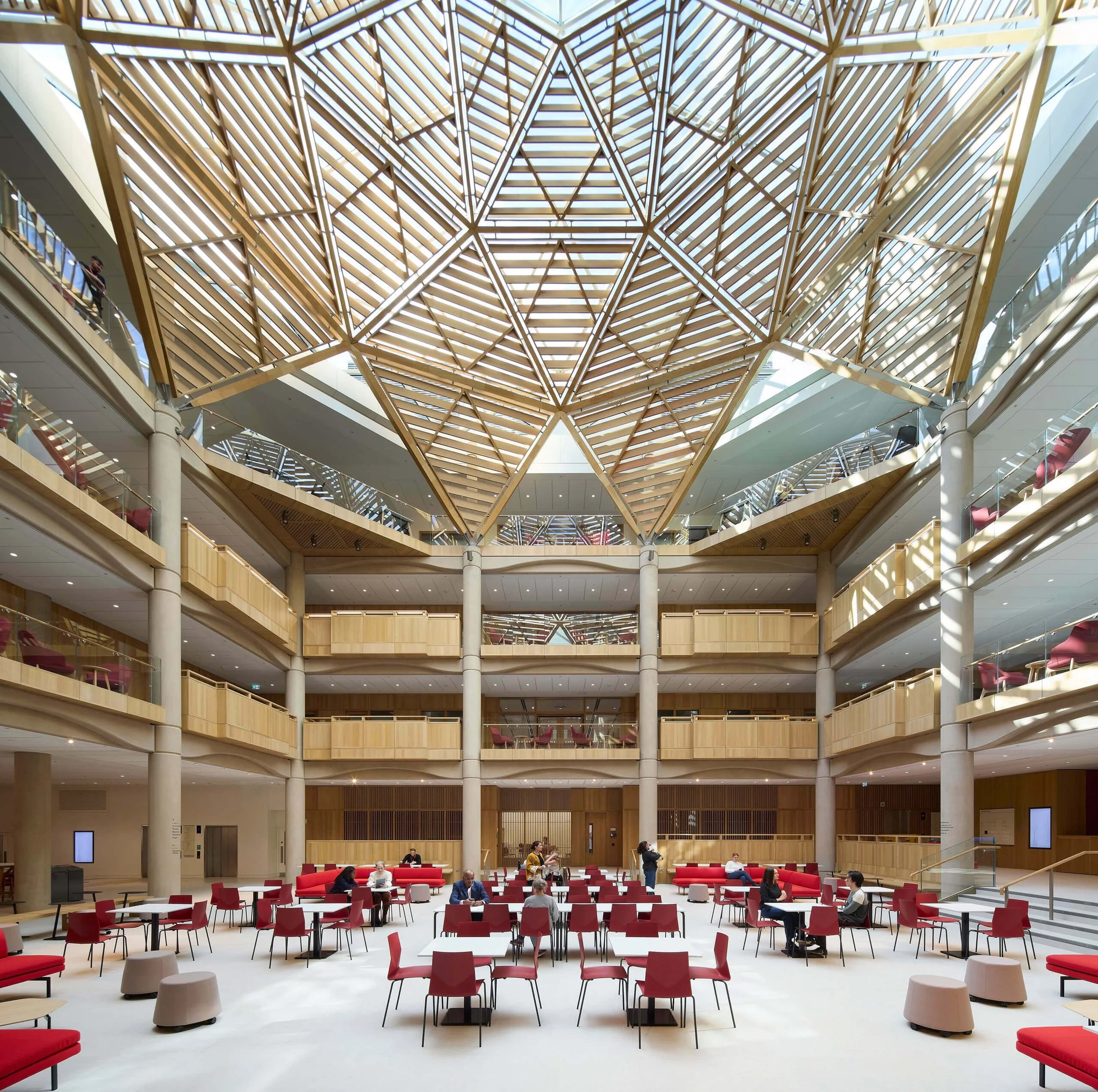
Photo credit: Hufton + Crow
Excellence Award
Schwarzman Centre for the Humanities, University of Oxford,
Hopkins Architects
Jury Comments
This project distinguishes itself through an exceptional combination of architectural clarity, civic ambition, and environmental leadership. What impressed the jury most was the way it succeeds simultaneously at many levels — technically rigorous yet deeply humane, ambitious in scale yet generous in its public and social spaces. Sustainability is not treated as an overlay but as something fundamentally embedded within the architecture itself. Every aspect of the design, from urban contribution to material resolution, works towards a unified vision. It is one of the clearest examples this year of architecture operating at the highest level of design excellence.
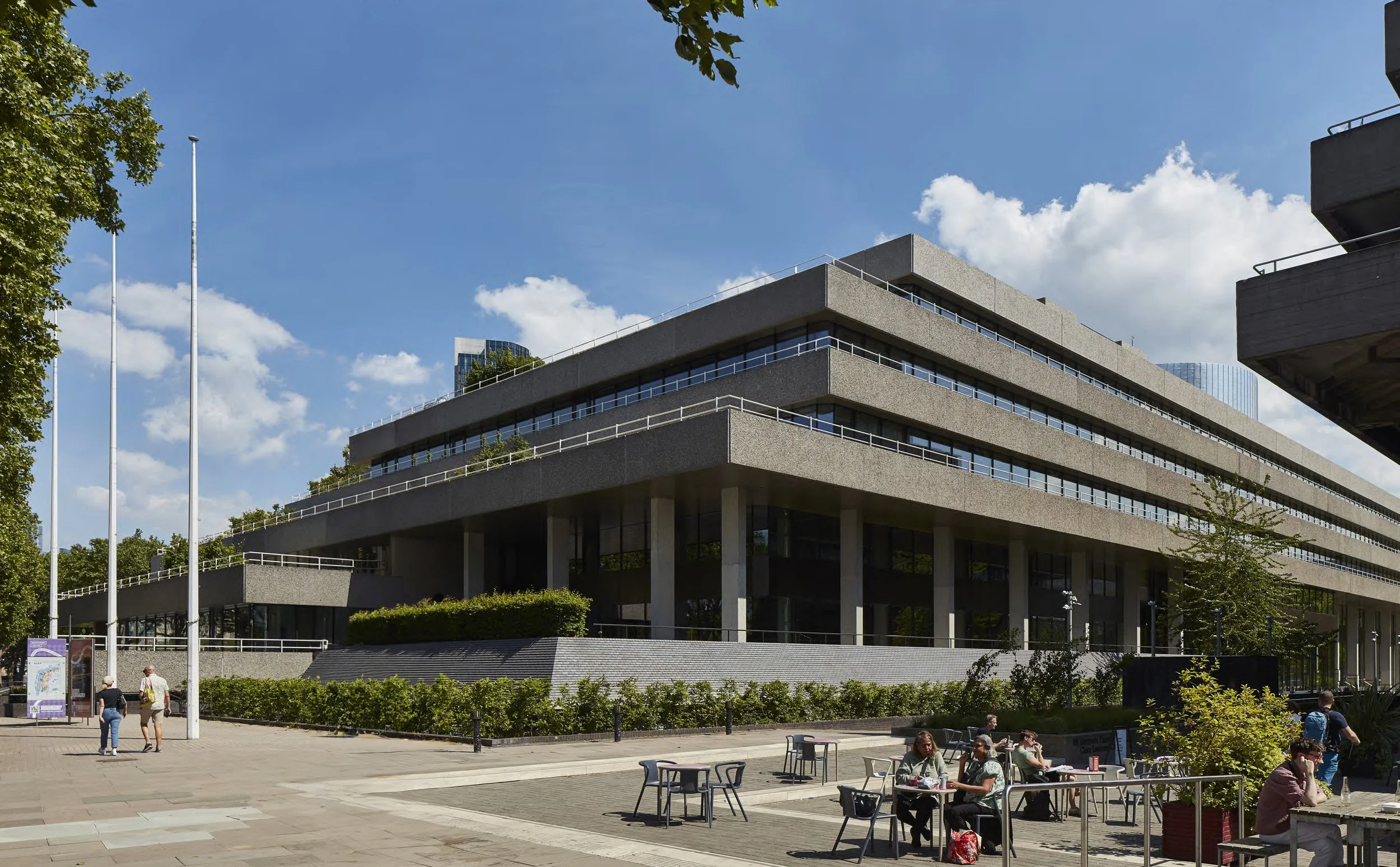
Photo credit: Rob Parrish
Merit Award
76 Southbank,
Allford Hall Monaghan Morris
Jury Comments
This project anchors its commitments to heritage, environmental performance, and workplace quality in named decisions and measurable results — overachieving against the sustainability benchmarks of its typology in a manner the jury found genuinely impressive. The rigour and ambition evident throughout the submission speak to a design process that takes its obligations seriously and follows them through. The jury noted that the design argument itself is the strongest thread running through the work, and the project is all the more persuasive when it trusts that argument to carry the case.
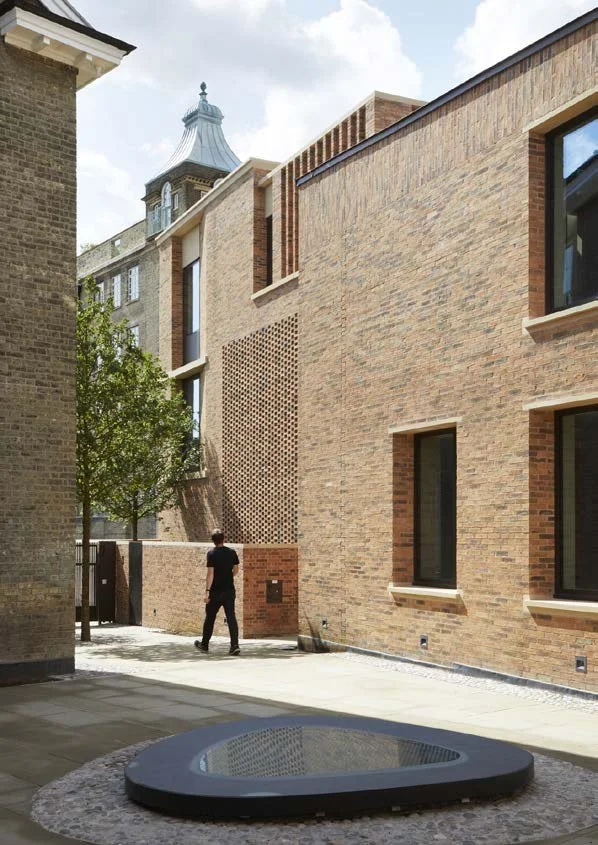
Photo credit: courtesy of Stanton Williams
Citation
Young's Court Development at Emmanuel College, Cambridge,
Stanton Williams
Jury Comments
This project sustains its commitments with rare consistency — from initial brief through to quantified, measurable outcome. The jury was struck by the seamless integration of communality, sustainability, and heritage, delivered with exceptional craft and a thoughtful approach to public realm that honours both the old and the new. Figures such as a 50% carbon reduction and 83% biodiversity net gain are not incidental achievements; they give the project's ambitions genuine and lasting credibility.
Excellence in Urban Design and Environmental Stewardship
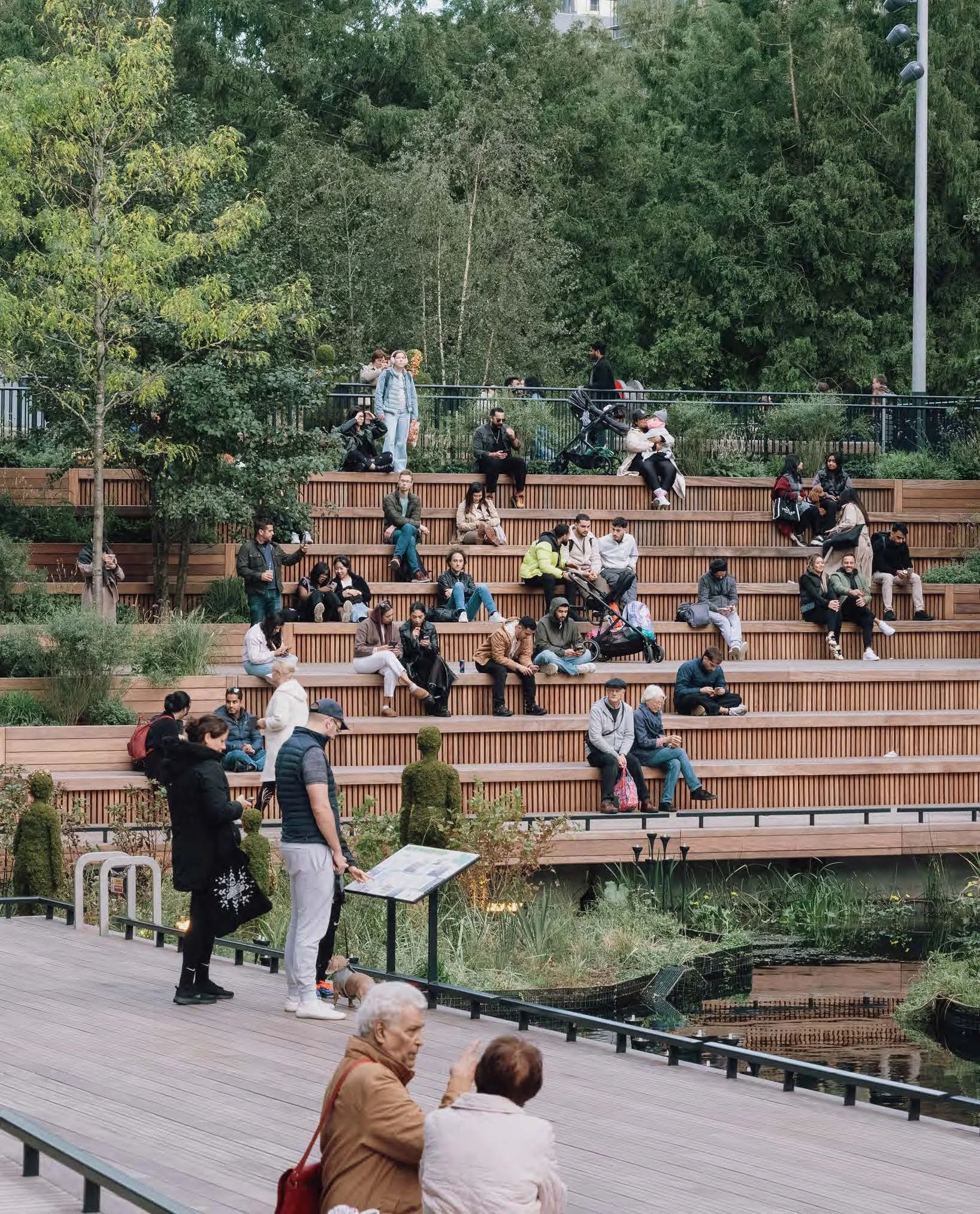
Photo credit: Tim Crocker
Excellence Award
Eden Dock,
Howells
Landscape Architect: HTA Design
Client: Canary Wharf Group
Jury Comments
This project stood out for the conviction with which it unifies public realm, ecology, and connectivity into a single coherent design proposition. Its construction narrative is particularly distinctive, grounding the scheme in its context whilst adding genuine value to the history and character of its setting. The result is a project that not only fulfils its ambitions but is evidently well-used and well-loved — precisely the measure of successful urban design.
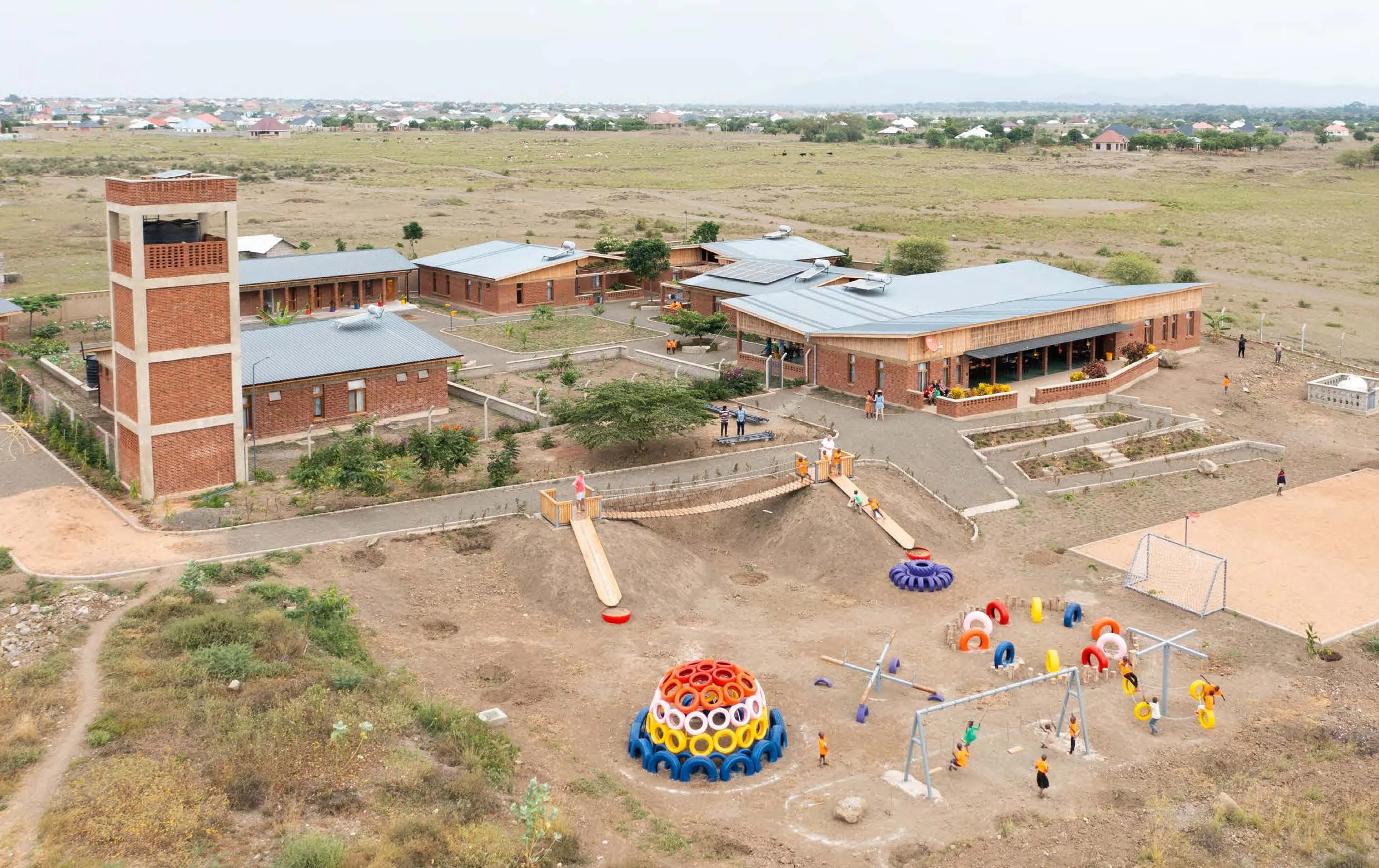
Photo credit: Eliya Lawrence Uzia
Citation
Kao La Amani Children's Village,
Article 25
Jury Comments
This project demonstrates how place-based design, when grounded in local knowledge and environmental responsibility, can shape a genuinely resilient and inclusive future for its community. Its ambition is expressed not through grand gesture but through careful decisions — a sensitive layout, generous shared spaces, and an integrated approach to off-grid systems for power, water, and waste that speaks to long-term self-sufficiency. The inventive use of local materials and craft, from timbrel vaults laid without formwork to sisal pole cladding, affirms that environmentally responsible urbanism is most powerful when it grows directly from the place it serves.
Excellence in Interior Architecture and Design Innovation
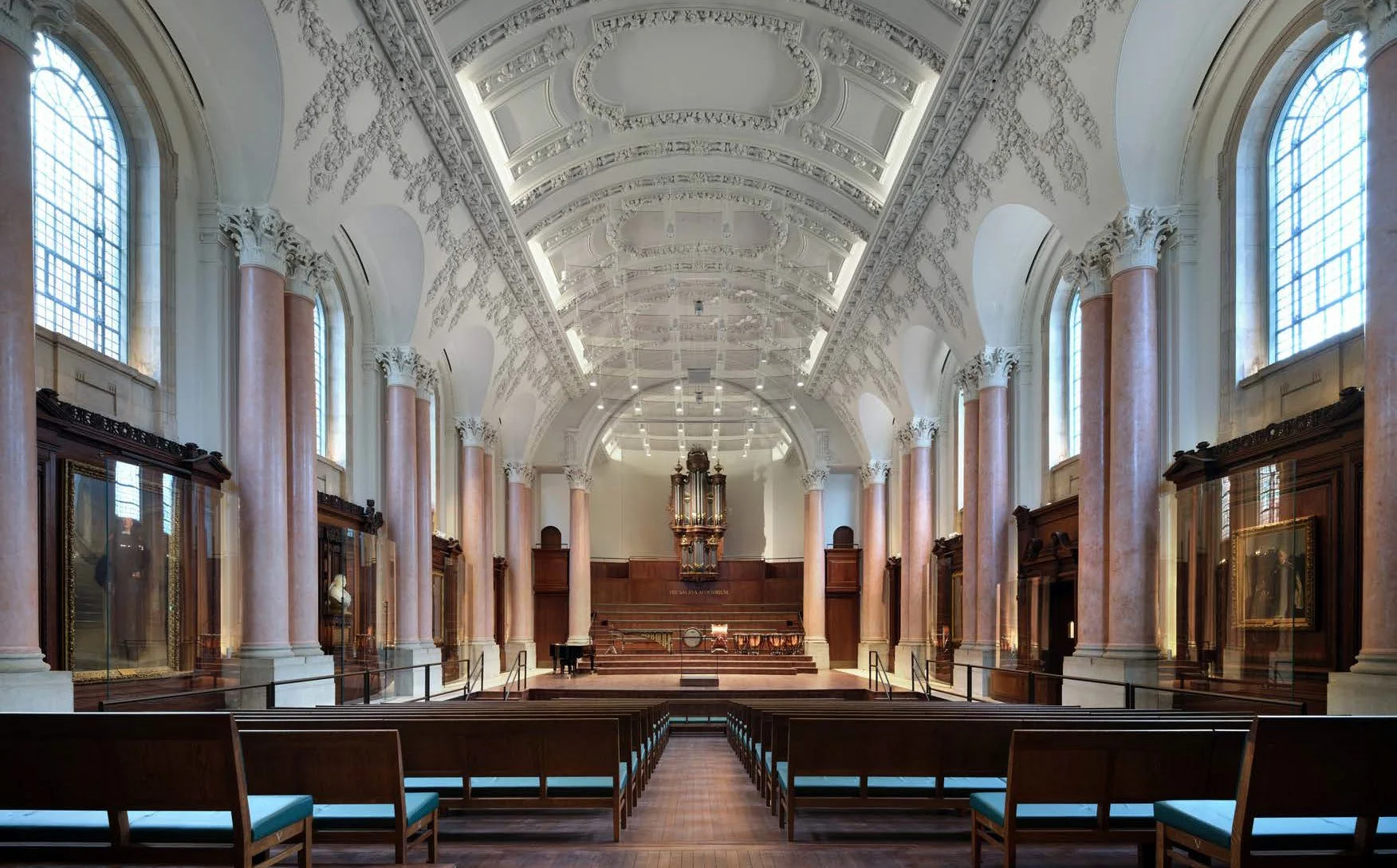
Photo credit: Philip Vile
Citation
Eton School Hall,
Hopkins Architects
Jury Comments
This project is the definition of agility. At first glance it looks as though nothing has changed; the deeper you look, the more you realise that everything is entirely new. Out of a listed and highly regarded historic building, a fully realised 20th-century performance and cultural space has been created.
Noel Hill Student Research Award
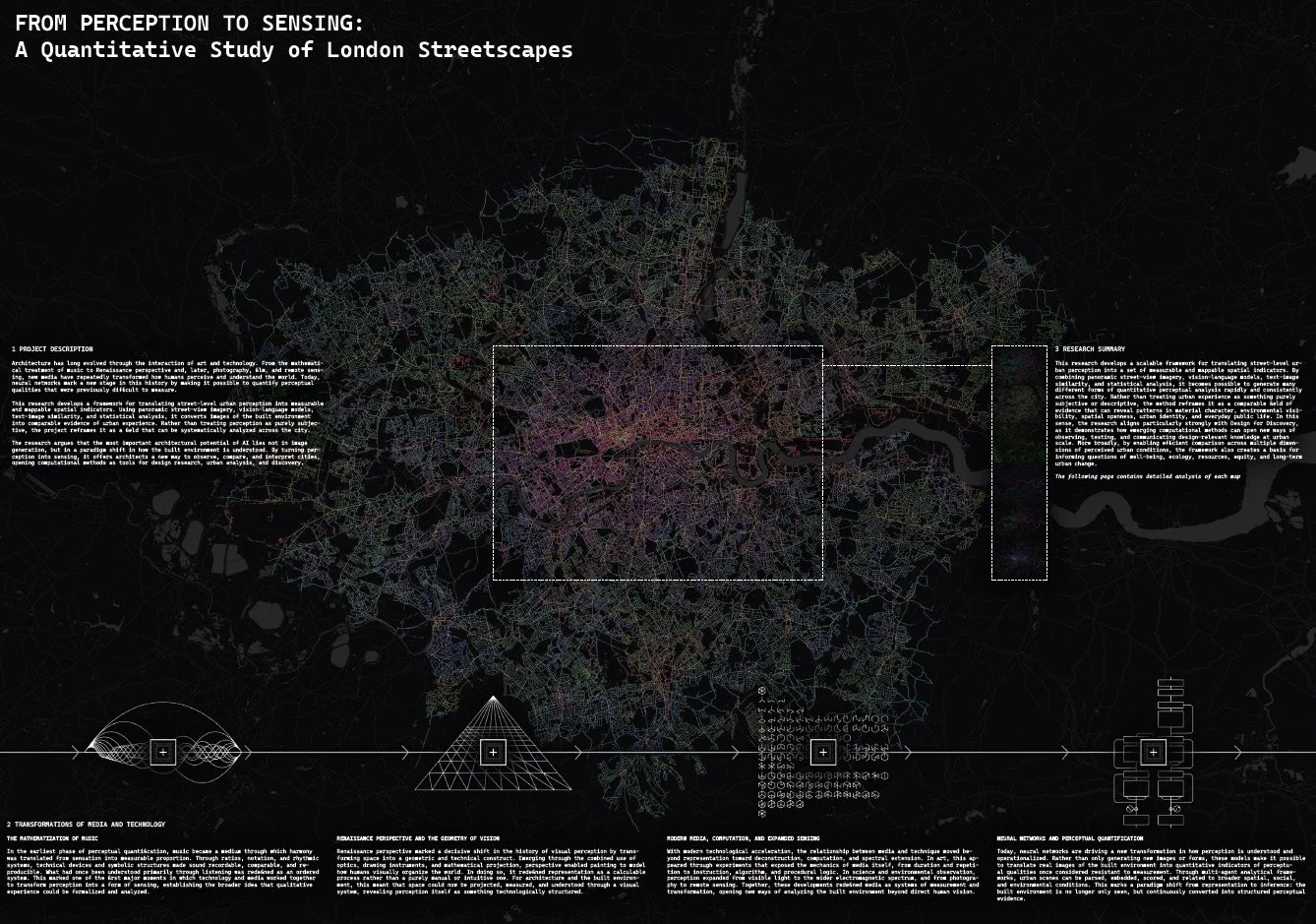
Image credit: Shengtao Xia
Excellence Award
From Perception to Sensing: A Quantitative Study of London Streetscapes
Shengtao Xia, AA School of Architecture
Jury Comments
This project reframes artificial intelligence not as a generator of speculative form, but as an instrument for uncovering the perceptual character of urban reality — a distinction the jury found both intellectually sharp and genuinely significant. The rigour of the research proposition is matched by the ambition of its potential application, pointing toward methods that could meaningfully disrupt how the profession understands and analyses the built environment. The jury recognised in it the hallmarks of research that reaches beyond the academic context, with real promise to shape the way the industry engages with cities in the years ahead.
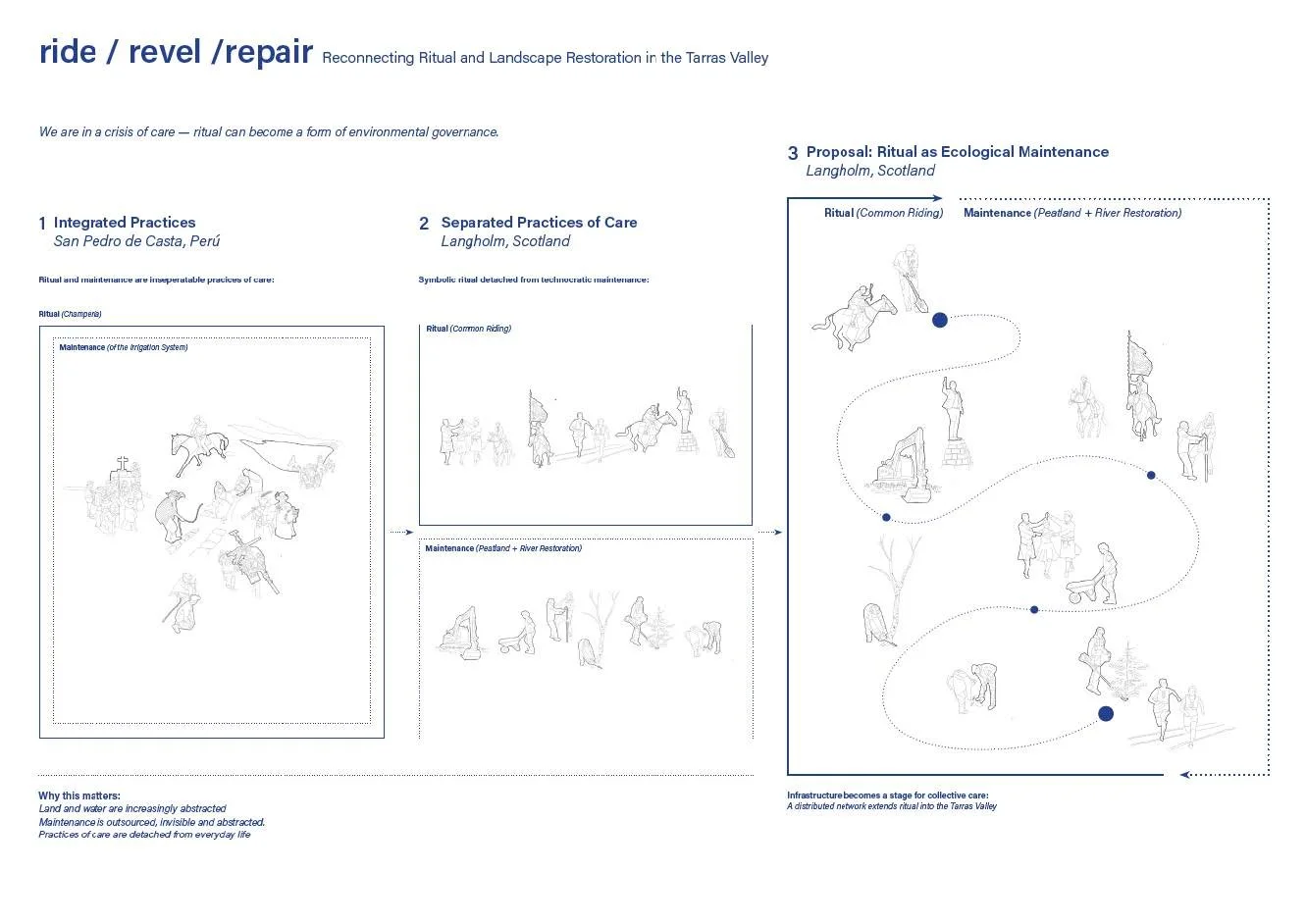
Image credit: Camilla Flora Ludwig
Merit Award
Ride/Revel/Repair: Reconnecting Ritual and Landscape Restoration in the Tarras Valley
Camilla Flora Ludwig, University College London
Jury Comments
Global in ambition and local in focus, this project combines sweeping breadth of research with a compelling vision for applied urbanism — one that engages the public, transforms specific sites, and manages to do genuine good while remaining joyful in its approach.

Image credit: Joshua Self
Citation
The Realm of Analogue: Acoustic Systems Across Domestic and Cultural Space
Joshua Self, University of the Arts London
Jury Comments
A self-initiated research inquiry that speaks to architecture at its most considered — engaging the discipline as both a spatial and sensory practice. The jury was moved by the depth of commitment evident throughout, and by the originality and beauty of the work itself. It is a compelling reminder of the intellectual ambition that student research, at its finest, can bring to the field.
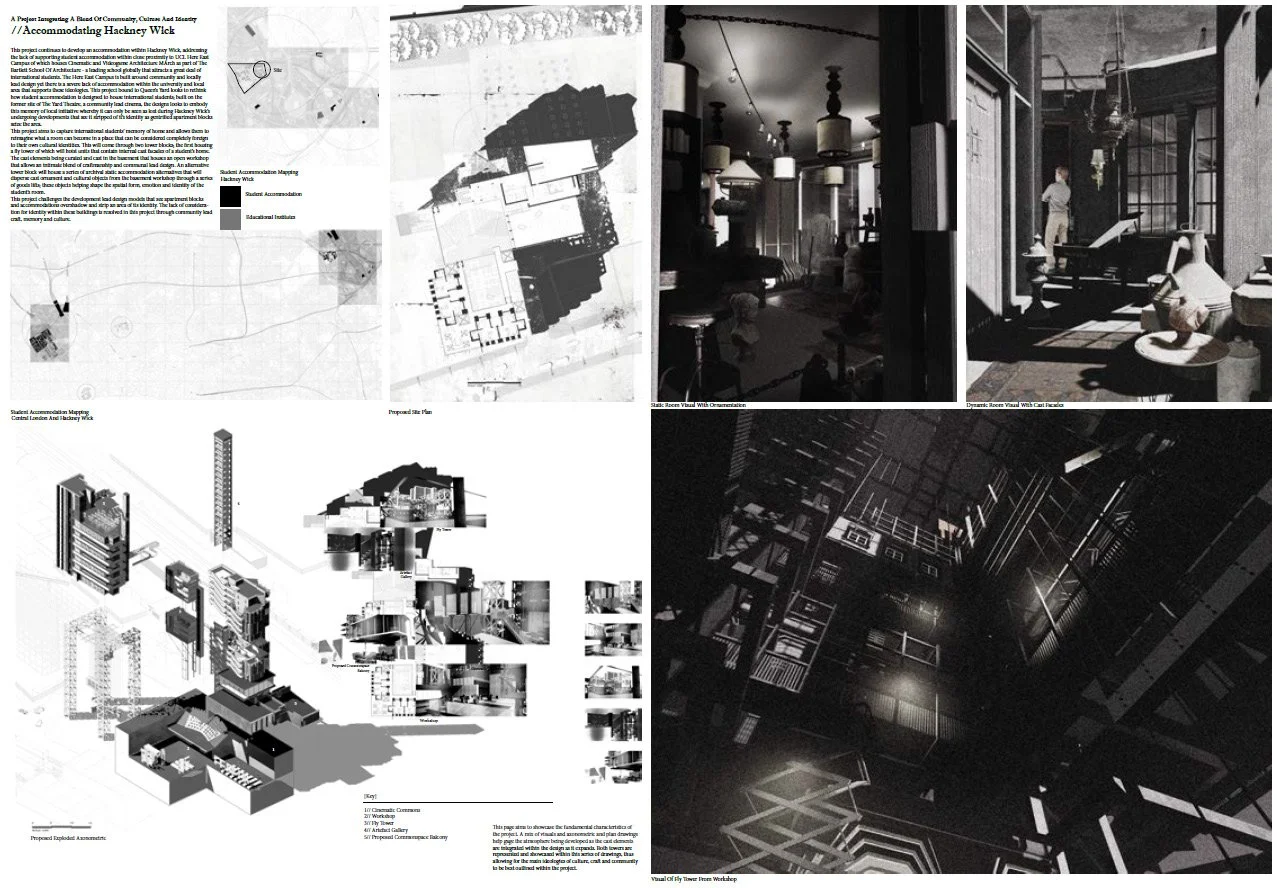
Image credit: Cieran Peter Clarkson
Citation
Accommodating Hackney Wick
Cieran Peter Clarkson, Leeds Beckett University
Jury Comments
This project brings a genuinely inventive spatial, cultural, and cinematic lens to the pressing question of how international students inhabit shared space. The visual ambition is striking, and the narrative clarity with which it frames its inquiry — drawing on the language of props, theatre, and the idea of home — makes for a compelling and memorable piece of work. The jury saw in it the kind of creative speculation that pushes the boundaries of architectural research, even as it opens further conversations about the more fundamental conditions of housing it engages.
Sponsored by
