Building Tour - Urbanest Battersea, A New Benchmark for Passivhaus Student Living in London
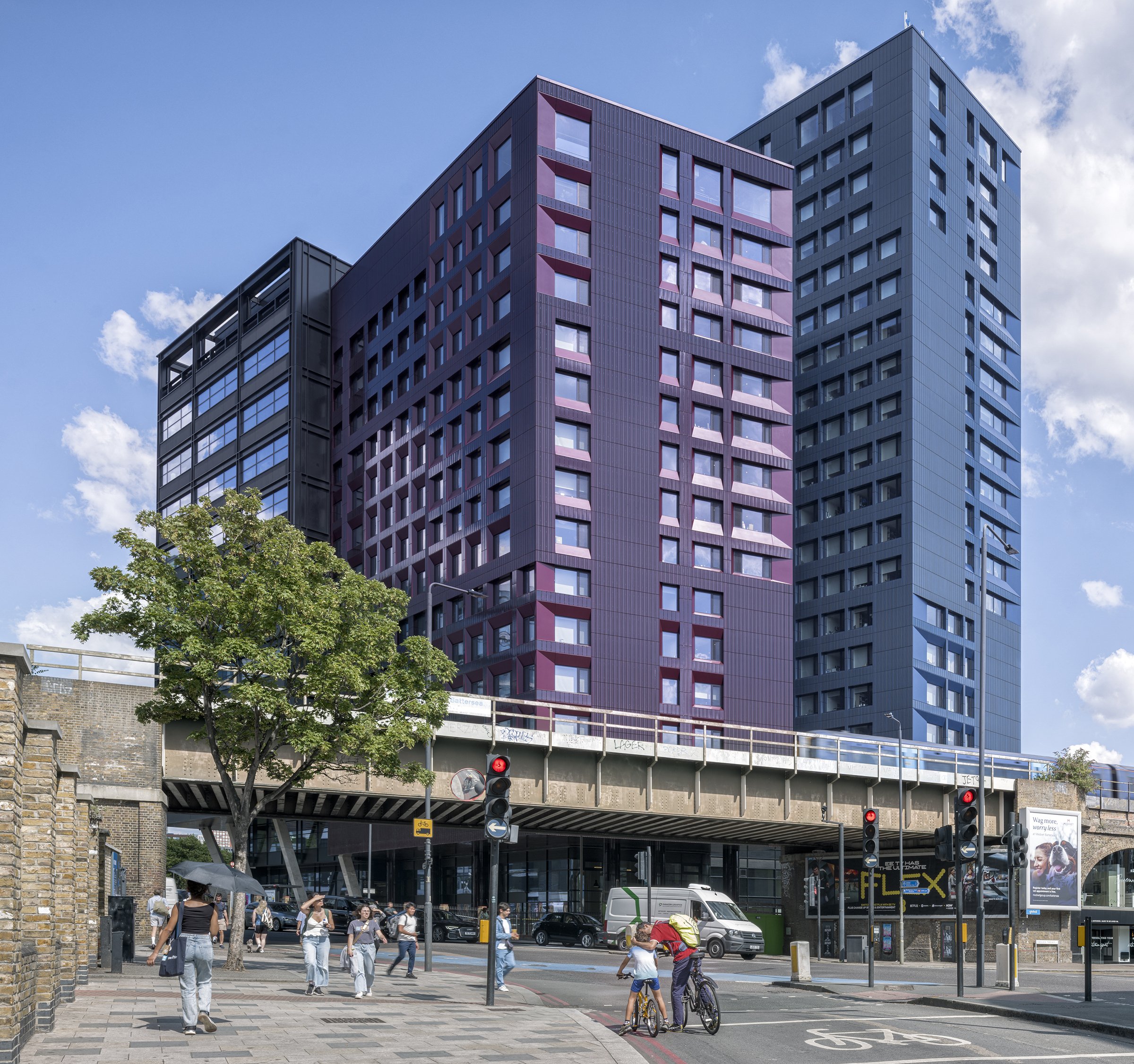
Photo credit AHMM
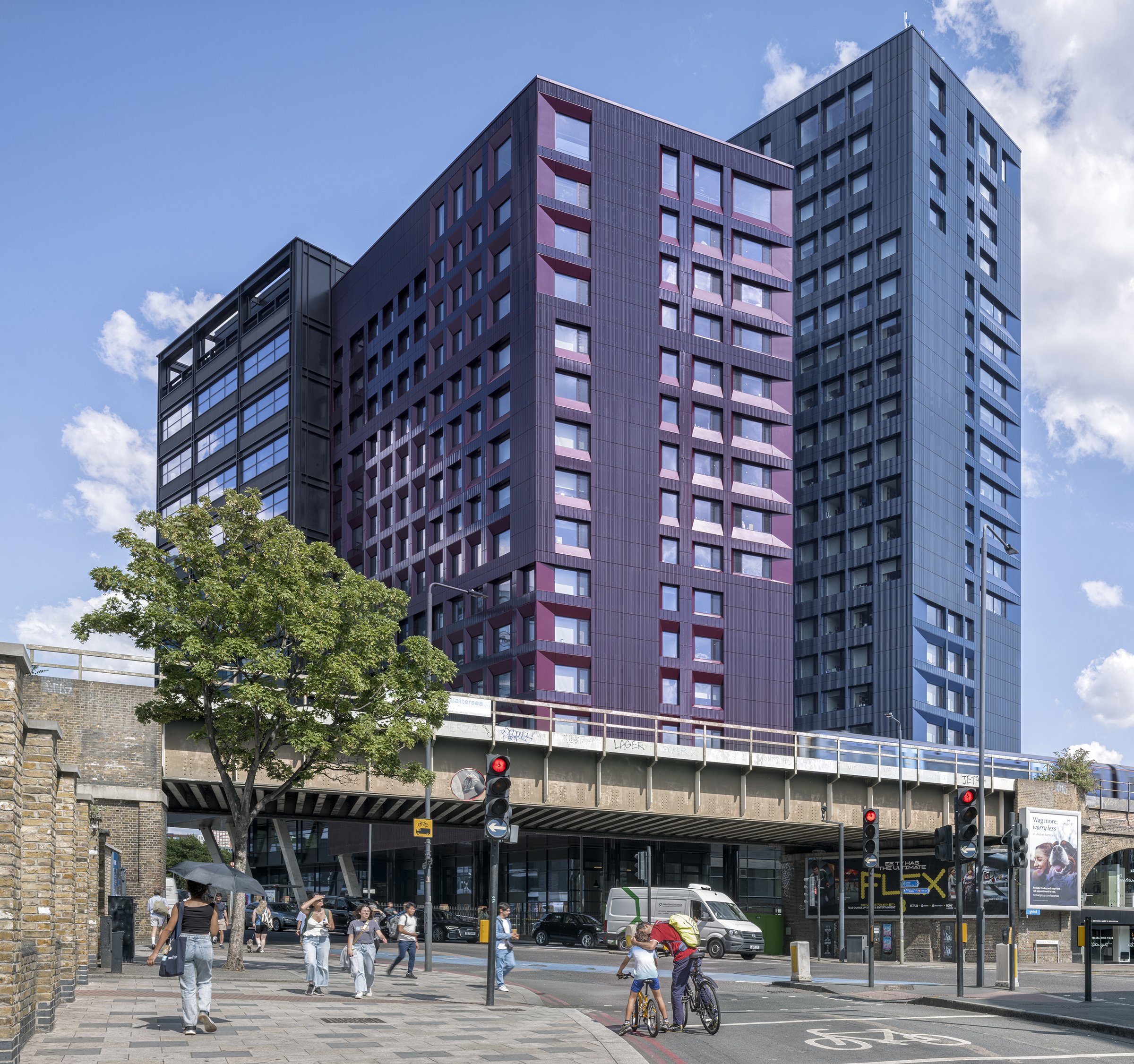
On 9 October, we had the opportunity to tour Urbanest Battersea in person. Urbanest positions itself as London’s leading student accommodation provider, with nine distinctive properties across central London. With 853 student beds distributed across buildings reaching up to 19 storeys, Urbanest Battersea is also Europe’s largest student accommodation development constructed to Passivhaus standards. Having previously toured Urbanest City by Hopkins Architects in June, I can say without reservation that Urbanest’s approach meaningfully redefines contemporary student housing.
The student rooms are well considered, each incorporating a bed, built-in desk and chair, wardrobe, and a private shower room. Comfort cooling and heating are provided alongside an air-filtration system and augmented acoustic dampening. Clusters of rooms share fully furnished communal kitchens with generous dining areas. Public amenities are extensive and of a notably high standard, including a gym, cinema room, rooftop terraces offering expansive city views, and a variety of communal study spaces. Attention to detail and finishes is consistently strong throughout.
Designed by AHHM, Urbanest Battersea recently became the UK’s largest certified Passivhaus development after passing a demanding series of airtightness tests. Located on the south side of Battersea Park Road, opposite the emerging Battersea Power Station district, the scheme comprises three student residential buildings and a dedicated commercial building, forming a highly sustainable and thoughtfully articulated ensemble.
Three of the four buildings are connected by a shared podium, with heights ranging from 11 to 19 storeys and creating a dynamic skyline. Our guide, Flora Genel, explained that the staggered building heights and stepping massing are deliberately arranged to frame key views, while the podium unifies the scheme around landscaped courtyard gardens. She also highlighted the glazed terracotta façades—rendered in a vibrant palette of red, green, and blue—which reference the area’s industrial heritage as well as the surrounding brickwork, local flora, and sky.
The design, like many contemporary student residential schemes, encourages social interaction. The three interconnected residential cores (colour-coded to match the terracotta façades) converge at podium level. This area also accommodates a public house, café, and an Enterprise Business Unit (EBU), which offers a flexible community hub for cultural events and workspace. The combination of a socially oriented design strategy, careful materiality, low-energy performance, and exemplary Passivhaus credentials—in addition to outstanding living and amenity spaces—positions Urbanest Battersea as a standout model for student accommodation in London.
Written by Gregory Fonseca, AIA
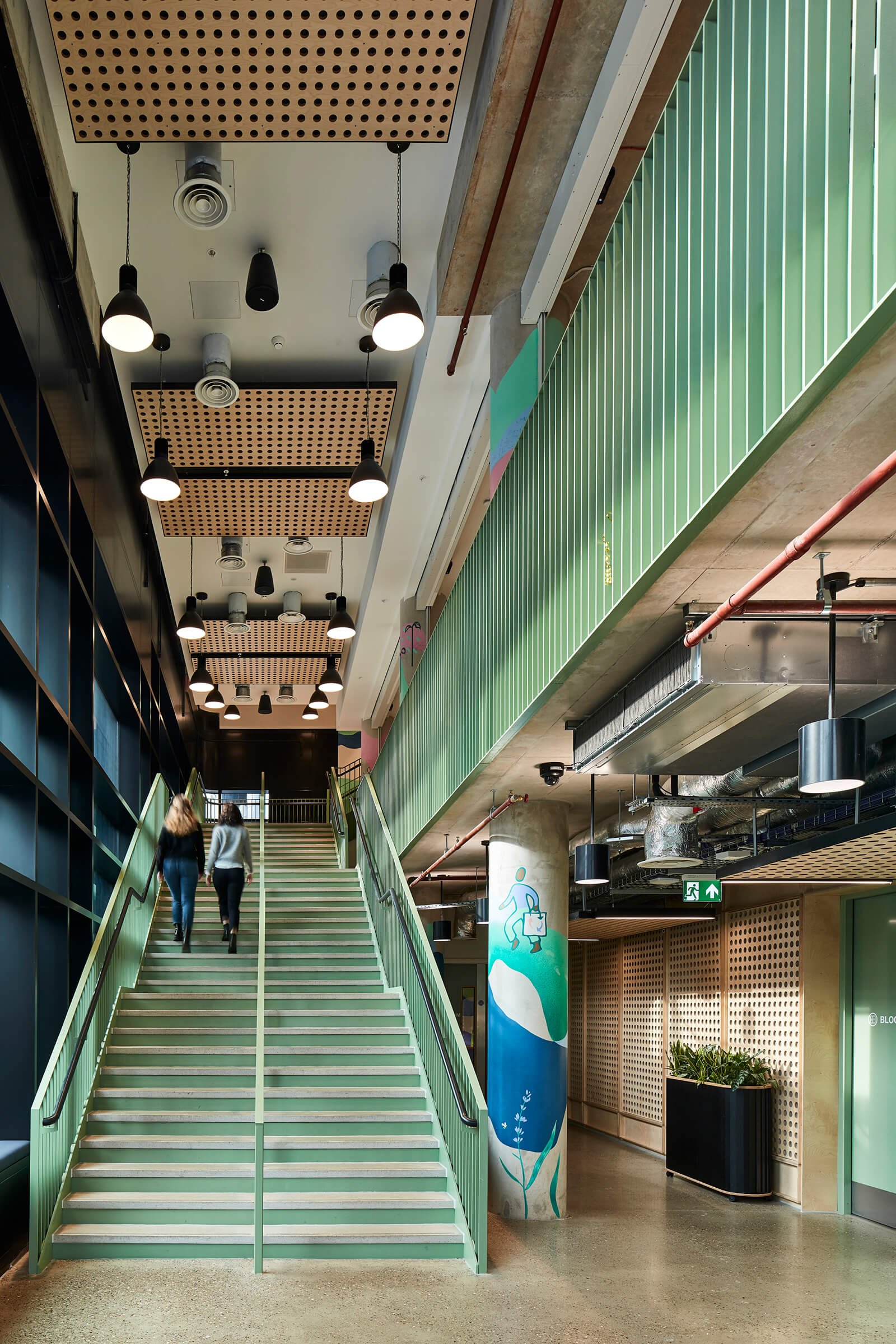
Photo credit AHMM

AIA UK and AIA CE - Venice Architecture Biennale Study Trip

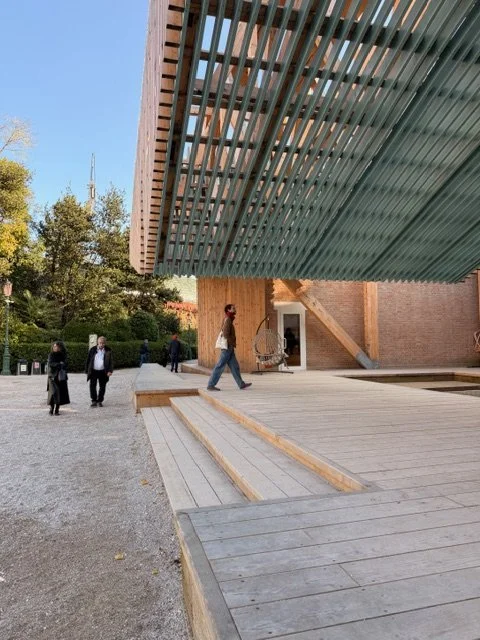
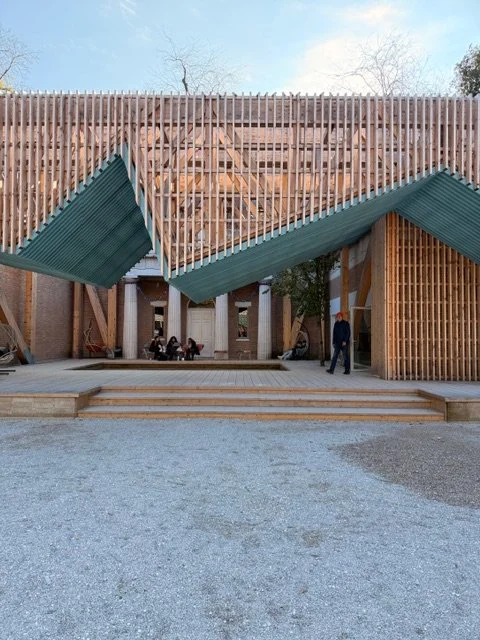
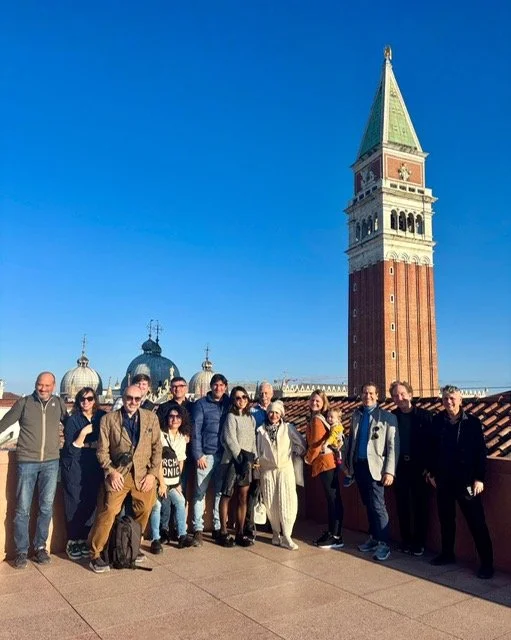
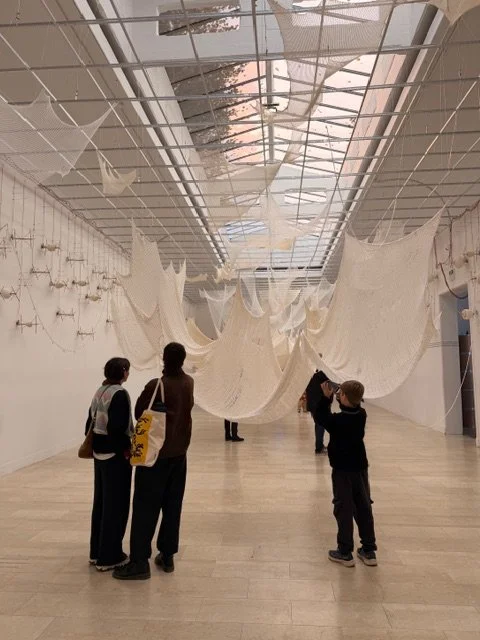
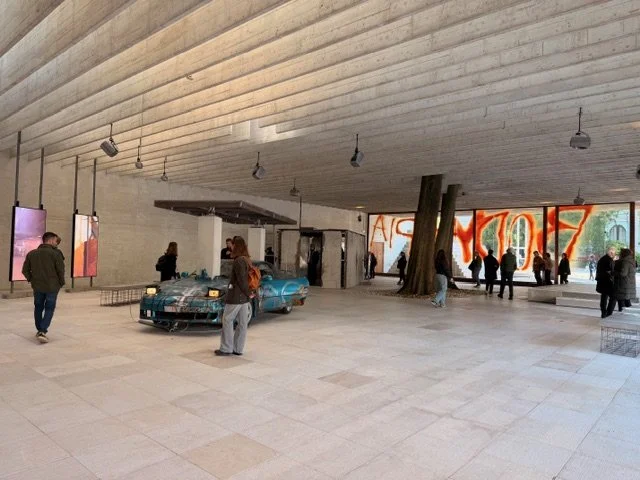
AIA UK, in collaboration with AIA Continental Europe, hosted a two-day study trip to the Venice Architecture Biennale 2025 on 8–9 November. The visit brought together members from across the UK and Europe to explore this year’s curatorial theme, Intelligens: Natural. Artificial. Collective.
The program began with an architectural visit to Banca Generali by David Chipperfield, where participants examined how contemporary design can respond sensitively to Venice’s historic fabric. The discussion focused on materiality, proportion, and the integration of new interventions within protected urban environments, reinforcing the importance of contextual awareness in architectural practice.
On the second day, participants explored the Biennale exhibitions at the Giardini and Arsenale as a group. The 2025 theme, Intelligens, invited reflection on how architecture navigates the intersection of natural systems, artificial intelligence, and collective human knowledge. Through international pavilions and installations, architects gained insight into emerging approaches to climate adaptation, technological innovation, and socially responsive design.
The trip strengthened collaboration between AIA chapters in the UK and Europe, creating a shared platform for professional exchange and critical dialogue. By combining study, cultural immersion, and peer discussion, the Venice program supported architects in expanding their global perspective and deepening their understanding of how intelligence—natural, artificial, and collective—shapes the future of the built environment.
The co-organizers were Morgan Danner, AIA & Lulu Yang, Assoc AIA.
Written by Lulu Yang, AIA
AIA UK Super Saturday 2025 - Windsor and Eton
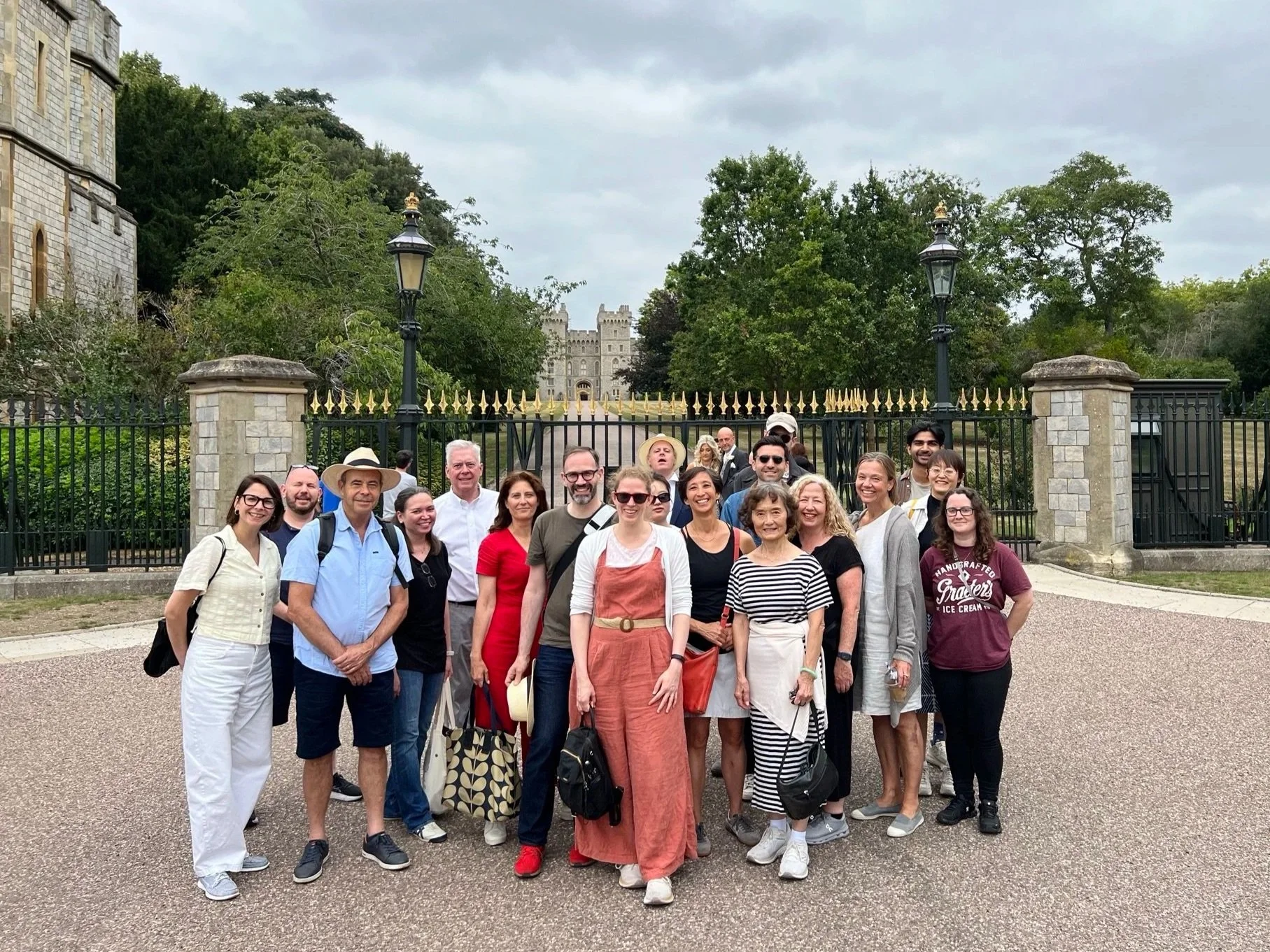
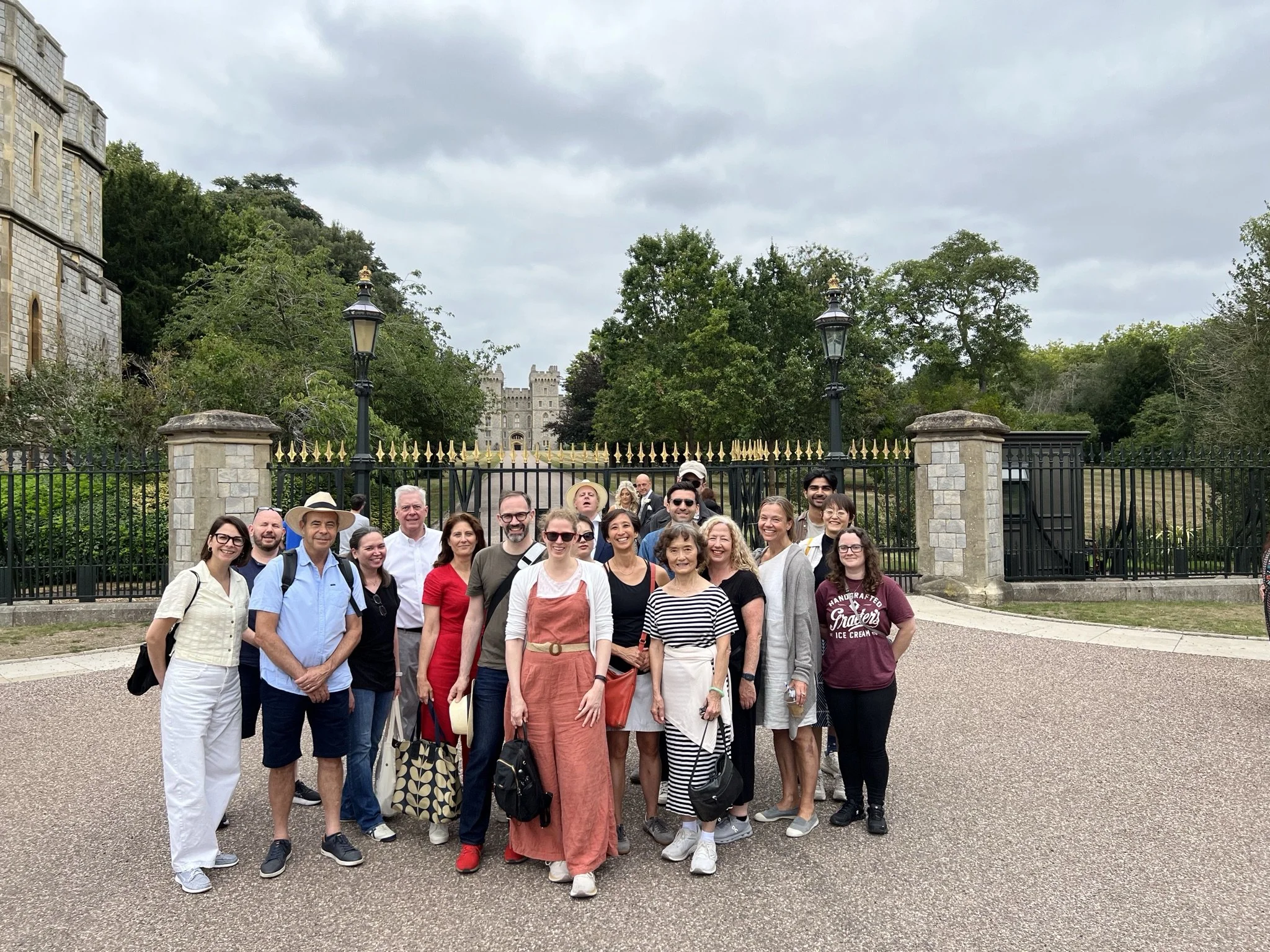
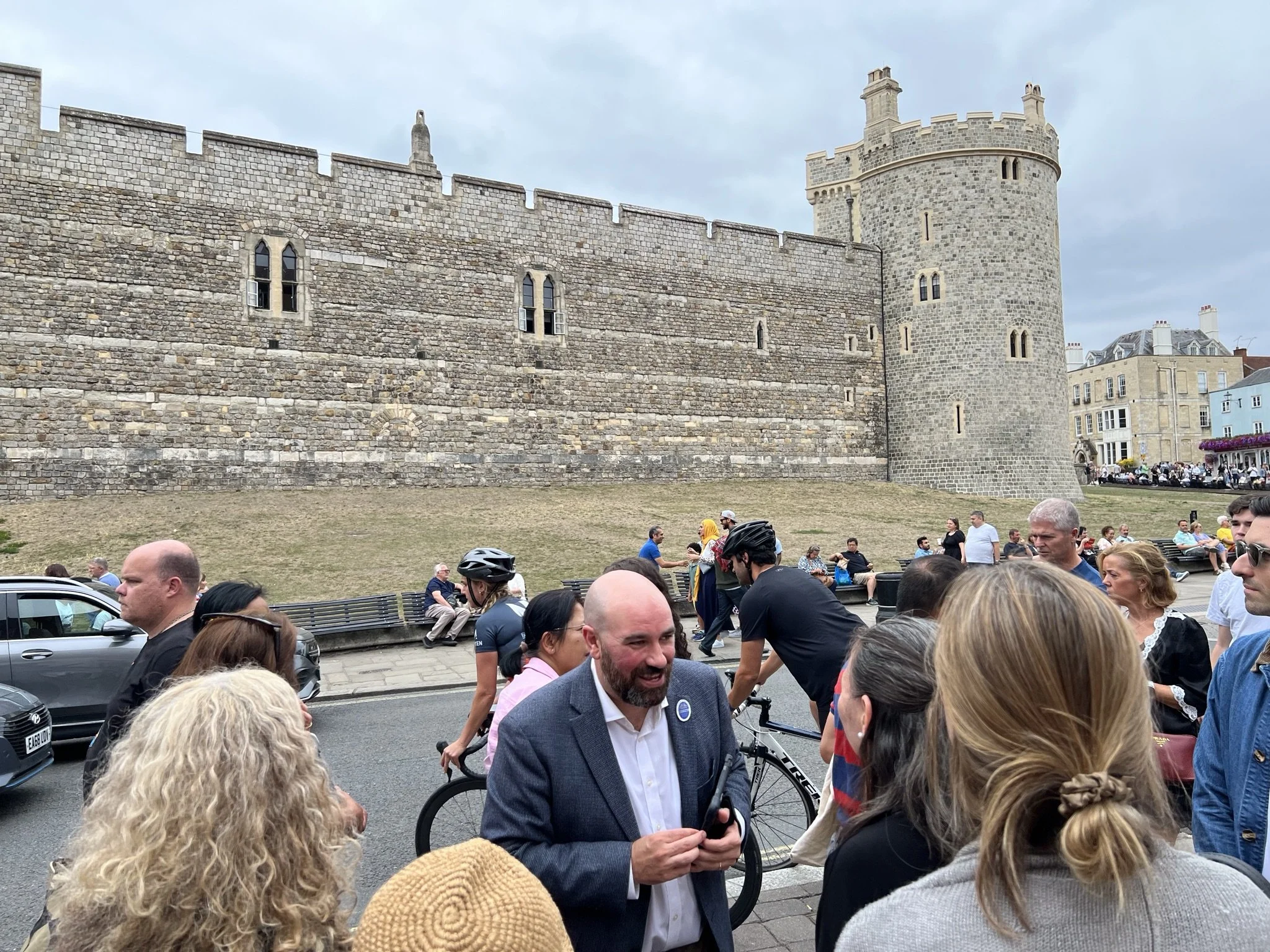
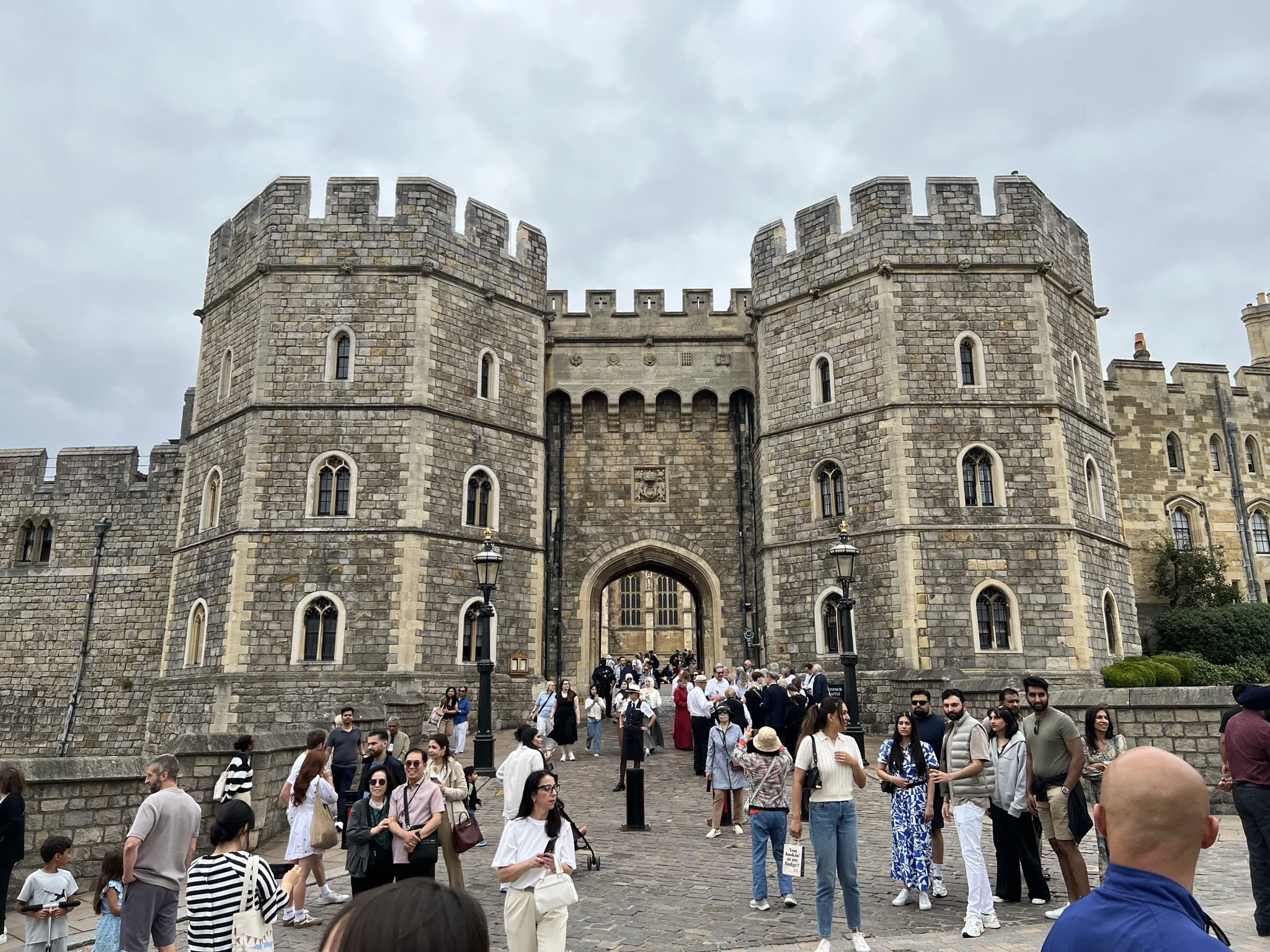
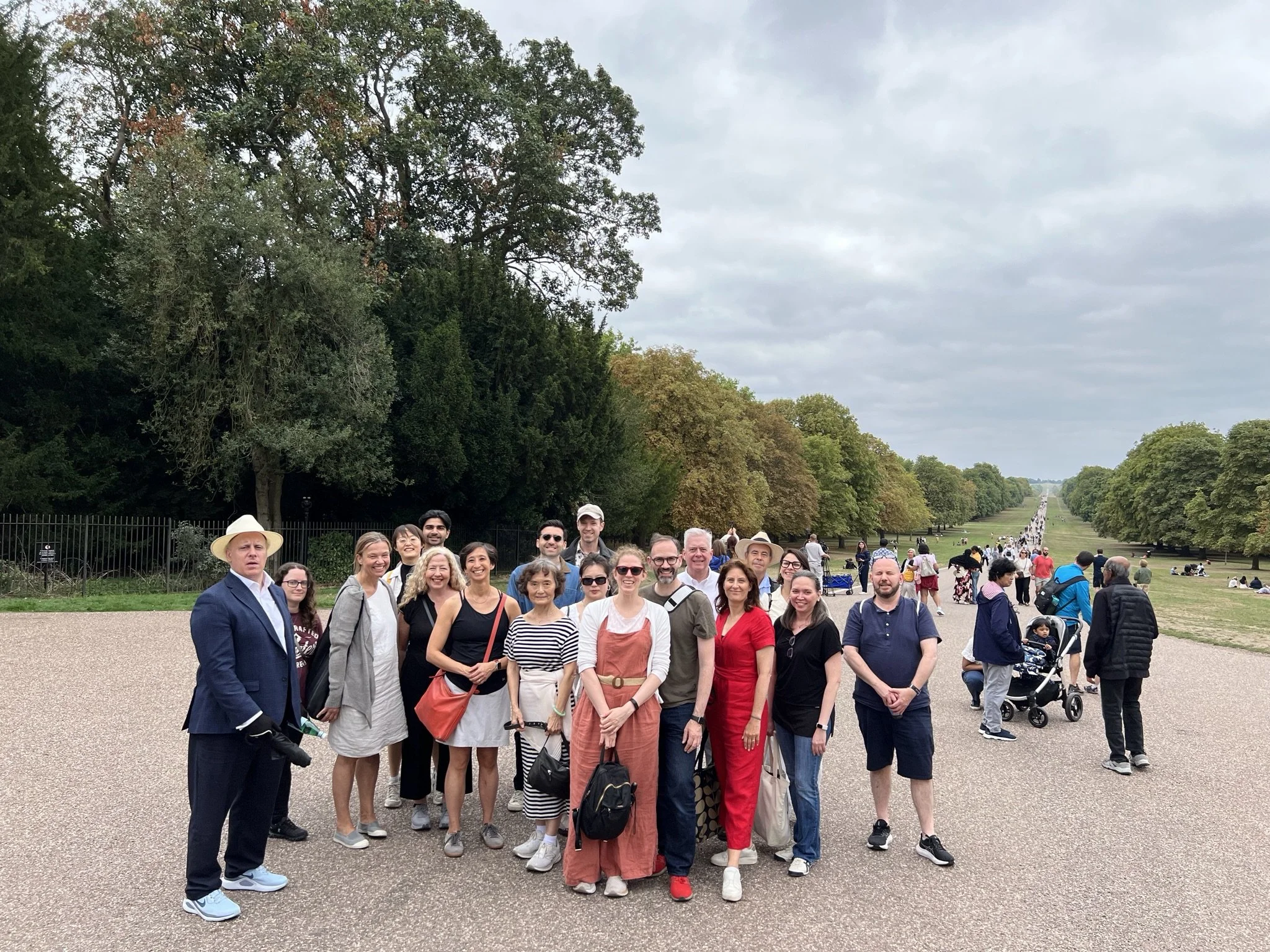
Outside Windsor Castle on The Long Walk
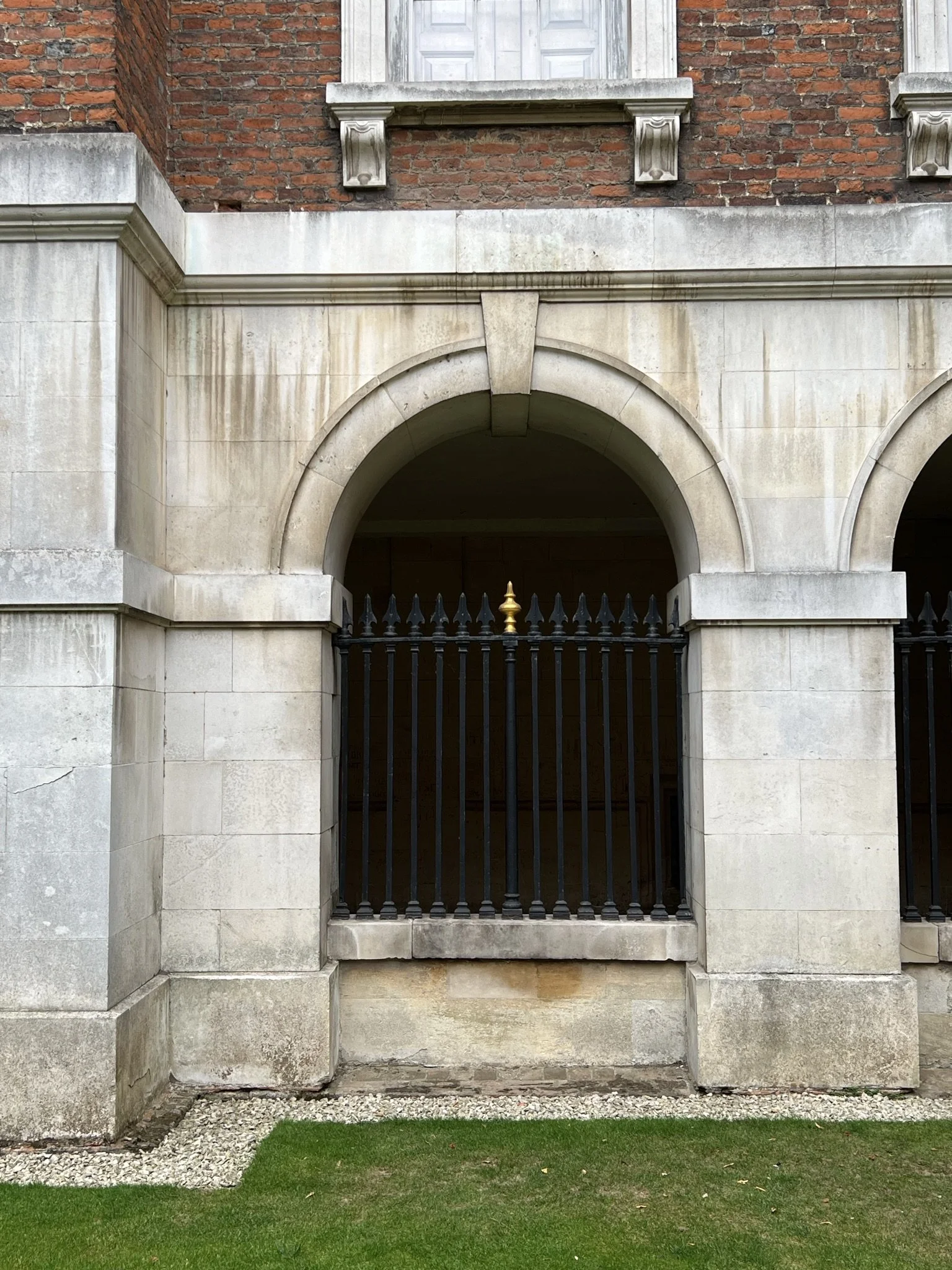
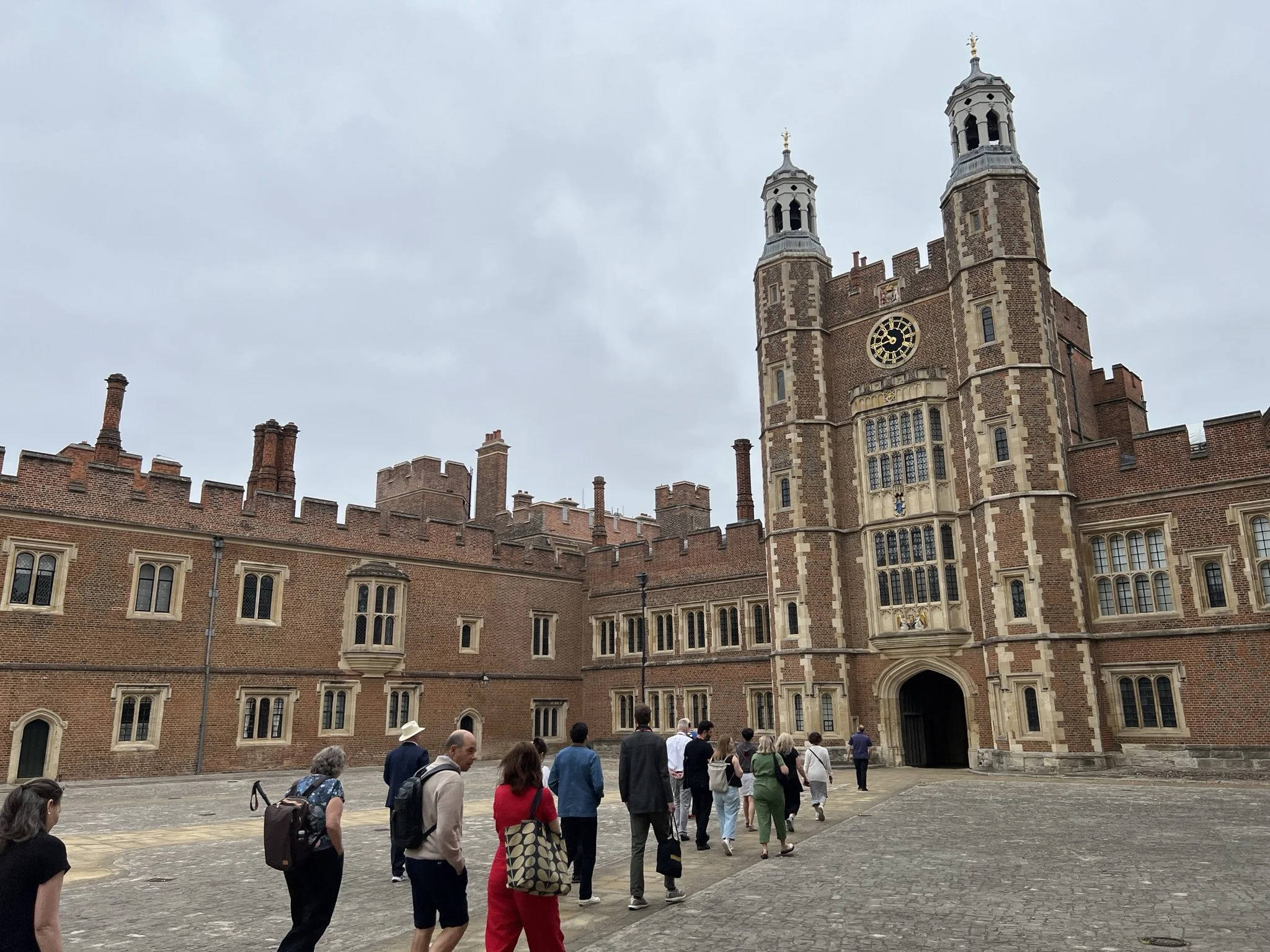
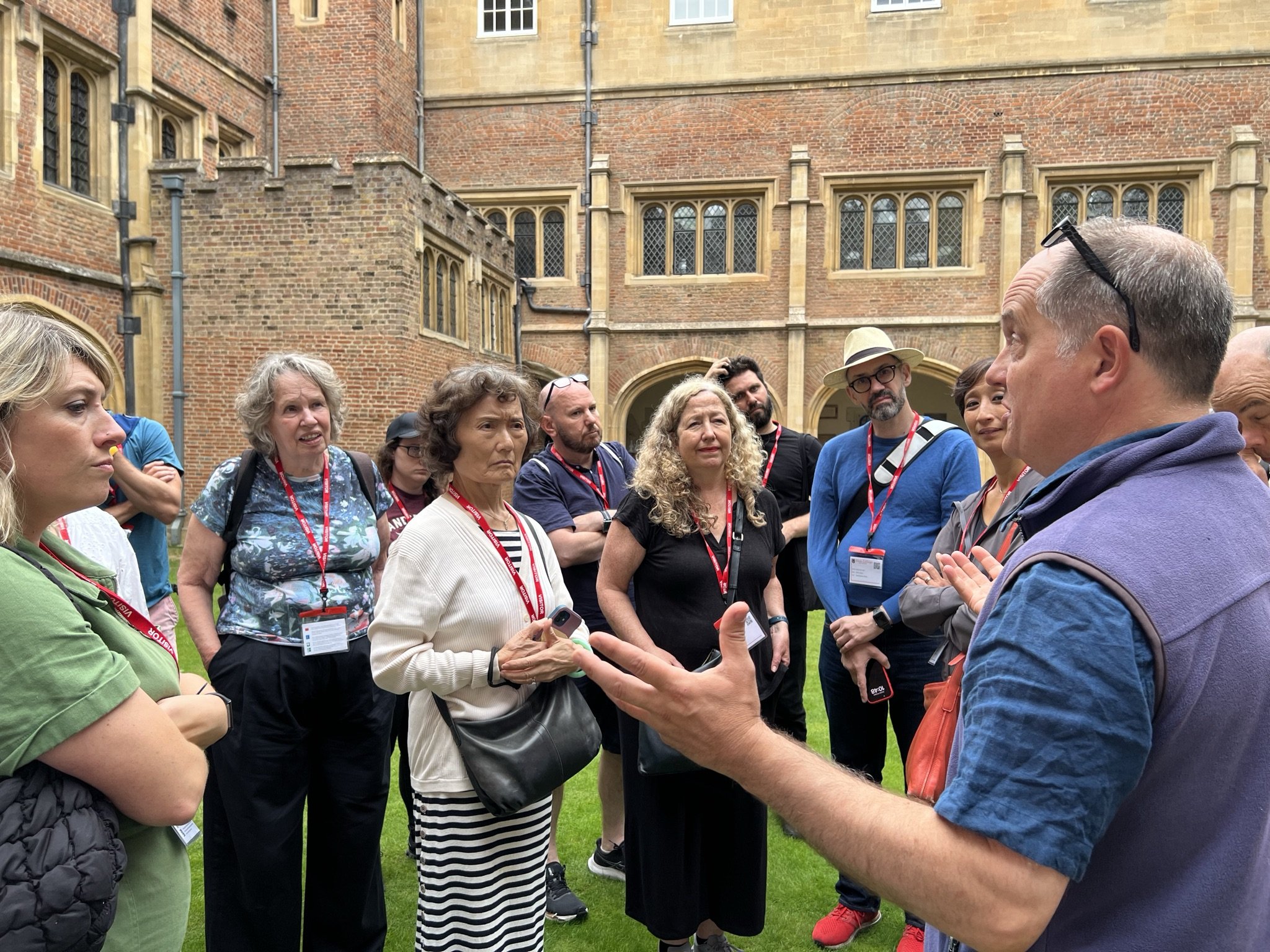
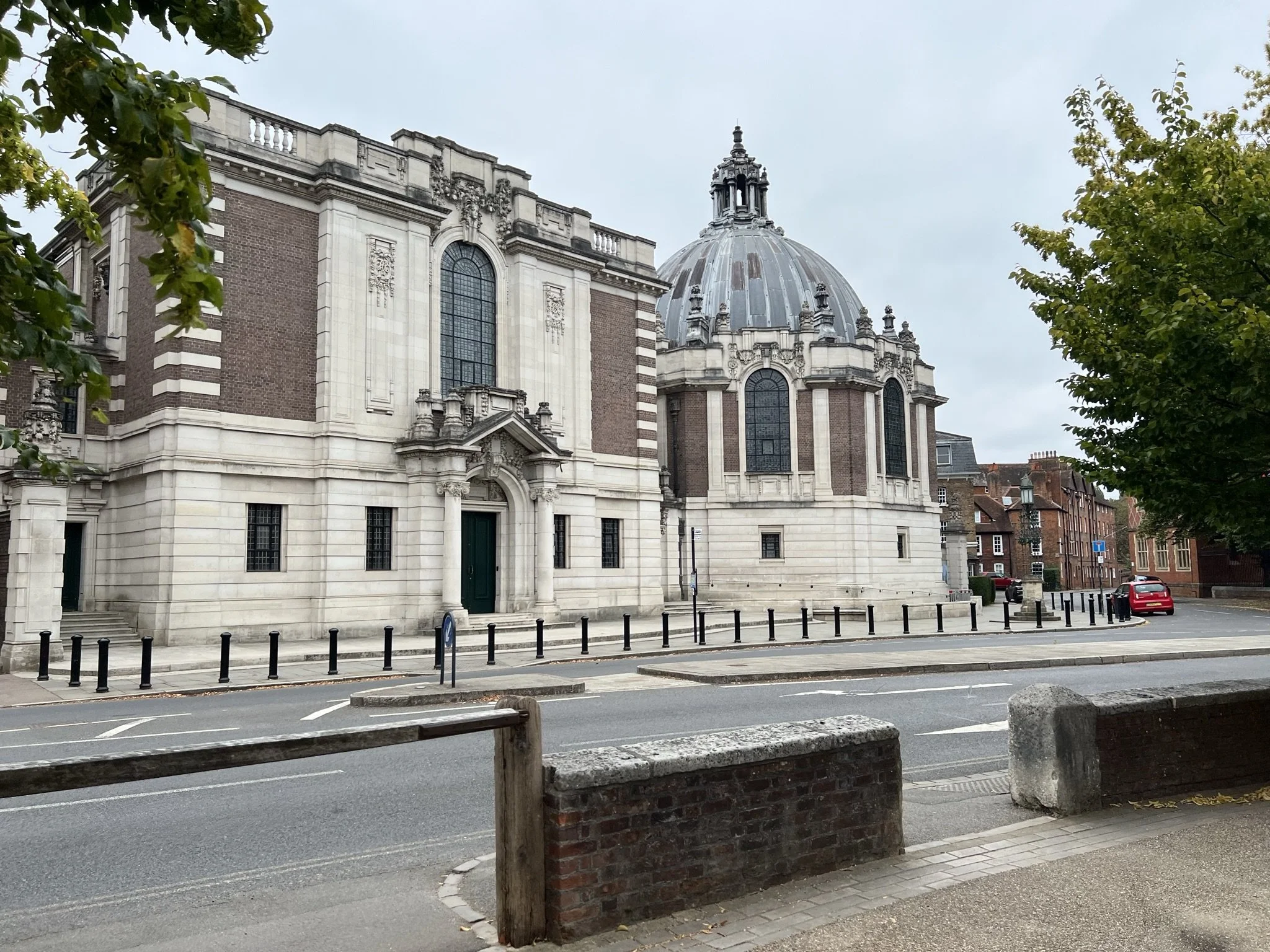
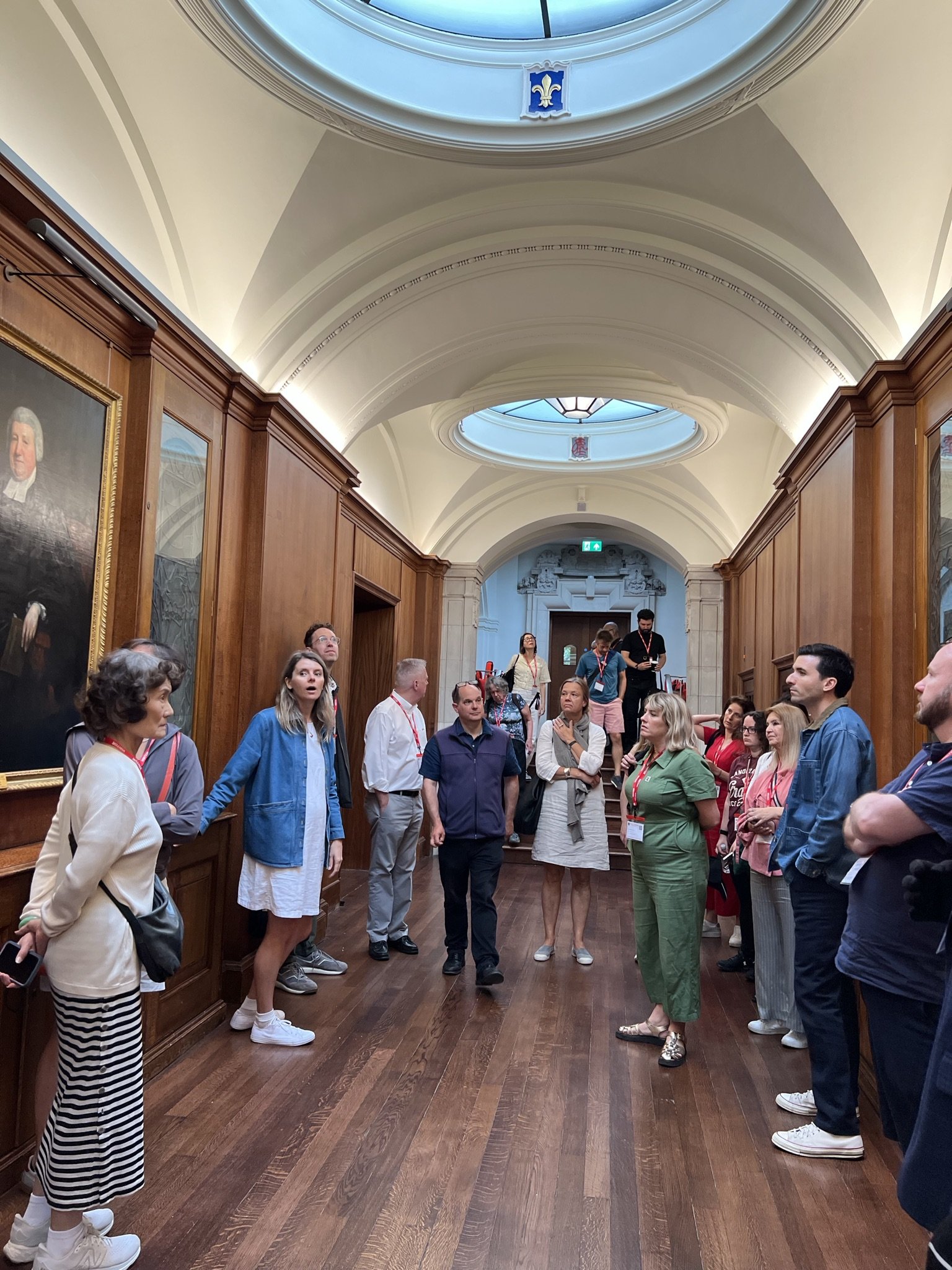
AIA UK's Super Saturday event in Windsor and Eton proved to be an exceptional day of architectural discovery and historical immersion. After gathering for morning coffee in Windsor, on 16 August 2025, our group made their way to Eton College, where we were welcomed at the Porters Lodge by Justin Nolan. His expertly guided tour took attendees through the layers of Eton's architectural heritage, from the upper and lower school buildings to the magnificent chapel and the historic college grounds that have shaped generations of students. Nolan's deep knowledge and engaging storytelling brought the centuries-old structures to life, highlighting the evolution of educational architecture and the careful balance between preservation and adaptation.
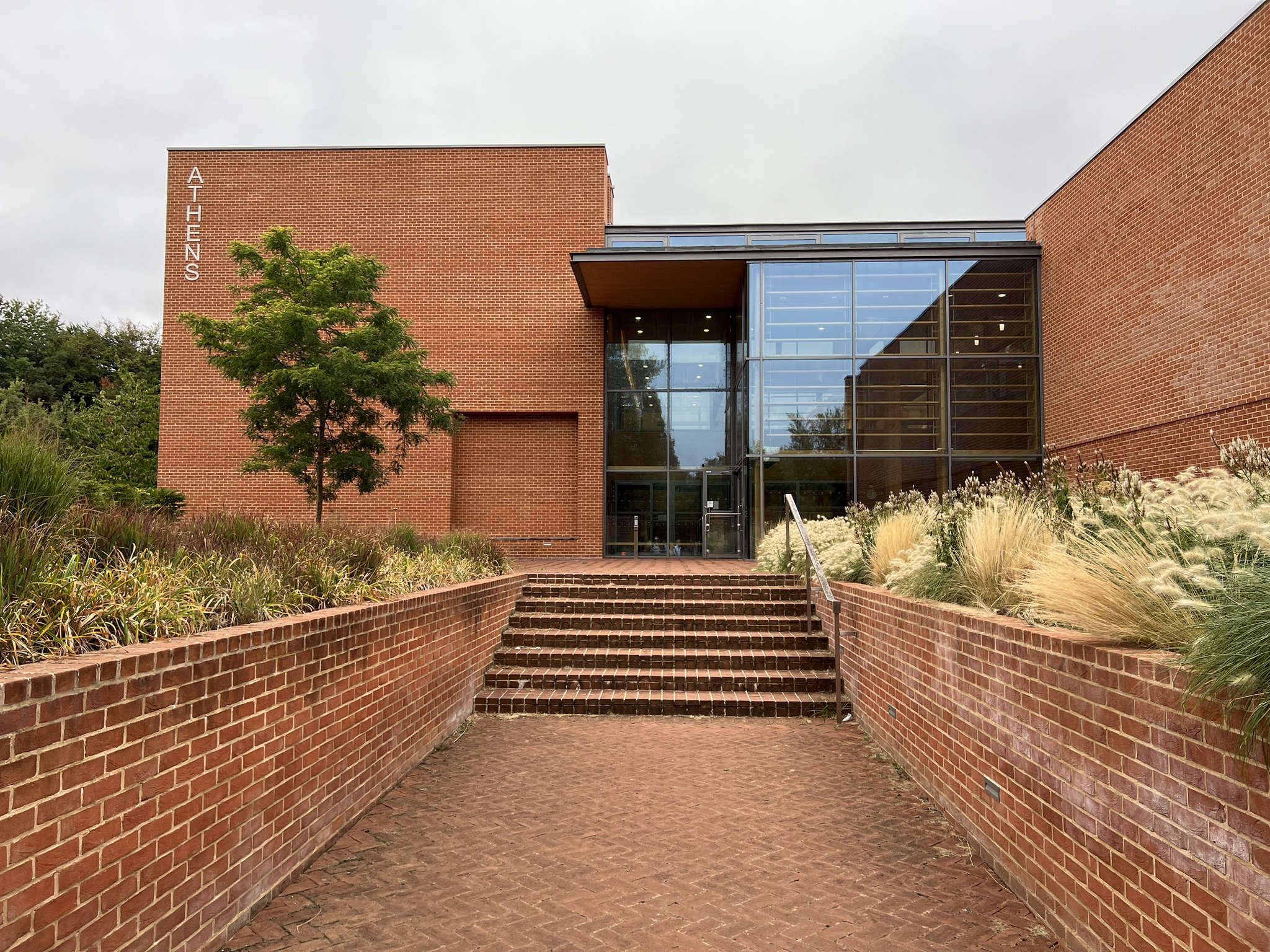
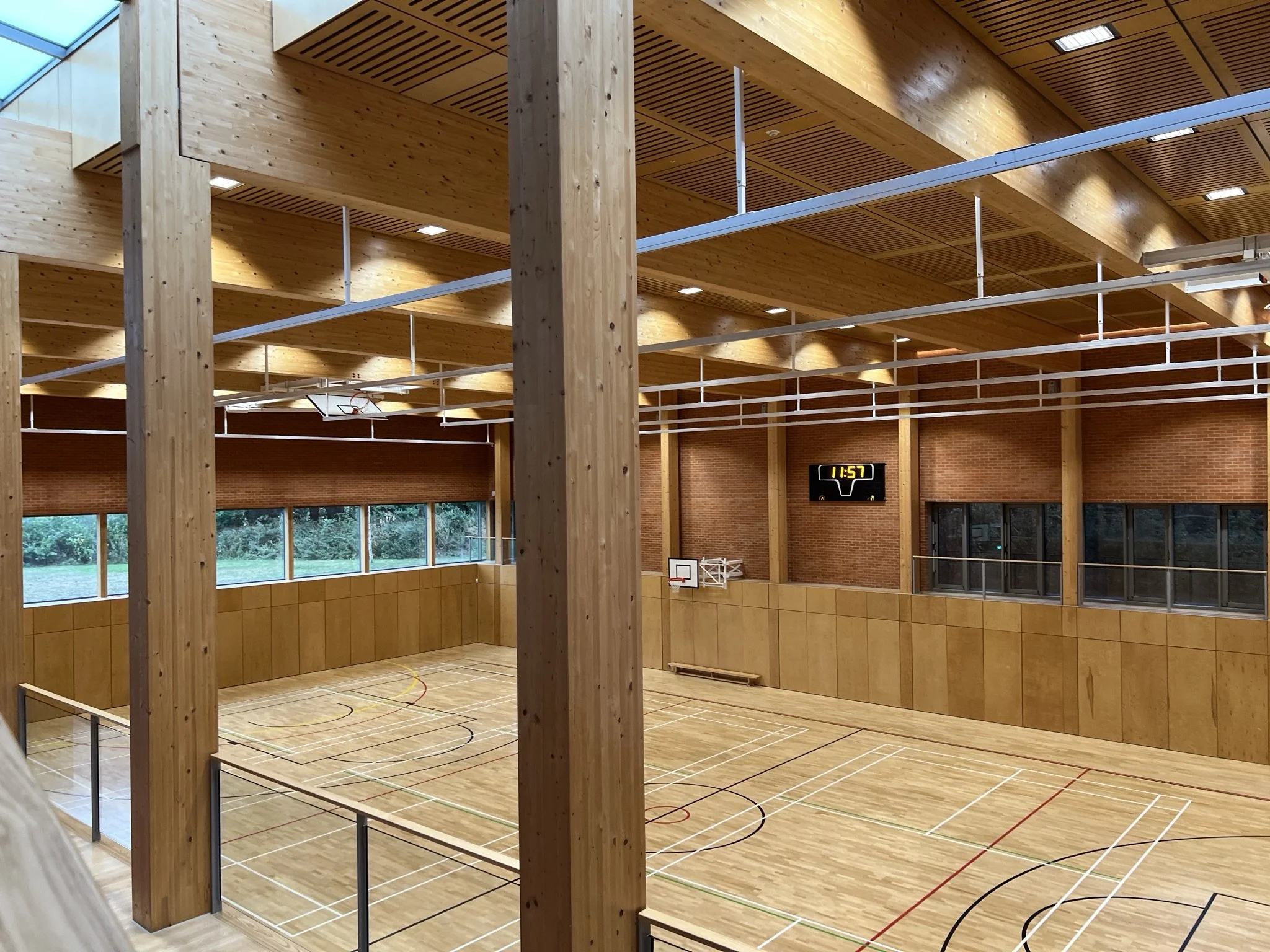
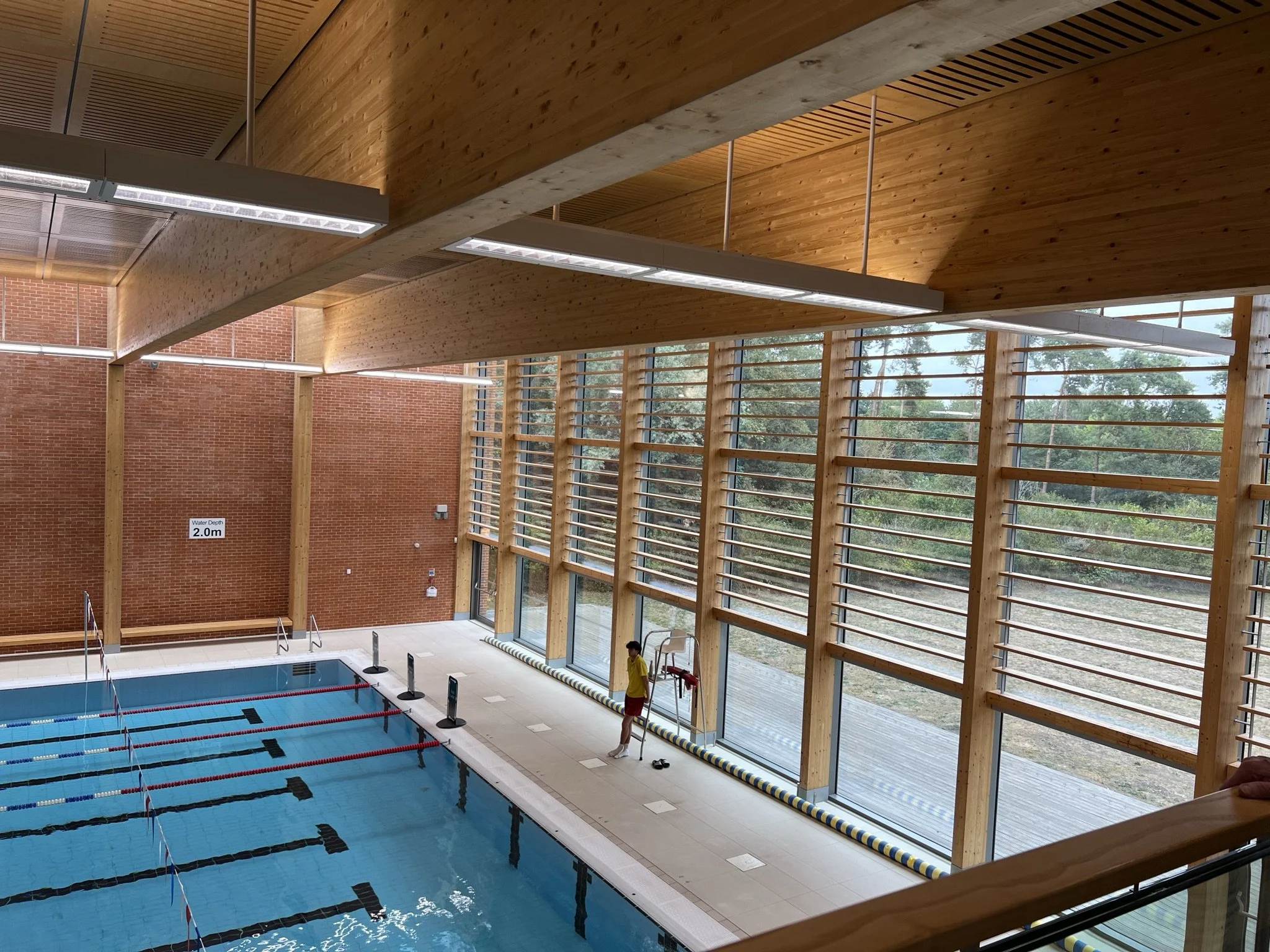
The architectural exploration continued with Alex McCartney from Hopkins Architects, who provided invaluable insights into both the college's historic fabric and contemporary additions by the practice. The group was treated to an in-depth tour of the school hall, the state-of-the-art Eton College Sports and Athletics Center, and the specialized rackets courts and fives courts that showcase the institution's commitment to both tradition and modern sporting excellence. McCartney also gave a glimpse into the ongoing gym renovation project, demonstrating how contemporary architectural intervention can respectfully enhance historic educational environments while meeting the evolving needs of 21st-century learning and recreation.
The morning at Eton College offered attendees an unique opportunity to examine how institutional architecture can successfully bridge historical significance with functional modernity. The combination of Nolan's historical perspective and McCartney's contemporary architectural insights provided a comprehensive understanding of how thoughtful design continues to serve one of Britain's most renowned educational institutions.
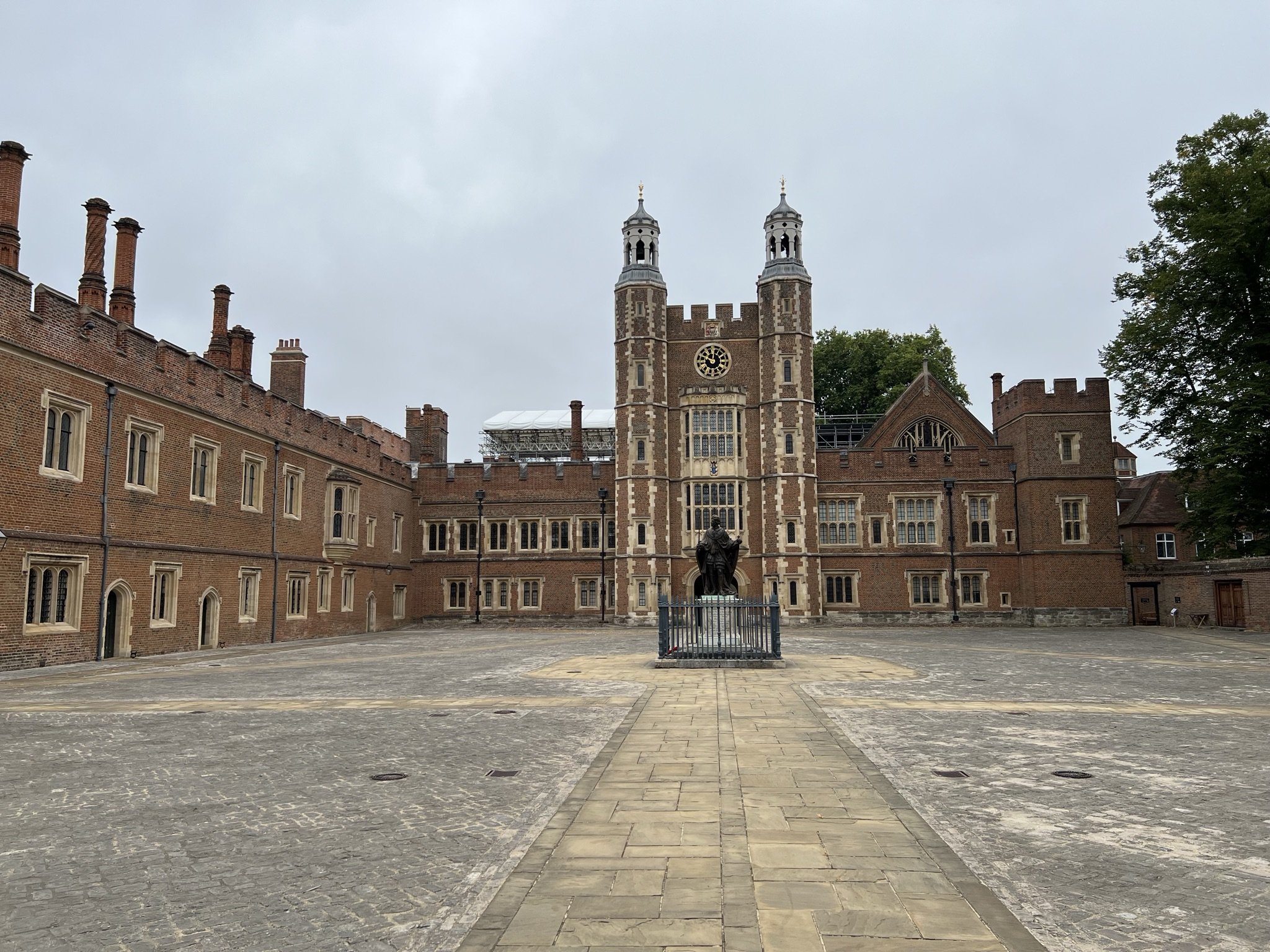
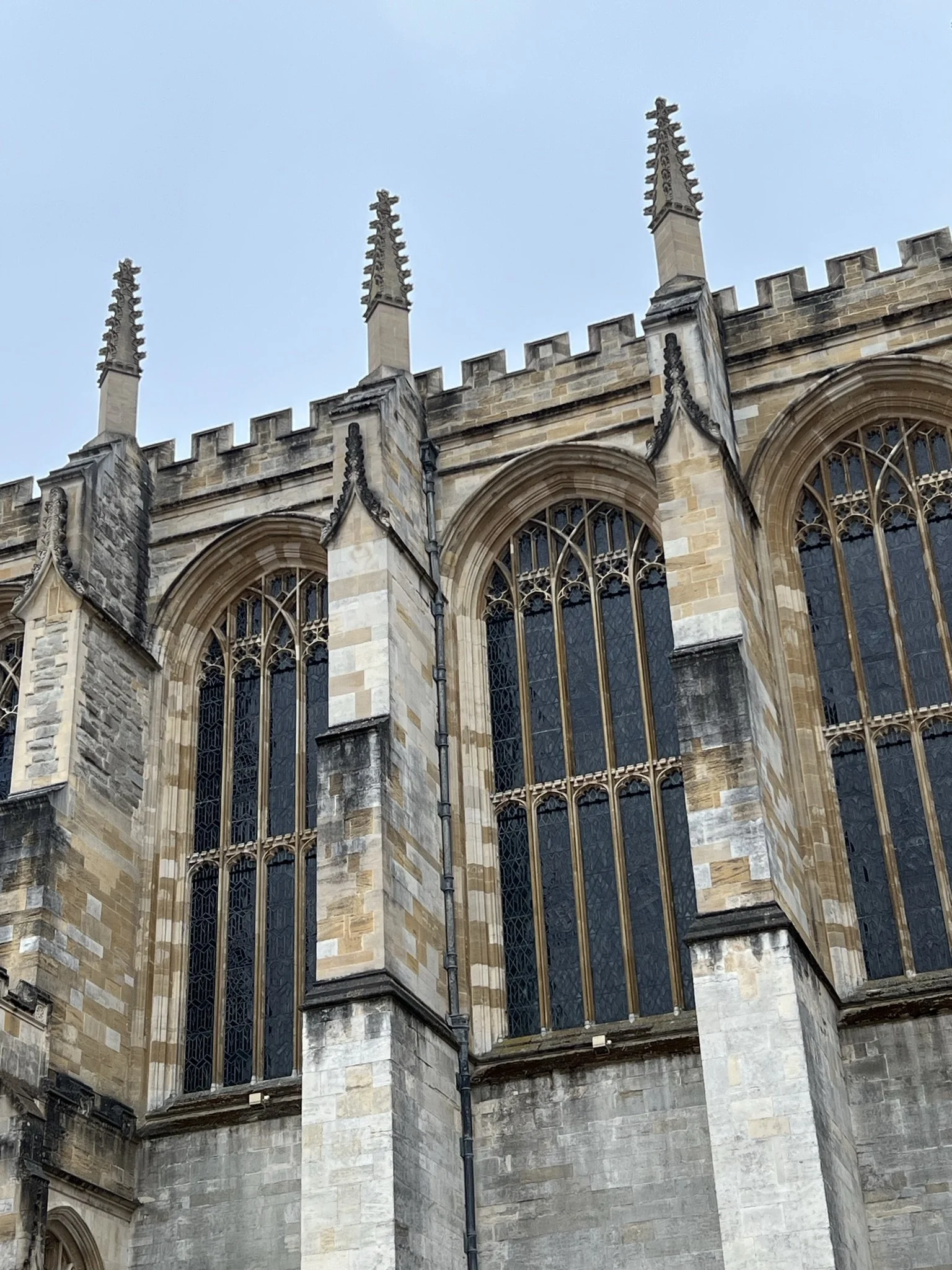
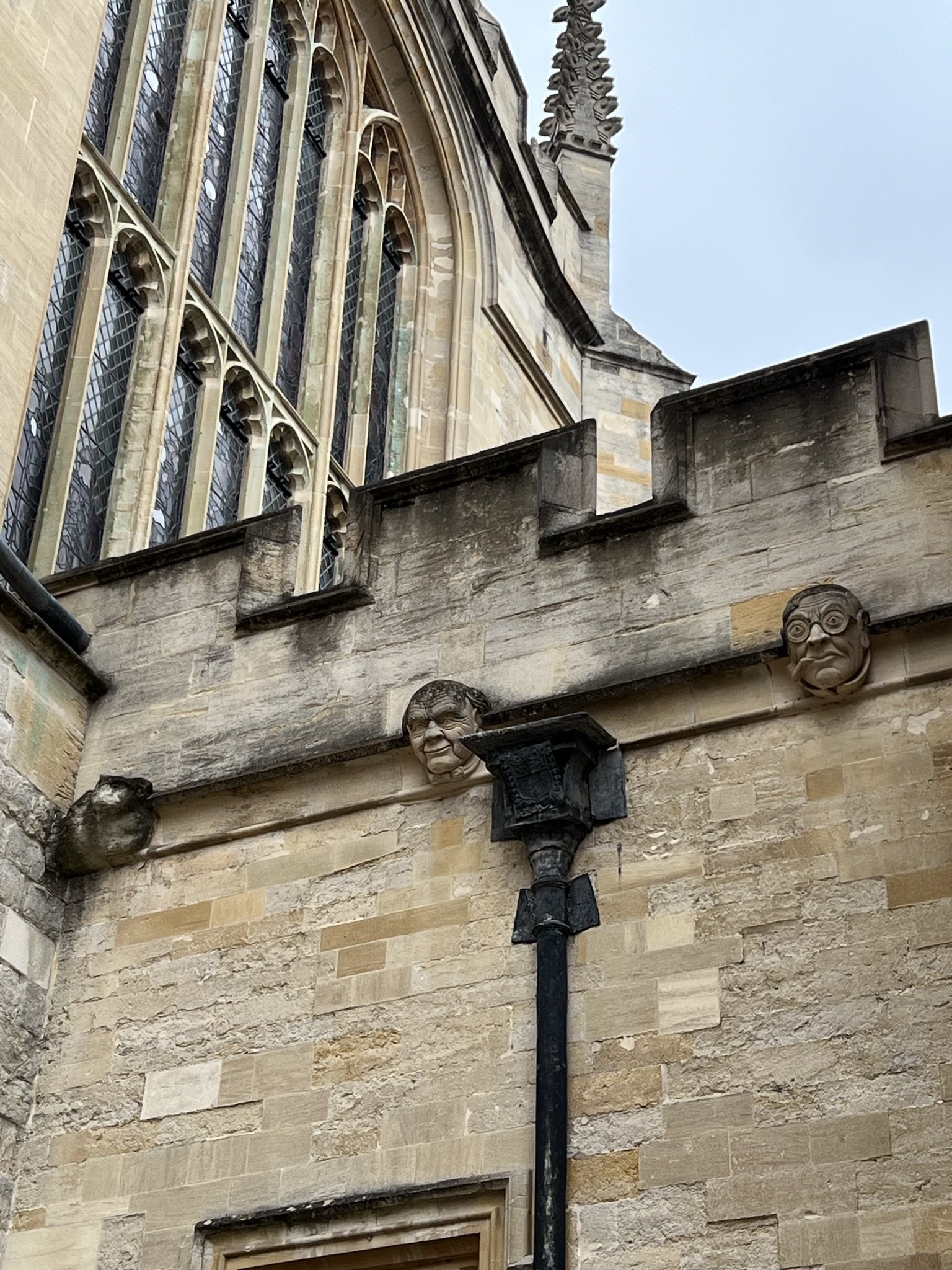
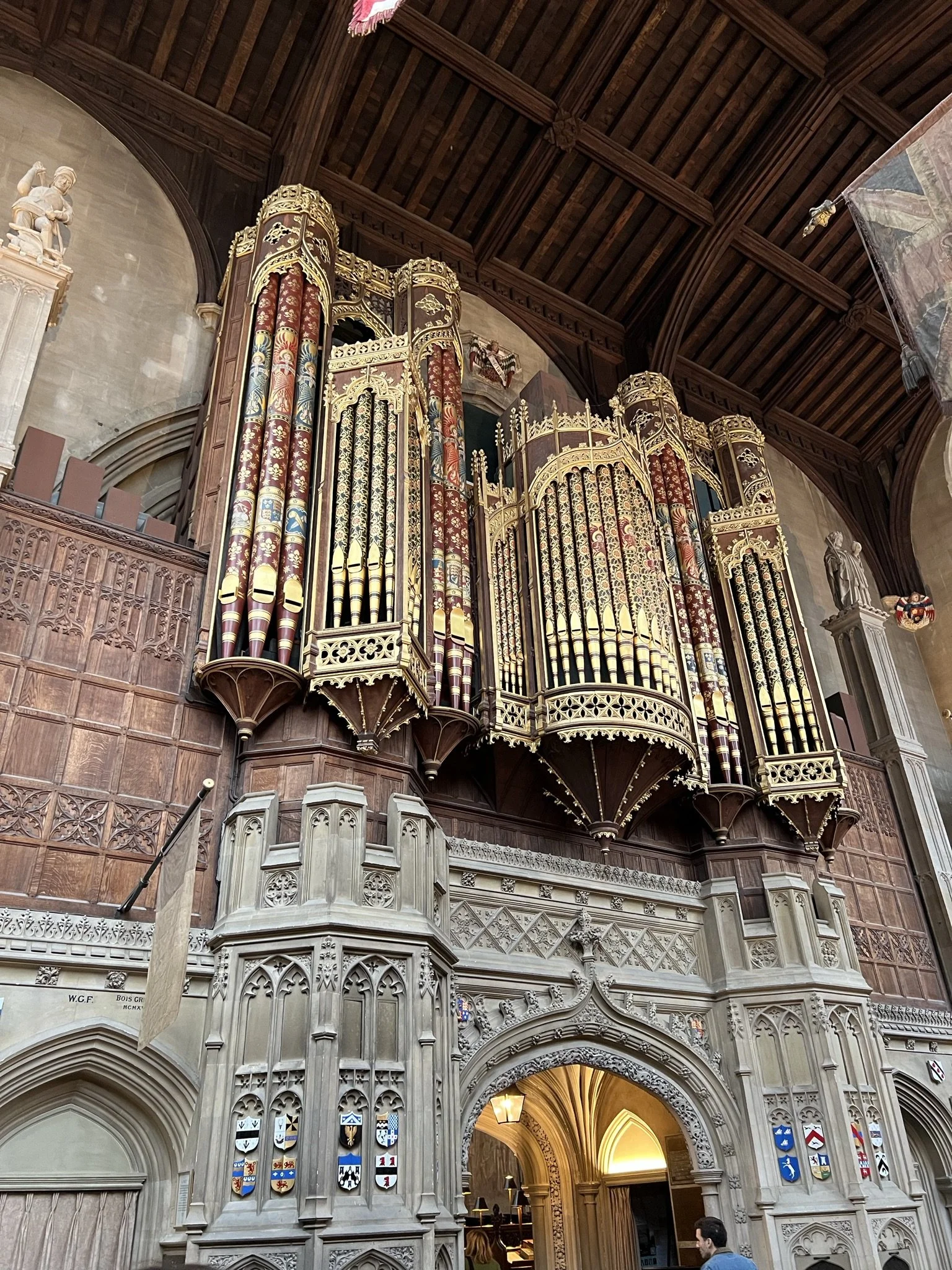
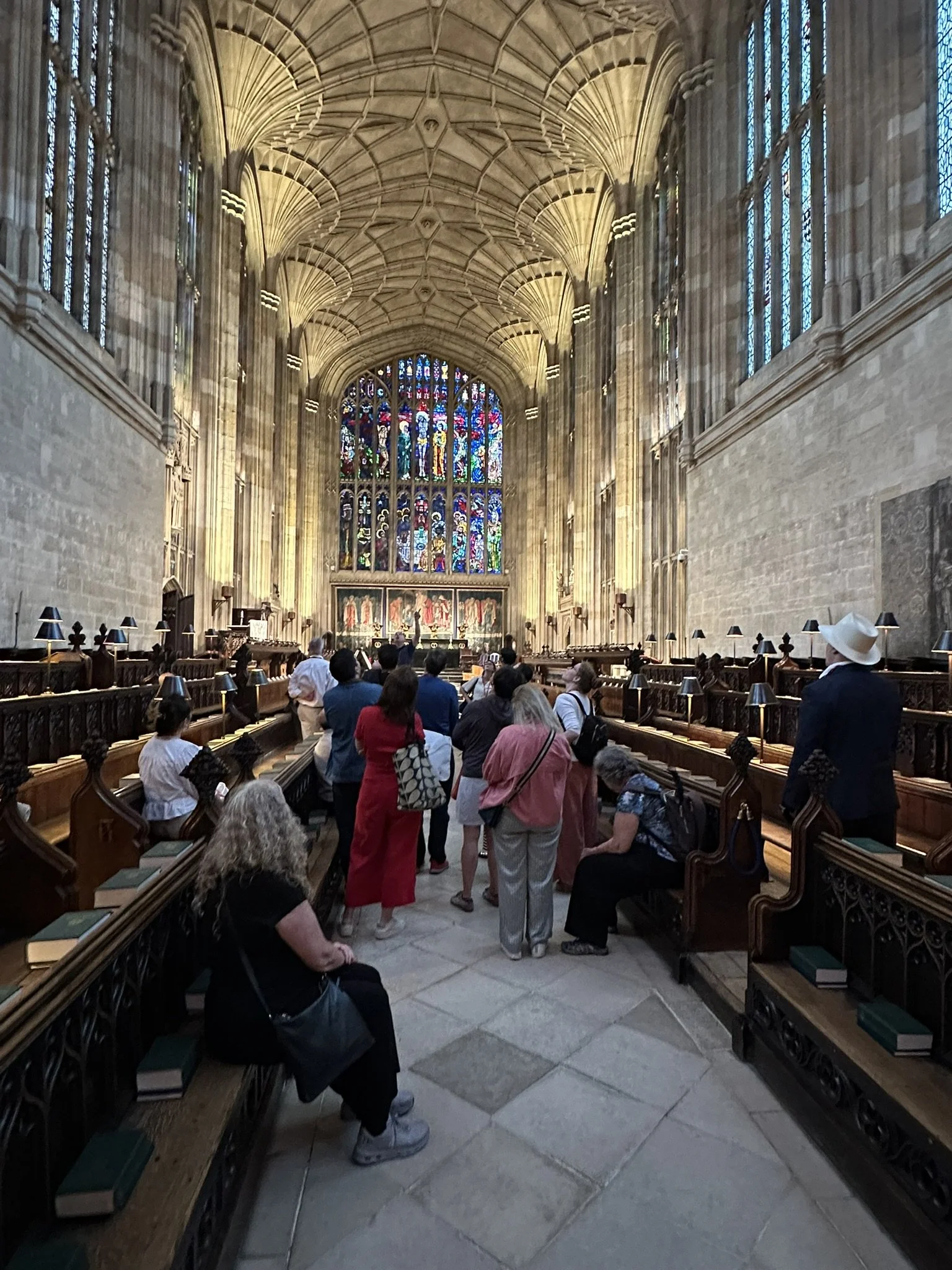
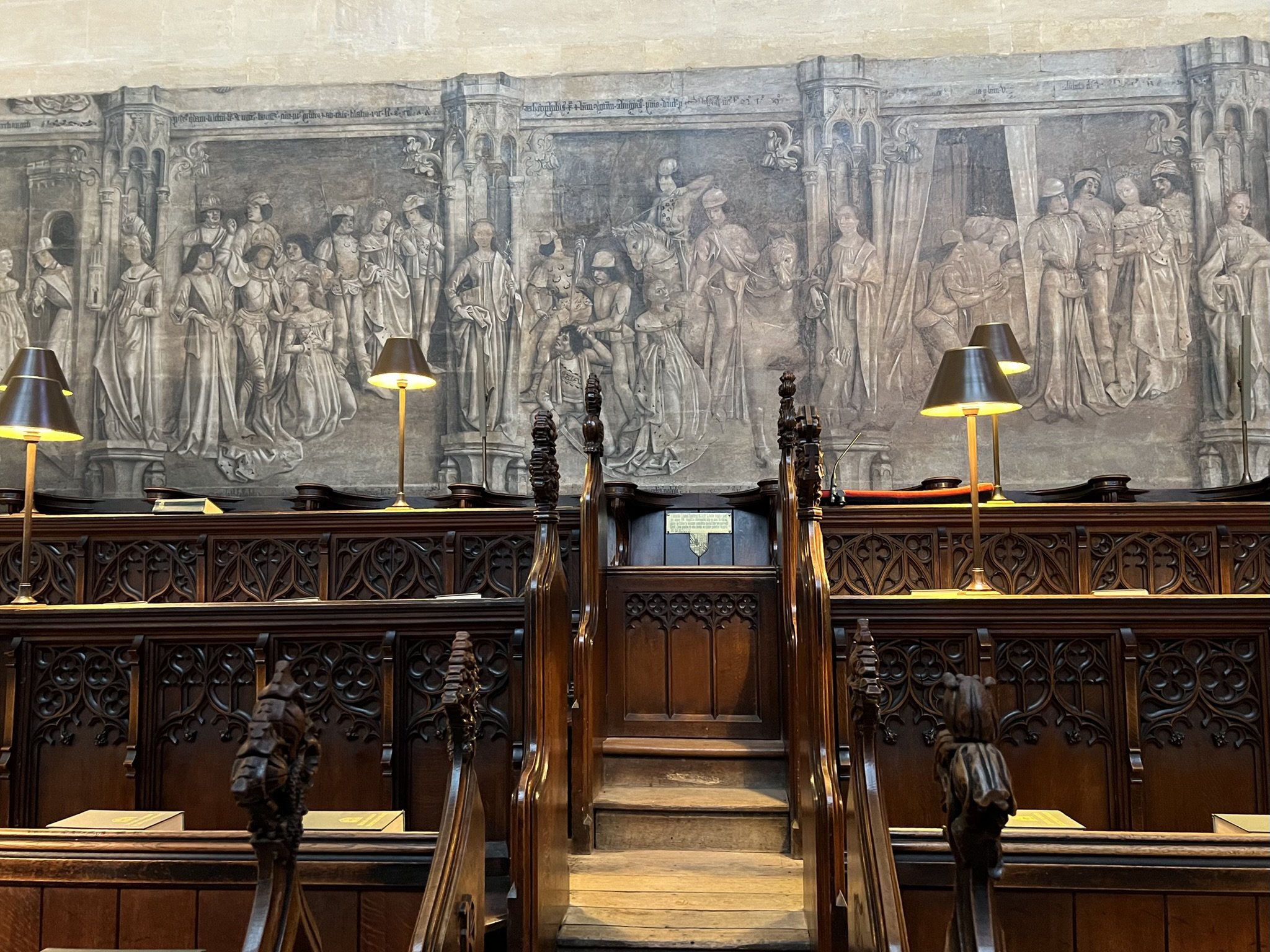
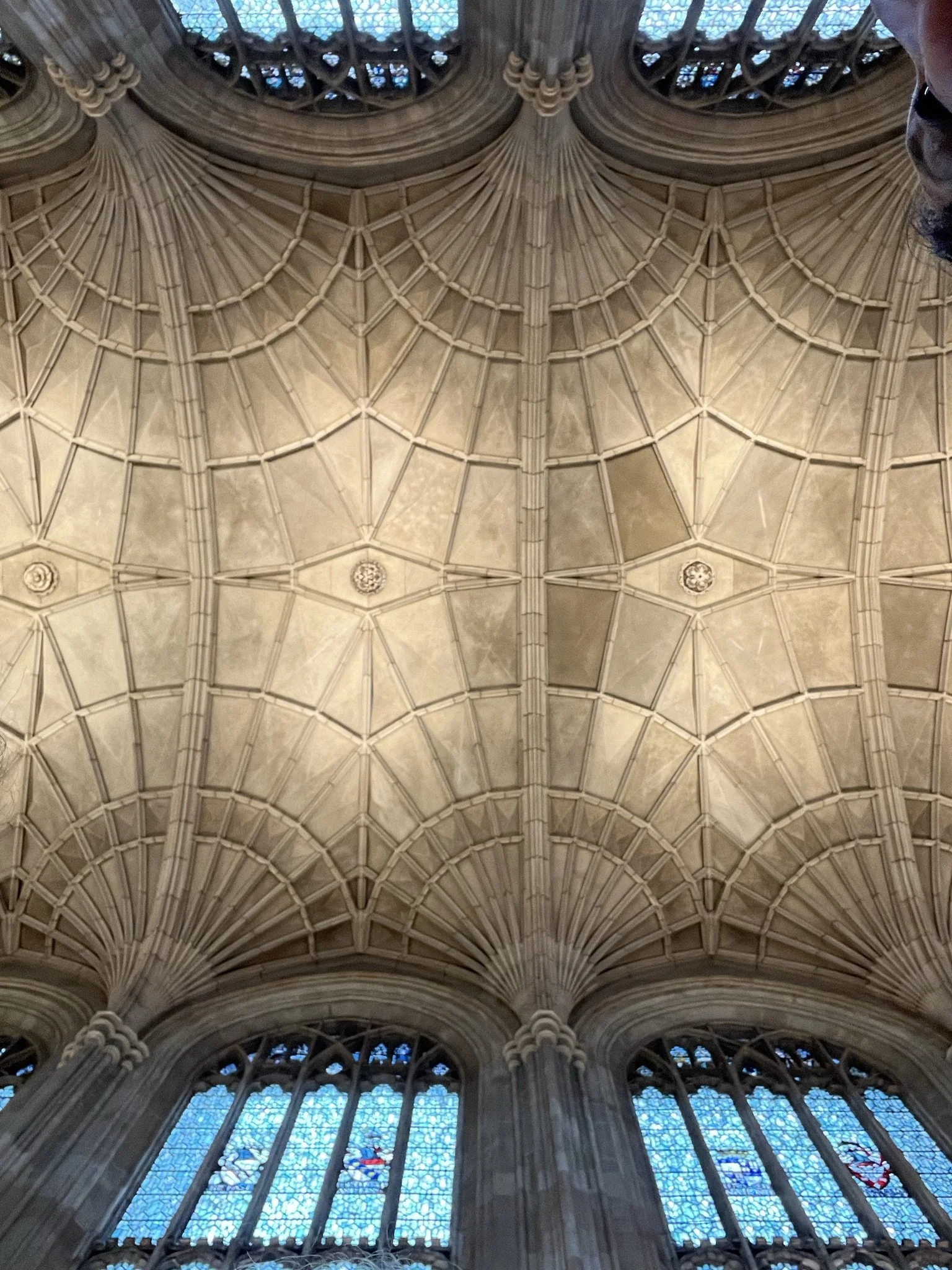
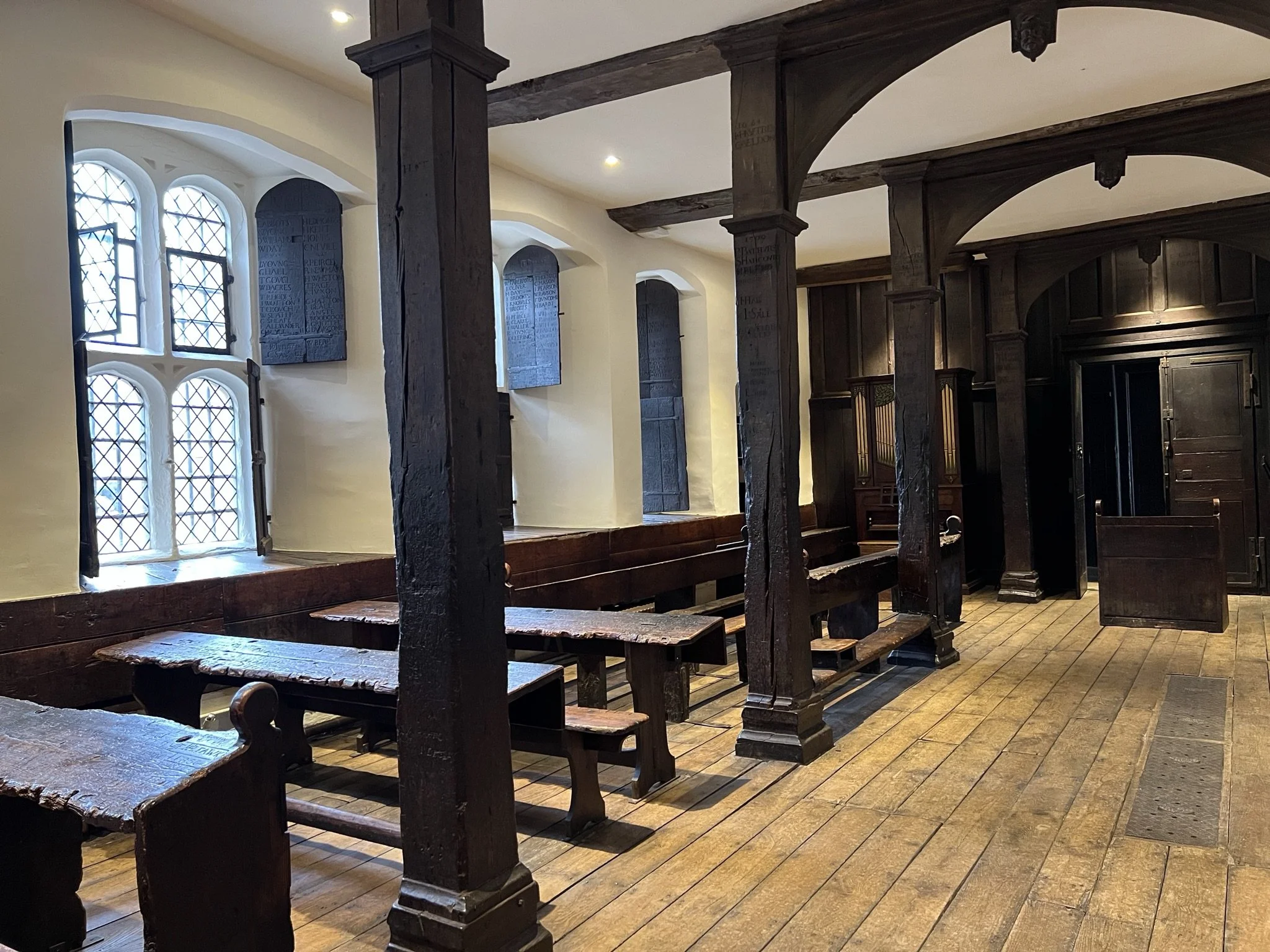
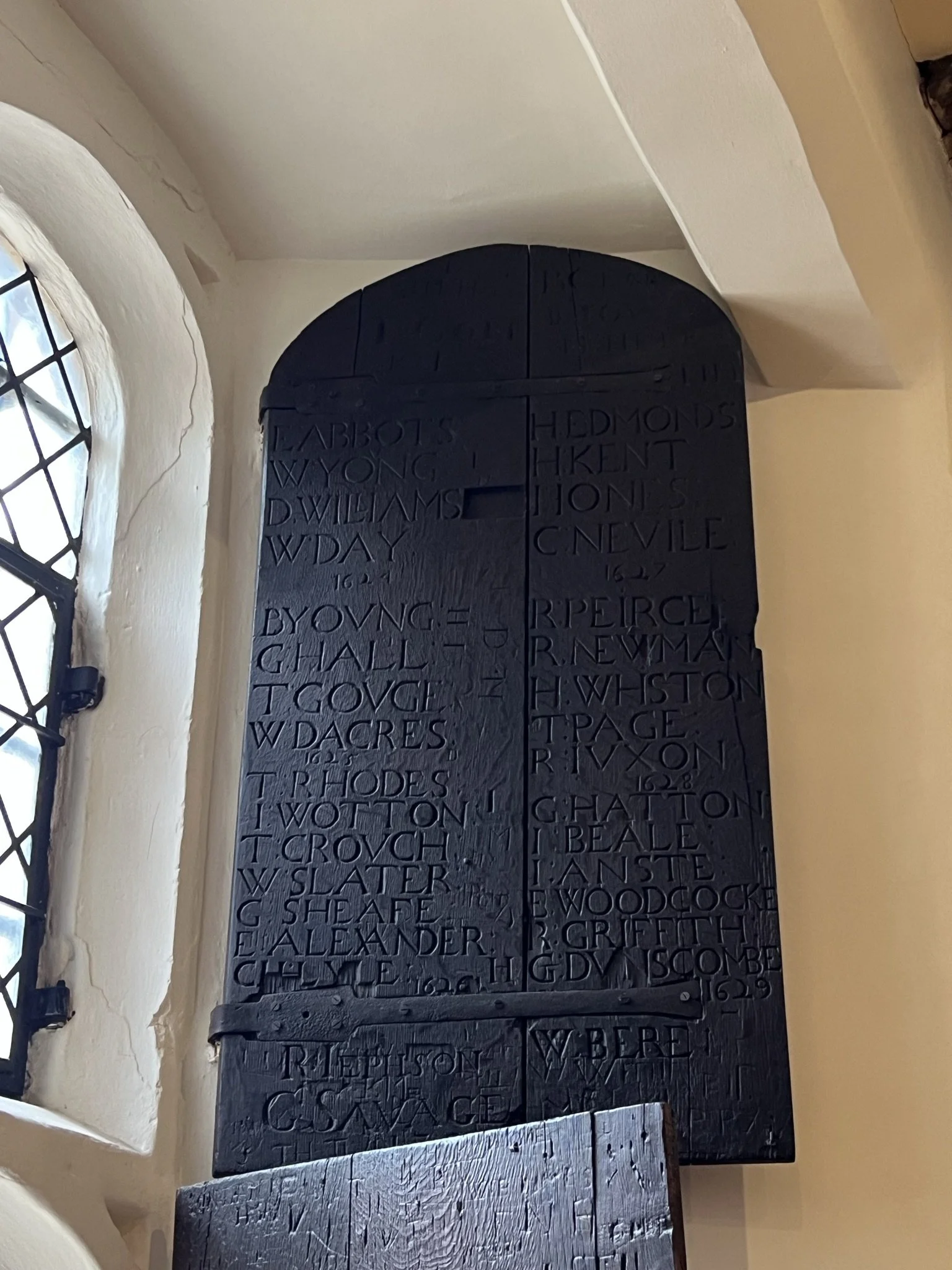
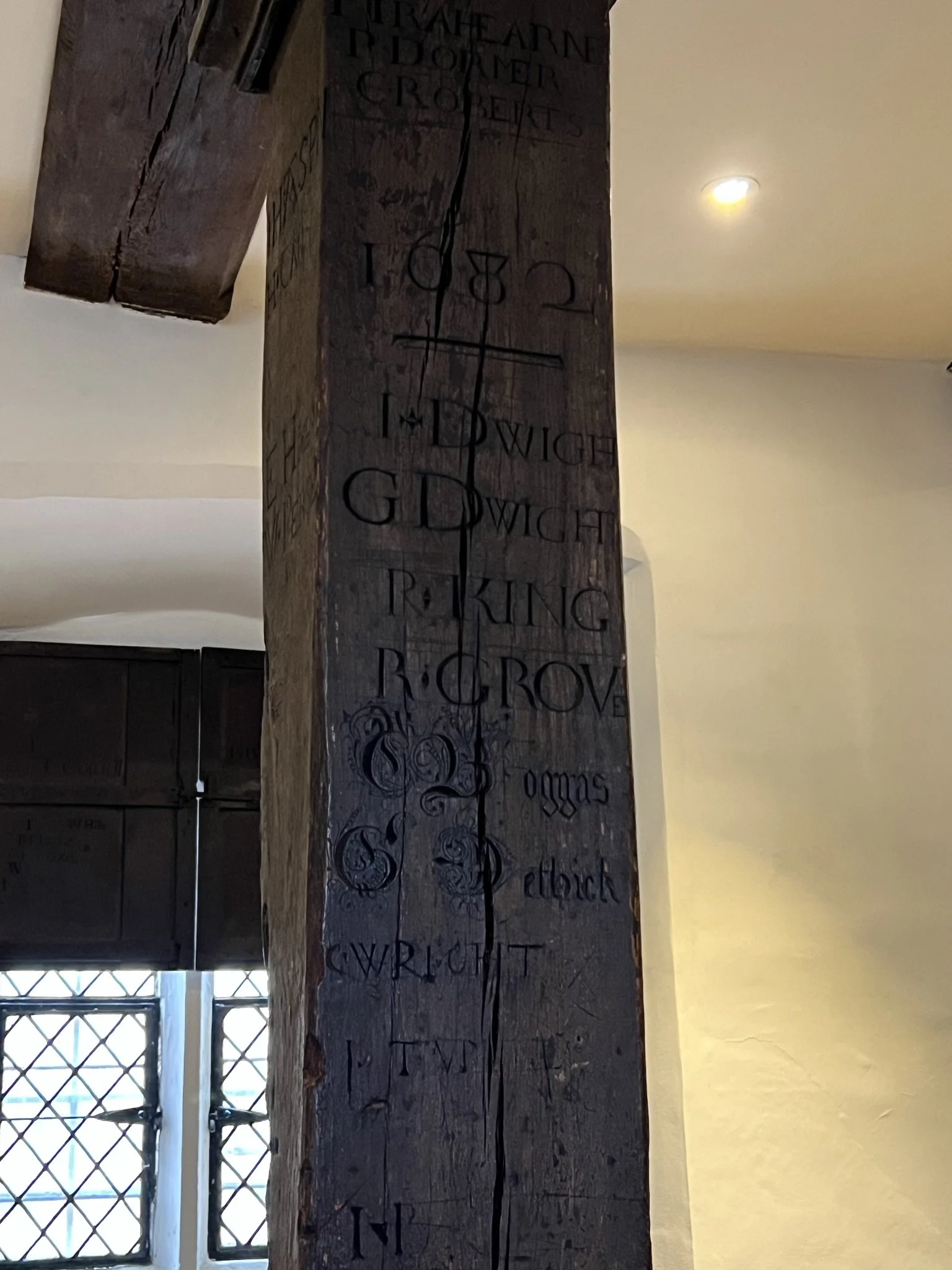
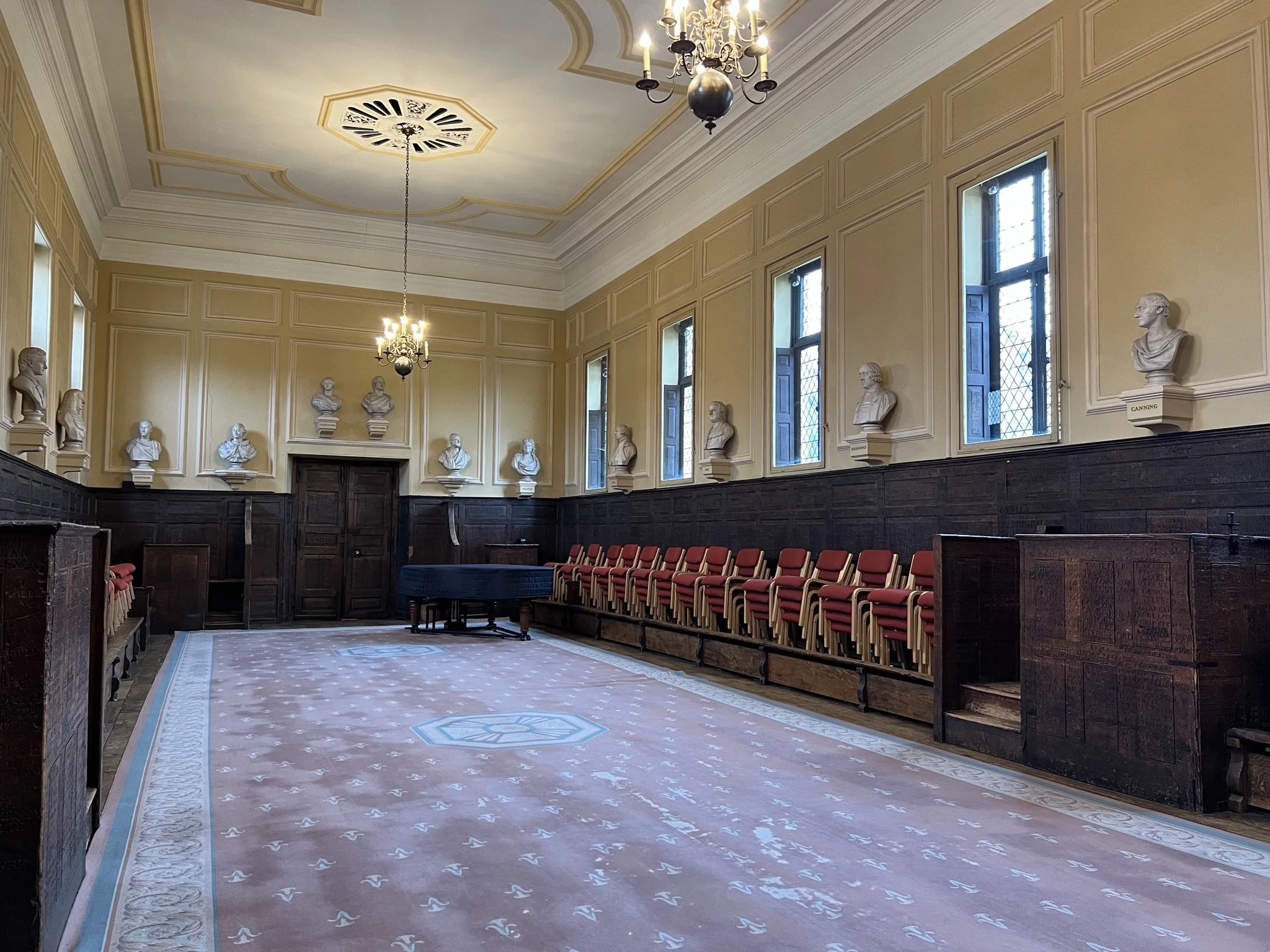
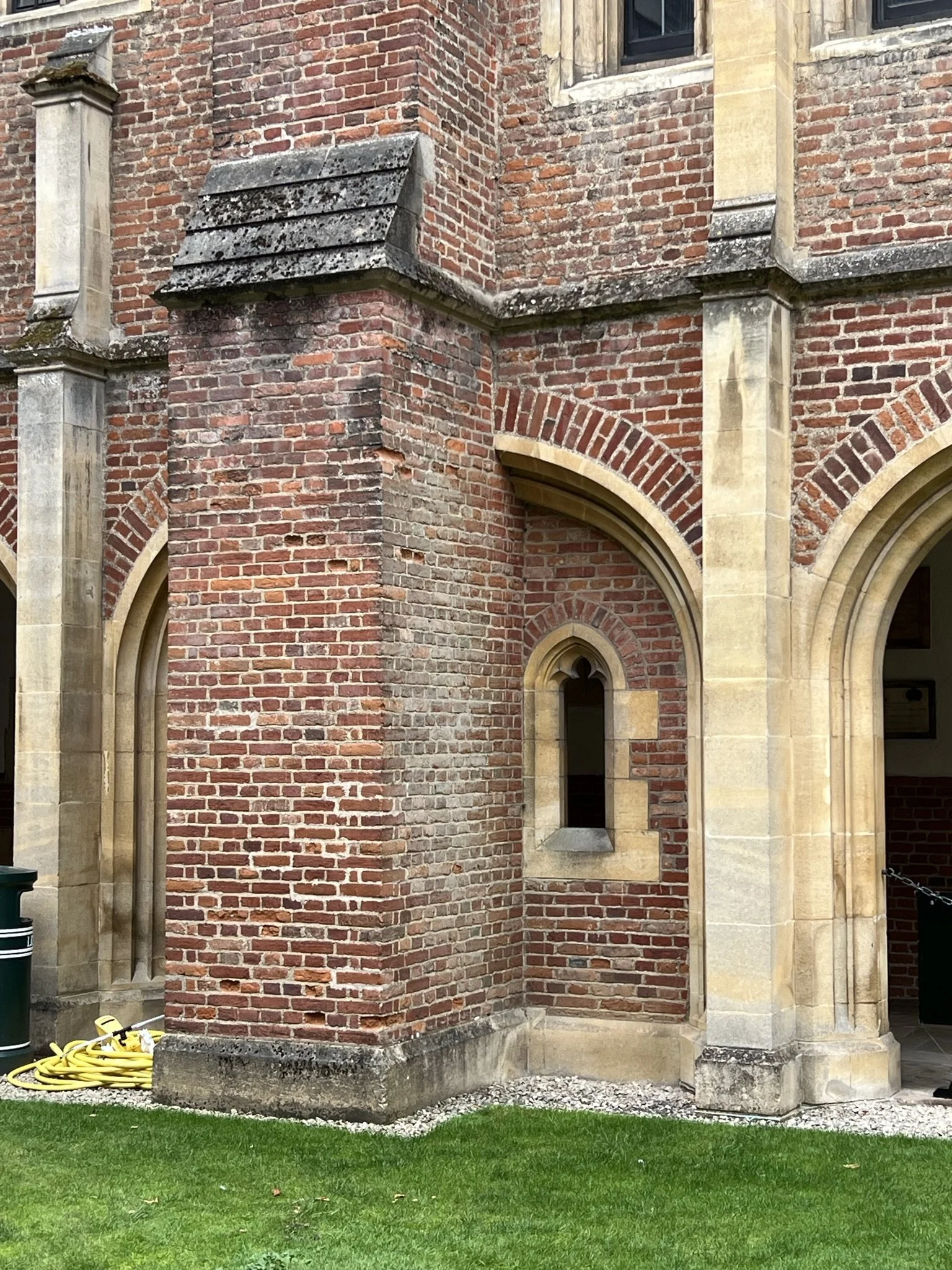
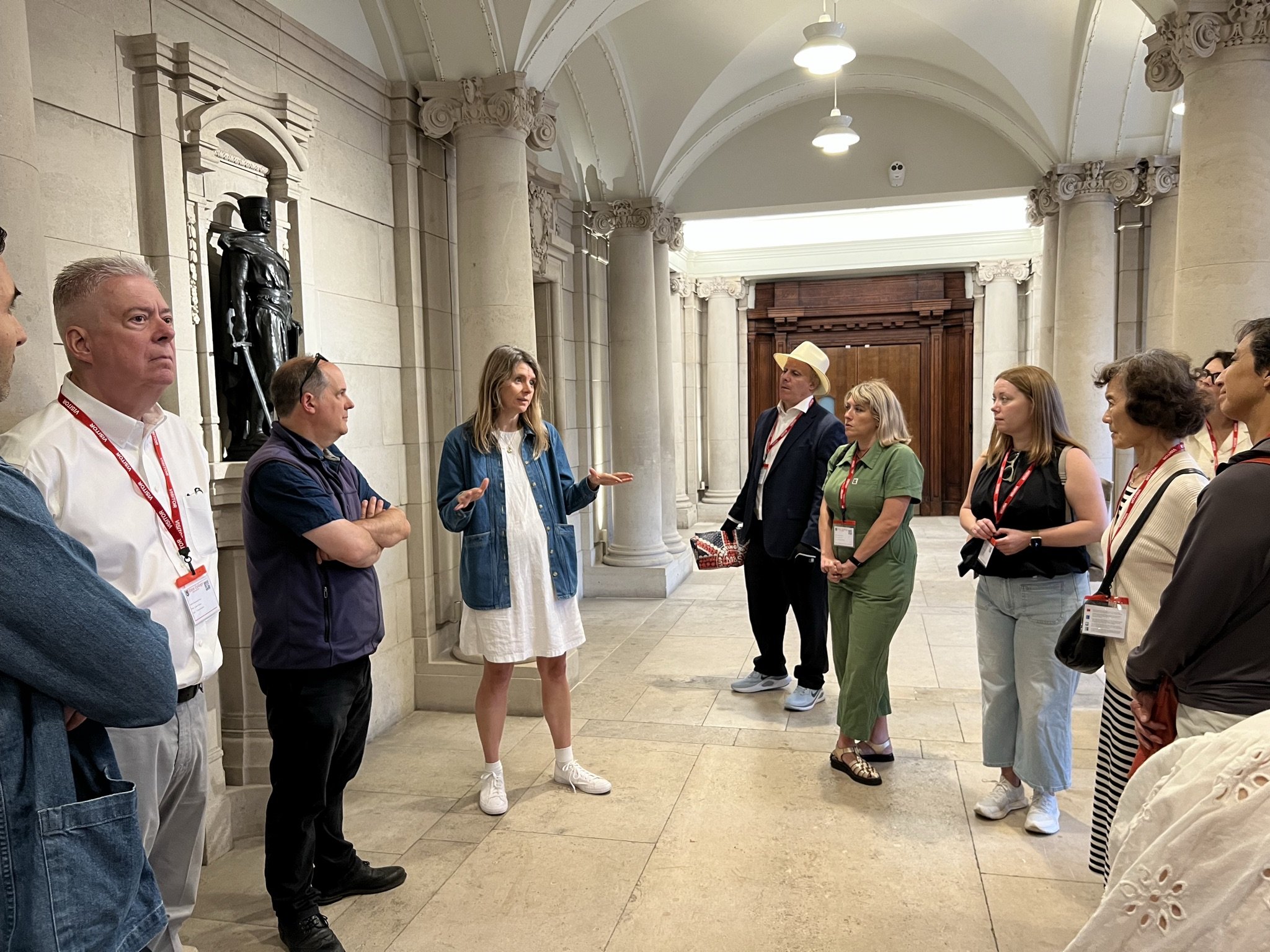
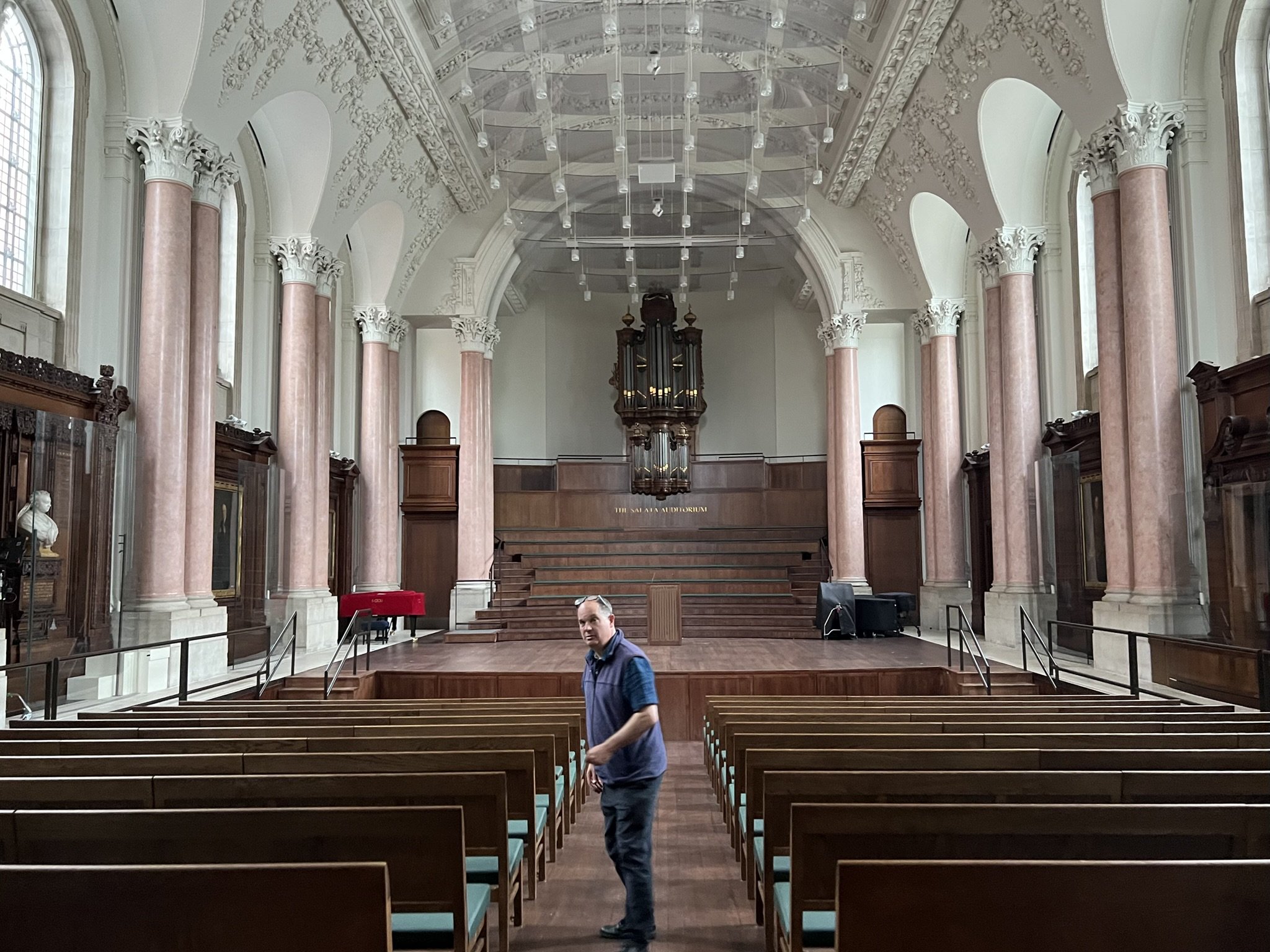
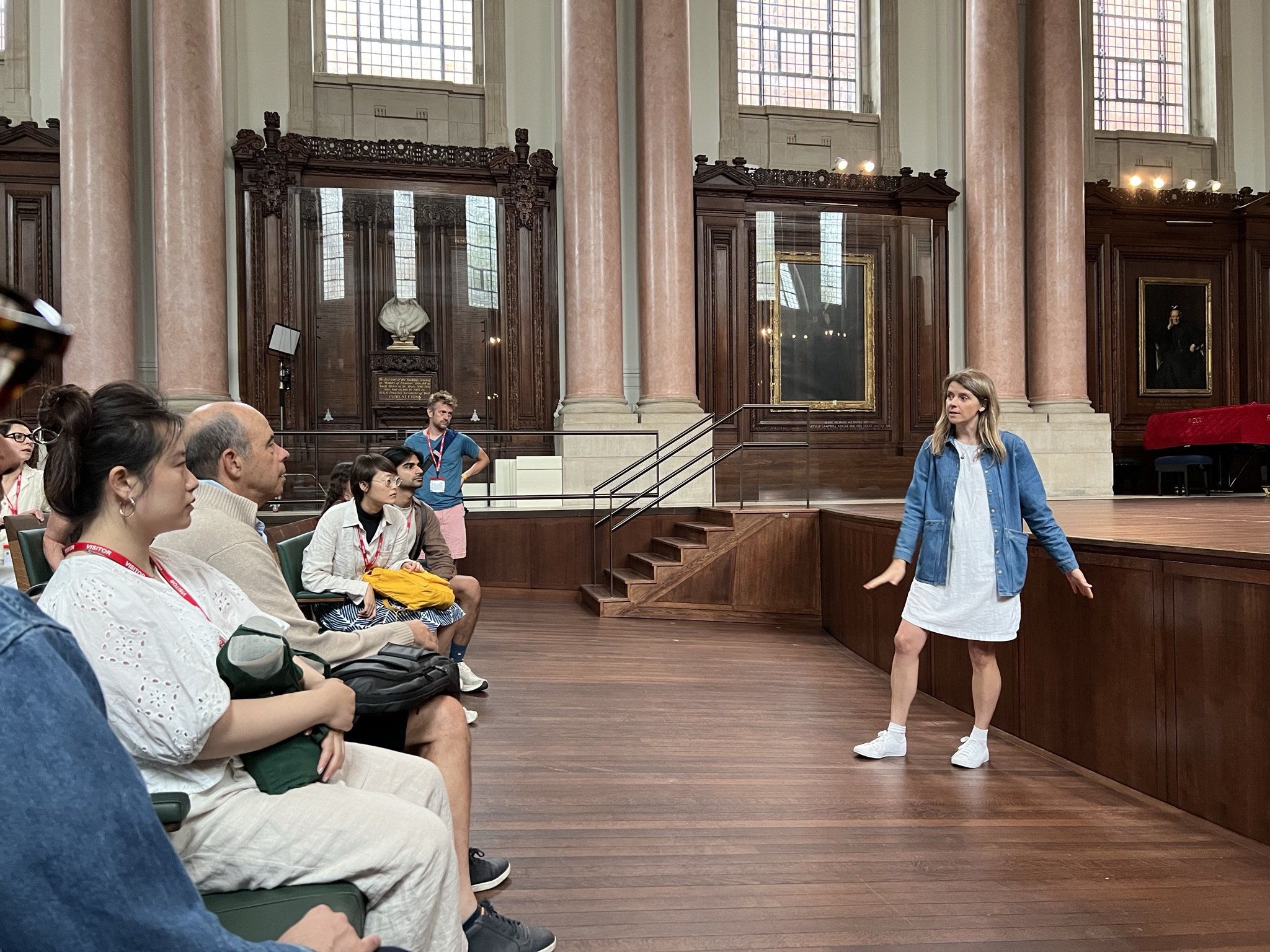
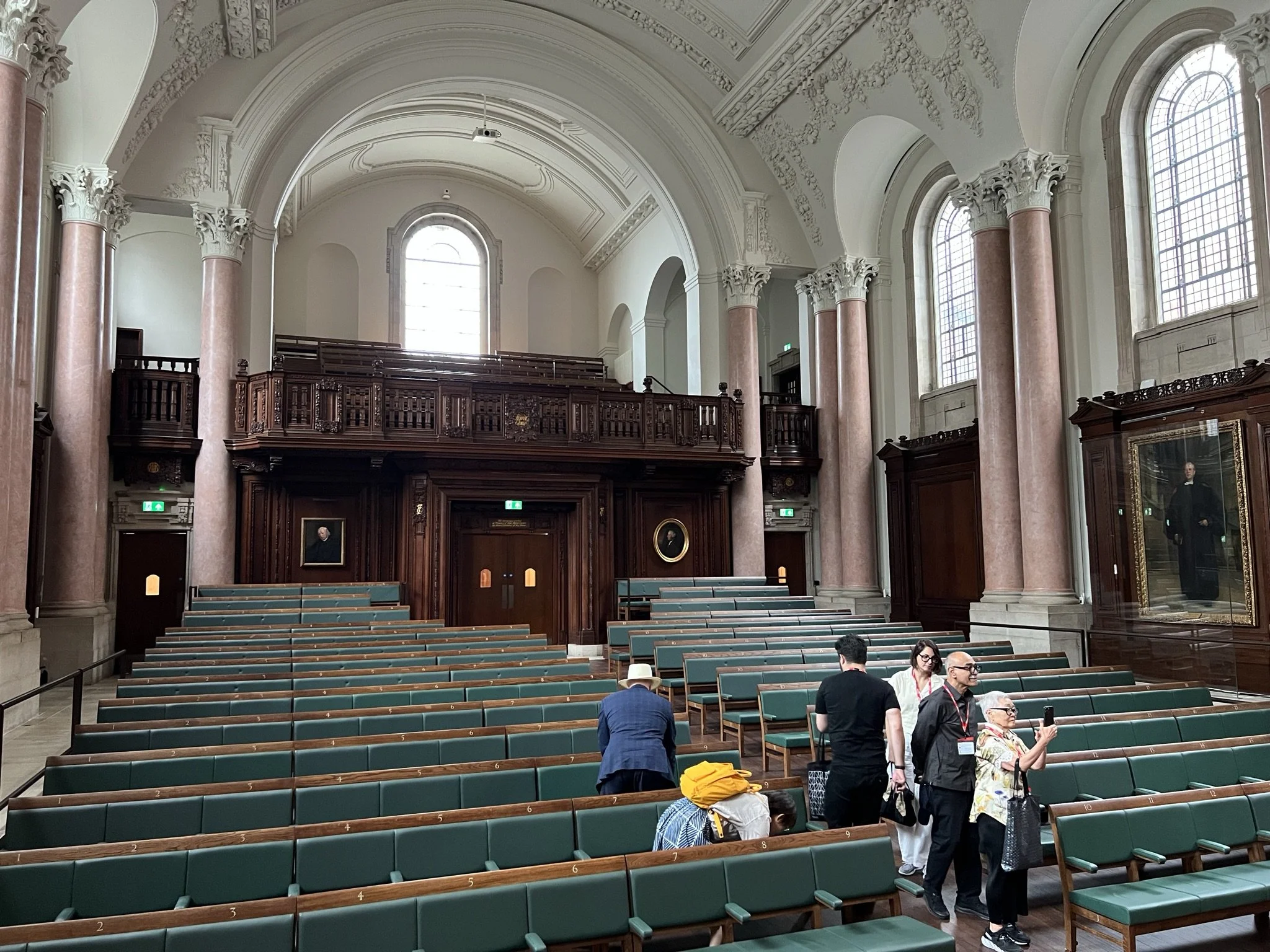
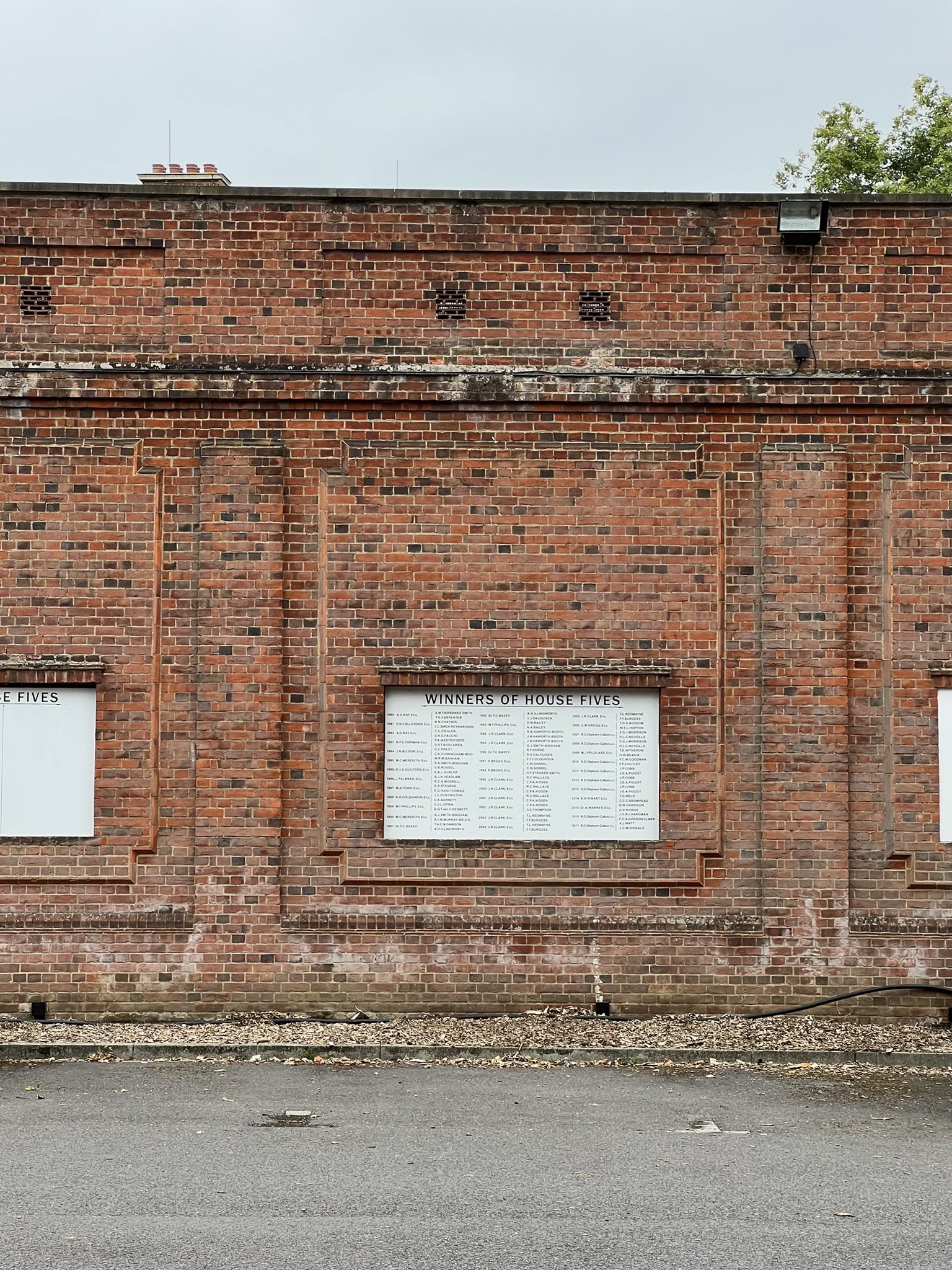
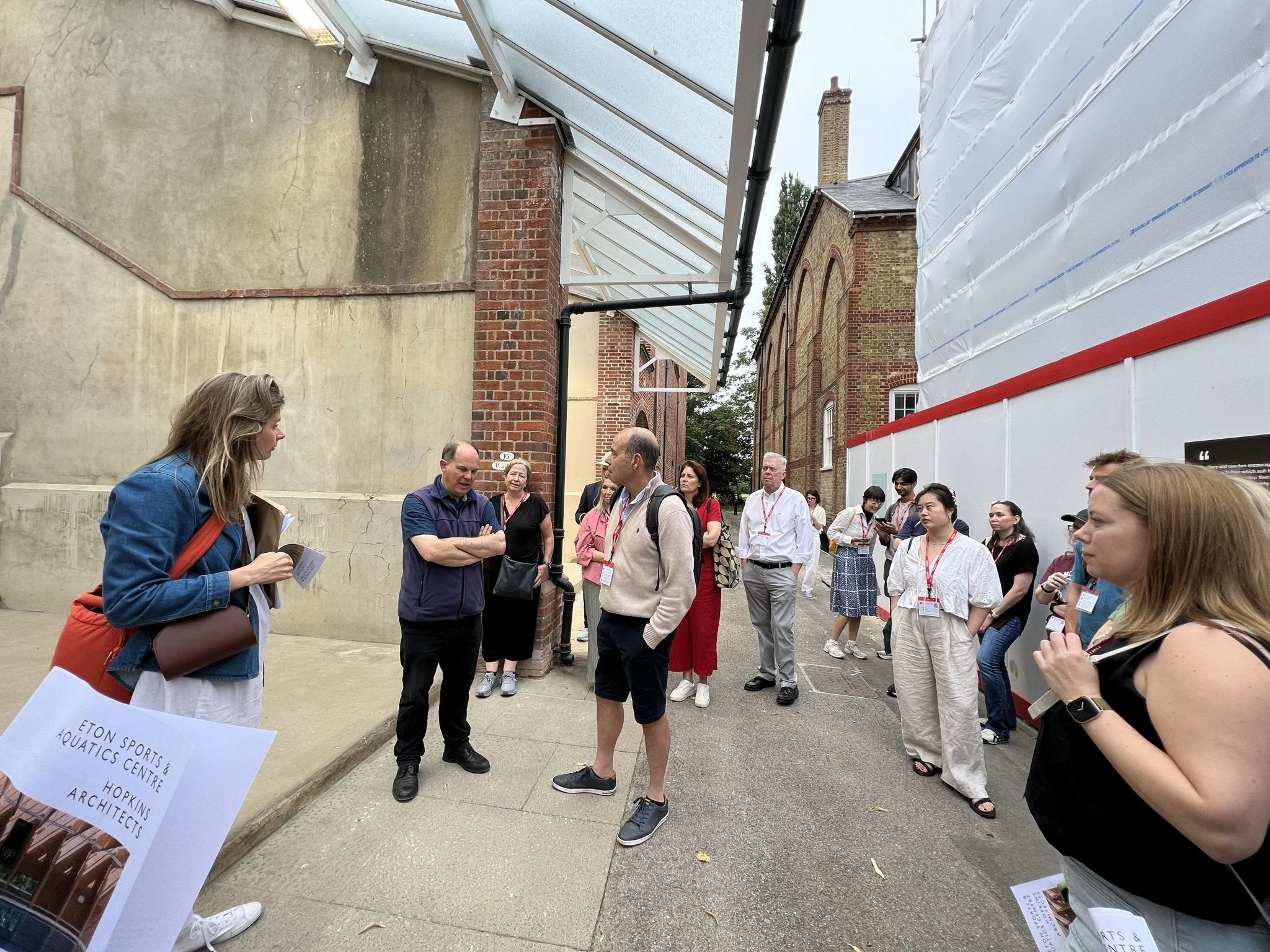
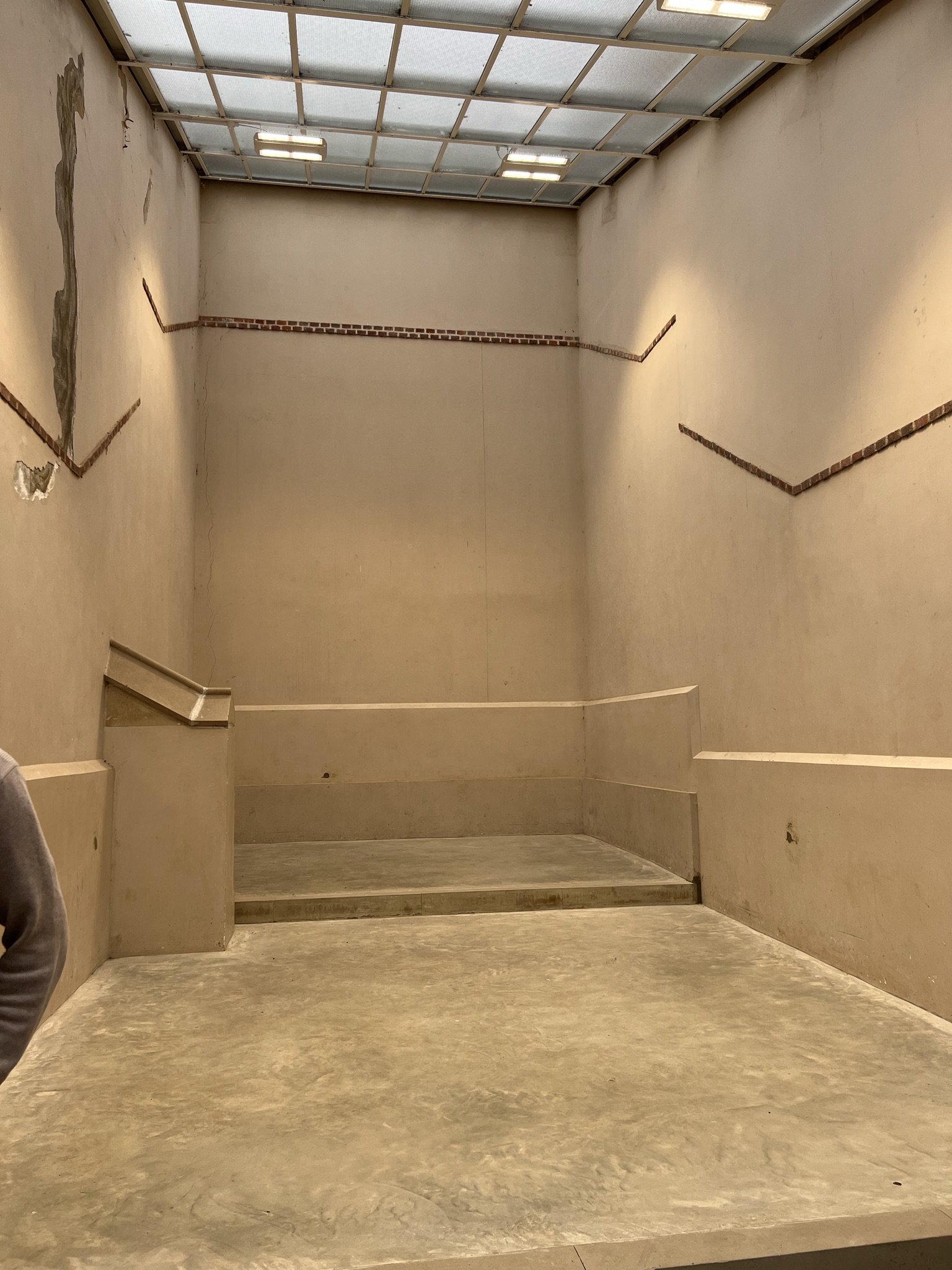
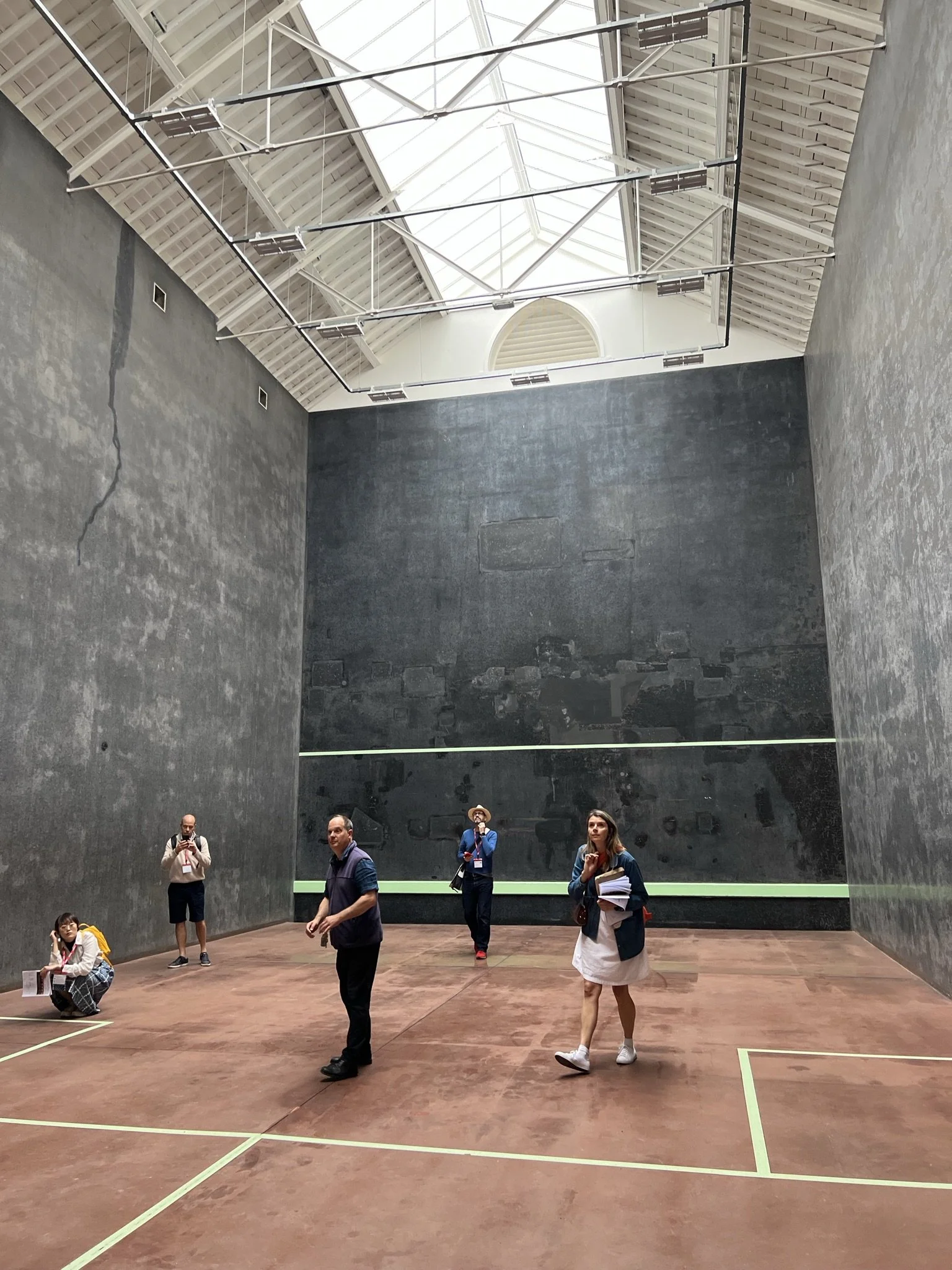
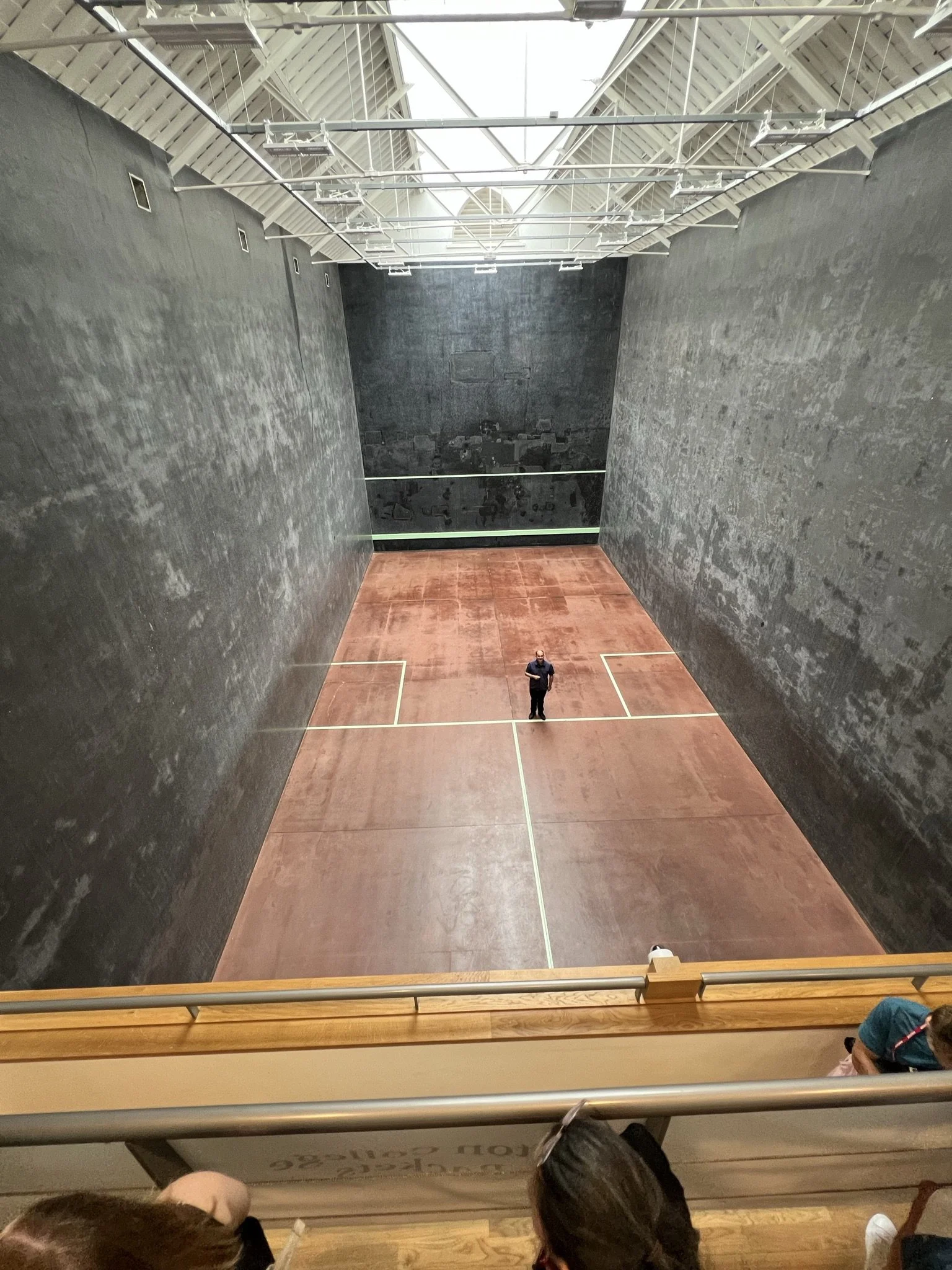
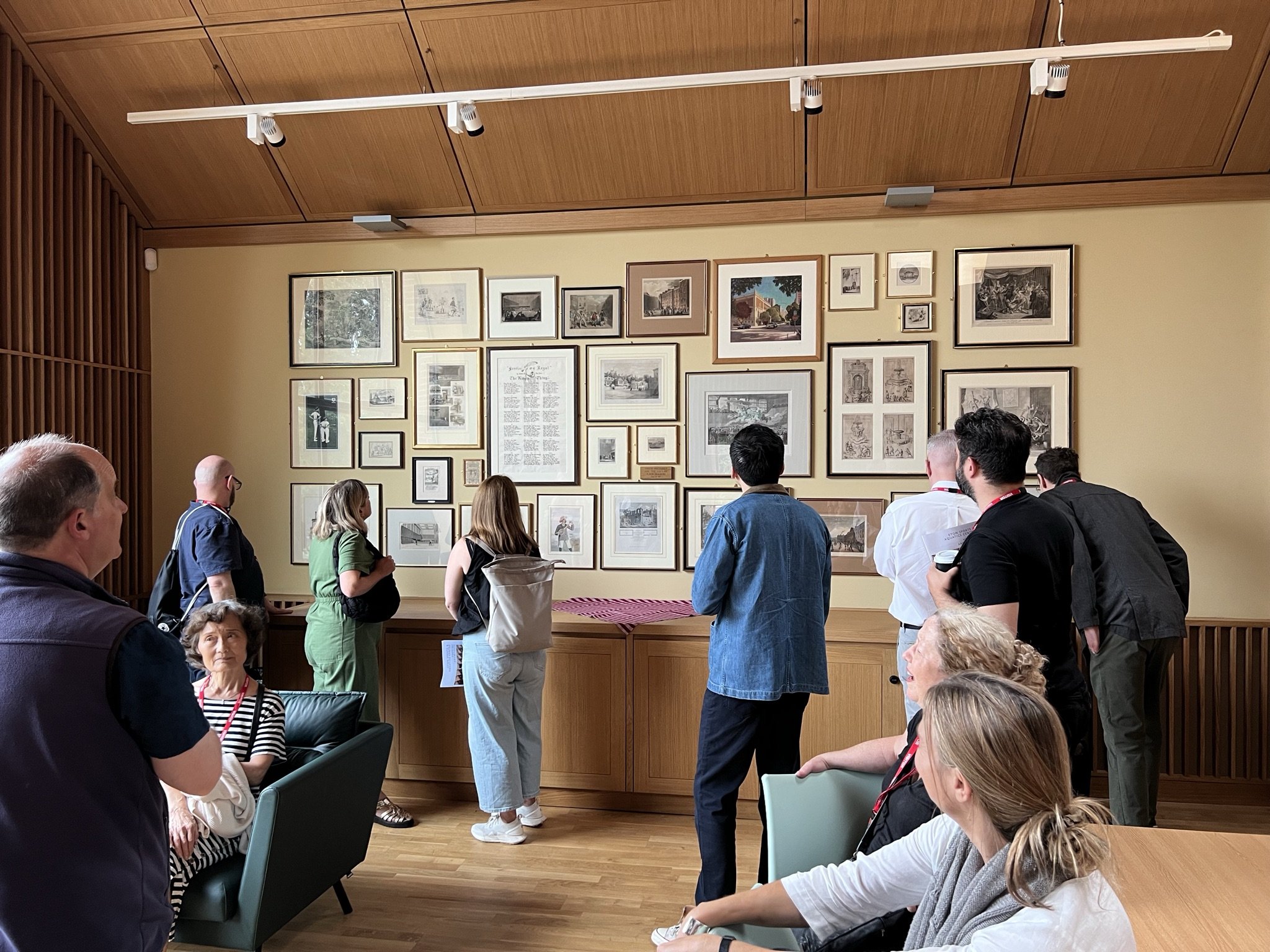
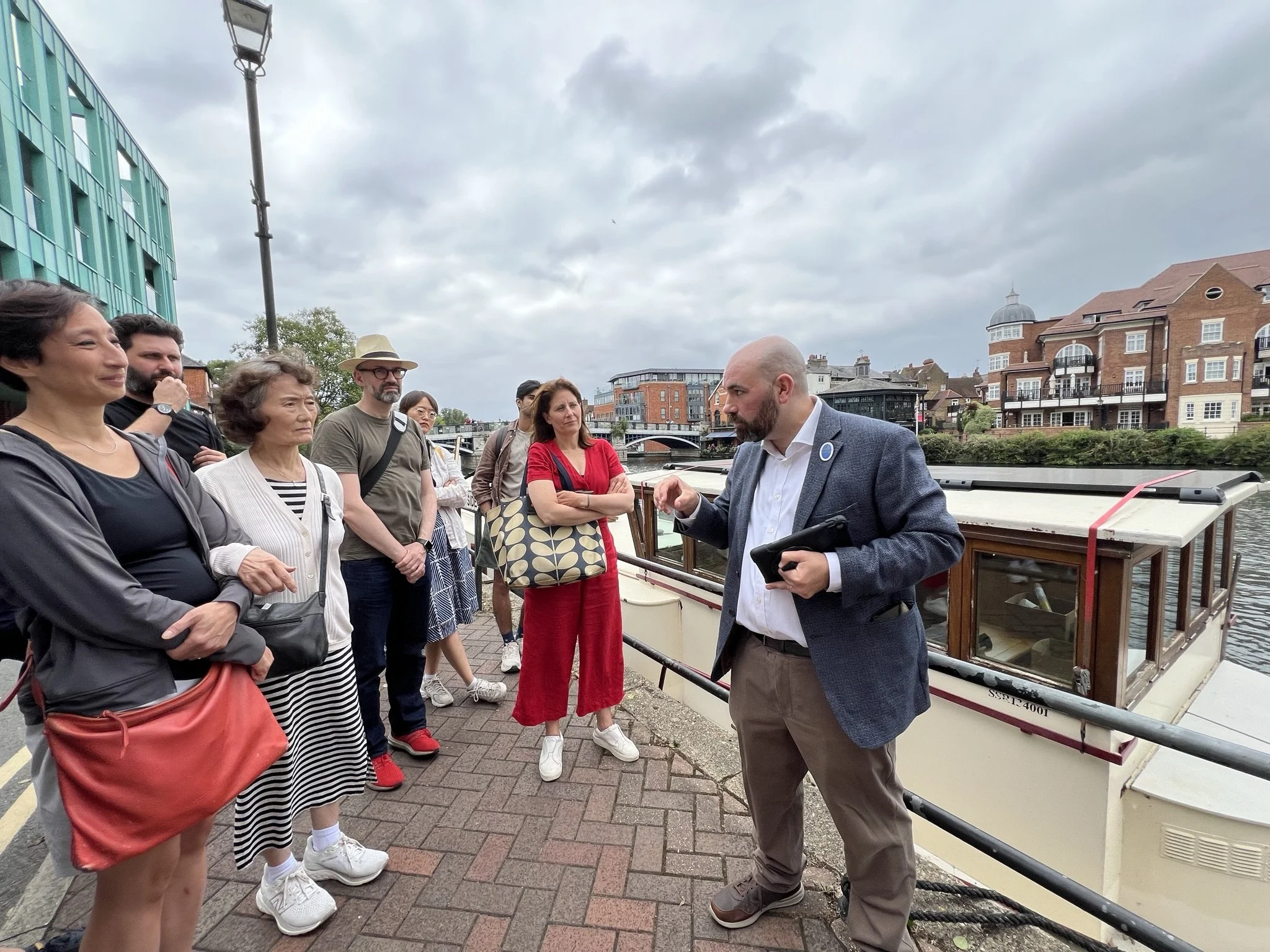
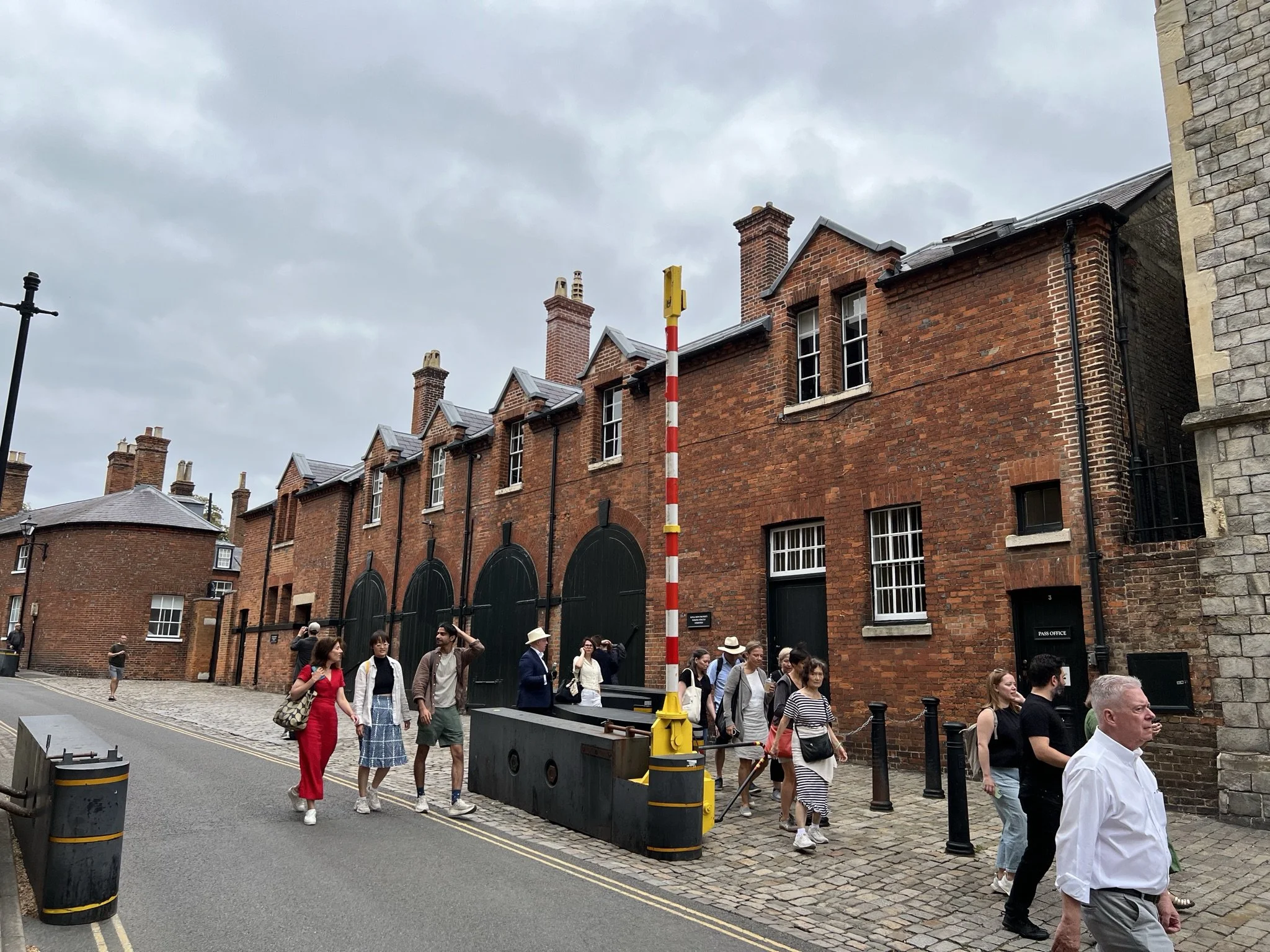
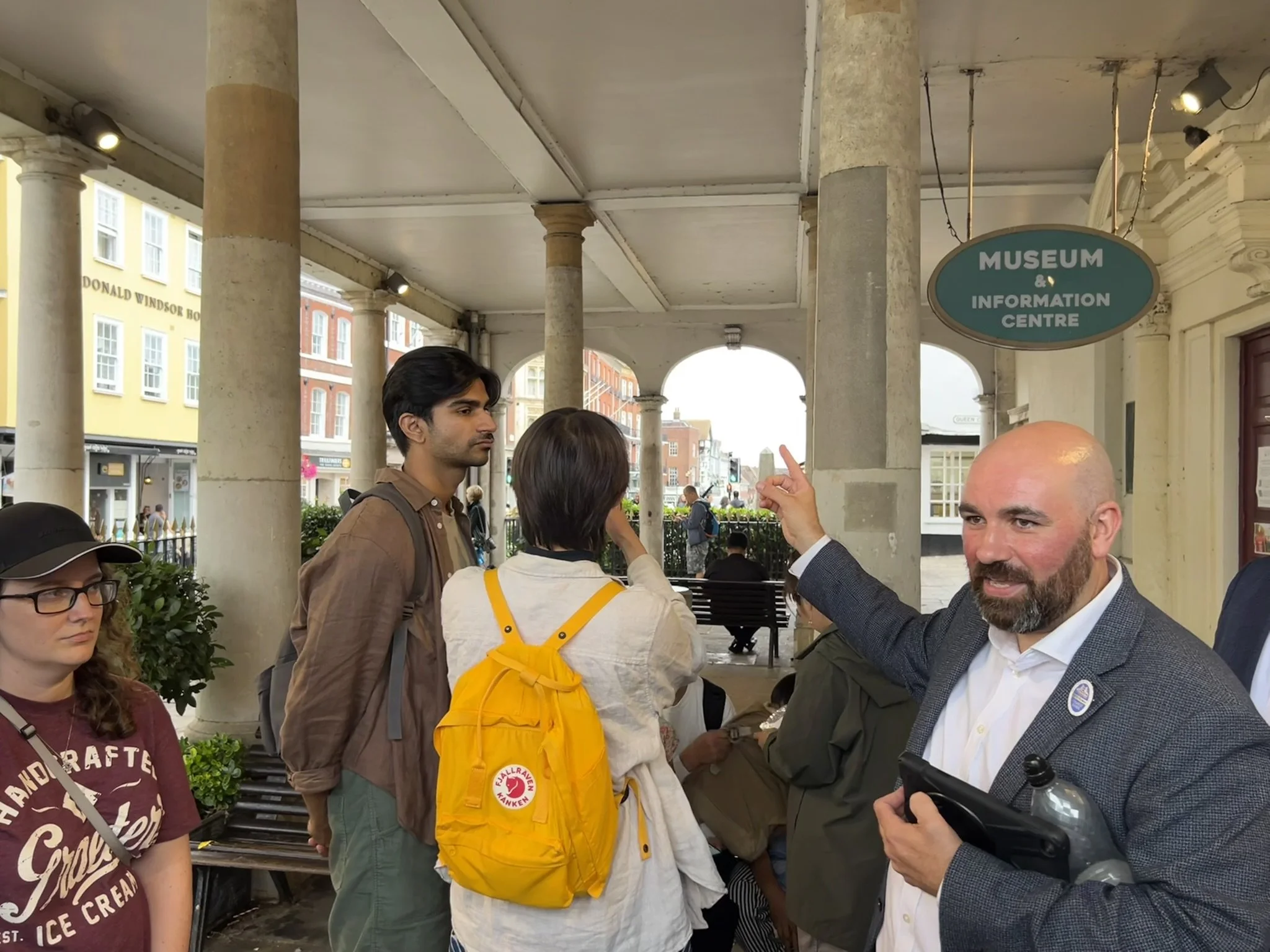
After a relaxing and fortifying riverside lunch at the Boatman, the group was met by our tour guide, Rhys Thomas, a Blue Badge Guide, and we set out for a two-hour walk around Windsor.
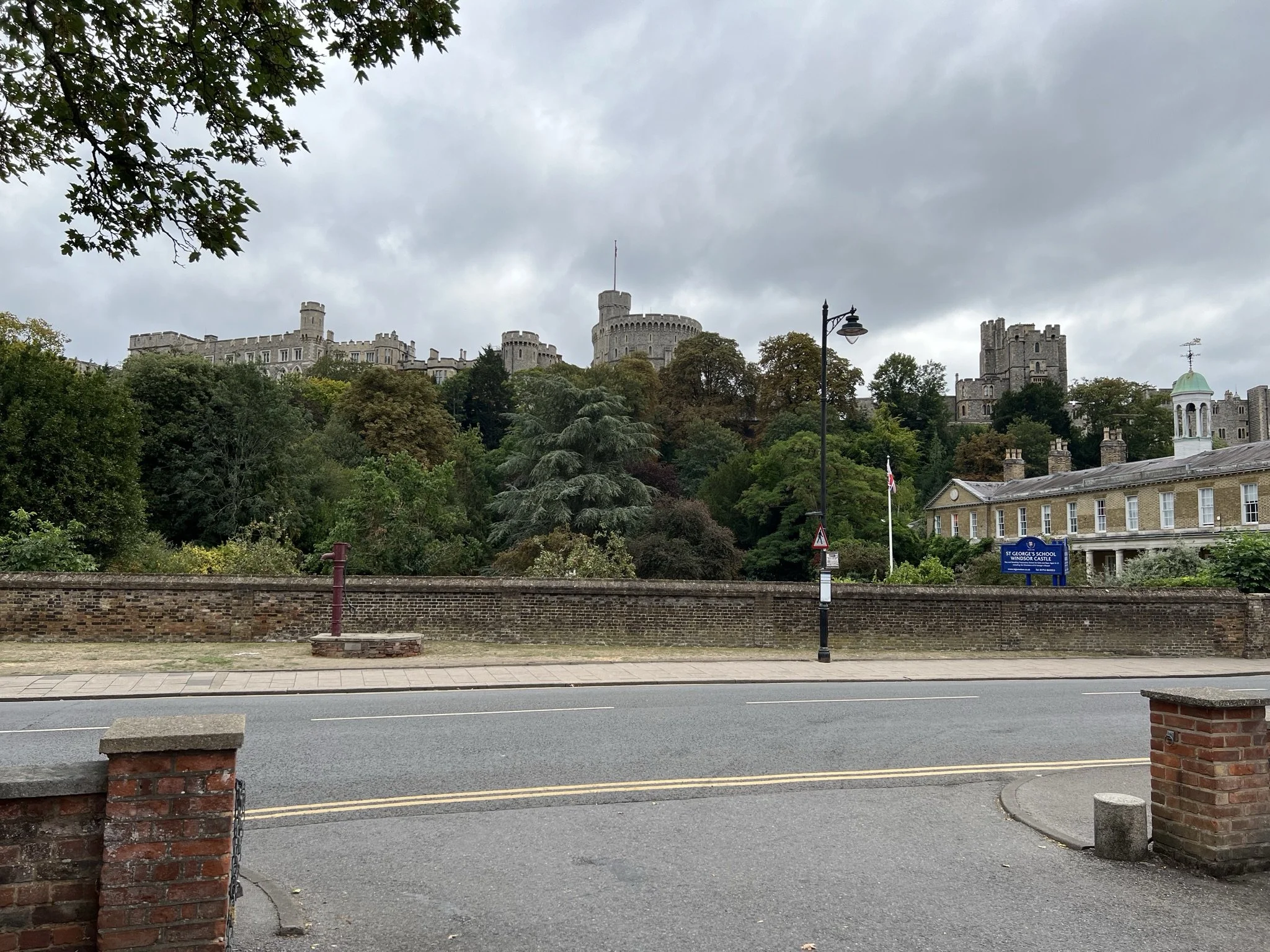
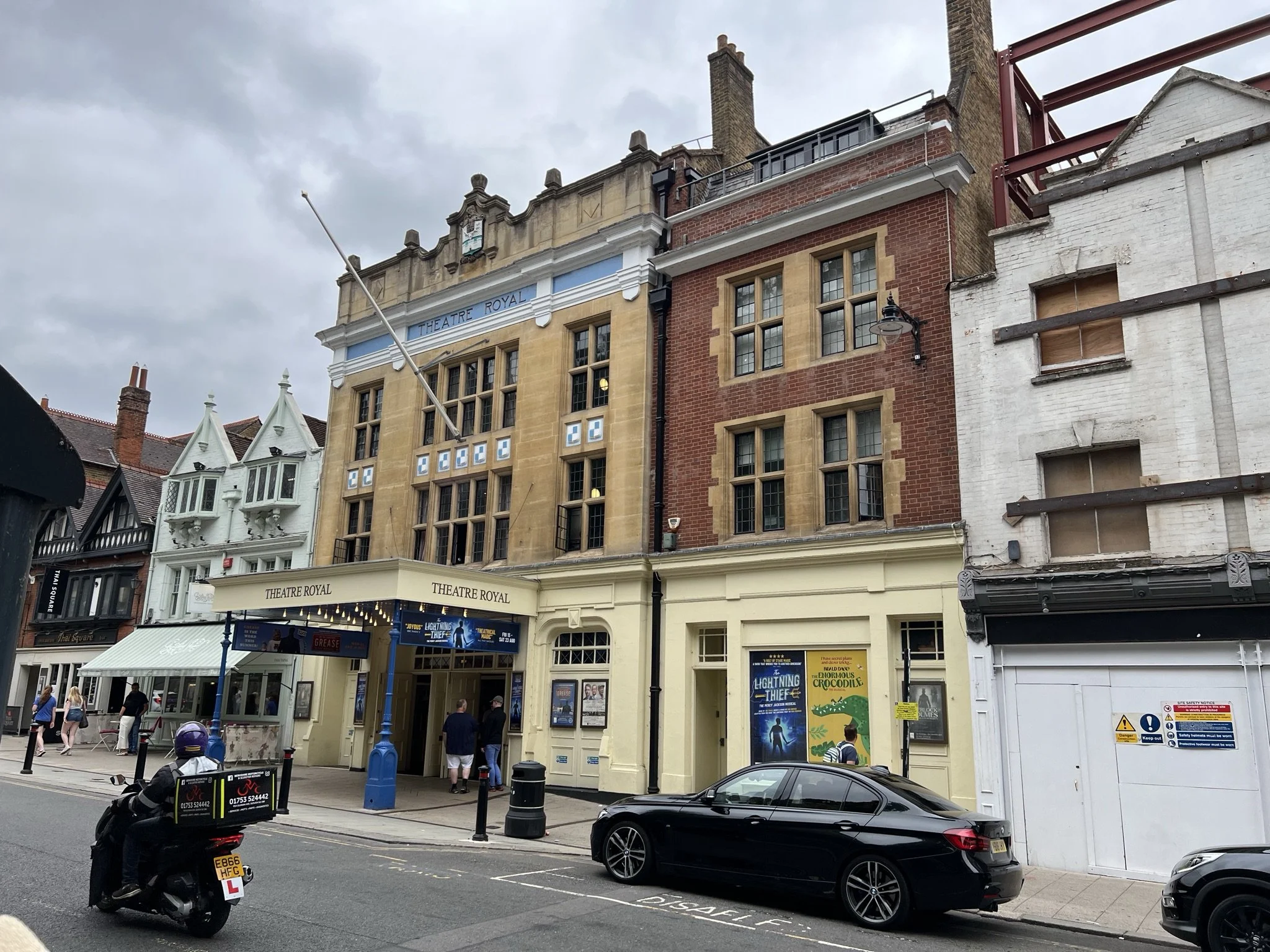
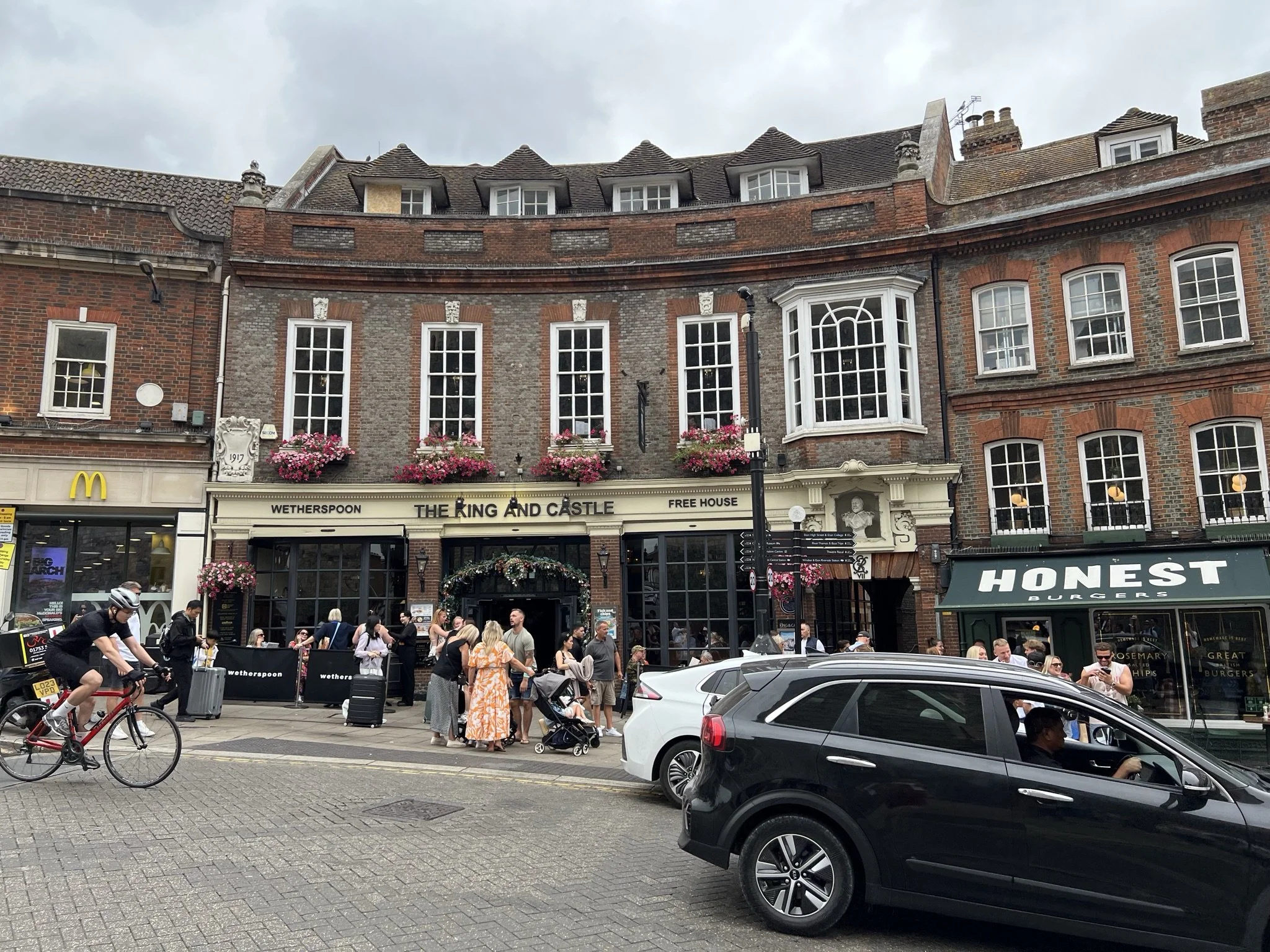
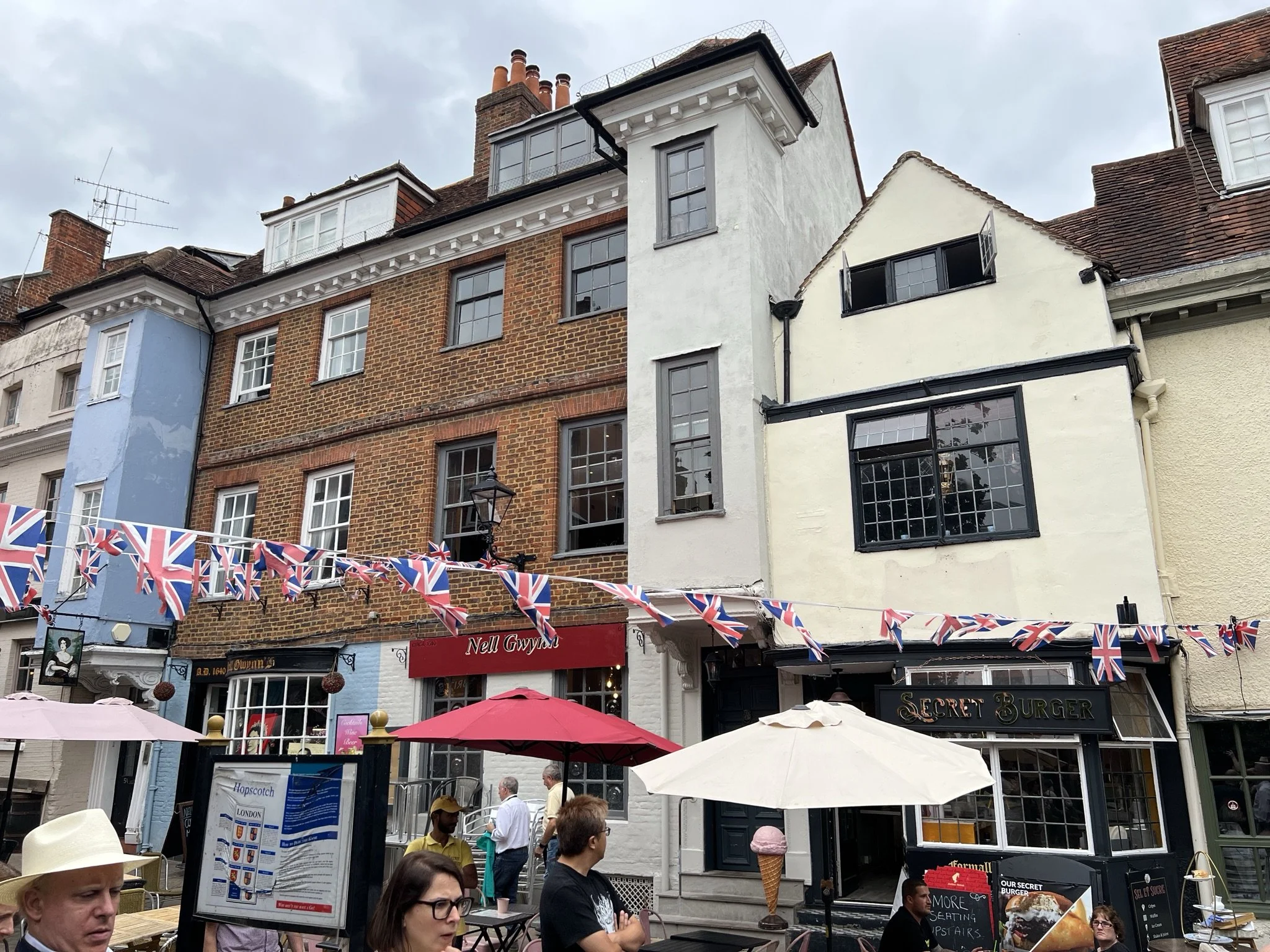
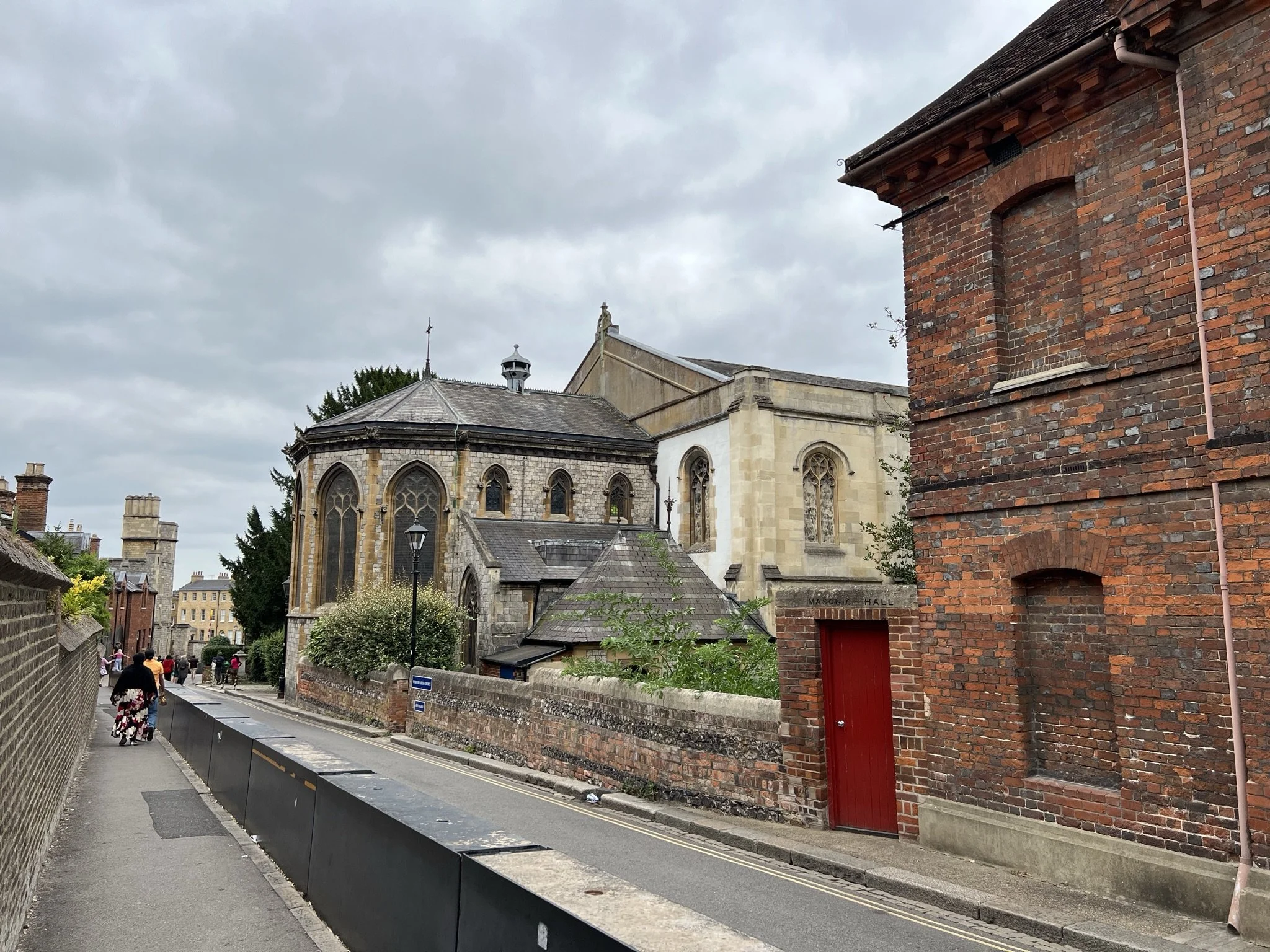
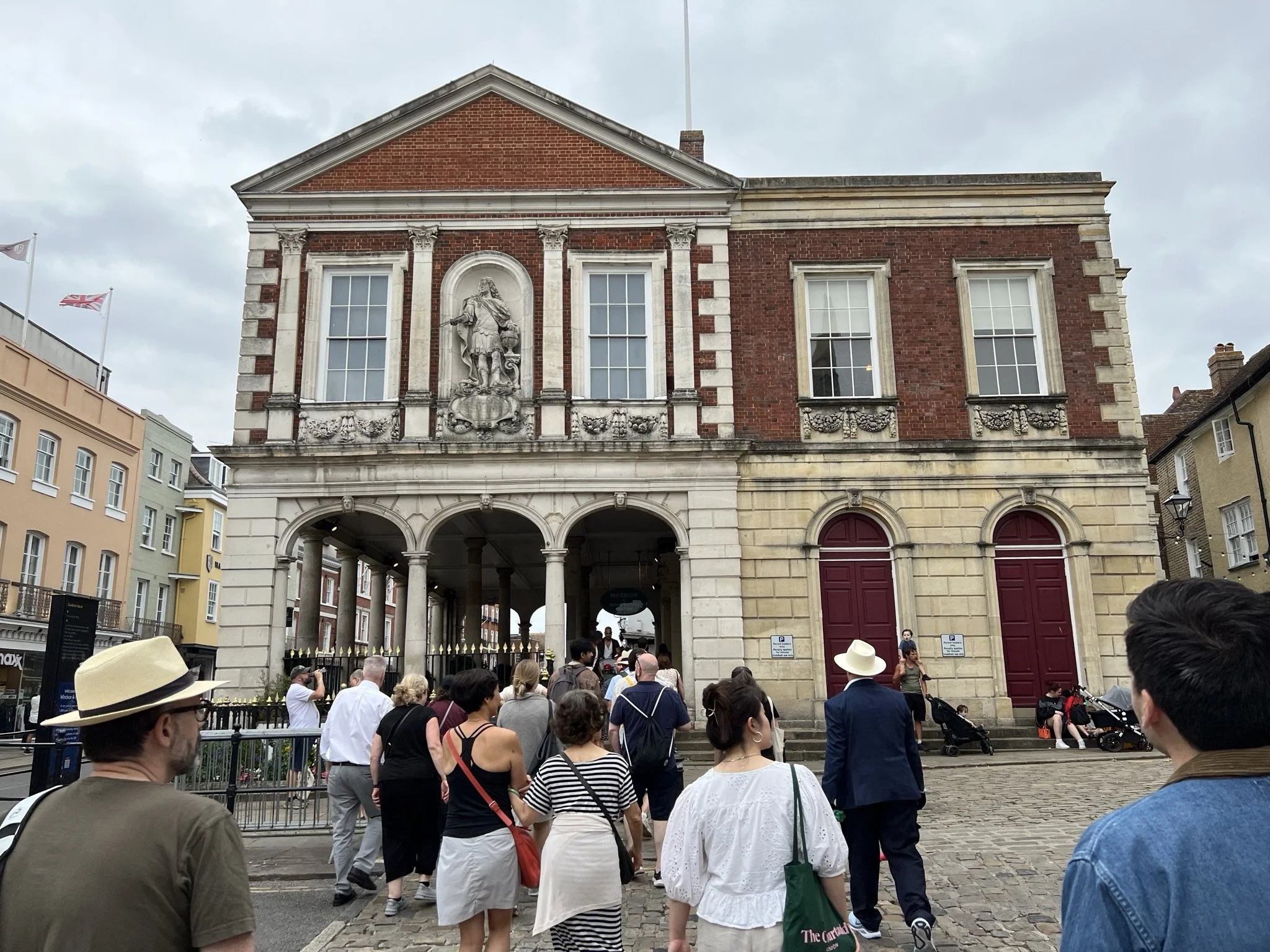
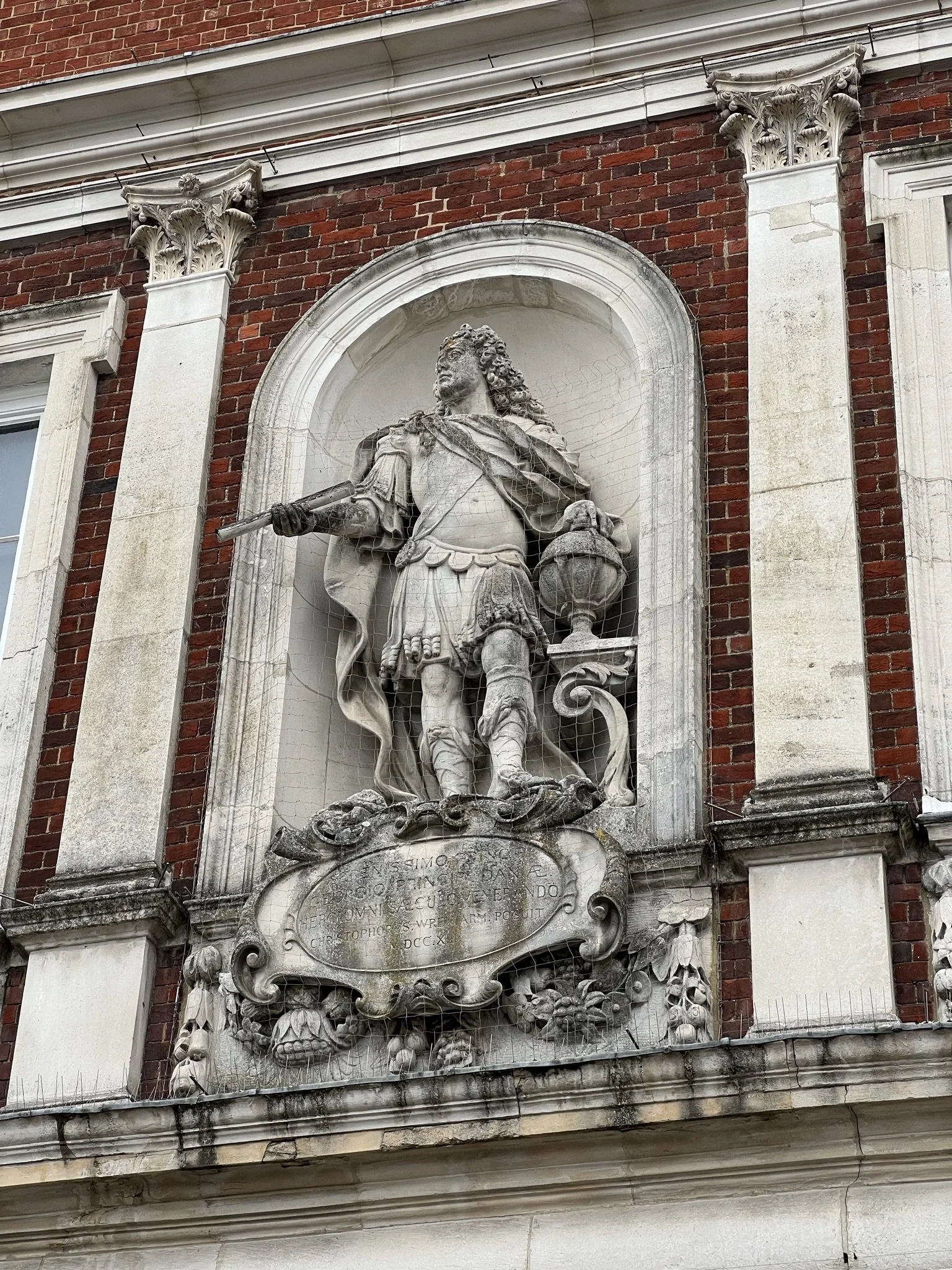
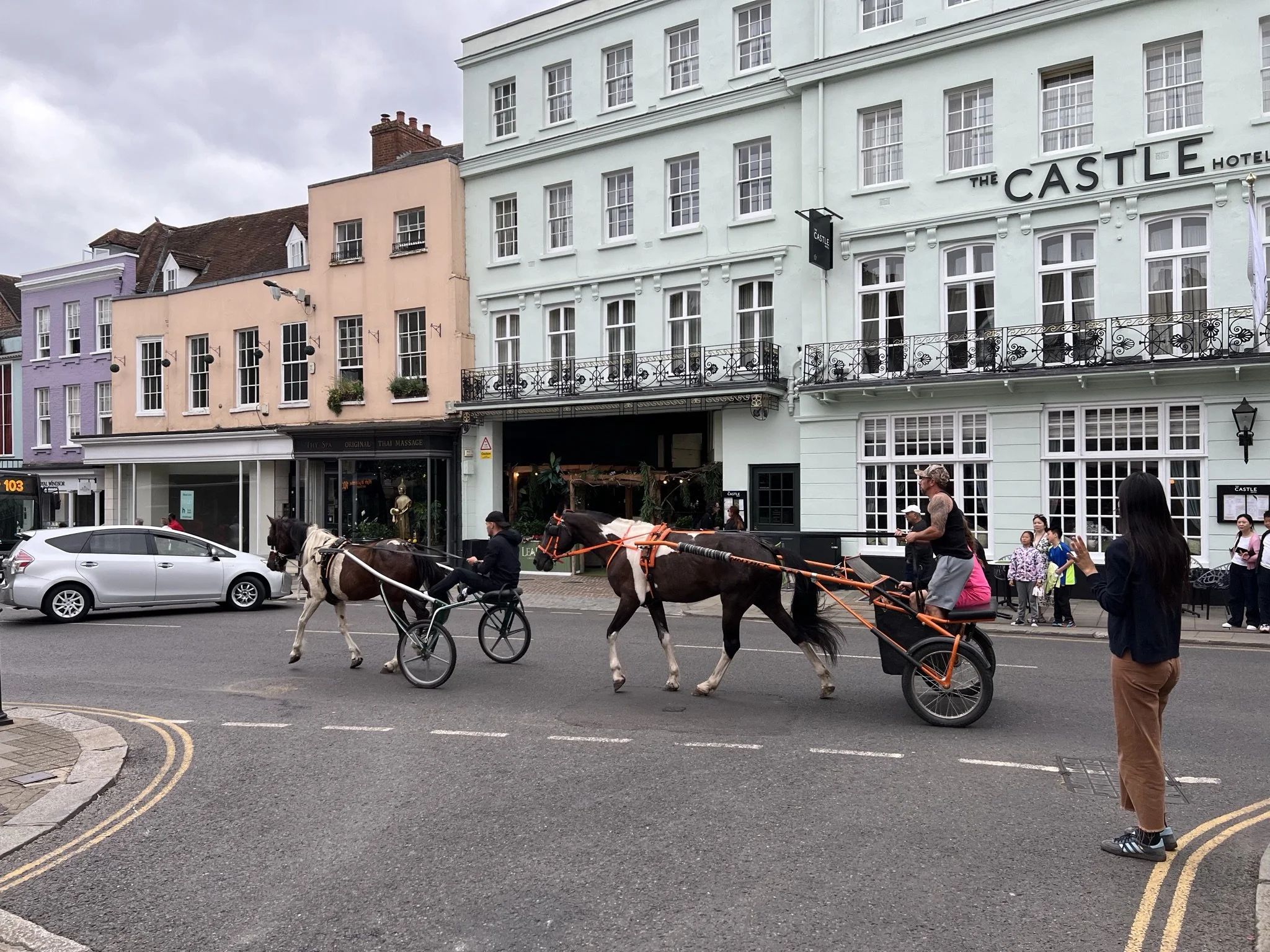
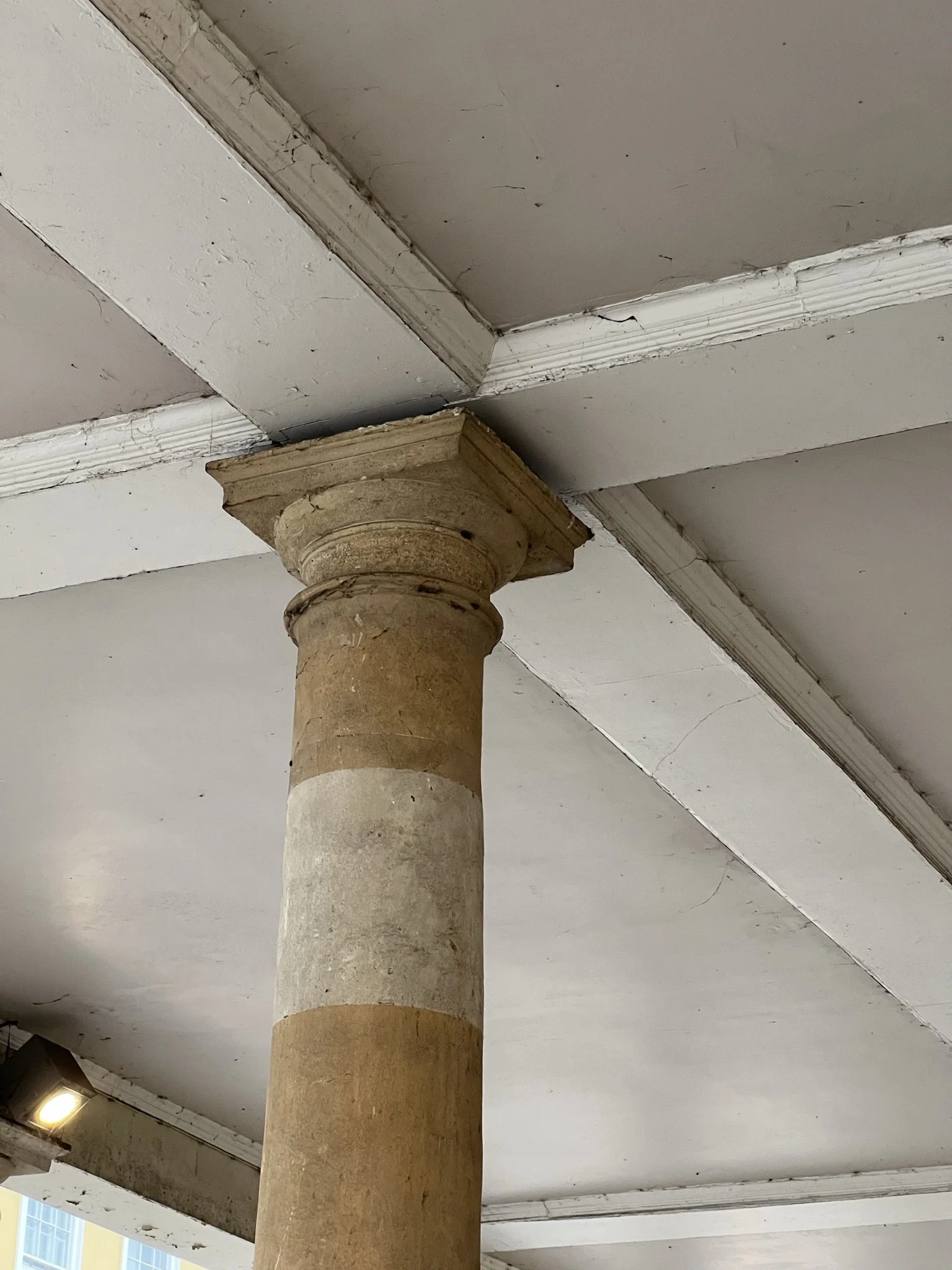
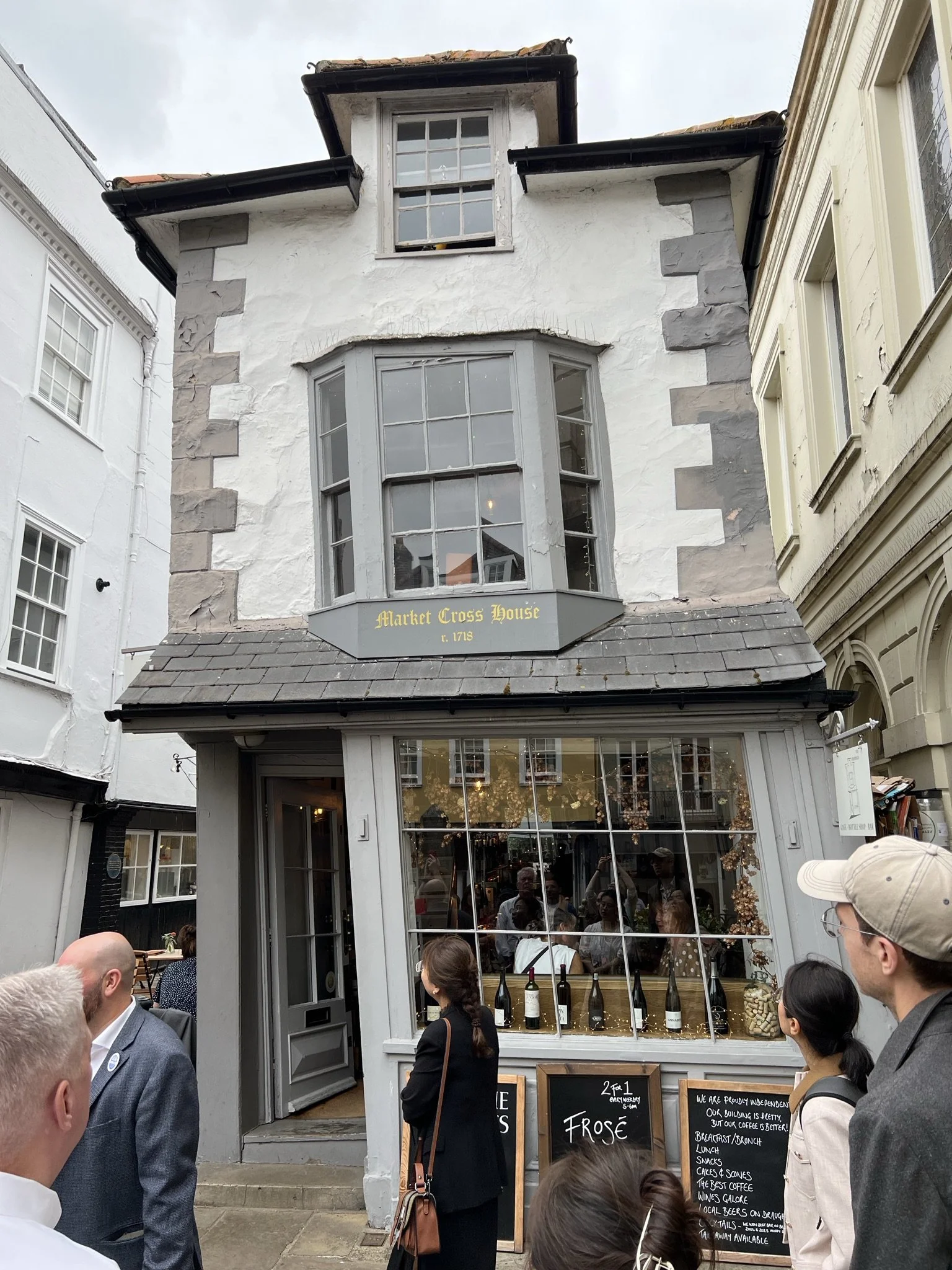
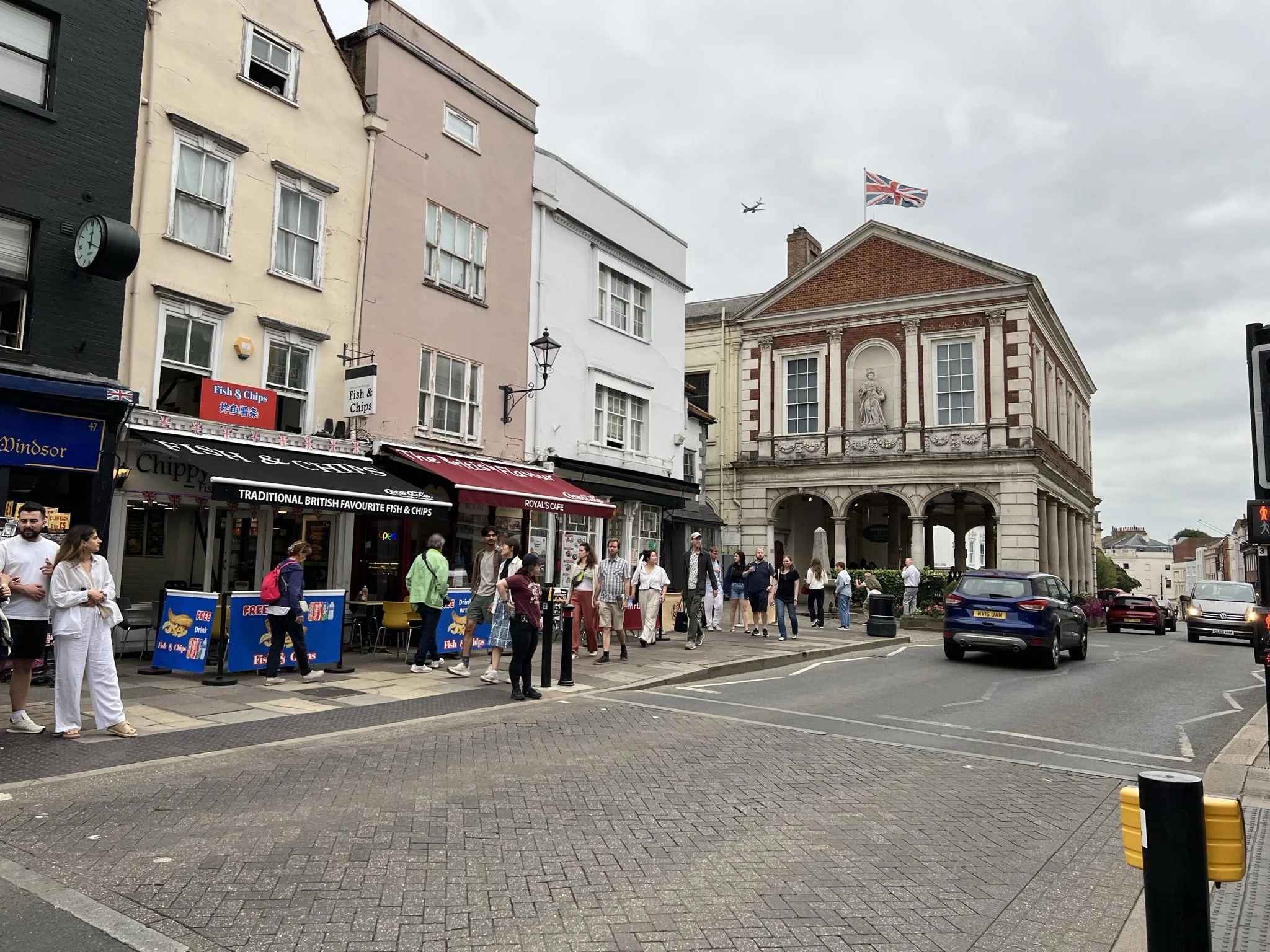
The town of Windsor offered a deeply layered architectural experience, found not only in its world-famous castle but throughout its historic town centre. Our route led us past a series of Tudor, Queen Anne, Georgian, and Victorian buildings, and through Rhys’s informative and fascinating narrative, these buildings illustrated how Windsor’s urban form developed alongside the fortunes of the monarchy and the social changes of successive centuries.
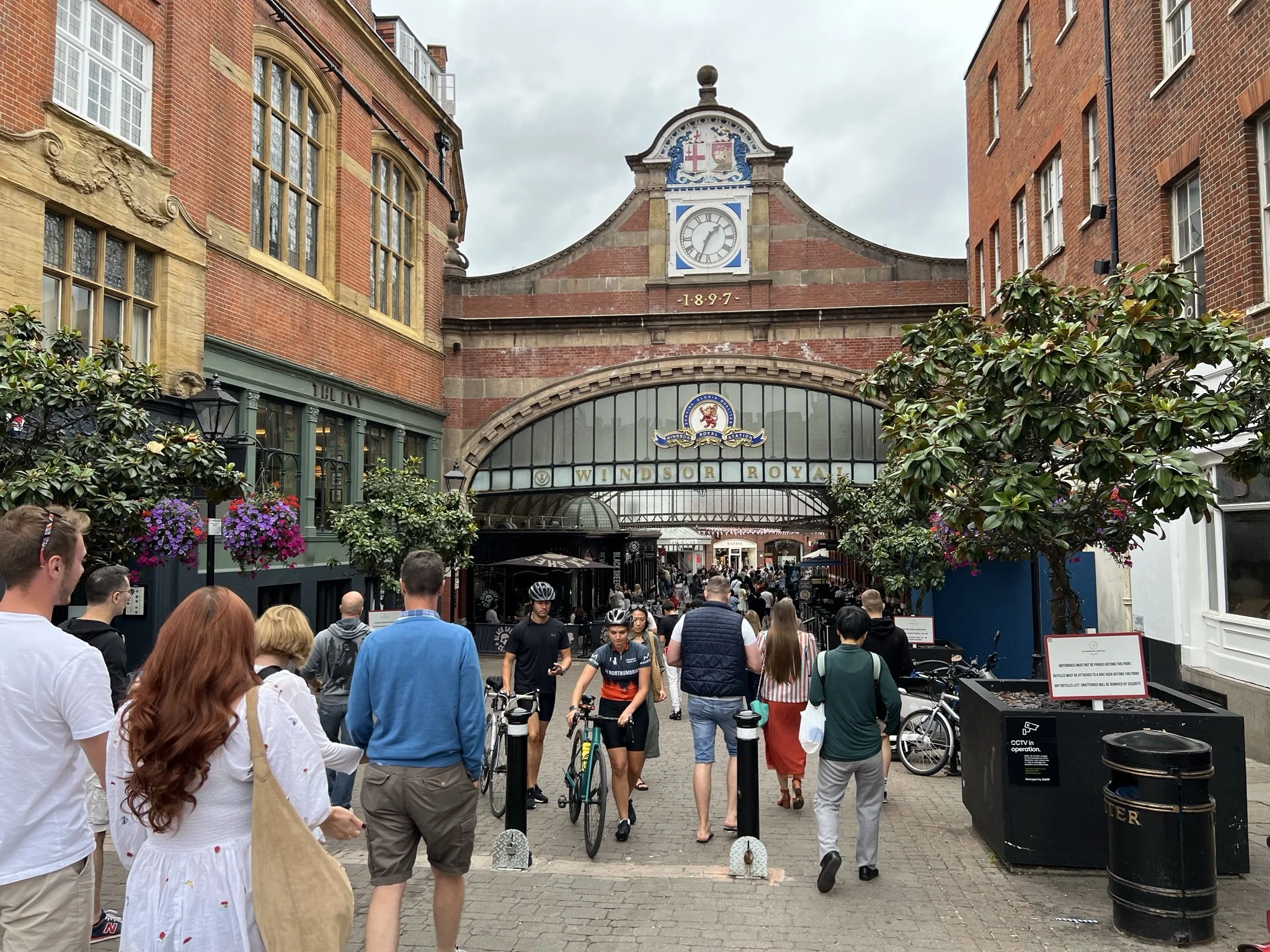
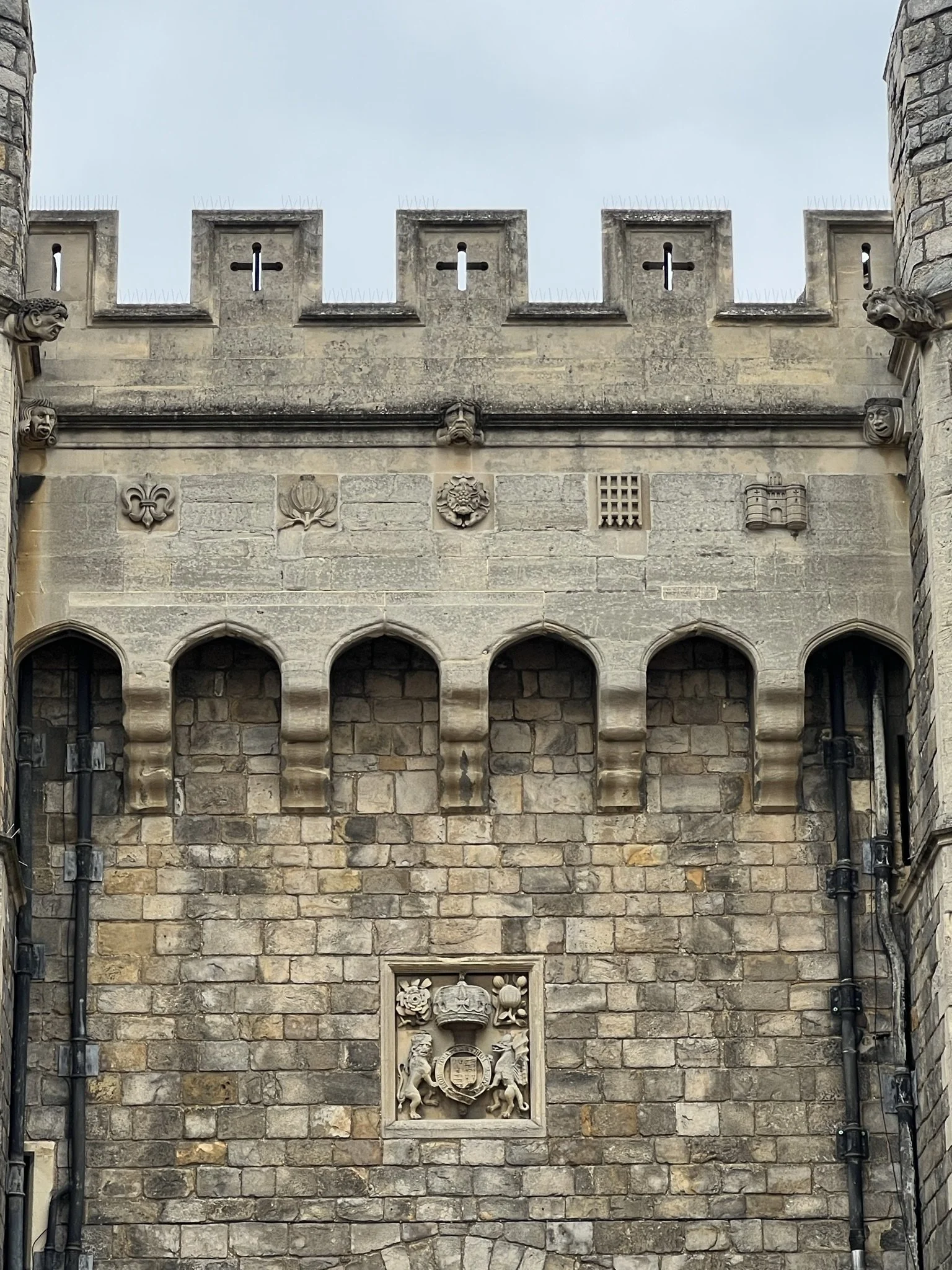
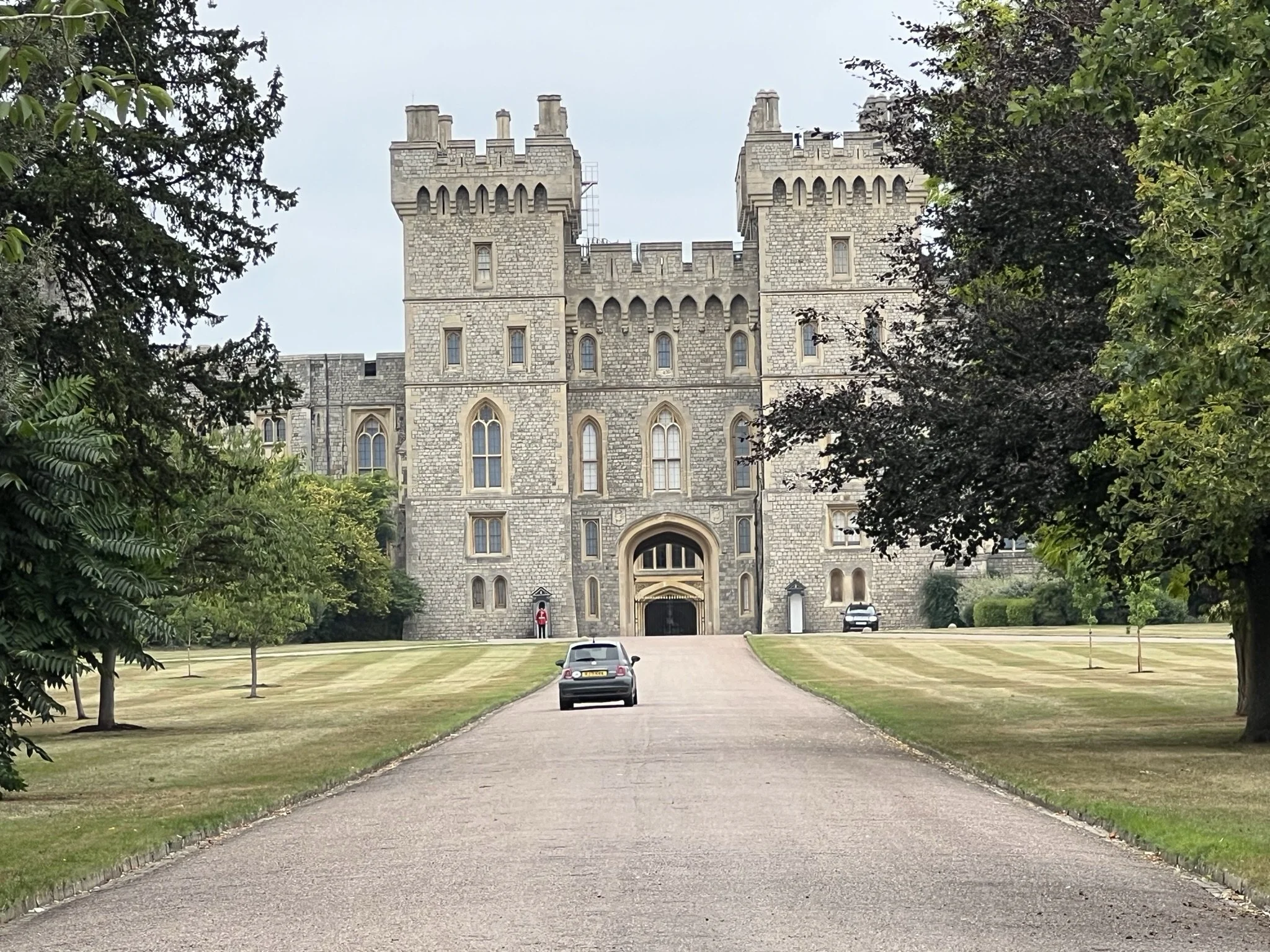
The tour began at Windsor Castle—founded in the 11th century by William the Conqueror, it is Europe's longest-occupied royal residence. Rhys provided a full narrative of St George's Chapel, a centrepiece of the castle complex that stands as a masterpiece of late Gothic architecture, as well as the fabled tunnels that lie beneath the castle, allowing for the clandestine behaviour of past royalty. The tour proceeded through Windsor’s side streets and market squares, with Rhys pointing out historic buildings and bringing them to life with architectural and cultural stories. For example, the fierce rivalry between the Great Western and South Western Railway companies, which led to the creation of the town’s two railway stations—an episode that transformed Windsor’s accessibility and economic landscape in the 19th century. We also encountered modern interventions in the town, such as recent infill projects and sensitive updates to historic structures—evidence of Windsor’s ongoing adaptation while respecting its heritage.
Windsor’s architectural diversity demonstrates how centuries of design, planning, and social change have shaped every street and square of this small but important town. Our tour finished at Windsor station, where the group was able to catch trains back to London and reflect on a very enjoyable day that encompassed so much of British history, and how it is being preserved, rejuvenated, and augmented by talented professionals in the built environment.
Written by Taylor Rogers, AIA and Kristy Sels, AIA. Photography and editing by Katharine Storr, AIA
2026 Annual General Meeting
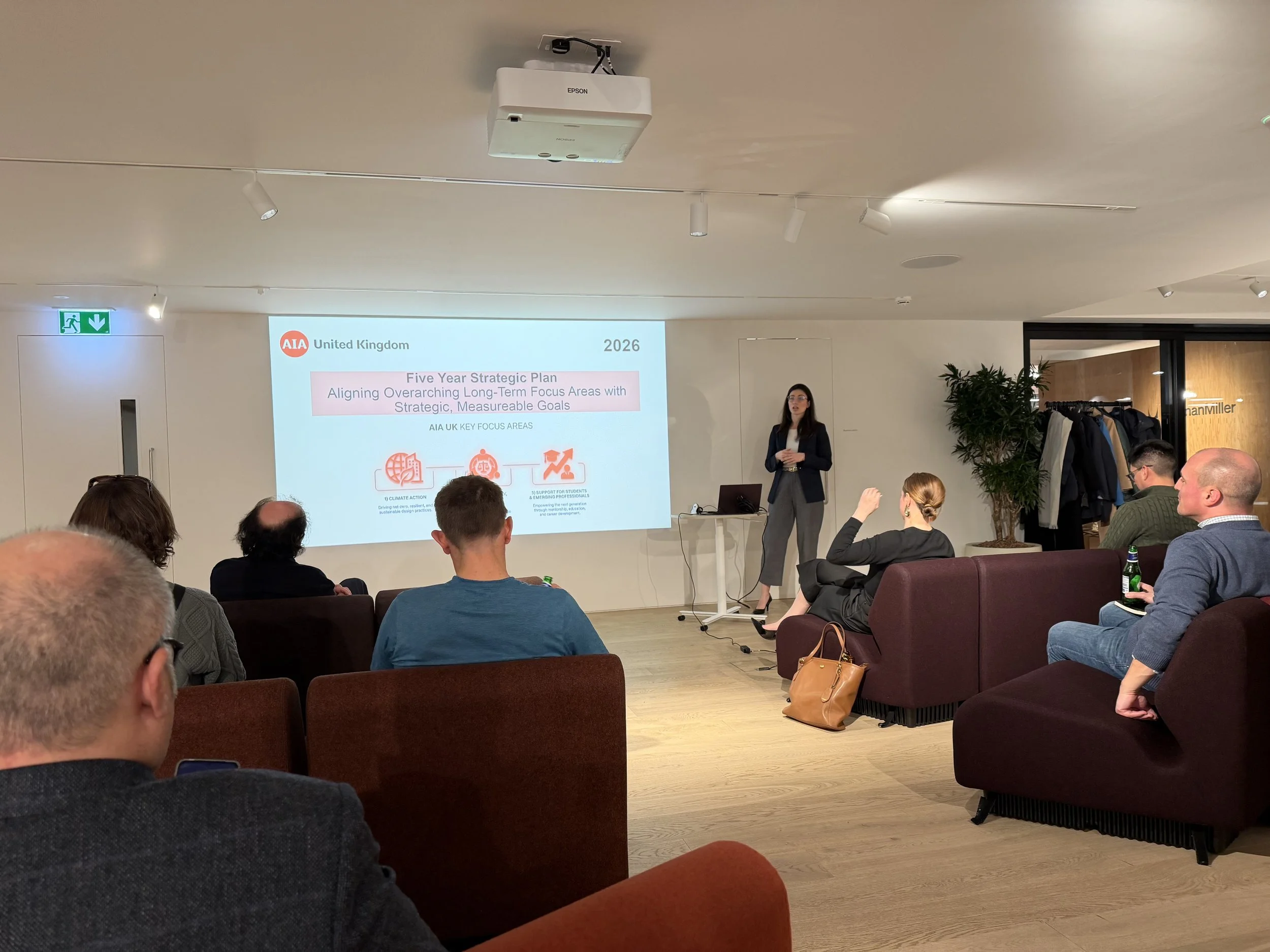
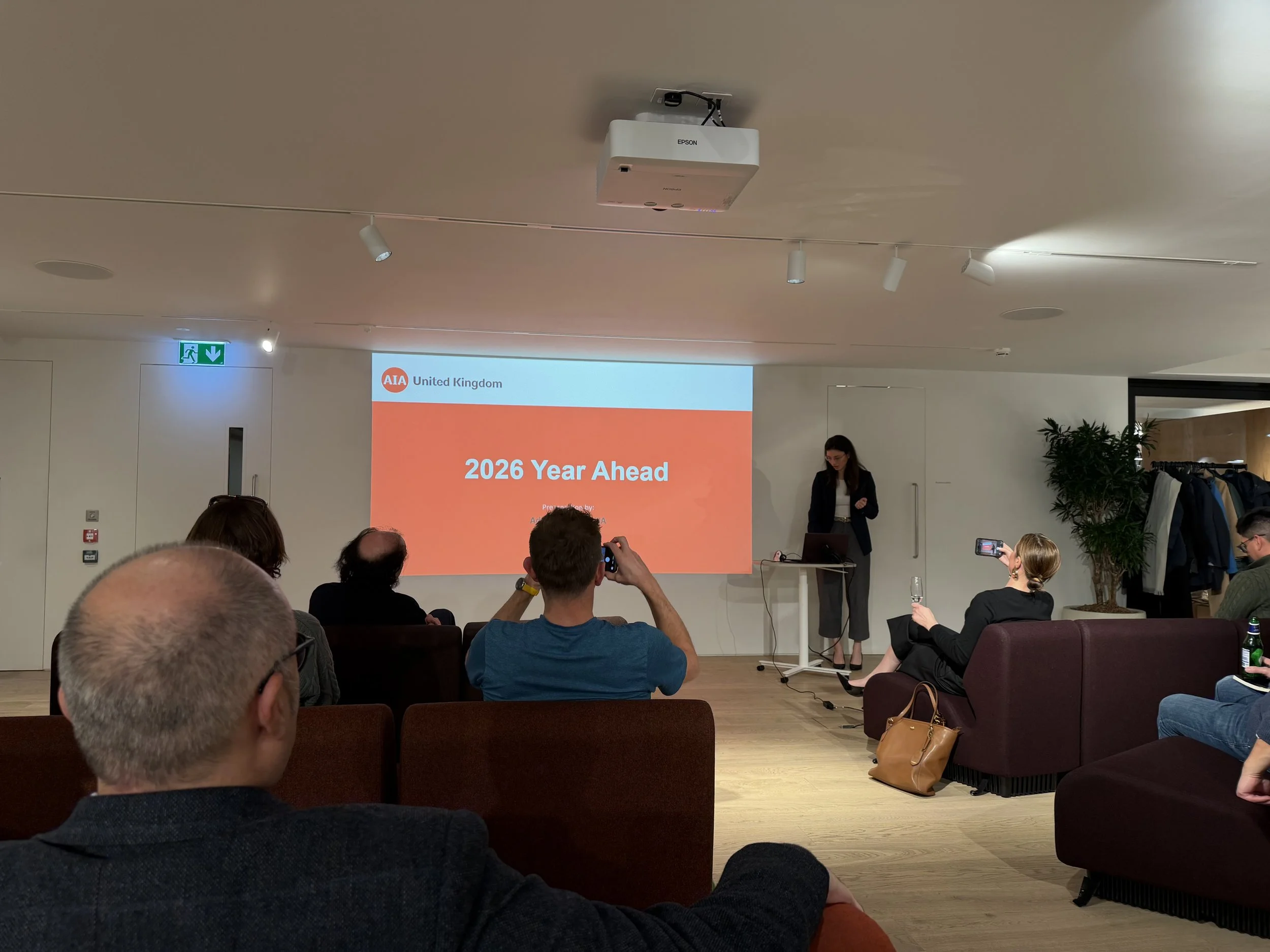
2026 President Adelina Koleva gives the ‘Year Ahead’ presentation
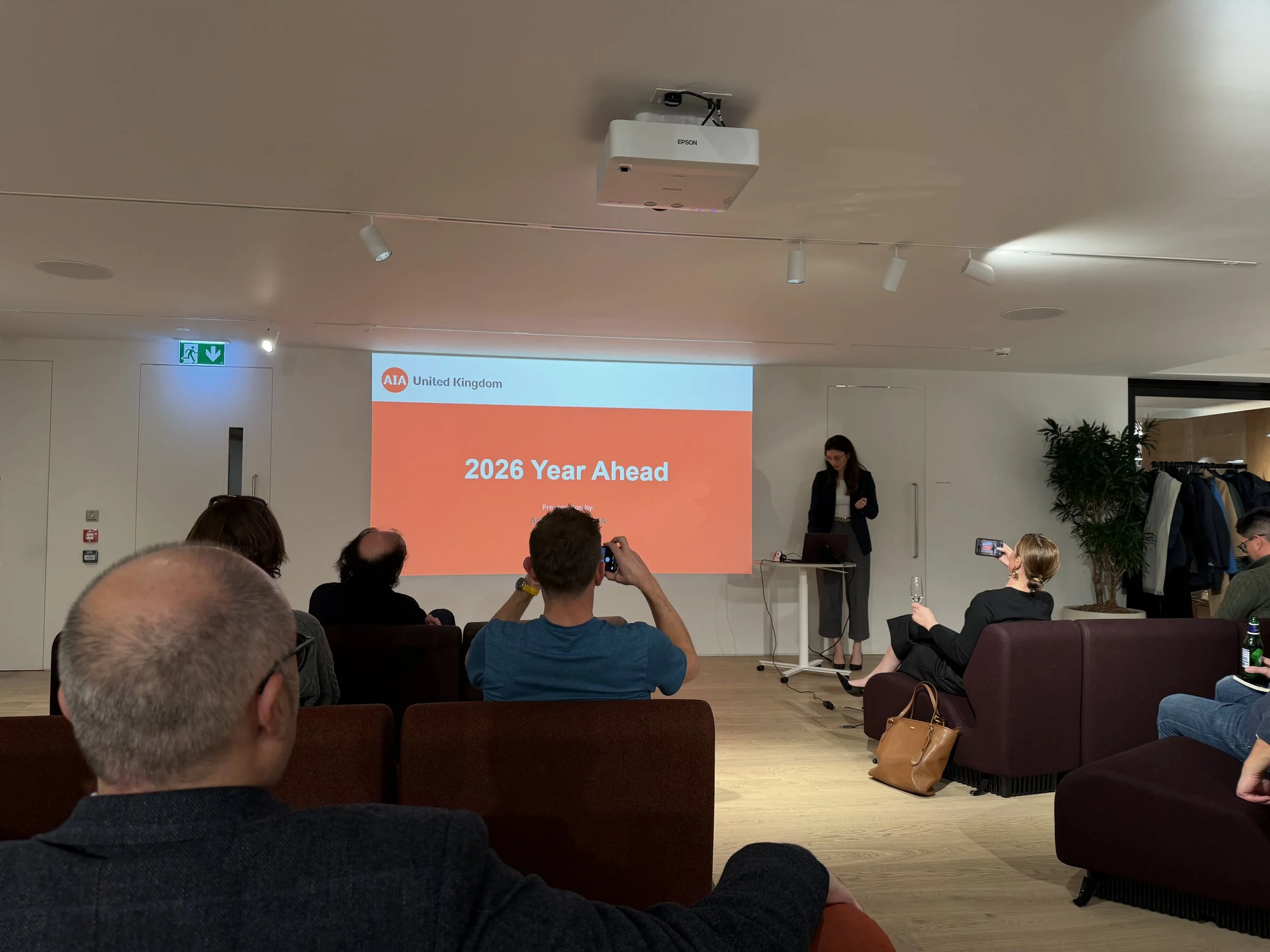
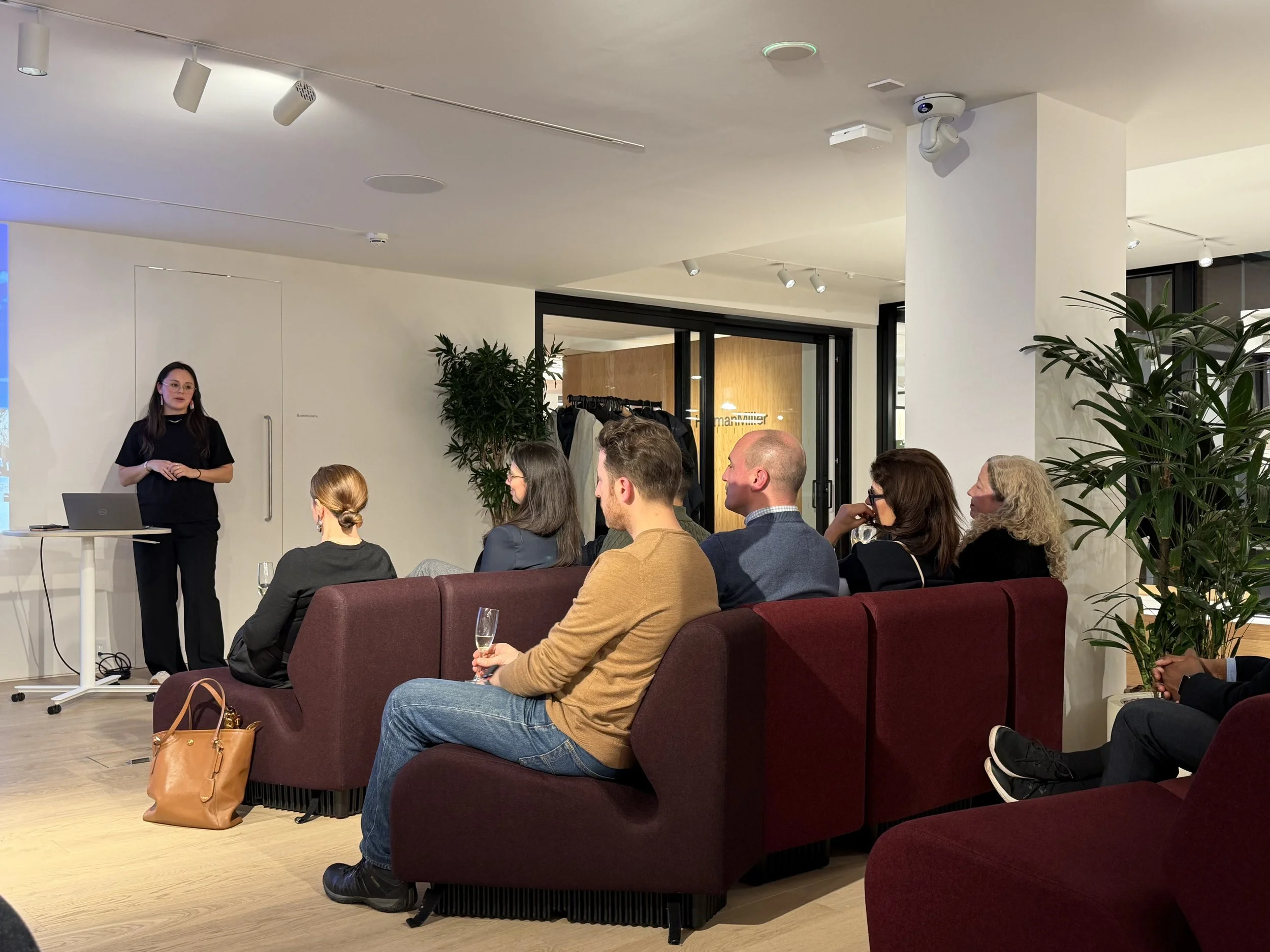
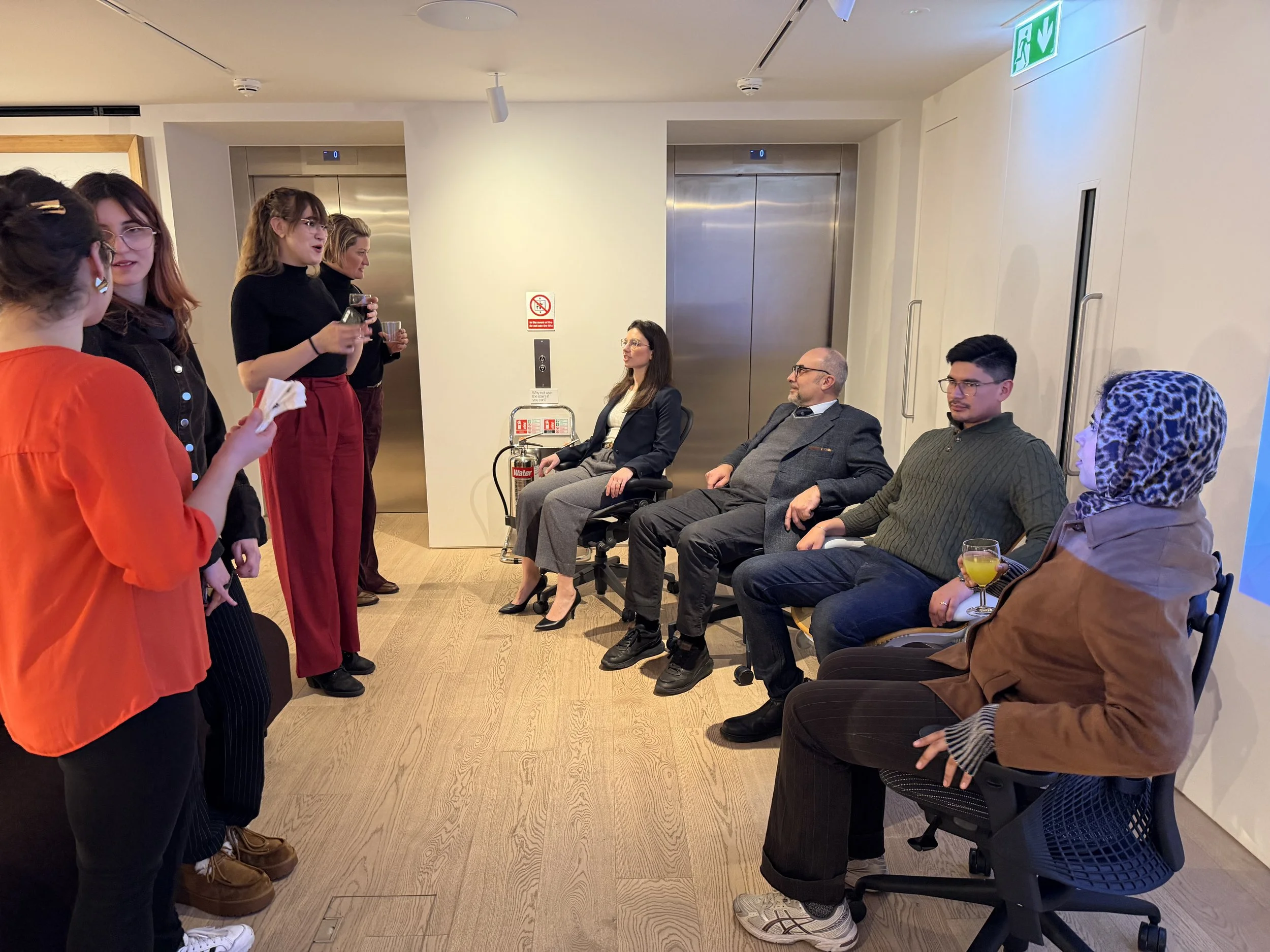
This year’s Annual General Meeting was held on 14 January 2026 at the Herman Miller London showrooms. The formal part of the AGM began with the 2025 President, Mark E. Breeze, AIA, providing a comprehensive Year in Review Presentation, which was followed by the review of the 2026 Financial Accounts, Membership Report; after election of the 2026 Officers and Board of Directors, the newly elected 2026 President, Adelina Koleva, AIA, gave a Year Ahead Presentation.
Following a tradition starting in 1994, Herman Miller - our longest-standing sponsor - gave an educational presentation, this year entitled ‘High Performance Work Seating’.
Written by Anna Foden, Associate AIA
2025 AIA UK Pub Quiz Photo Album
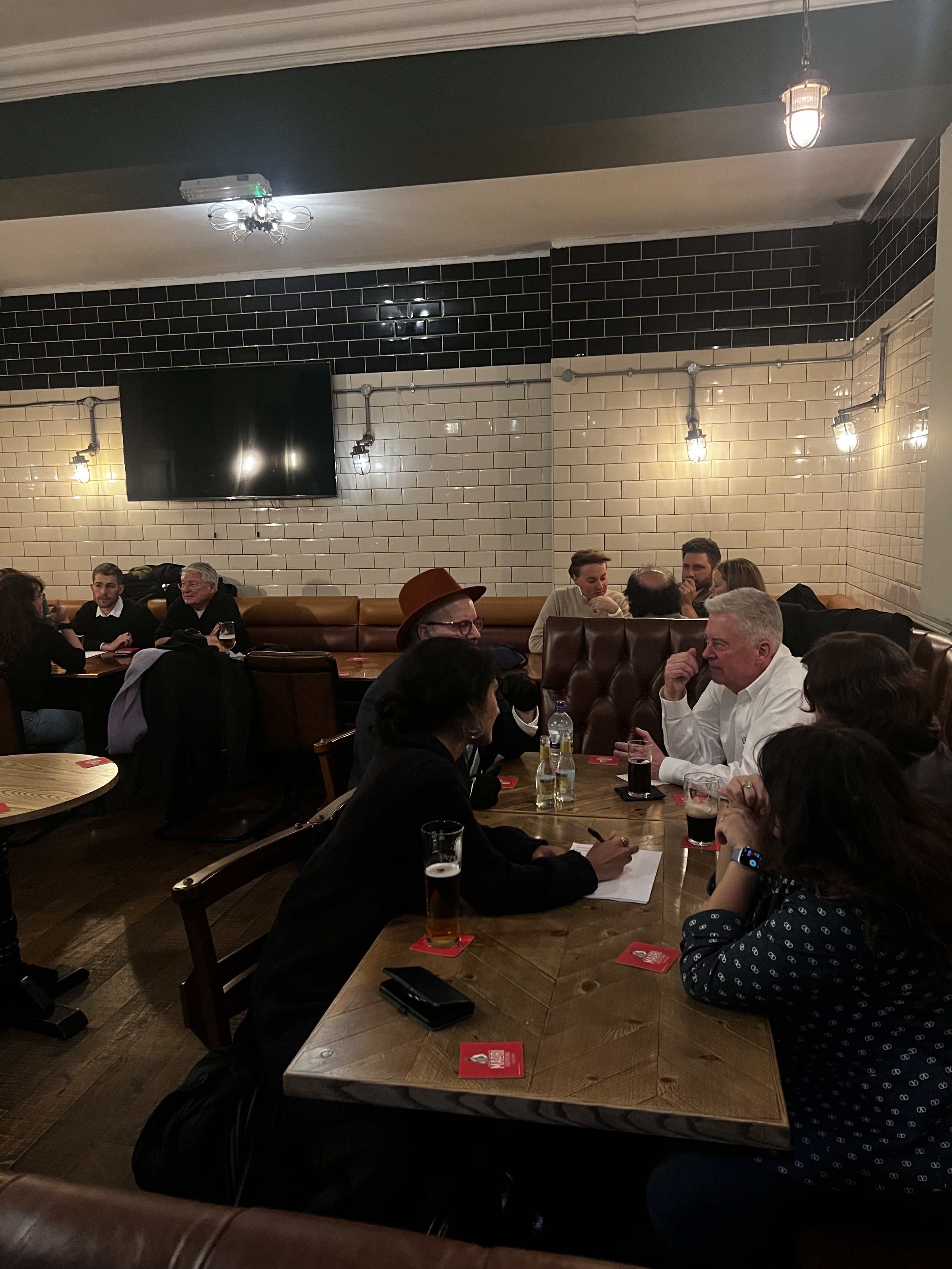
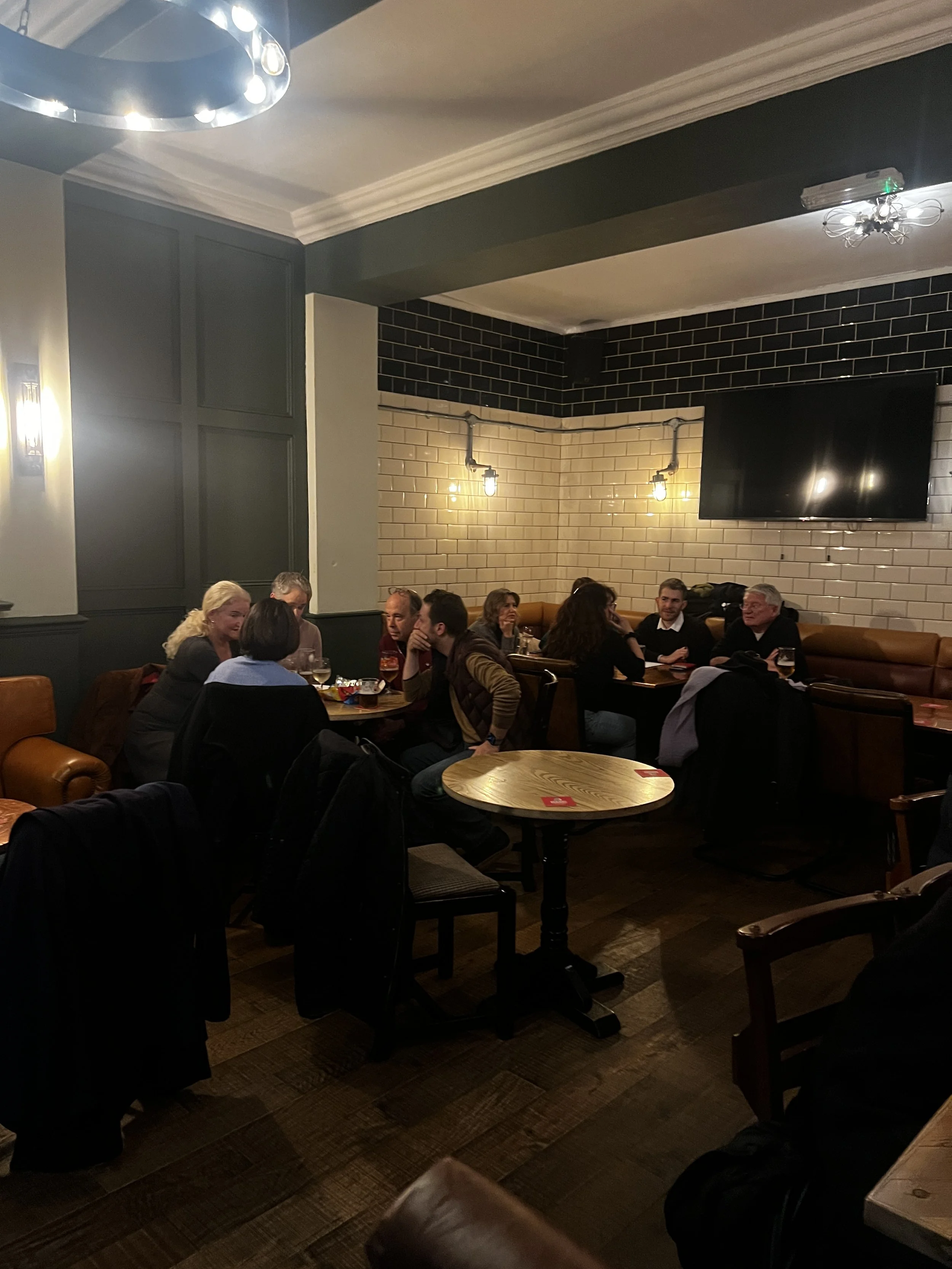
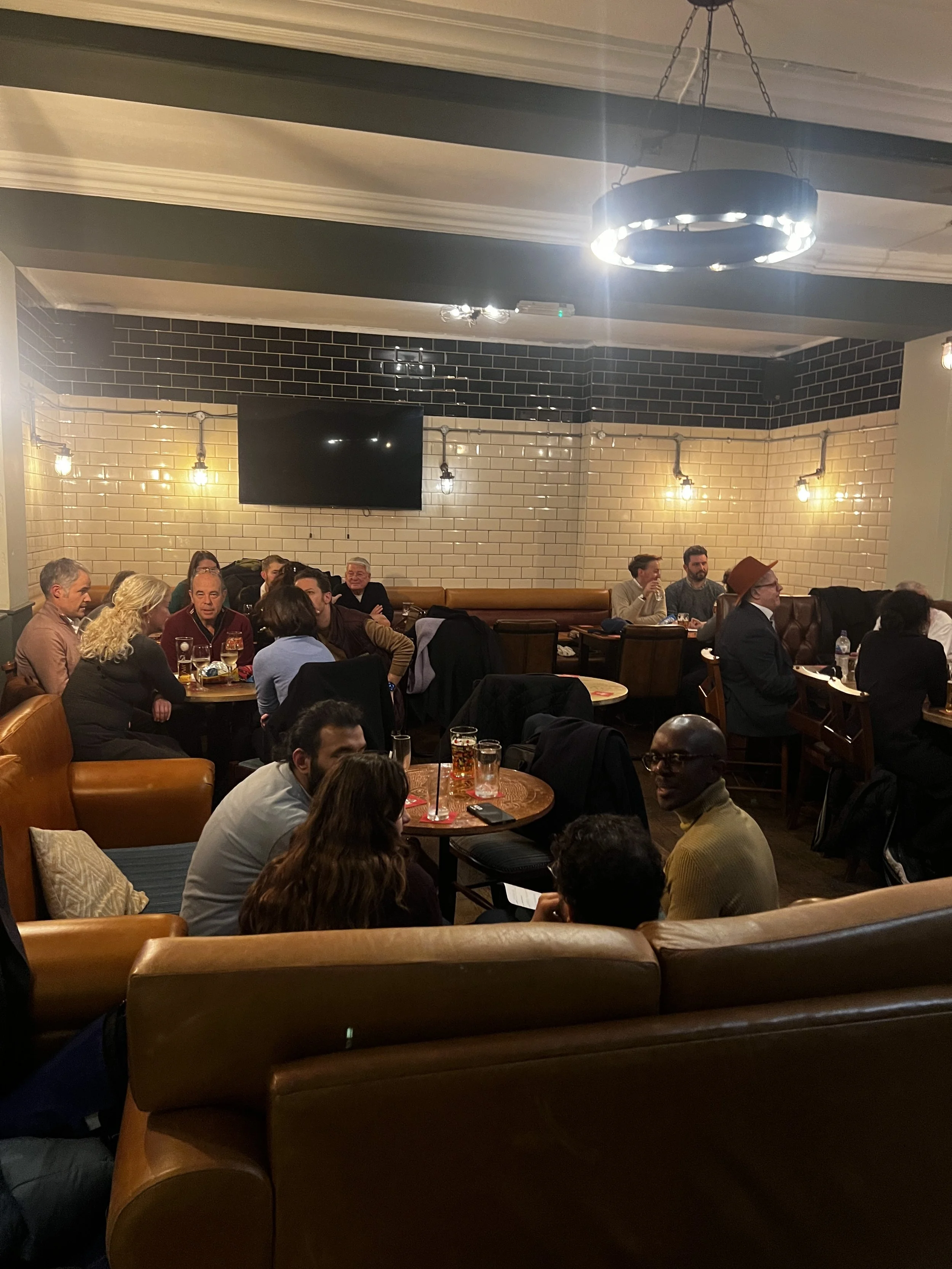
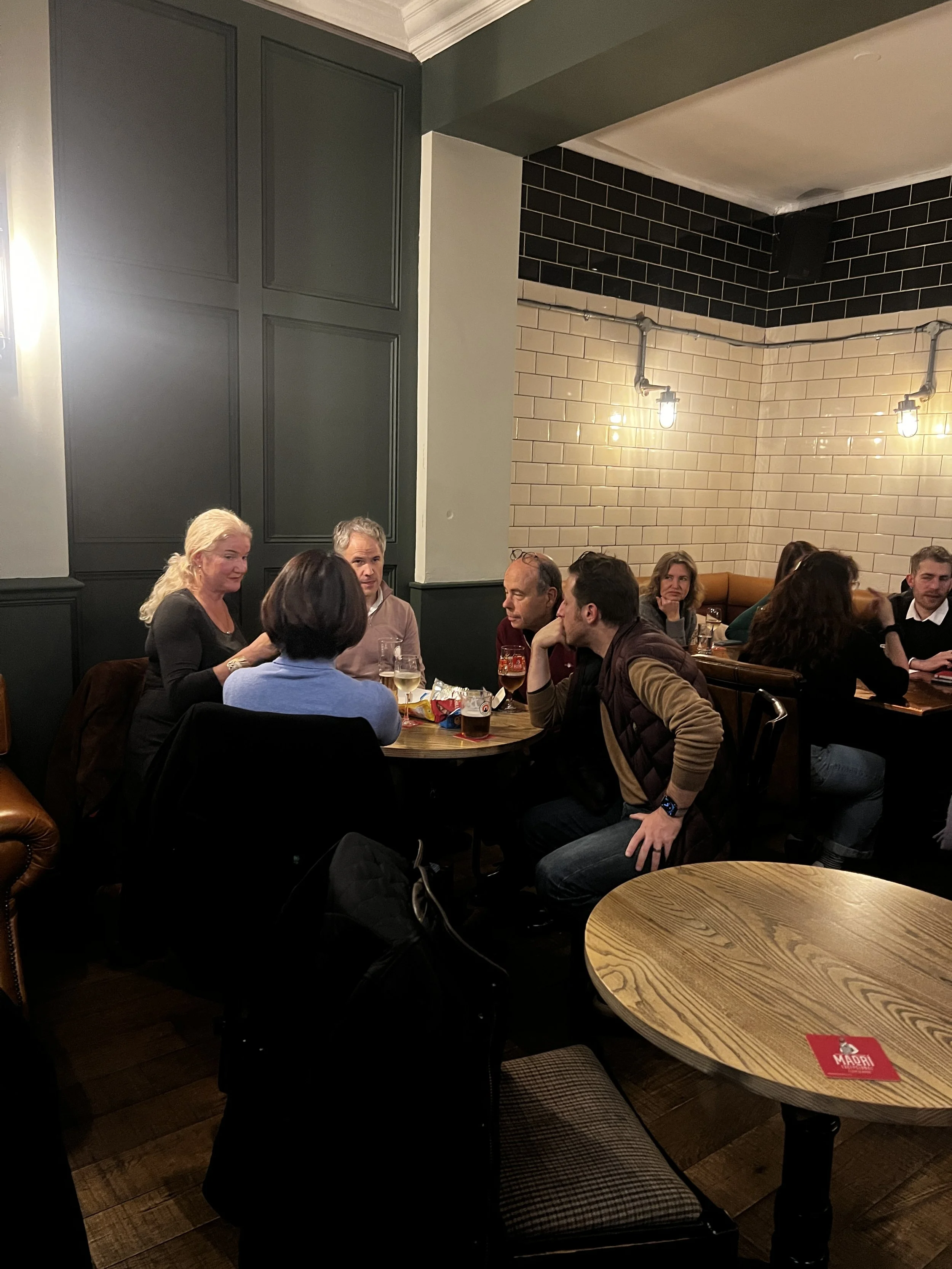

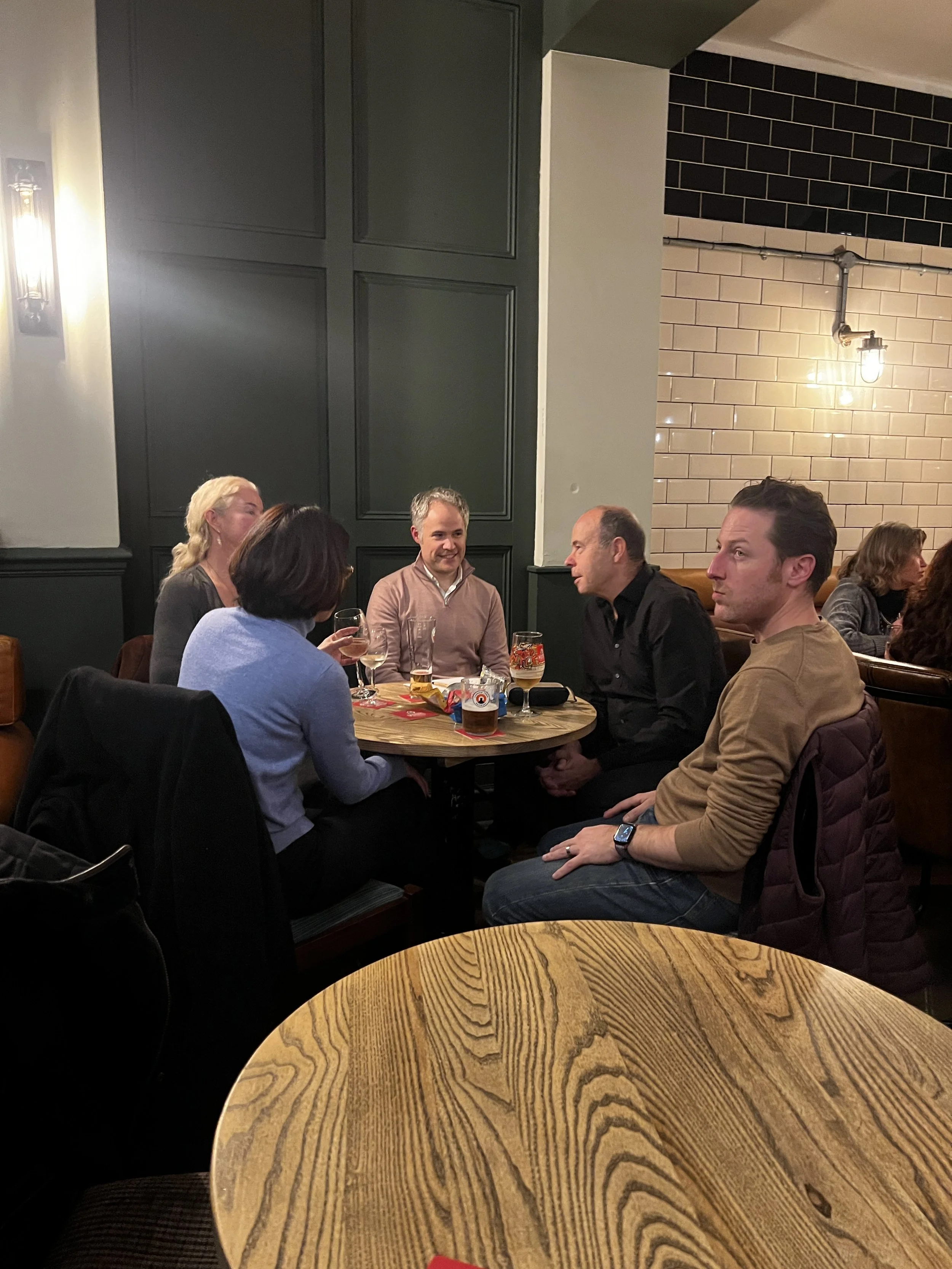
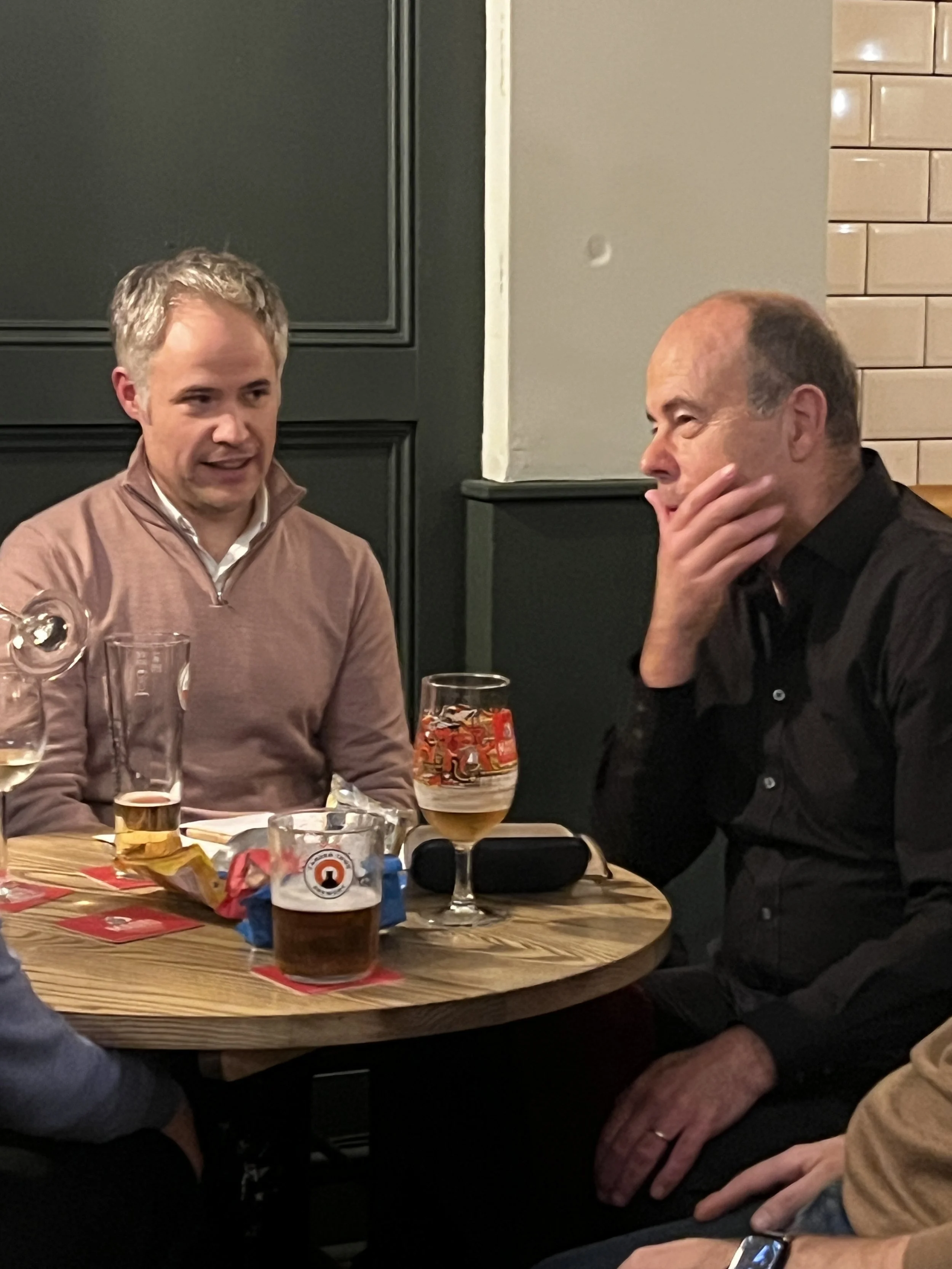
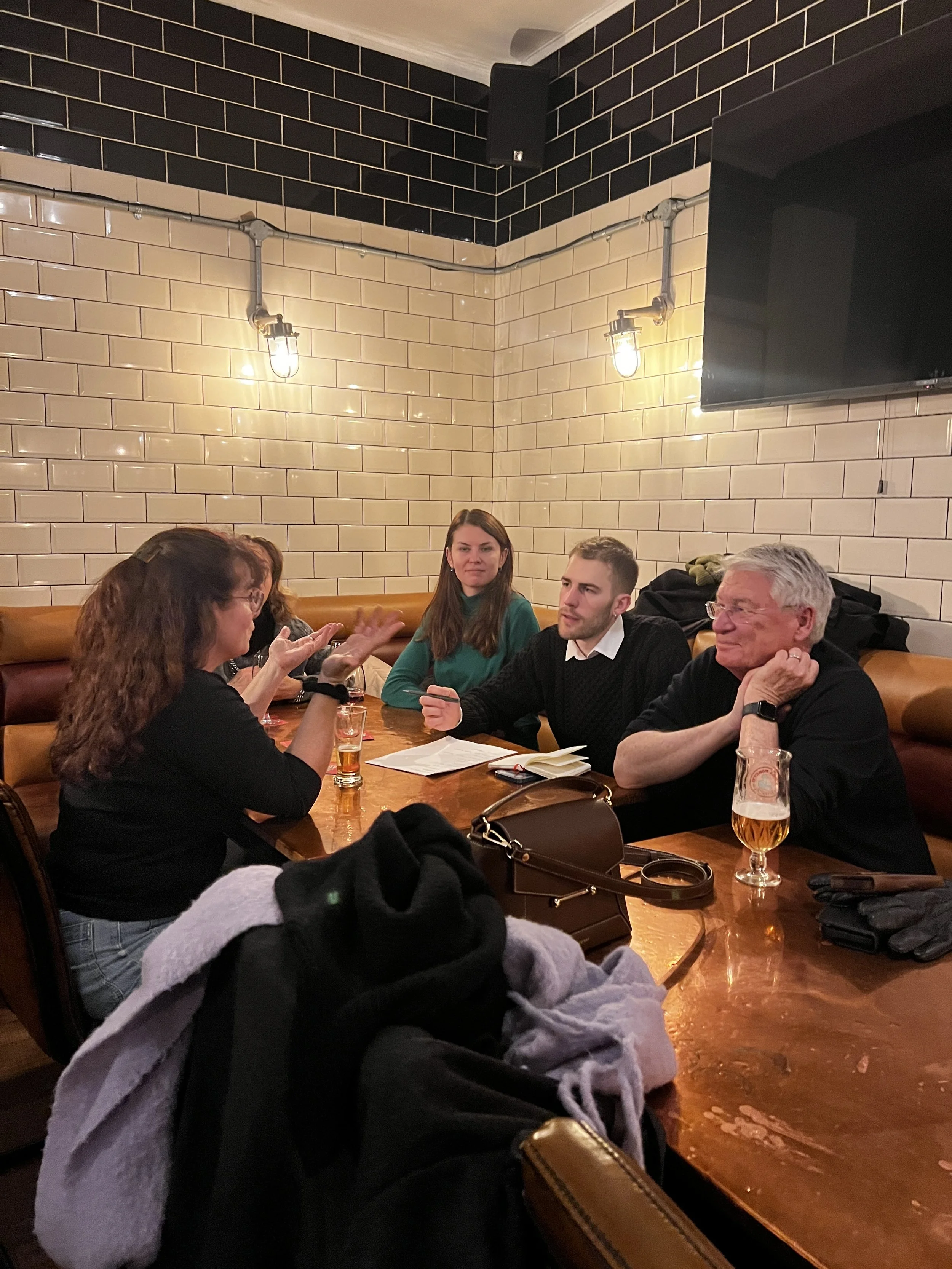
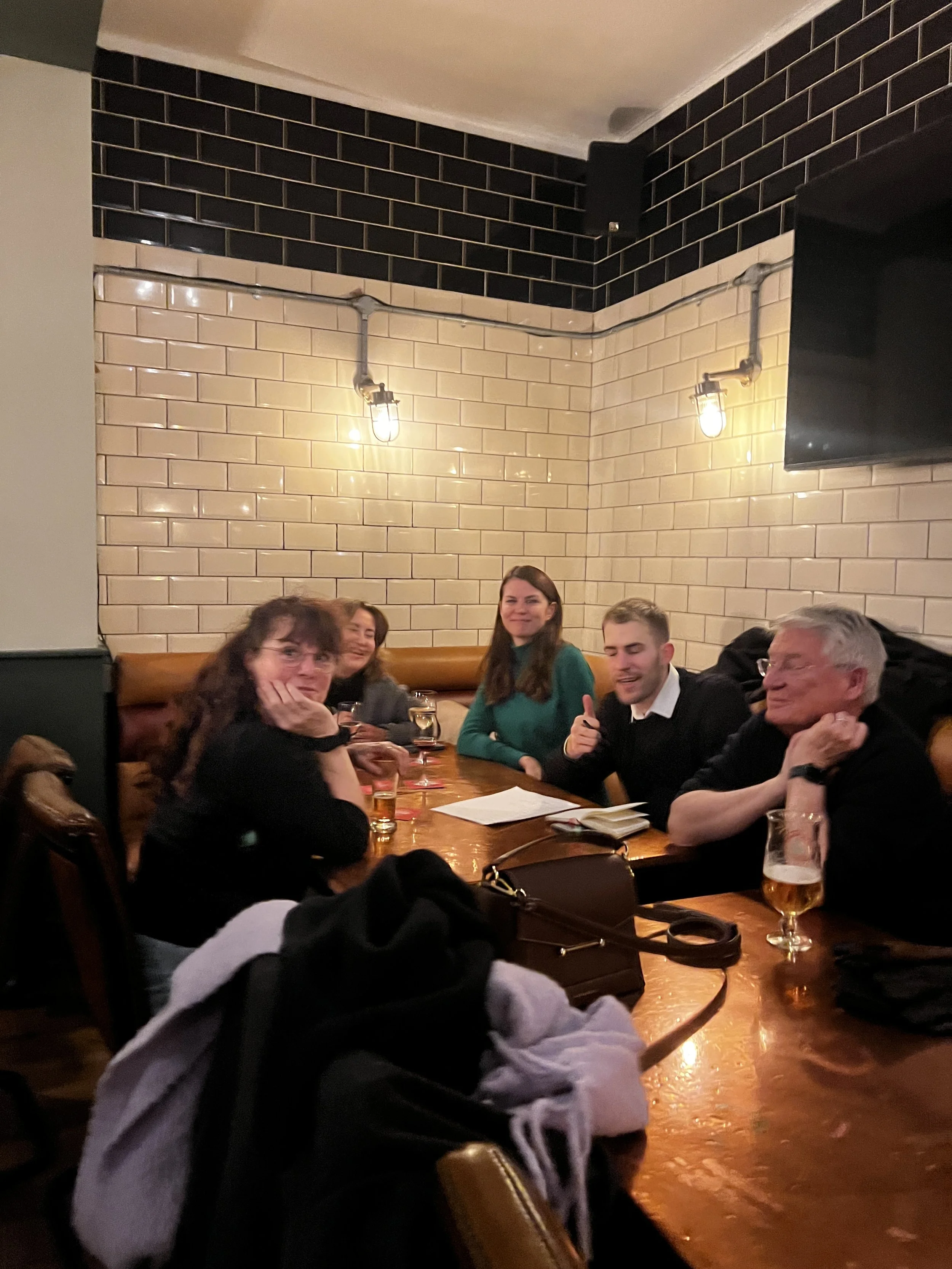
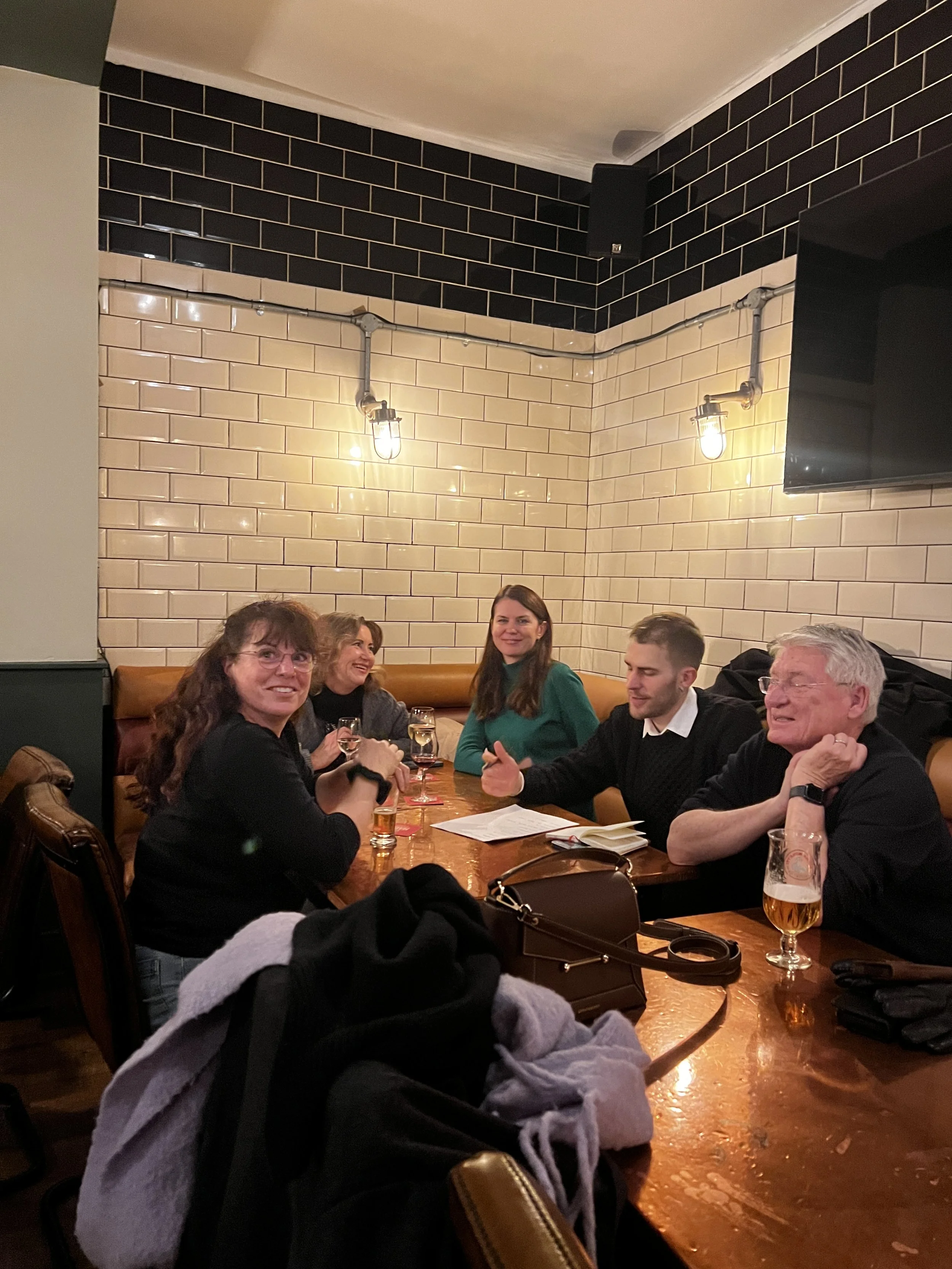
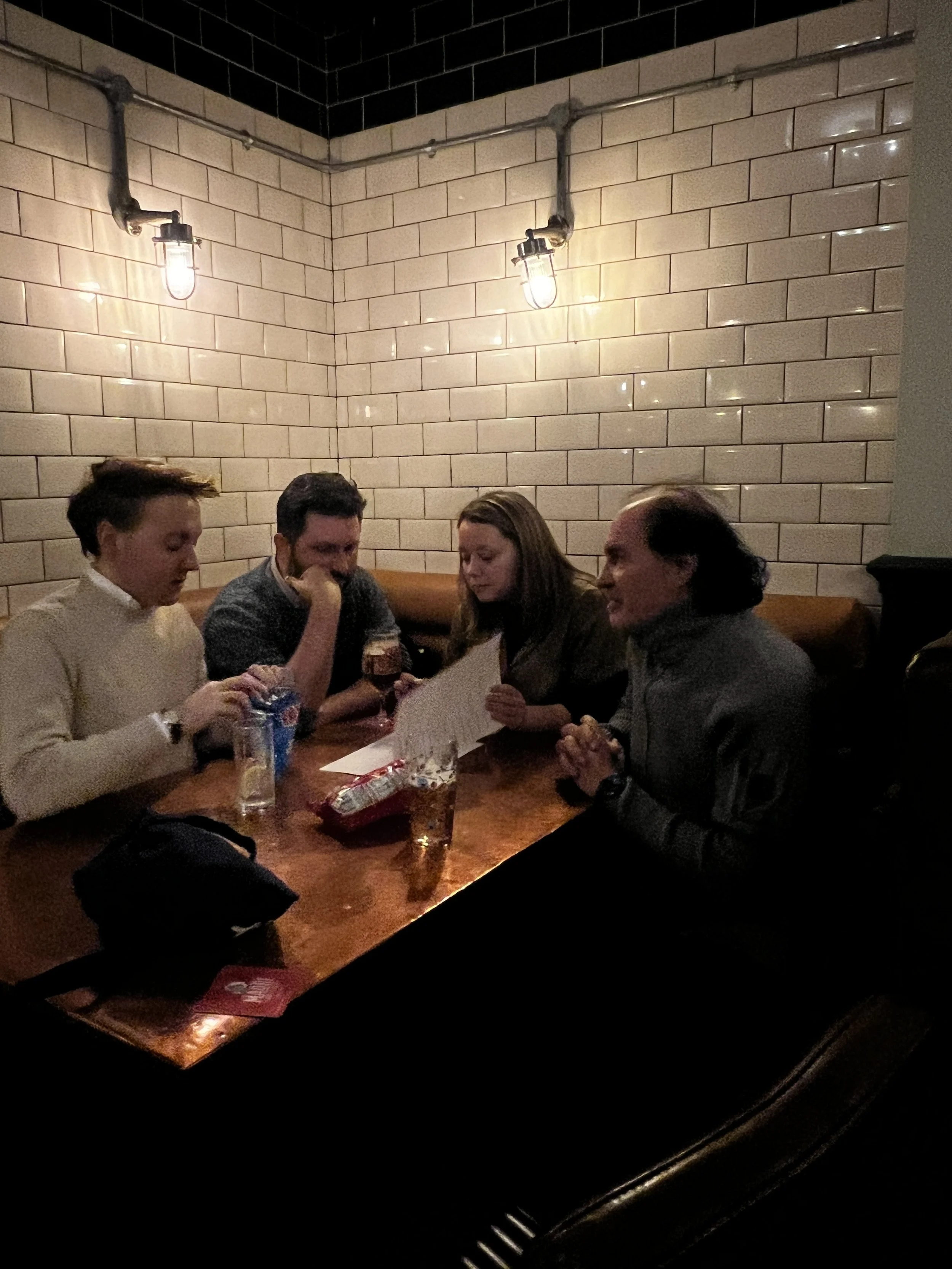


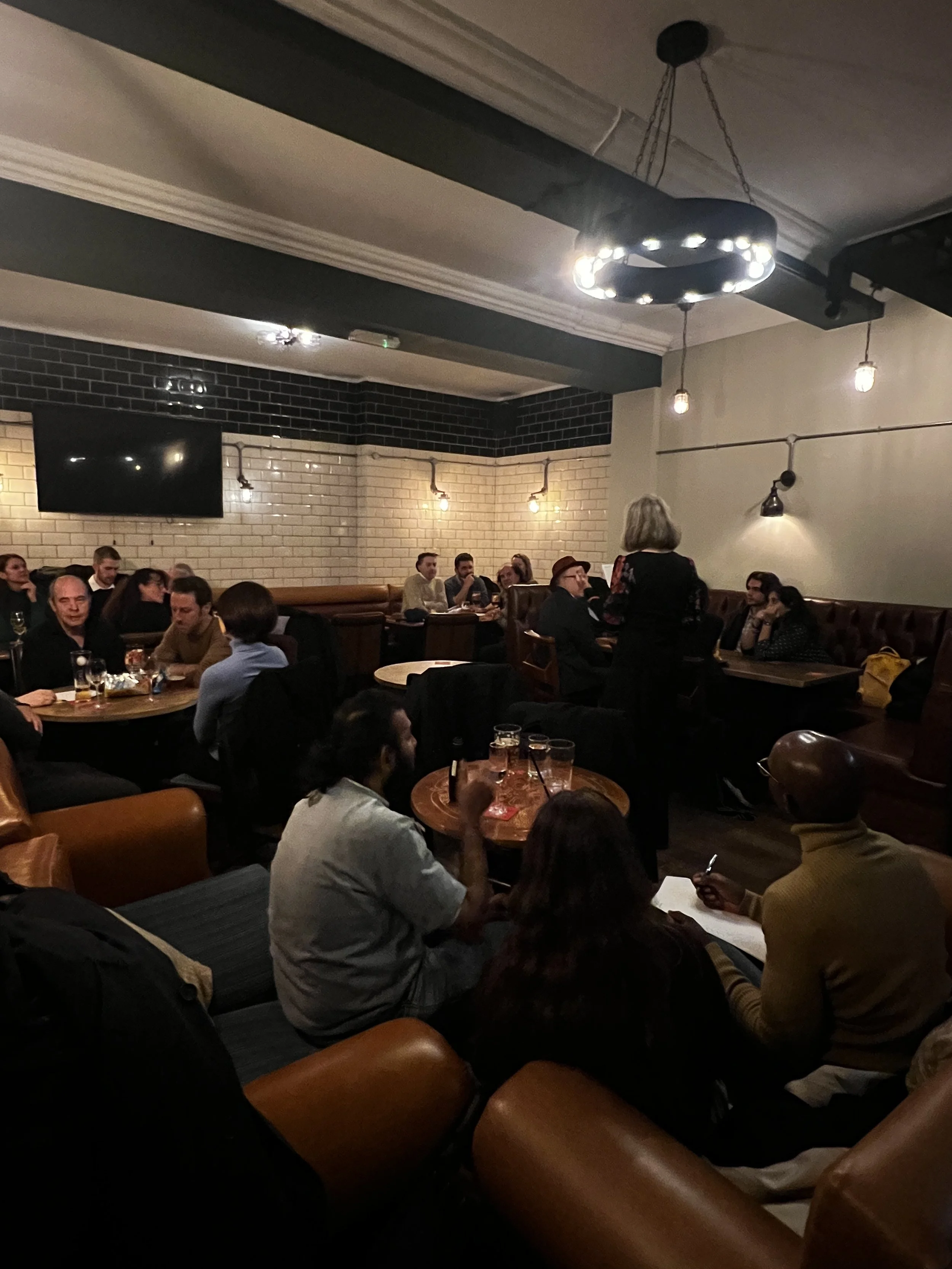
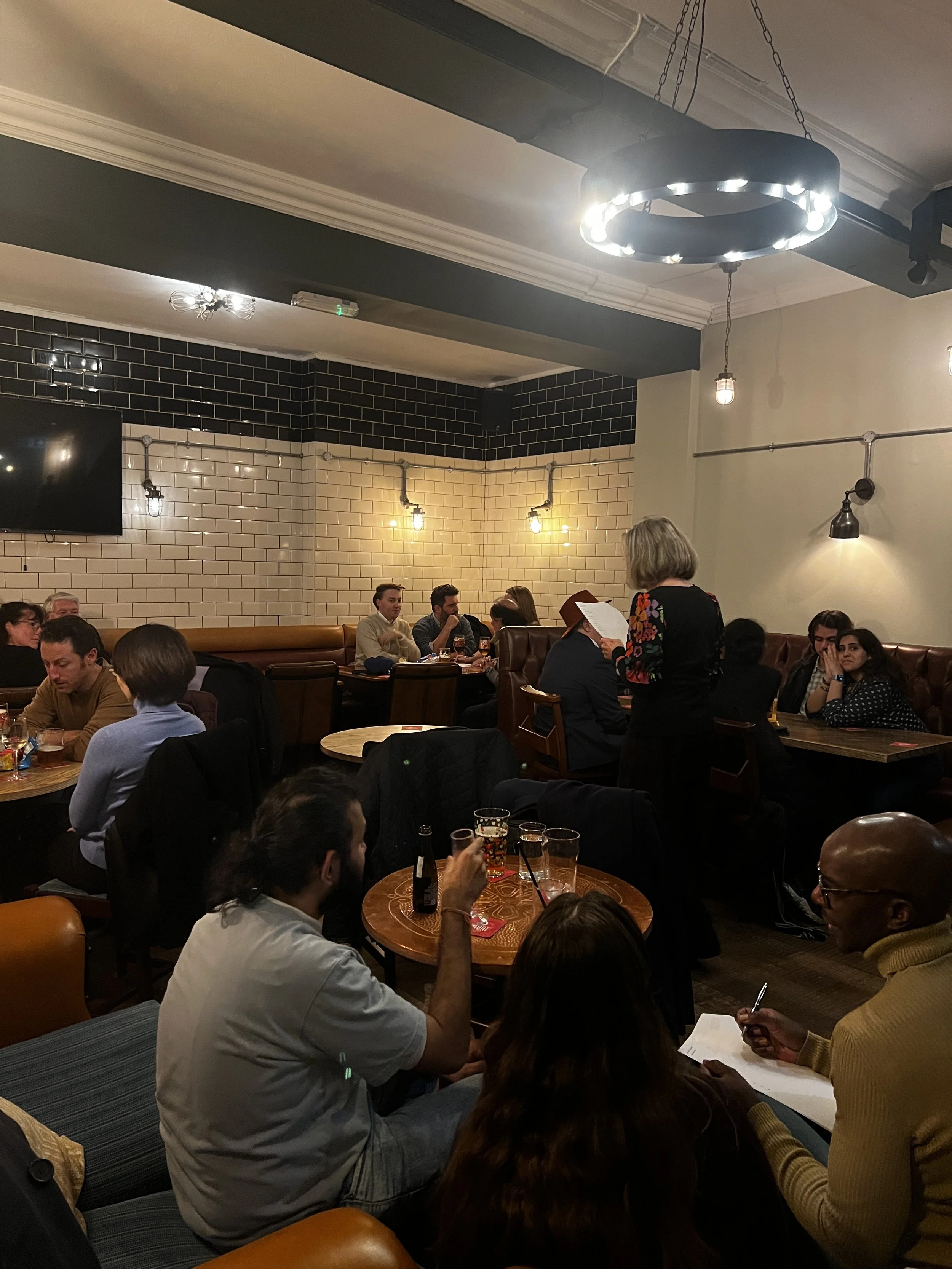
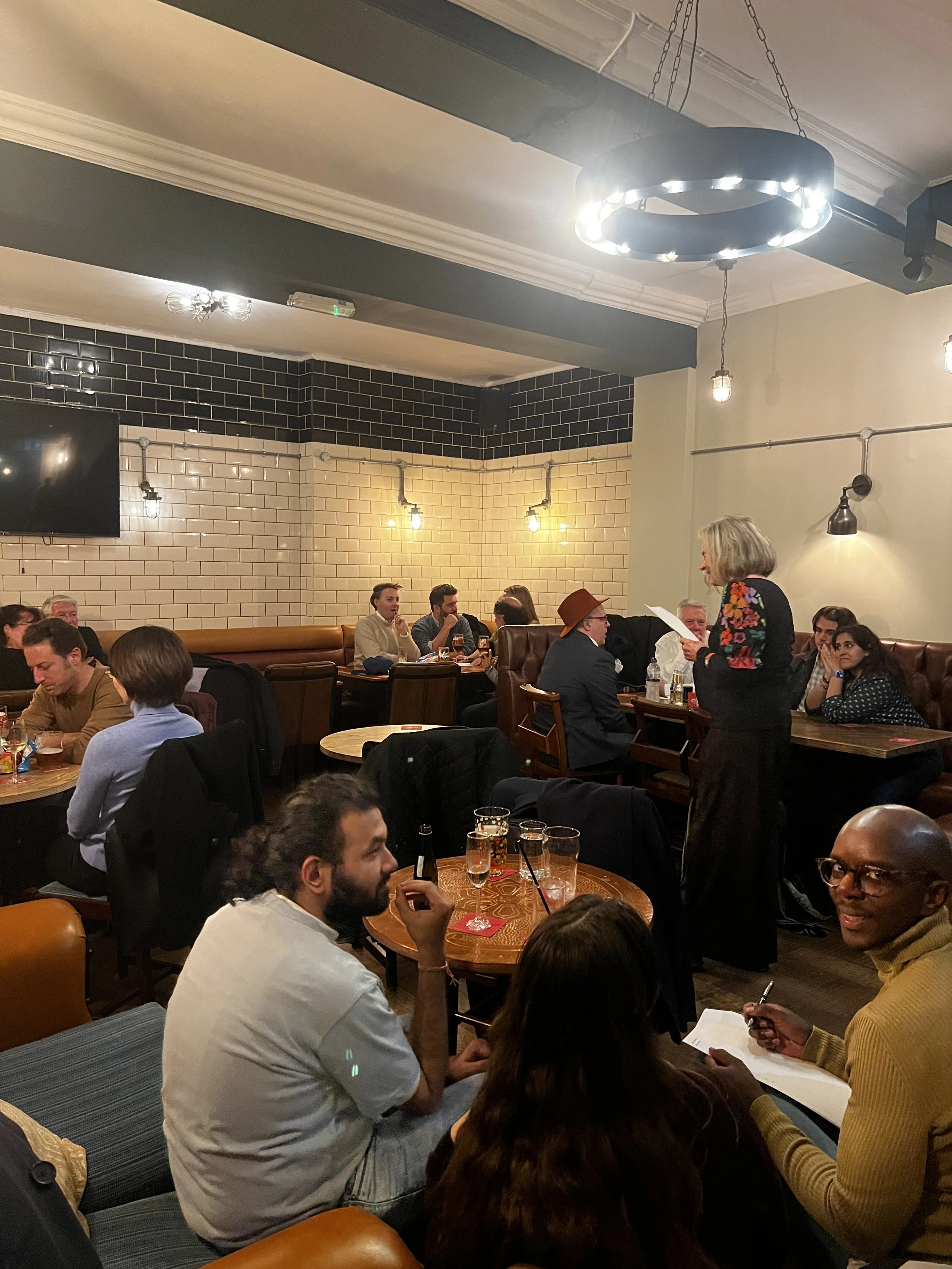
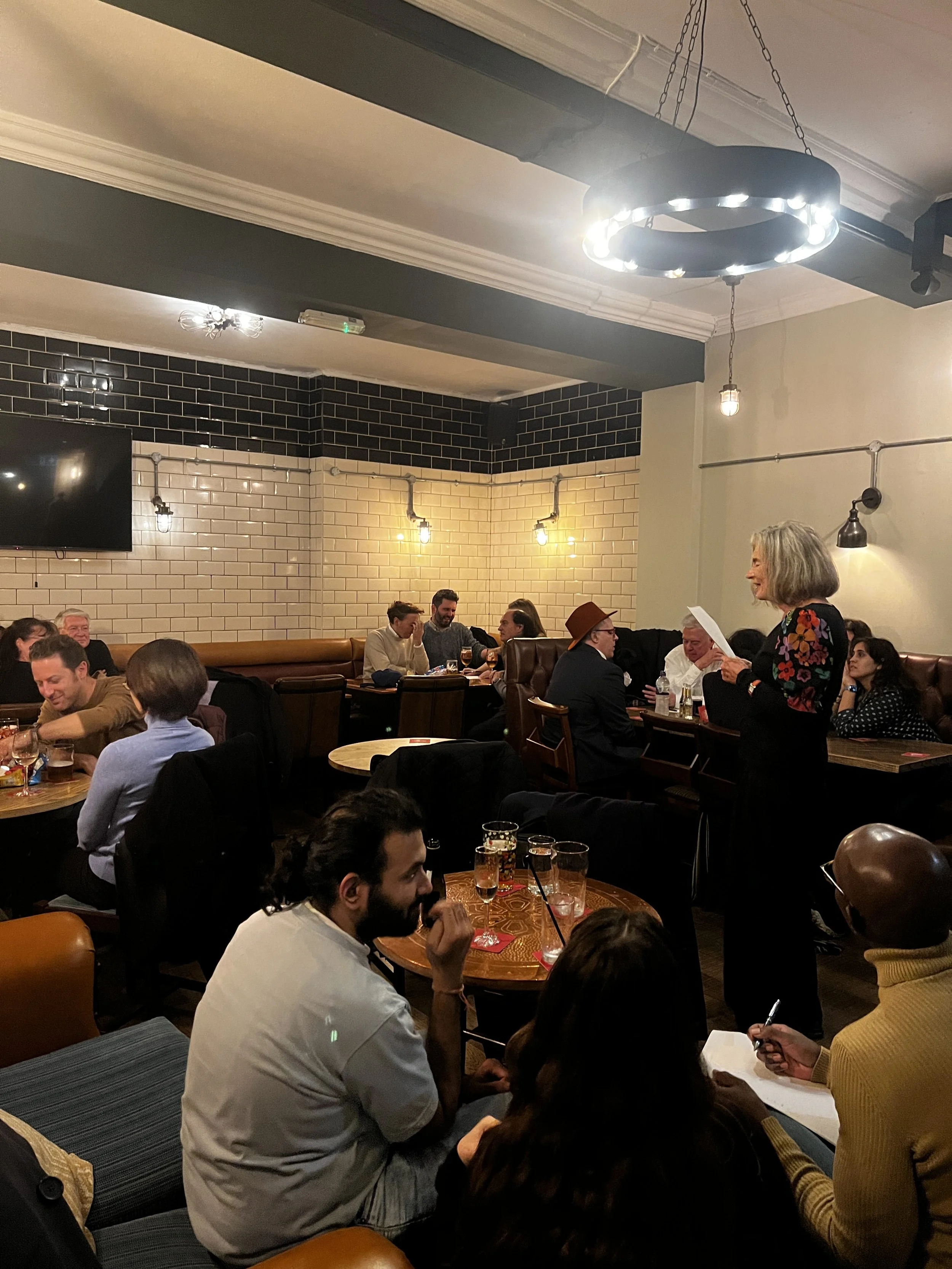
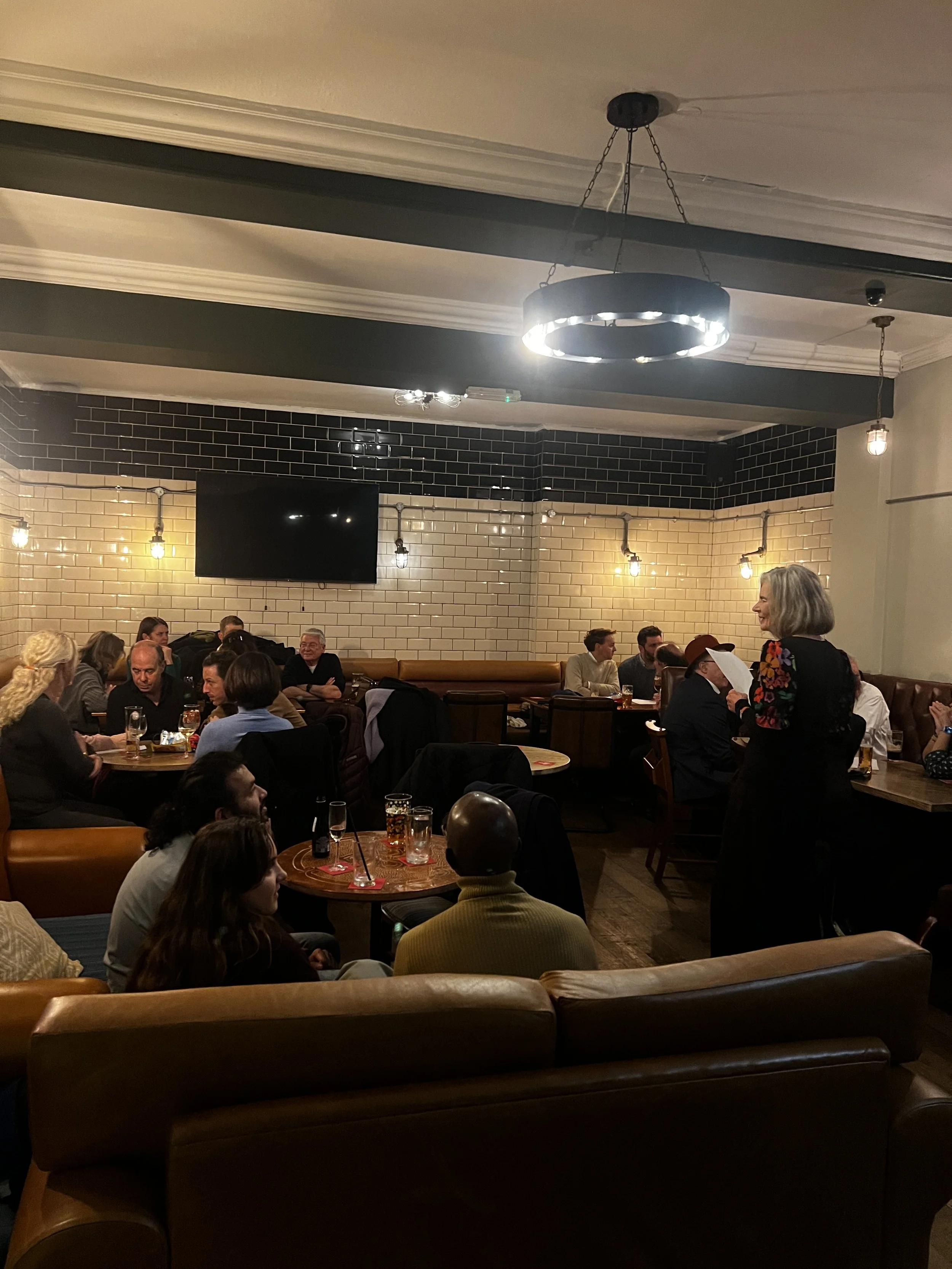
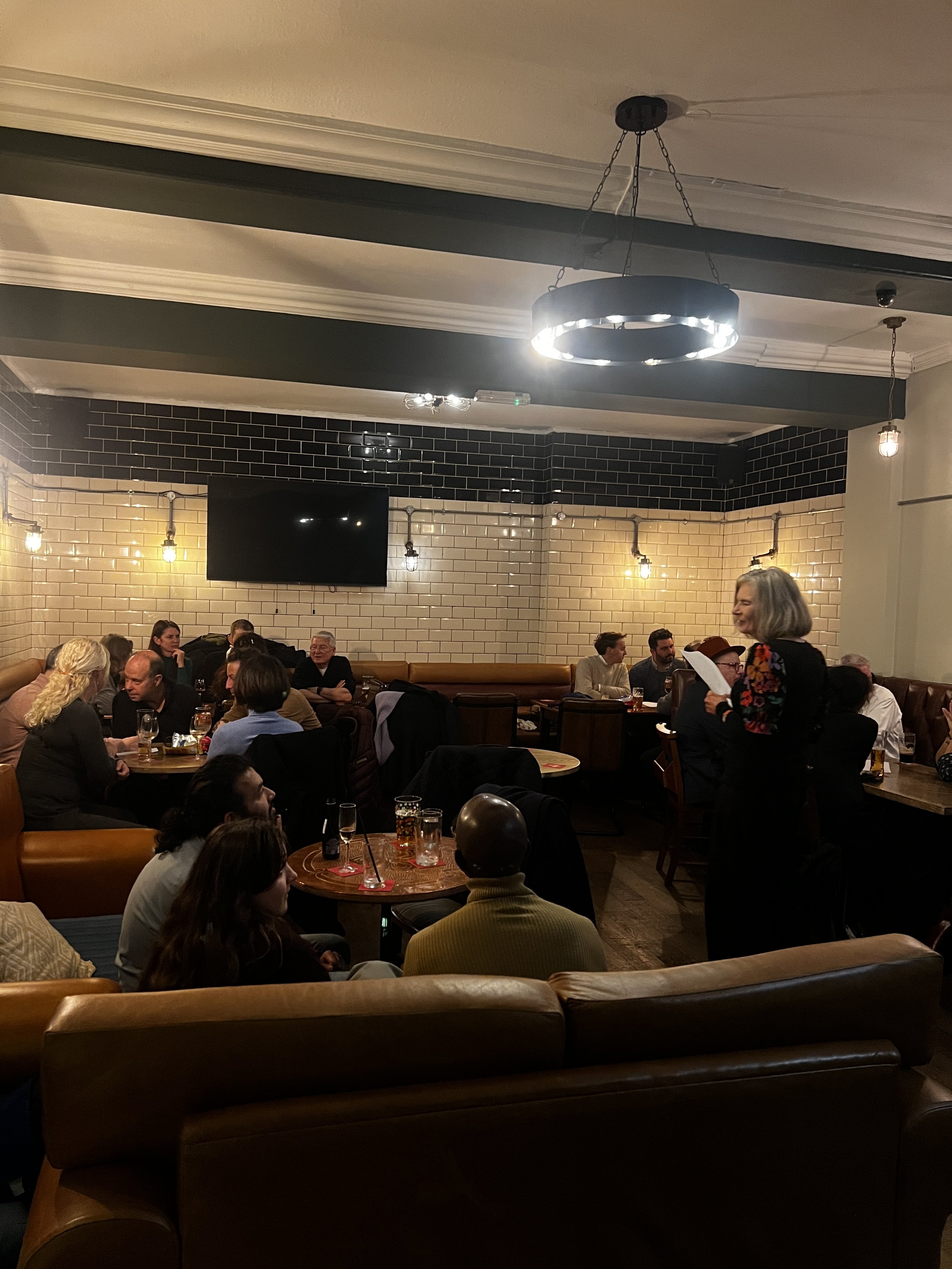
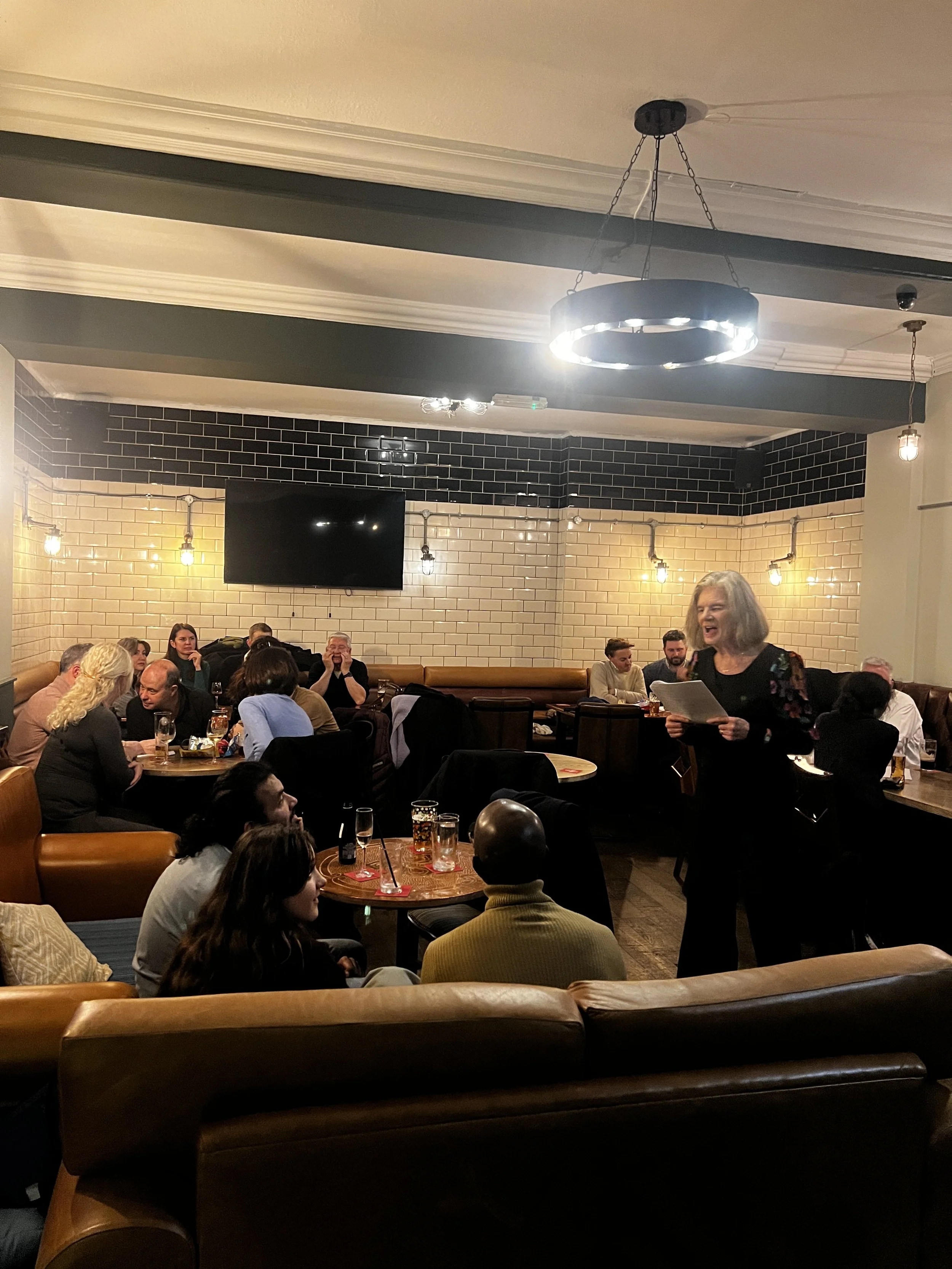
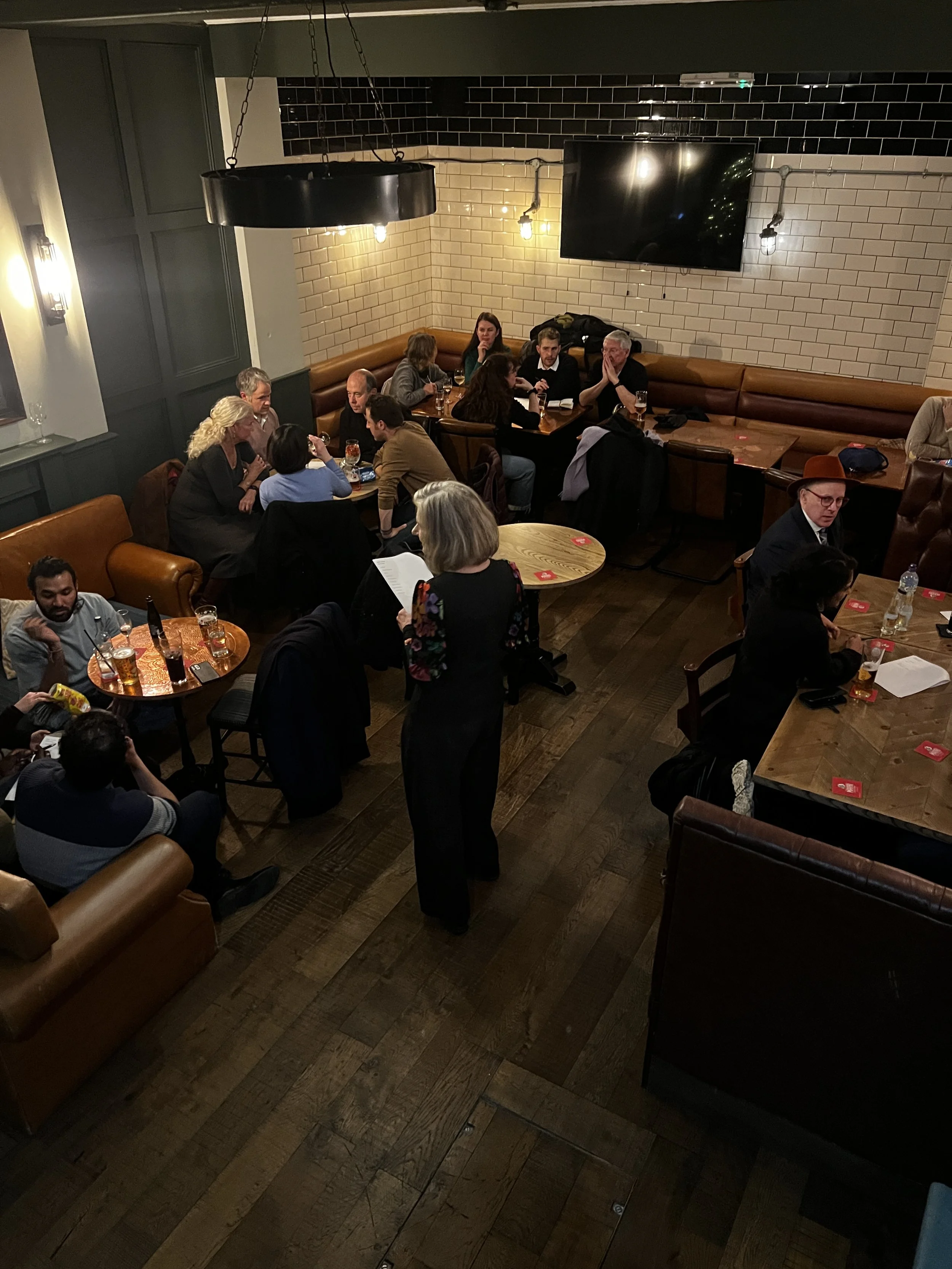
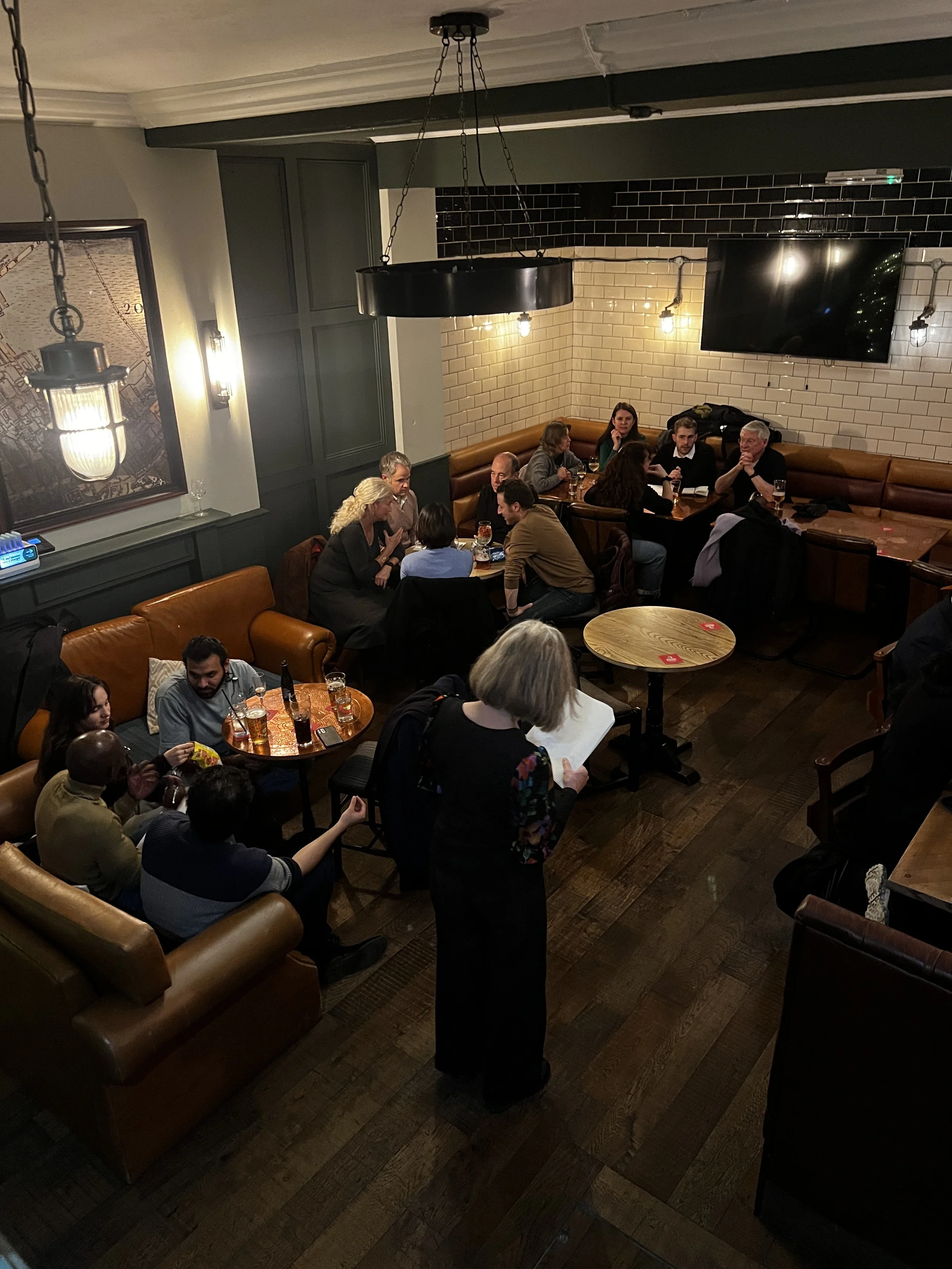
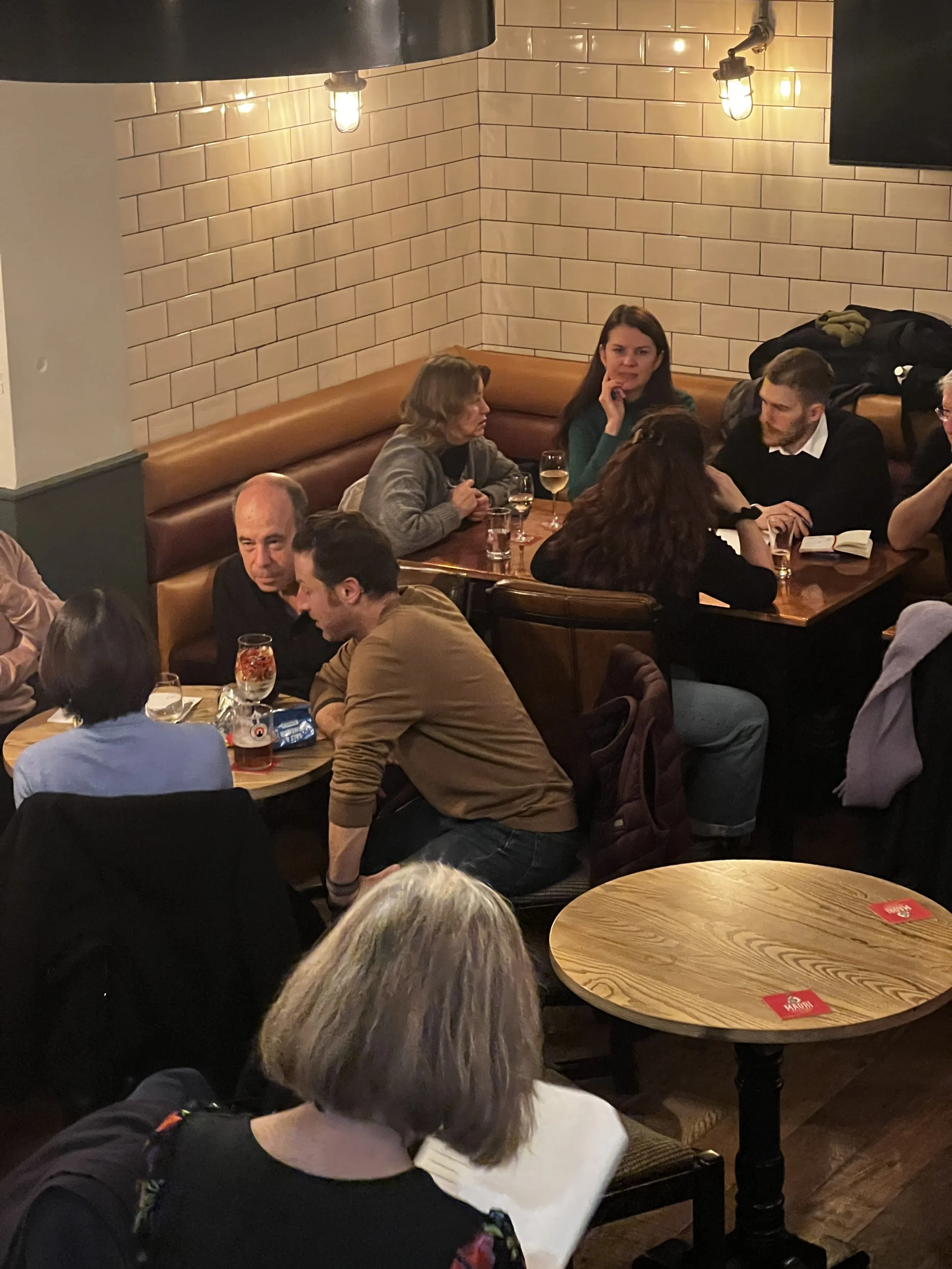
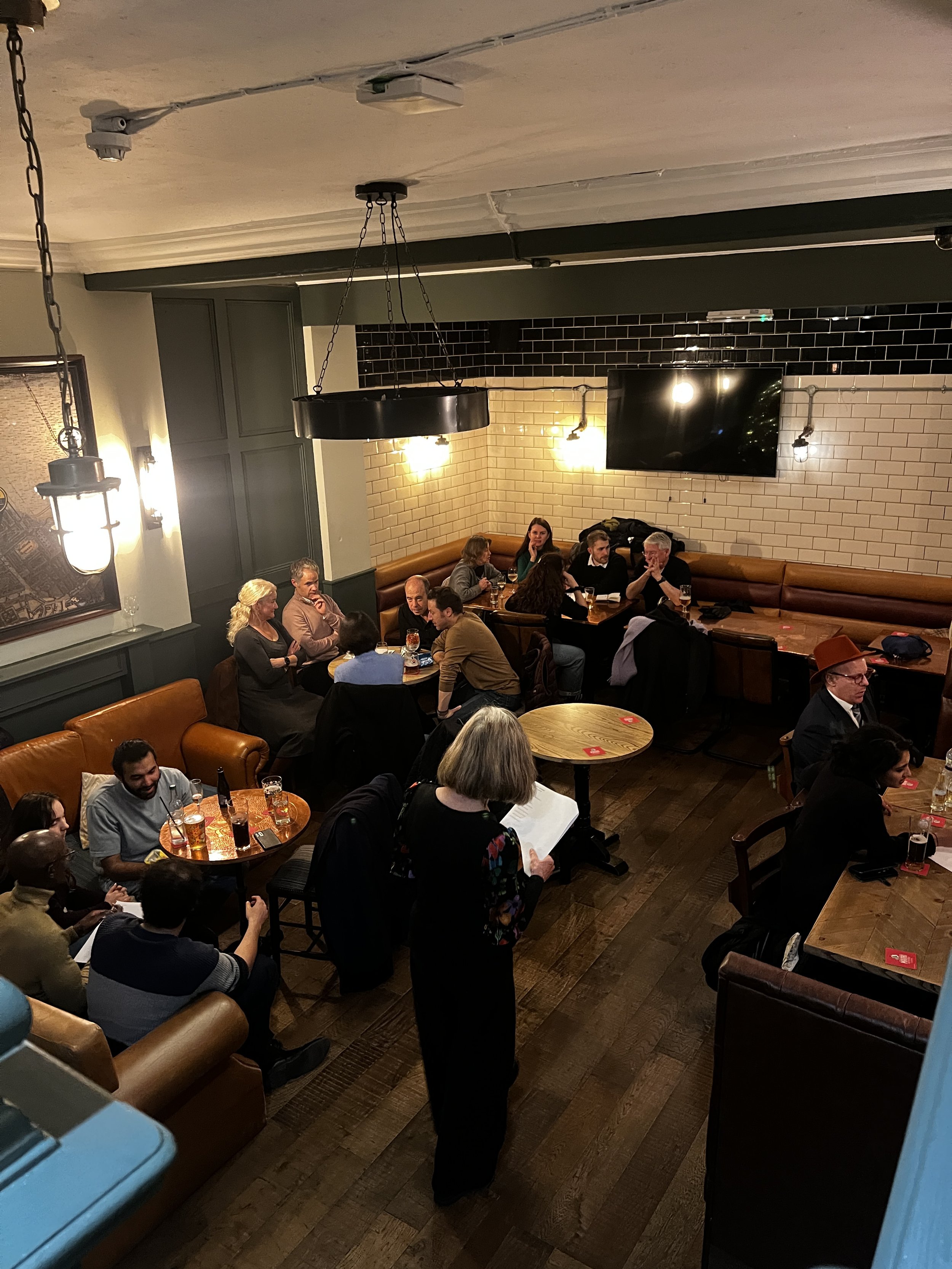
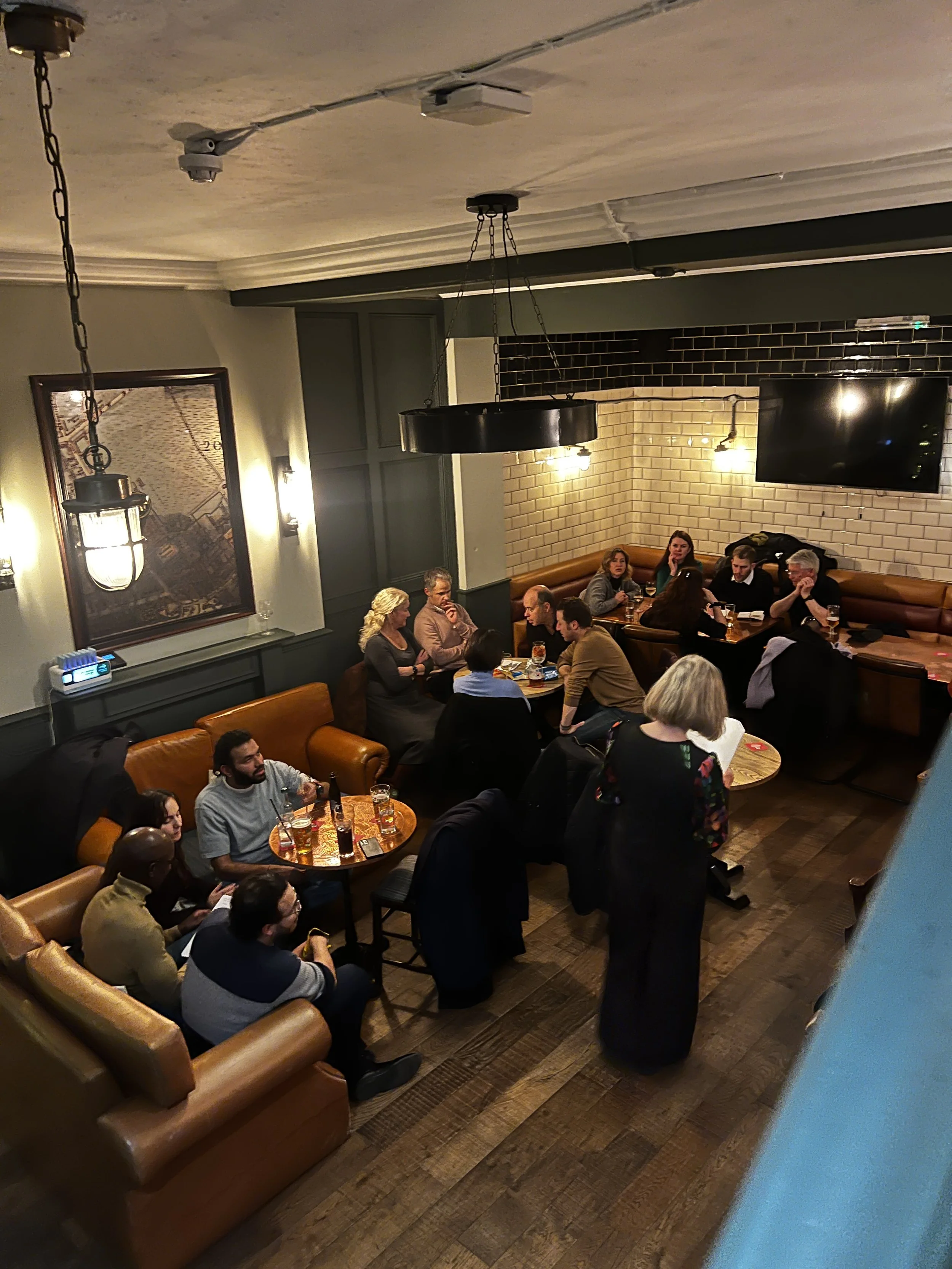
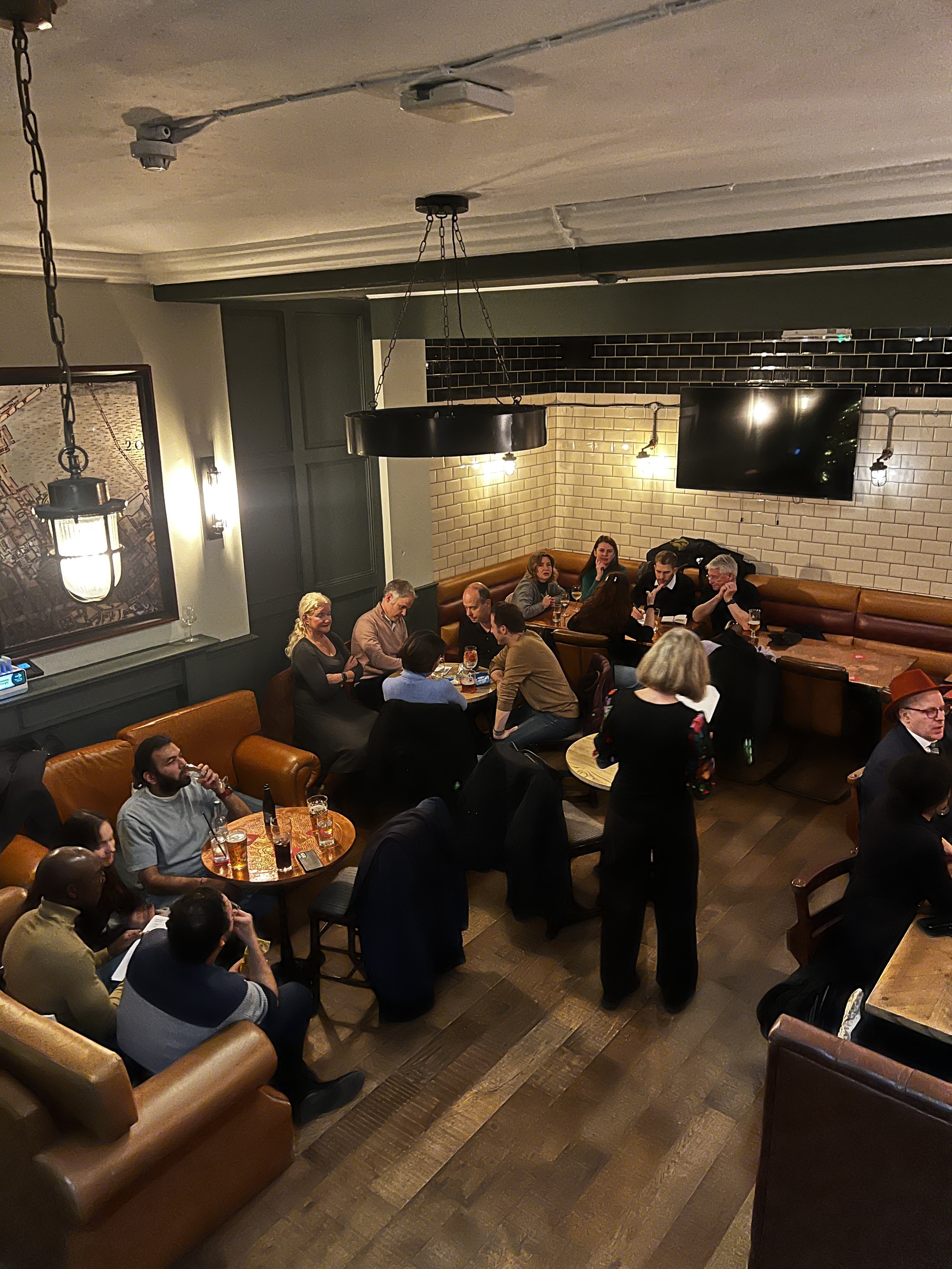
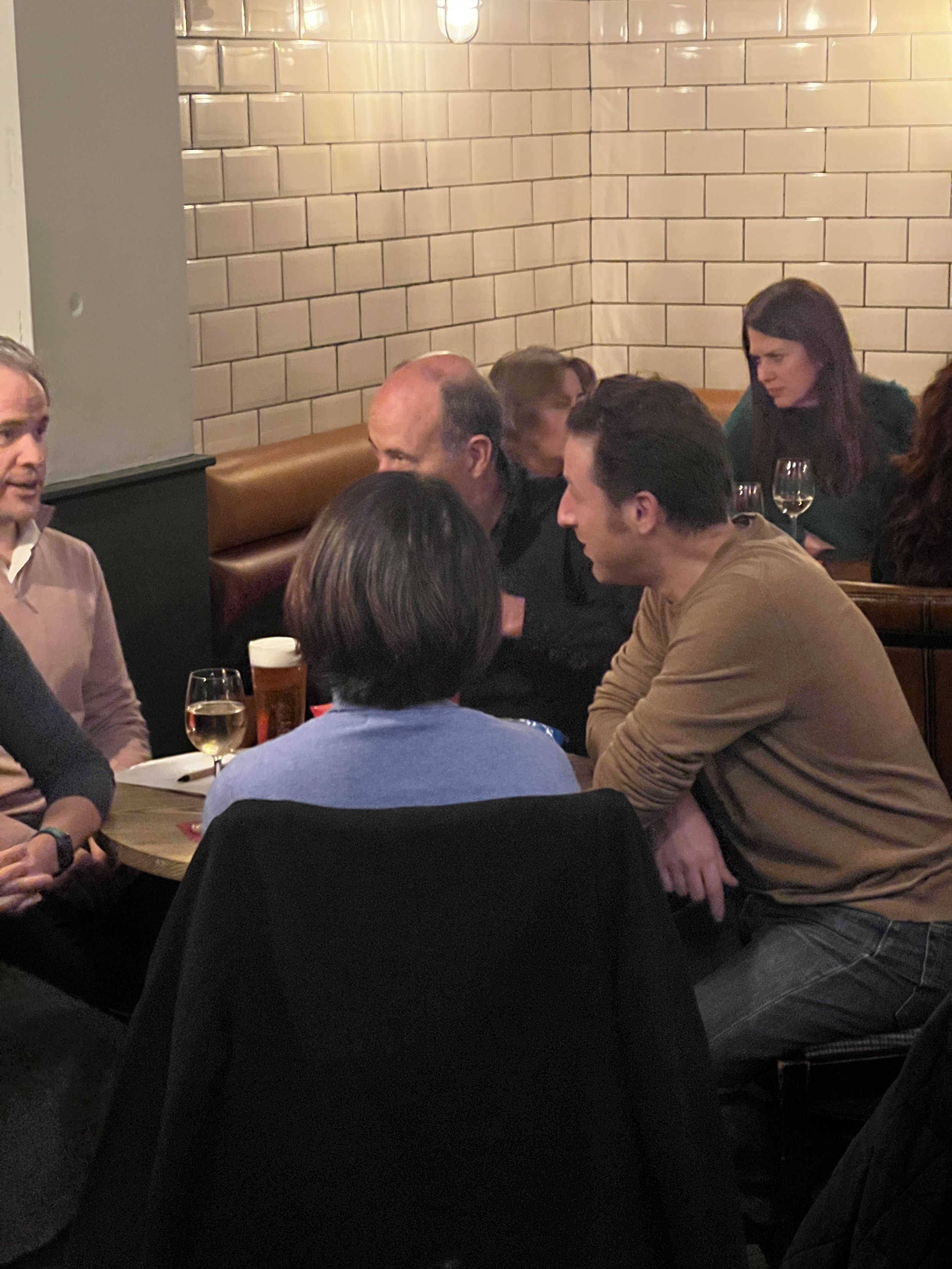


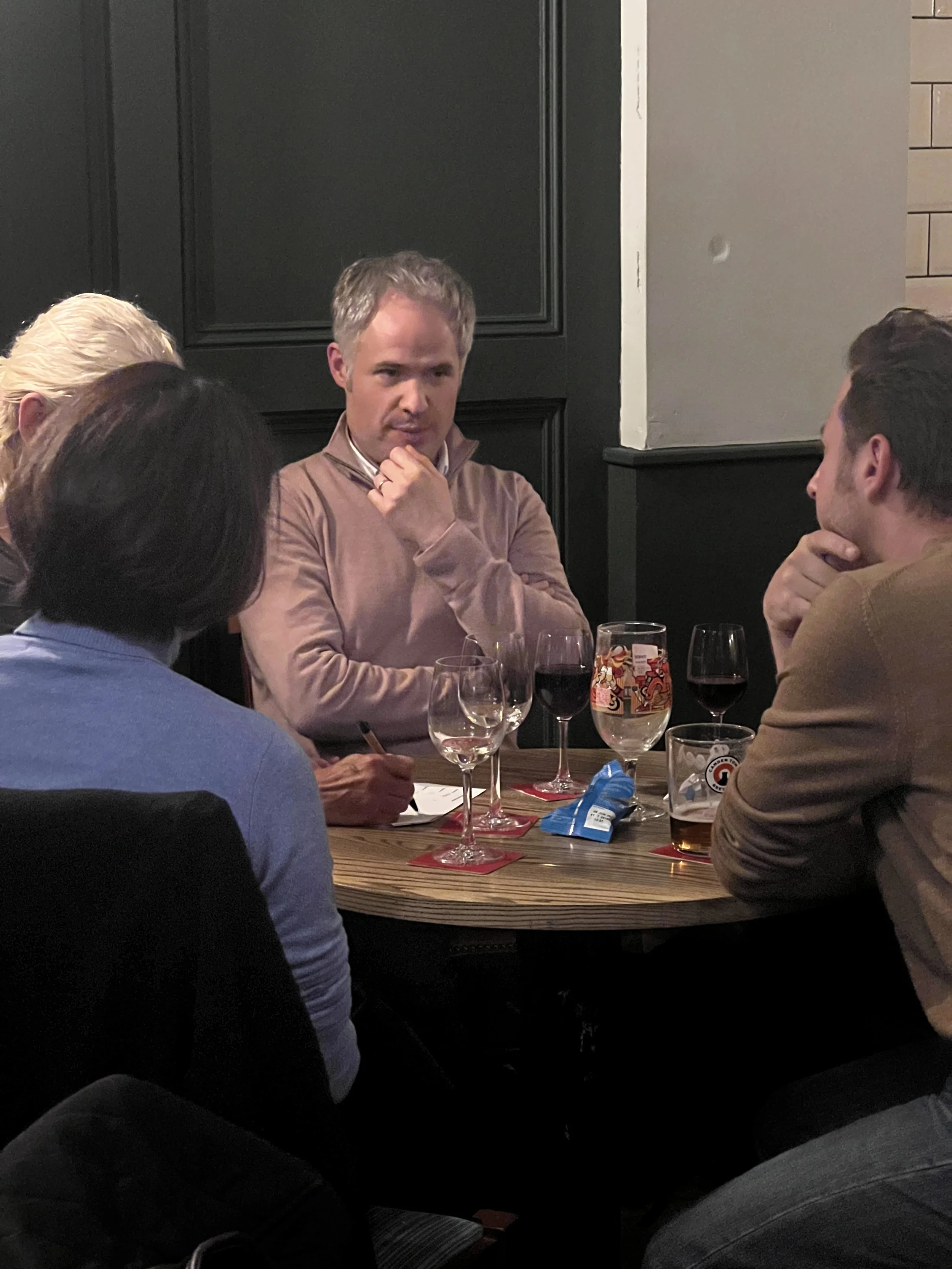
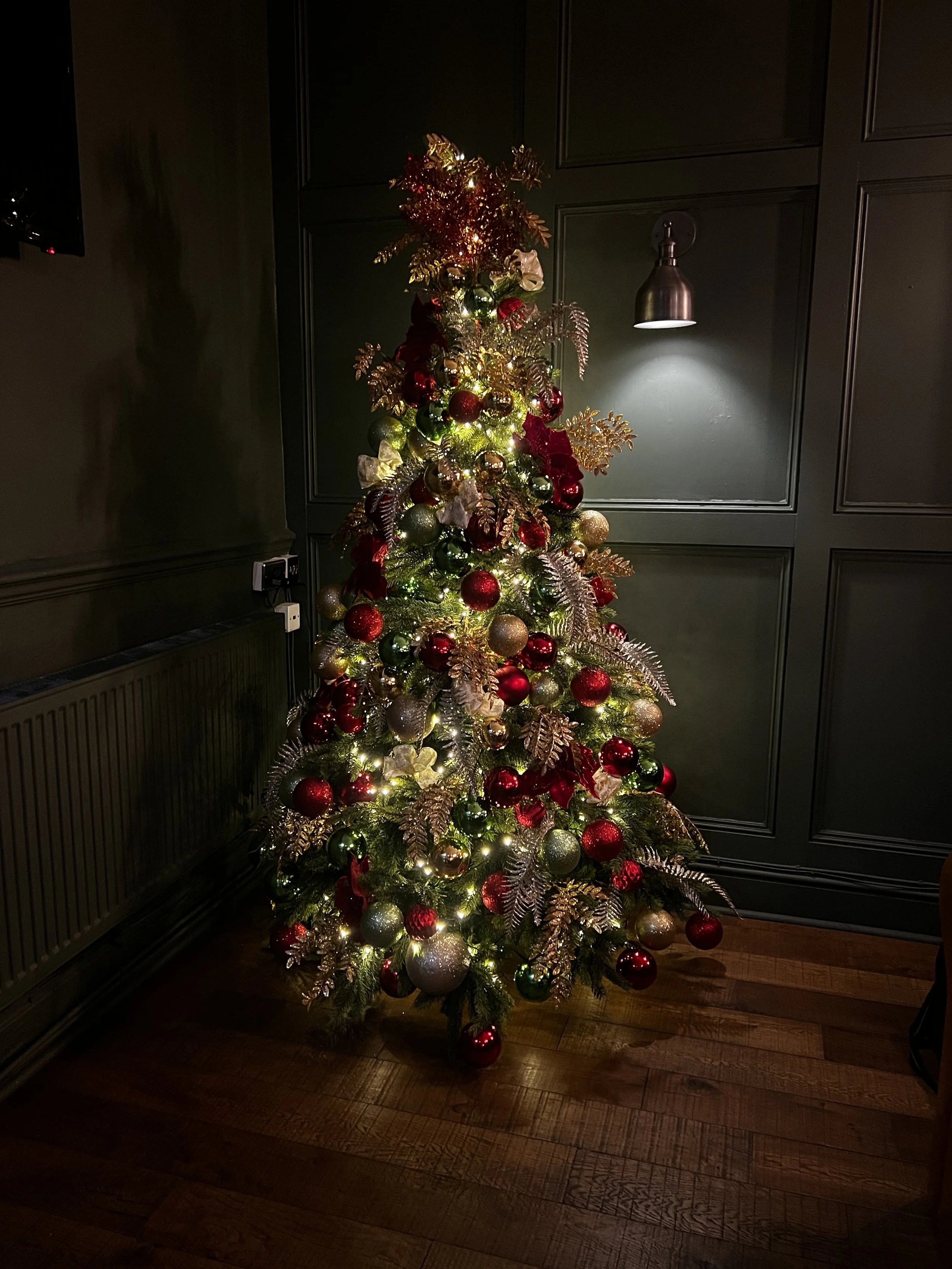
On November 19, 2025 at the College Arms, the AIA UK hosted a holiday pub quiz.
2025 AIA UK/RIBA Keynote Lecture - Lina Ghotmeh
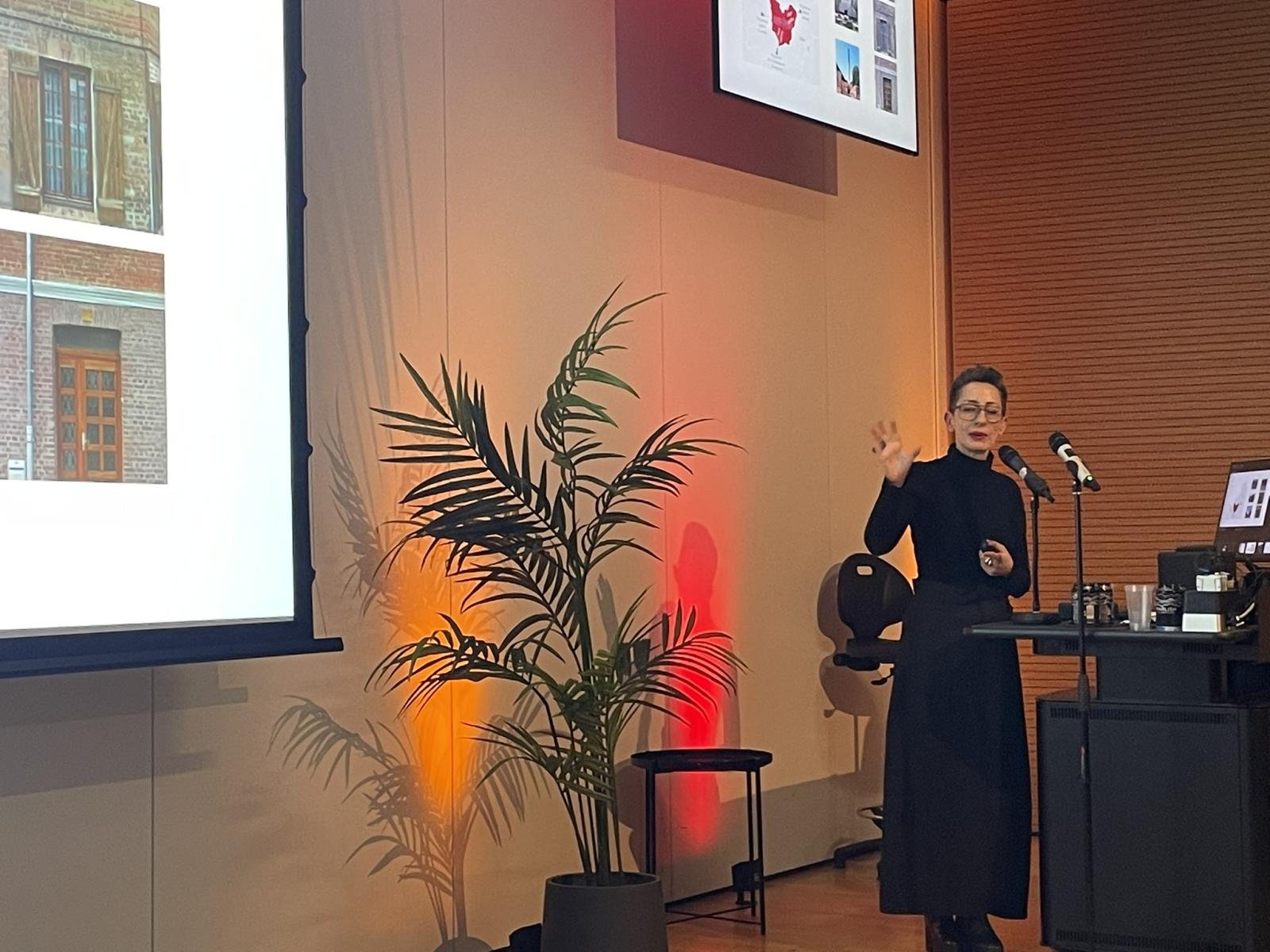
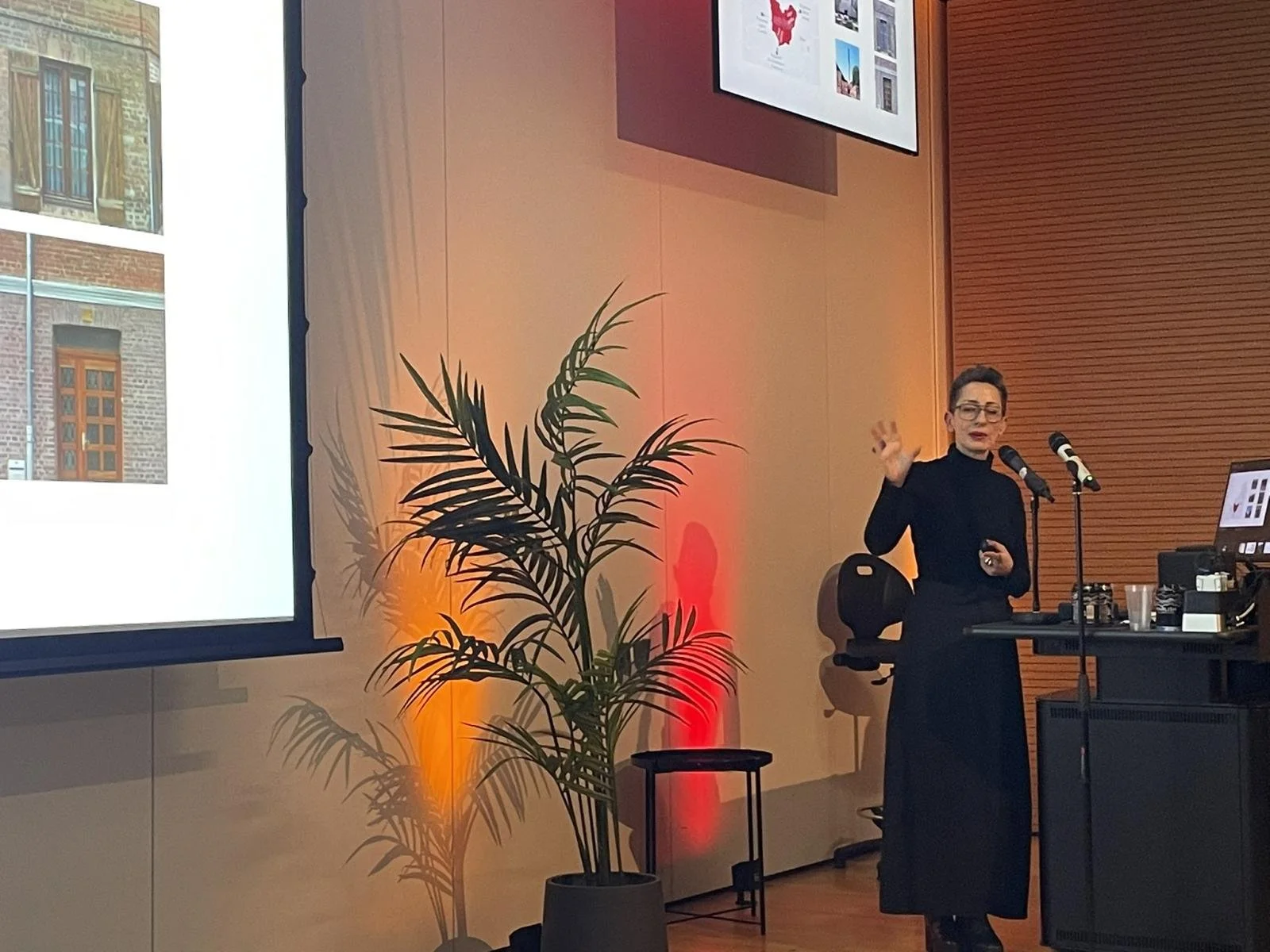
The 2025 AIA UK / RIBA Keynote Lecture featuring Lina Ghotmeh took place on 13 November at UAL Central Saint Martins, drawing an audience of approximately 250 attendees for what proved to be a superb and deeply engaging evening. Opening remarks were delivered by representatives from UAL/Central Saint Martins, RIBA CEO Valerie Vaughan-Dick, AIA National President Evelyn Lee (via video), and AIA UK President Dr. Mark Breeze.
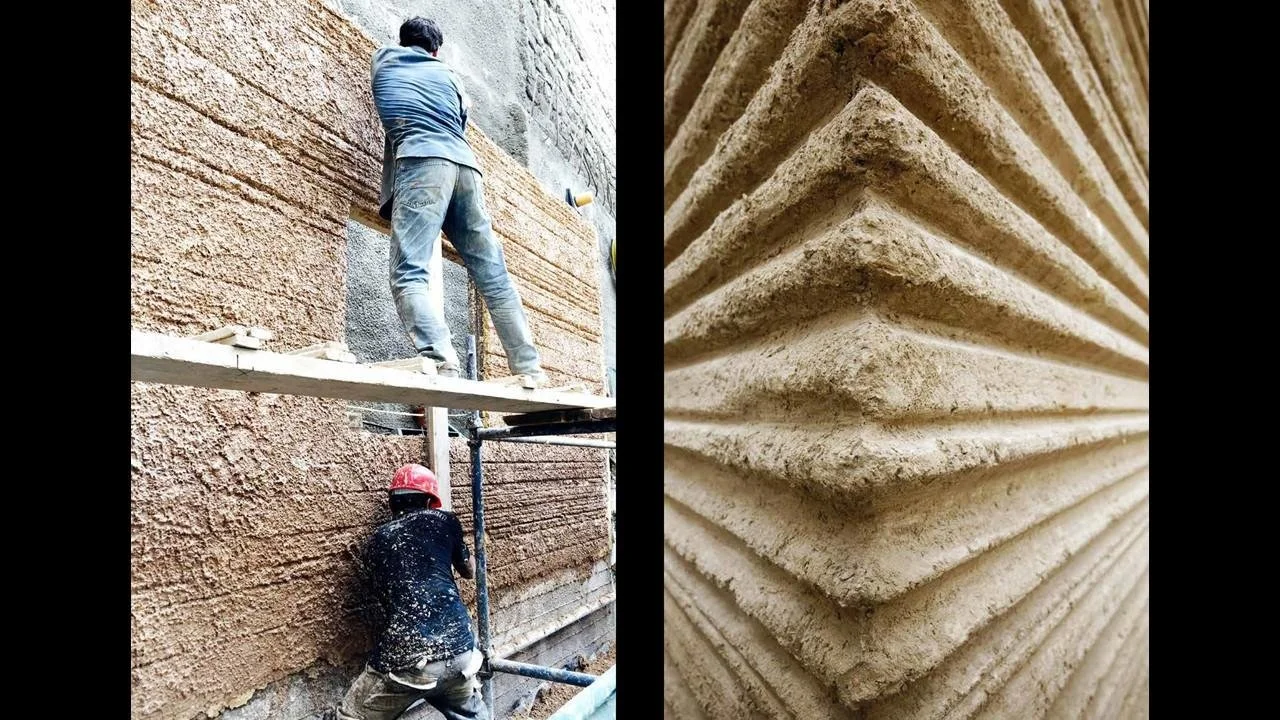
Lina Ghotmeh’s keynote, The Art of Architecture, explored the craft, materiality, and tectonic sensibilities that define her arts-driven practice. She wove an insightful narrative around each of her projects, emphasising her guiding ethos of an “Archaeology of the Future”—an approach in which contemporary architecture emerges from a careful reading of history, memory, and place, while pointing toward a sustainable and humane future.
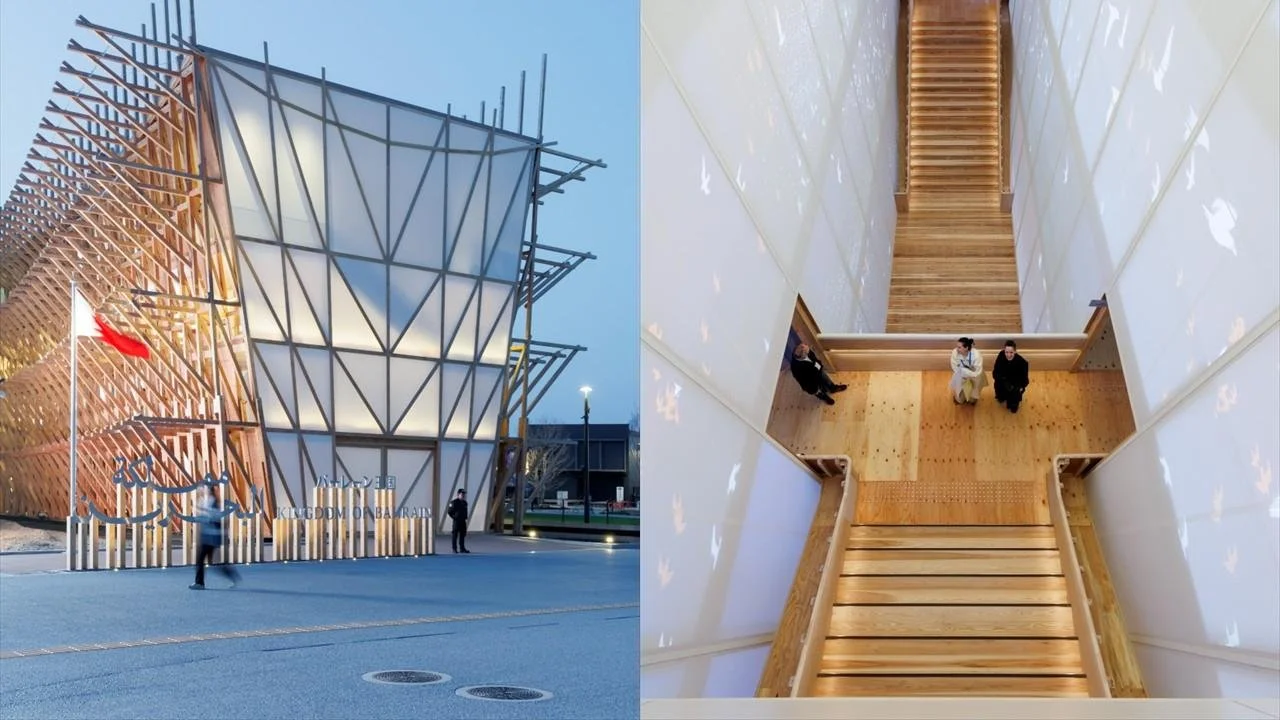
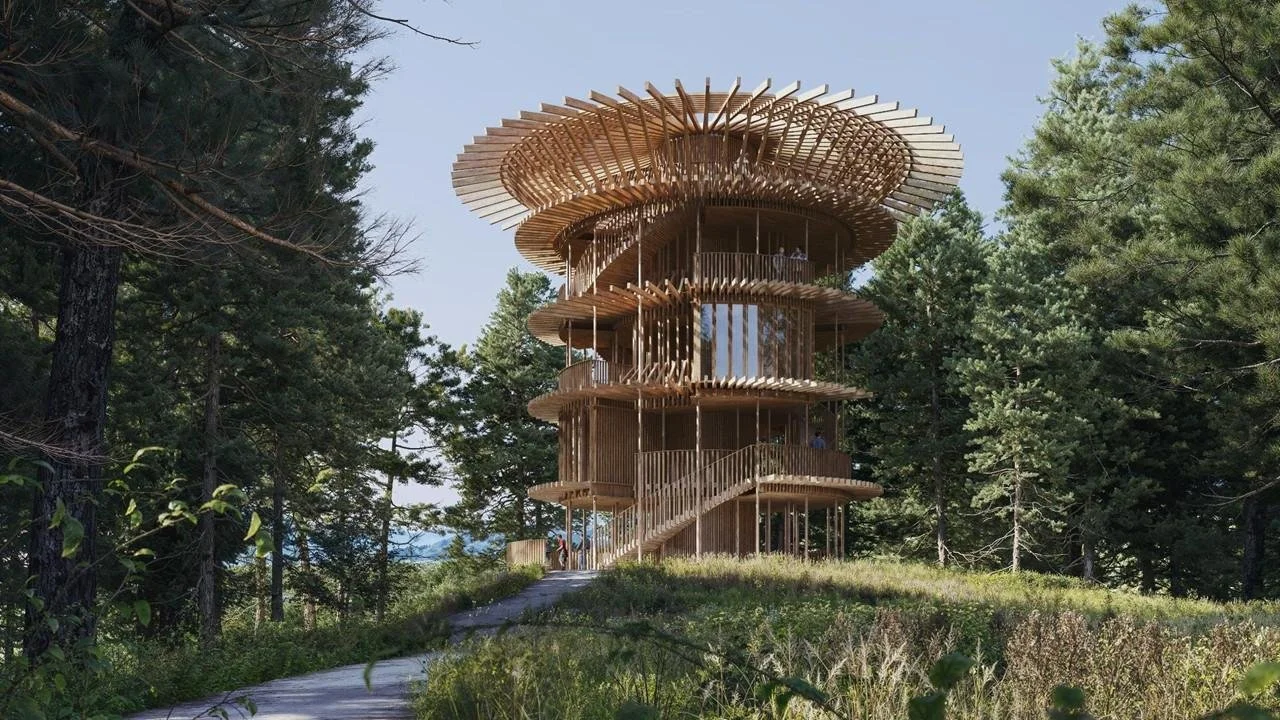
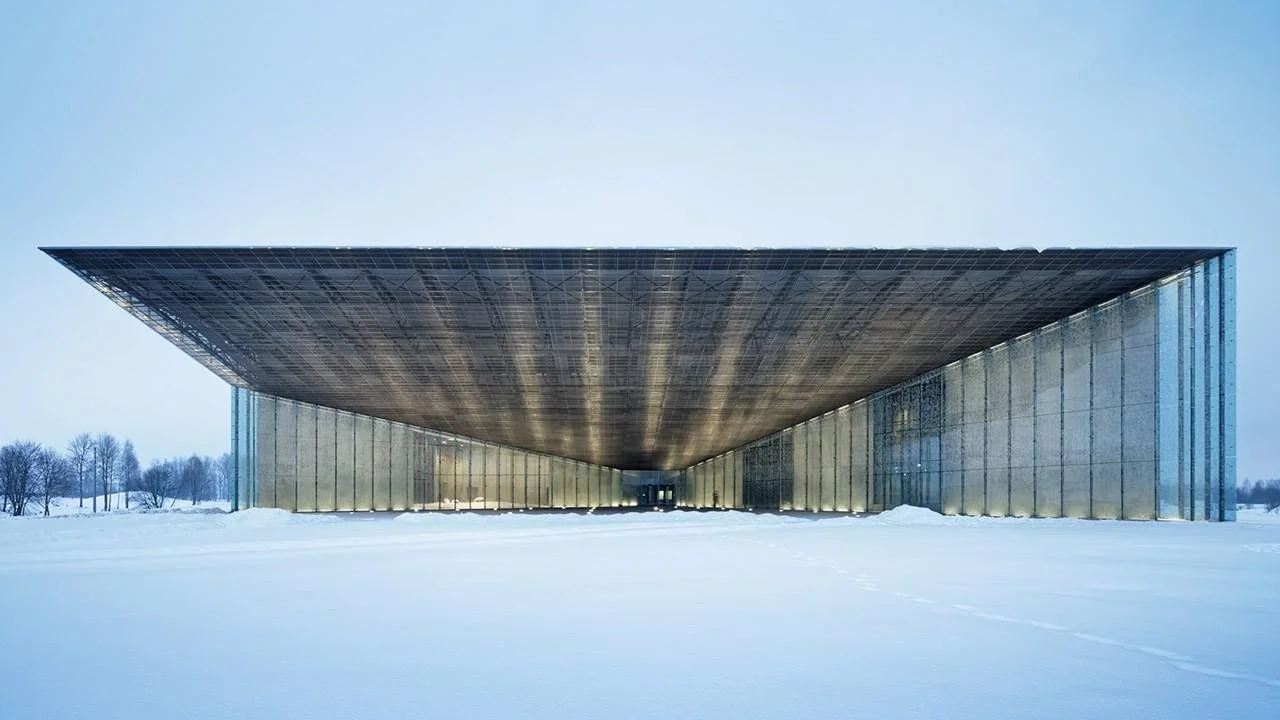
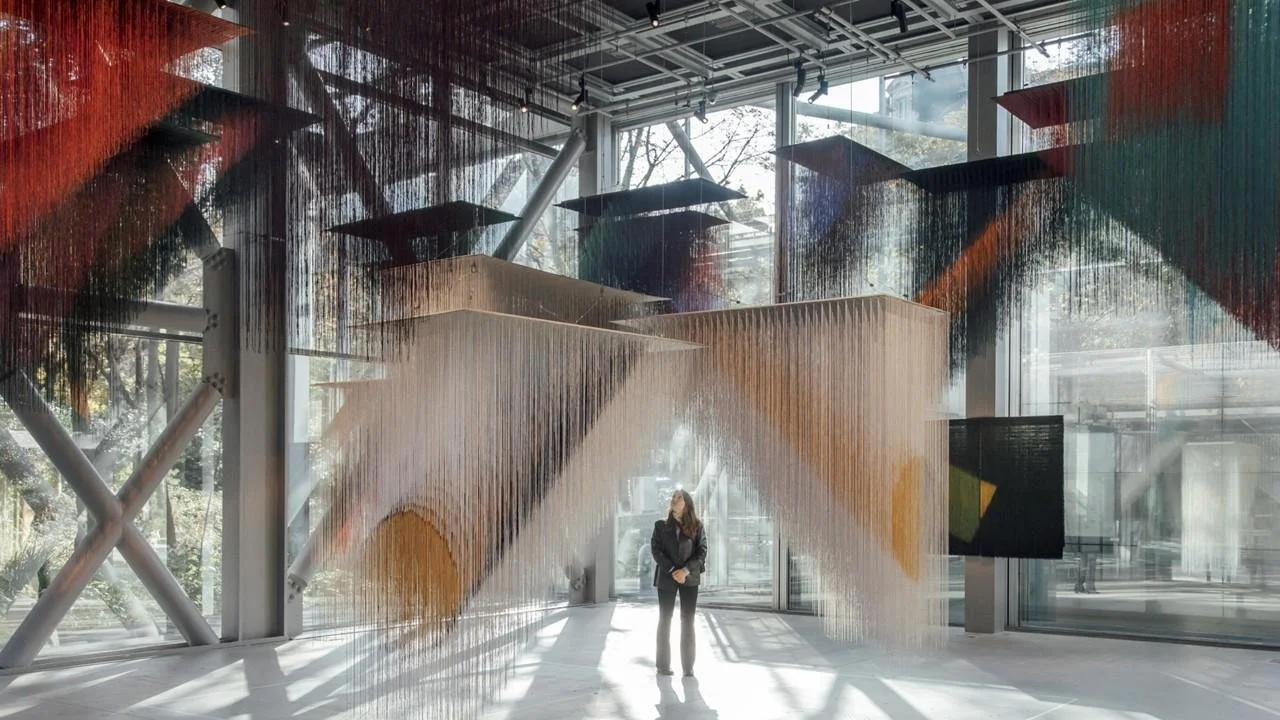
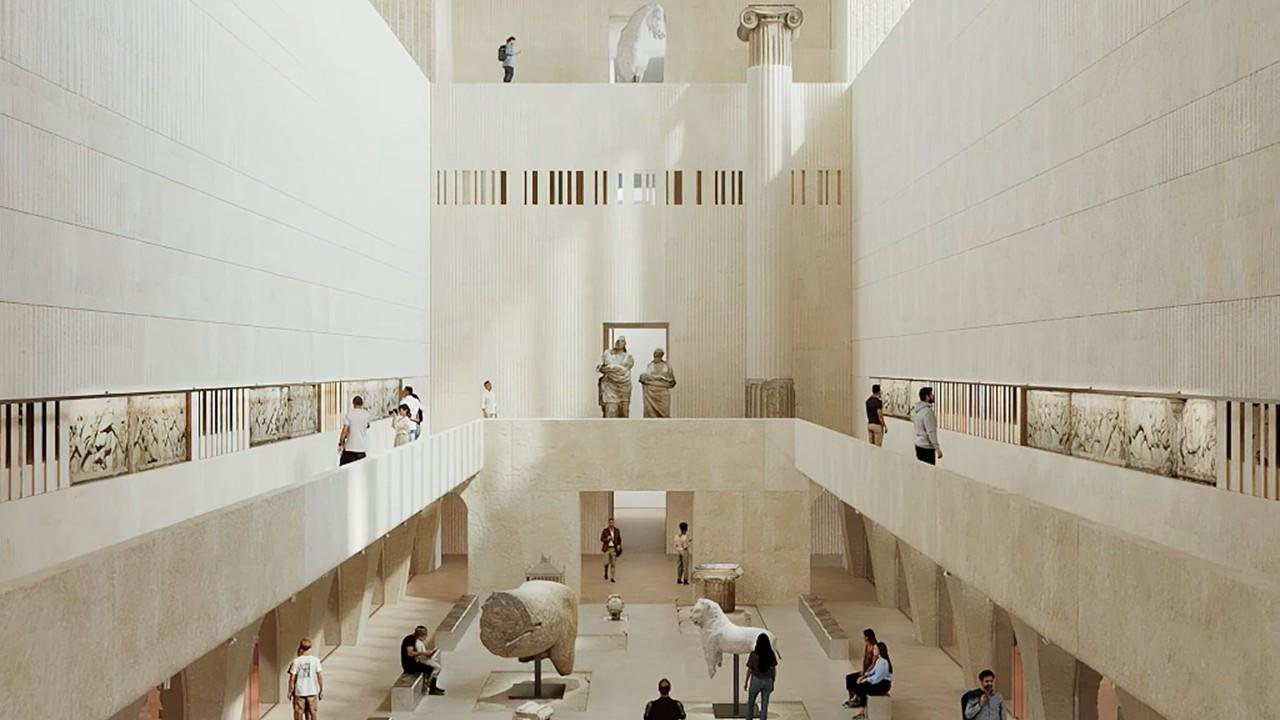
Ghotmeh shared a wide range of her internationally acclaimed work, including the Bahrain Pavilion for the Osaka Expo, the Estonian National Museum, the Stone Garden tower in Beirut, the Hermès Workshops, and the Serpentine Pavilion in London. She concluded the lecture with a preview of her early design explorations for the remodelling of the Western Range at the British Museum.
The AIA UK Chapter extends its grateful thanks to the RIBA, UAL/Central Saint Martins, Lina Ghotmeh – Architecture, and our sponsor Axalta, whose support made this event possible.
Written by Lester Korzilius, FAIA RIBA