
AIA Film Challenge 2021 is open

The AIA Film Challenge 2021 invites you to share stories of architects, civic leaders, and their communities working together to achieve a zero-carbon, resilient, healthy, just, and equitable built environment. This year, we’re asking for 1:30- to 3-minute short documentary films that you can produce from any device. Your film must address at least one of the categories outlined in the prompt. Participants compete for more than $15,000 in prizes! Submissions are due August 16.
Learn more about this year’s prompt >

Call for Submissions 2021 AIA Upjohn Research Initiative
The AIA Upjohn Research Initiative supports applied research projects that enhance the value of design and professional practice knowledge. This AIA program funds up to six research grants of $15,000–$30,000 annually for projects completed in a 6-to 18-month period. The funds must be fully matched with hard dollars, with a maximum of 10% allocated for overhead. Grant recipients’ research findings and outcomes are published online by AIA. Grants are eligible to academic institutions, practice, and other research organizations.
2021 grants
Research should be relevant and applicable to practicing architects. Upjohn Research grant funding will be allocated to projects related to the priorities outlined in AIA's Climate Action Plan. These include a drive toward sustainable design that helps mitigate or adapt to climate change. More specifically, research projects must address one or more of these areas:
distributed energy and grid-integrated buildings
regenerative design (i.e., projects that lead to the improvement of the ecosystem, creating resilient and equitable systems)
circular building economy (e.g., materials market)
temporary and transitional housing models
improving equity through adaptation of spaces/ neighborhoods
water resilience & equity (e.g., equitable access to water systems, water system resilience, carbon impacts of water systems)
Submit an entry from this link.
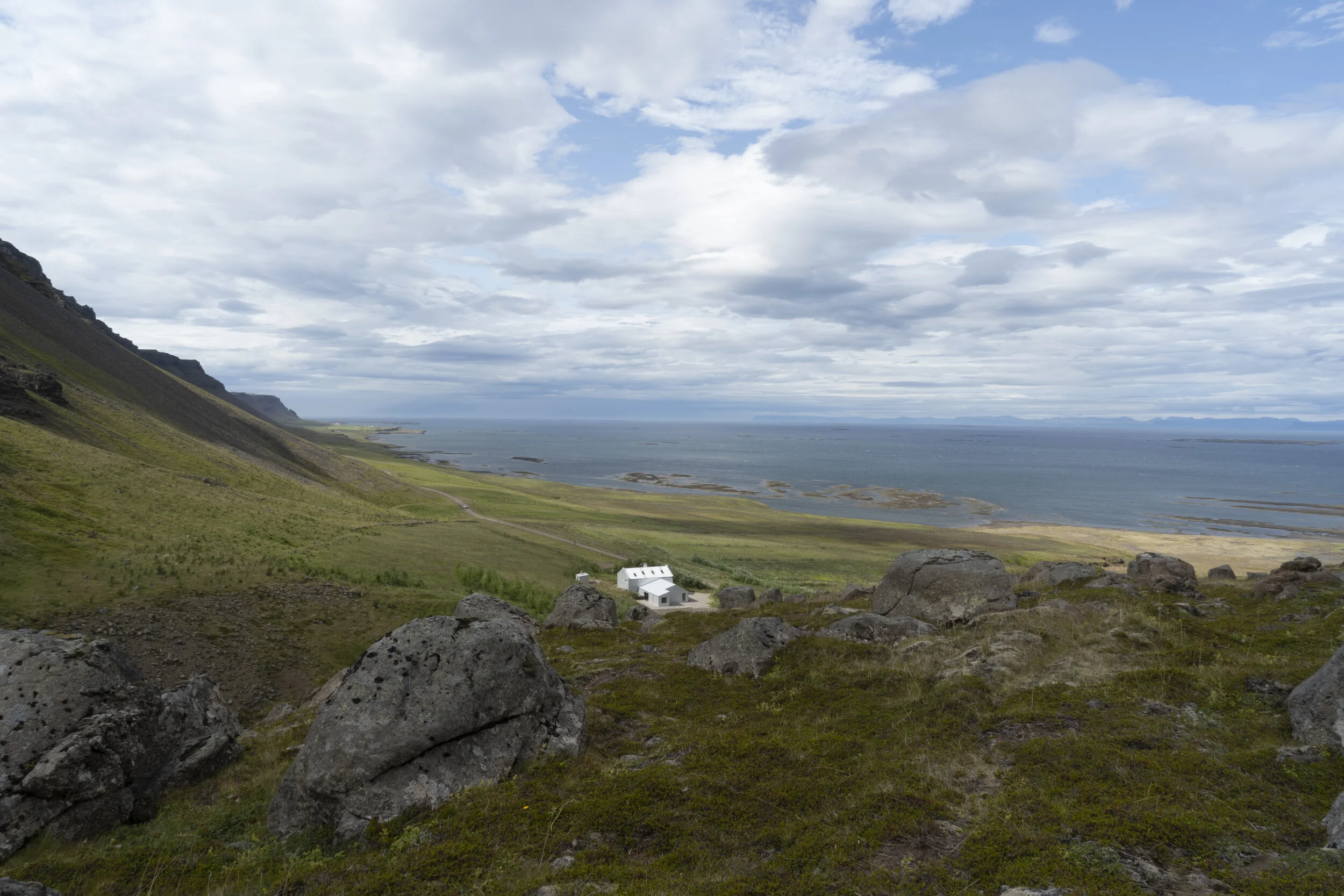
Virtual Building Tour – Nyp Guesthouse by Studio Bua
©GIOVANNI DE ROIA
The latest instalment of the 2021 series of the AIA UK Chapter’s “Virtual Building Tours” was held on 13 May with a visit to the Nyp Guesthouse, in West Iceland. Originally constructed in 1936 as a sheep farm overlooking Breiðafjörður (a nature reserve and bay between the Snæfellsnes Peninsula and the Westfjords in West Iceland), the building was deserted in the 1970s and was close to ruin before the new owners began rebuilding it in 2001.
Mark Smyth from Studio Bua and Sigrún Sumarliðadóttir led us through an insightful tour of their Icelandic Guesthouse, a winner in the Emerging Practice - Small Project category of the AIA UK Chapter Design Awards.
According to Sigrún Sumarliðadóttir, an Icelandic architect, the Guesthouse has become a cultural hub by hosting exhibitions, workshops and other events. During the tour, it was explained that the project brief was to make better use of the existing facilities and allow for additional, multi-functional spaces for various cultural activities. This would involve renovating the main house along with rebuilding and enlarging an adjoining sheep-shed. The design includes a naturally lit entrance hall and link to the farmhouse - a deliberately generous connection that allows it to simultaneously function as an exhibition space.
The main house is divided vertically into two volumes, with the original living quarters to the south and a barn for hay storage to the north. Studio Bua has cleverly inserted an additional floor into the barn, doubling the usable area, whilst creating a raised event space that captures views to the mountains and the fjord via a series of strategically placed openings. The architects described their approach ethos as focusing primarily on local turf homes and reinterpreting some of the original farmhouse historical features. The project made use of local labour, to the extent possible, whilst utilizing local techniques and materials – for example, stone-turf retaining walls and handmade tiles from locally sourced clay from the next valley.
©GIOVANNI DE ROIA
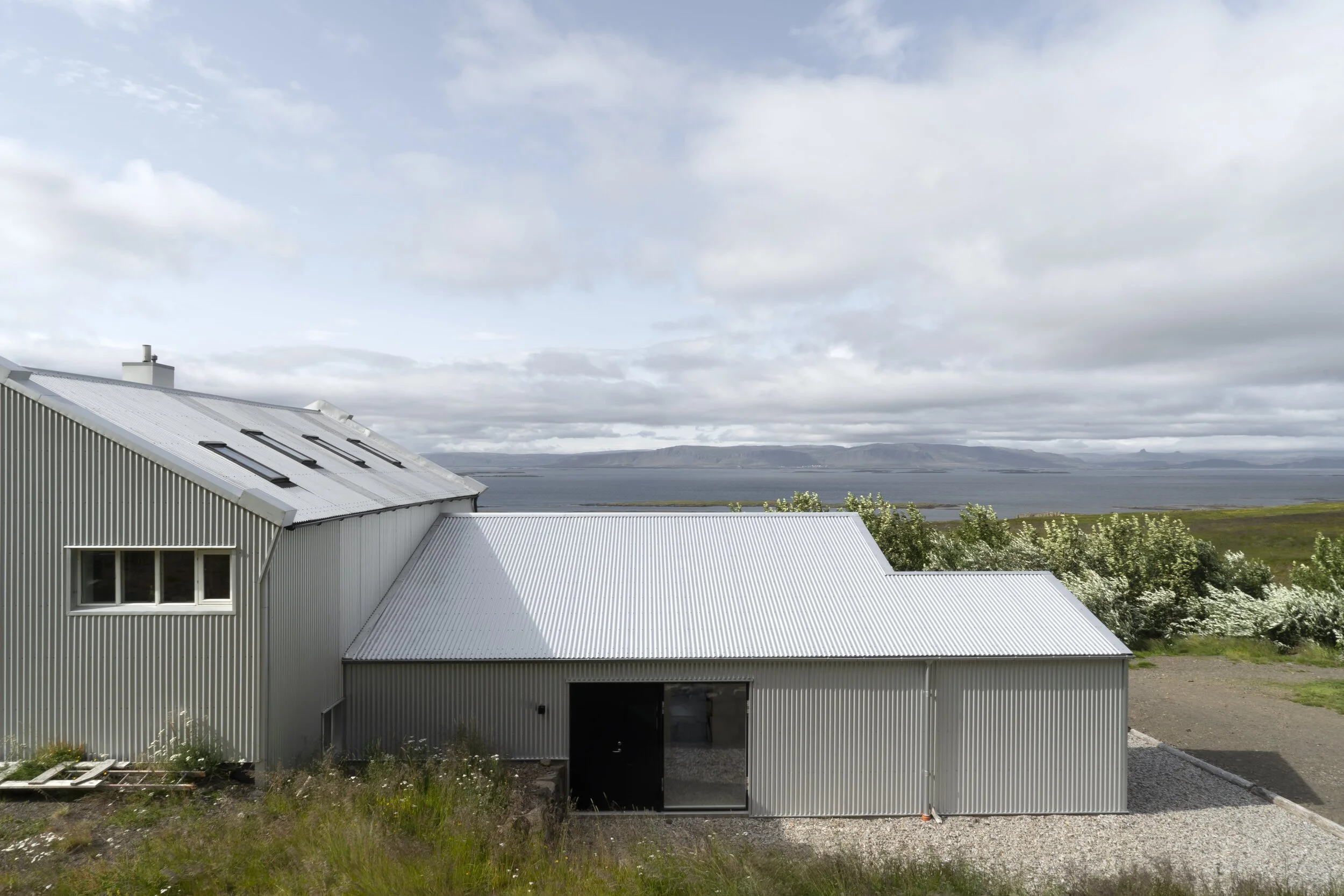
Mark Smyth discussed the external cladding of the building; how the combination of timber frame and corrugated metal cladding has become mainstream in Iceland, replacing the traditional turf house construction. The siting and orientation of the Guesthouse subject it to strong, prevailing winds that come down the valley from the north and east. To withstand the extreme weather, the rear of the building and the new extension were overclad in corrugated aluzinc.
Whilst concrete in various forms has been used in buildings for centuries in Iceland, during the 1930's, it rapidly replaced conventional timber construction. Concrete was used extensively in the original farmhouse, even down to the window frames. The distinctive coarse concrete aggregate characteristic of the Nyp Guesthouse is the result of pebbles sourced from the local beach. To highlight the distinctive quality of the existing concrete, the original walls have been retained and exposed, both internally and externally, as much as possible. The principal facades facing the access road and fjord have been repaired and given a thin silicate, allowing the texture of the concrete to be expressed. The colour of the silicate render replicates the original colour of the façade.
It is hard to imagine a “sustainable” construction in such a harsh environment, however, the Nyp Guesthouse is an exemplar of sustainable design. The building itself is recycled. The building is constructed primarily with reused building materials – for example, driftwood salvaged from a neighbouring beach, which has been used as columns to support the new floor. Components such as steel handrails, timber doors and beams were salvaged from other building sites in old town Reykjavik.
In a similar spirit, the labour force was made up of local builders and craftsmen, including the neighbouring farmer who provided a cement truck. A specialist local mason restored the unreinforced concrete walls, which were fragile due to prolonged exposure to the elements. The whole project is a testament to the design team’s innovative spirit and its ability to convert a deserted and ruined building, poetically, into a local cultural centre for the Westfjords community in Iceland.
The AIA UK Chapter continues to host its virtual building tour series for the 2021 season based on Winners of AIA UK 2020 Excellence in Design Awards. The series offers architects and interested parties the opportunity to visit notable buildings that have particular design interests in the UK and abroad. Follow this link for further information to participate in the next tour of One Fen Court by Eric Parry on 10th June 2021.
Written by Gregory Fonseca, AIA
ARCHITECTS AT THE ART BIENNALE?
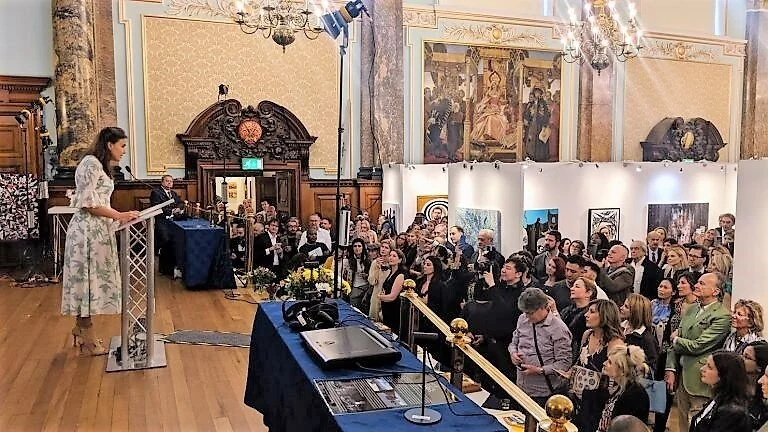
The LONDON ART BIENNALE – claiming ‘artistic excellence from all over the world’ - will take place from 30th June to the 4th of July 2021 at the Chelsea Old Town Hall on the King’s Road. Not sure how many artists displaying are also architects, but there will be at least one – our AIA UK Past President (2003), Elizabeth Casqueiro, AIA.
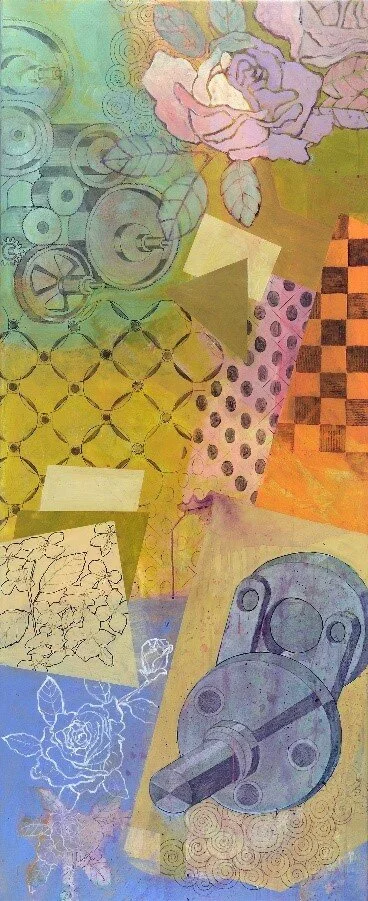
Image Credit: Elizabeth Casqueiro
Pending travel restrictions, she will be trying to make it to London from Washington for the event and would like to see old AIA friends there. Check the Biennale’s website for further details. Check with secretary@aiauk.org for updates on Elizabeth’s attendance. Check the AIA UK Chapter Website News section for previous articles on Elizabeth’s artwork.
Written by: Lorraine King, AIA
This note has been written as part of the AIA Newsletter’s commitment to member news. If you are aware of UK Chapter members’ involvement in newsworthy projects, research or events, please bring them to our attention via secretary@aiauk.org and we will publish the story. We will not know what has been achieved unless someone tells us!
Built Environment Summit: Open call for climate action research

Image of flags from different countries around the world
RIBA and Architects Declare have launched an open call for evidence and research around six key themes on climate action. Submissions will be selected for a report, culminating in its discussion at the Built Environment Summit, which will be held virtually and in London the week before COP26. The AIA UK Chapter is a partner organisation in this effort.
The Built Environment Summit is a report and conference hosted by the RIBA in partnership with Architects Declare.
The aim of the summit is to embolden governments to support and work with the international built environment industry to decarbonise construction.
We cannot meet the Paris Agreement’s 1.5°C limit above pre-industrial levels without making substantial changes to the way we design, build, operate, and adapt our built environment. The Built Environment Summit will bring that message from the international construction industry to governments at COP26.
Right now, buildings and construction are responsible for approximately 40% of the world’s carbon emissions. When accounting for the carbon embodied in all associated infrastructure, that figure is substantially higher.
Our industry is taking significant action to work within the Paris Agreement’s 1.5°C limit above pre-industrial levels. By showing what is possible, we will embolden governments to do the same.
We’re calling on the world’s governments to provide the necessary support and legislation to accelerate the systemic change in our industry to stay within the 1.5°C carbon budget.
There must be no more delays, or excuses.
We launch with an open call for evidence and research around six key themes. Submissions will be selected for the final report, culminating in its discussion at the Built Environment Summit to be held virtually and in London the week before COP26.
Then at COP26 in Glasgow, we will serve our report to the governments of the world to call for the change our collective future demands.
Call for evidence
The RIBA and Architects Declare are inviting submissions to support a report to governments to be presented at COP26.
The report will be developed over the coming months with partners across the international built environment industry. It will be backed up by evidence, research, and exemplar projects from across the globe that will be discussed at a conference on 28 to 29 October 2021 hosted by the RIBA and Architects Declare.
The report and conference will be structured around the six themes set out below. This international open call invites contributors to:
submit research, exemplar projects (built or unbuilt), and supporting evidence in any form under these six themes
express interest in presenting your research/project(s) at the conference (either in person or online)
express interest in supporting or endorsing this initiative, especially if you are a built environment focused membership organisation or institution
How your evidence will be used
Your research, projects or other work may be used to:
inform the report
provide an evidence base for the key messages in the report to governments
be linked to the report to be held on the RIBA website
be presented by you at the conference
Six themes
Both the report and the conference in the summit will be organised around six themes. This call for evidence is looking for supporting evidence for each of these themes.
Theme 1: The significance of the built environment
The built environment is central to our quality of life and needs greater emphasis in government policy. Under this theme we are looking for evidence such as:
demonstrable environmental, social and economic benefits of healthy, safe, and secure housing, workplaces, educational, civic and infrastructure
demonstrable environmental, social and economic benefits of energy efficient and low carbon buildings
social value of an environmentally and economically sustainable construction industry
demonstrable cultural, educational, and governance benefits associated with a sustainable built environment
demonstrable models of best practice in environmental design for a post-COVID 19 world
Theme 2: The environmental footprint of the built environment
We cannot address the climate emergency without making significant changes to the way we build, operate and adapt the built environment. Under this theme we are looking for evidence such as:
analysis and commentary on the built environment’s current environmental impact by nation, region, sector, or other factors
how international, national, sector based and other carbon budgets are being set and met (or otherwise) by the built environment
the impact of the Nationally Determined Contributions on the built environment and vice versa
the impact of renewable energy budgets on the built environment
the environmental impacts of the built environment beyond carbon and energy, including material footprint, water, habitats, biodiversity, soil health, and more
Theme 3: How to affect change in the built environment
The construction industry is a complex system that spans many sectors, governments’ departments, regulations, and areas of concern and influence. Understanding how to affect change within landscapes that vary across the globe but also interact through trade, culture, and more is difficult, but is critical to bringing about change. Under this theme we are looking for evidence such as:
system mapping of the built environment/construction industry by city, region, nation, sector, or other, recognising that this varies across the globe, sectors, and more
policy and regulation landscapes (system maps) impacting and affected by the built environment
research into the key leverage points for affecting change in the built environment
Theme 4: The built environment industry’s capabilities
The industry has the knowledge and technology to make the changes needed, though some elements need scaling back and others need scaling up. Under this theme we are looking for evidence such as:
ways in which we are able to meet clients needs or solve problems without building, for example through strategic consultancy, use of advanced simulation or machine learning or through deep engagement with communities
ways in which we are able to create buildings, spaces and infrastructure with recovered, reclaimed, refurbished, remanufactured, and recycled materials so avoiding raw material extraction and waste
ways in which we are able to build from low carbon, low energy and other low impact materials through design, engineering and material innovation
ways in which we are able to create new and retrofit existing buildings to be zero-carbon(-enabled) and low energy
ways in which we are able to integrate generate renewable energy into the built environment
ways in which we are able to restore ecosystems and employ nature-based solutions
ways in which we are able to improve the resilience of human and non-human habitats against climate change and other adverse events
Theme 5: The industry is committed to change
The industry has committed to and is working towards the change we need. Under this theme we are looking for evidence such as:
initiatives, declarations, educational reforms and more from around the world demonstrating how the industry is committed to climate action (to include both commitment to certain activities and divestments from or decisions to abstain from certain activities)
design processes and guidance to ensure the most sustainable solutions are explored, tested, developed, implemented and more
workflows, tools and ways of collaborating and thinking to facilitate the change needed (for example contract documents)
examples of how we measure success towards our goals: for example, certification schemes, awards, key performance indicators or post-occupancy evaluation
initiatives to challenge siloed design practices, linear design practices that place ideas before resources, high carbon aesthetics, and more
examples of research and development work taking place to bring about the transition to a sustainable built environment, especially partnerships between industry and academia
examples of where the industry is developing formal environmental, social and governance standards to rate the wider impact of projects on the environment through measurement of environmental gain/harm facilitated by new buildings and infrastructure
Theme 6: The industry needs governments’ support to change
Governments can provide the national, international, sector-focused, cross-sectoral regulations, infrastructure, and foresight to support the built environment in making the changes required to meet the 1.5°C target. Under this theme we are looking for evidence such as:
research and evidence of the benefits of environmental regulations in a variety of global contexts
learnings from environmental regulations affecting the built environment already implemented
literature review of policy recommendations for environmental regulations in the built environment and how these can be applied in a variety of global contexts
evidence-based proposals for policies and changes to the current regulatory landscape to bring about a transition to a sustainable/regenerative built environment
evidence-based proposals for infrastructure, funding, and other support to bring about a transition to a sustainable/regenerative built environment
examples of where the move to more sustainable practices is driving cost and efficiency savings and environmental gains and where new policy frameworks could incentivise private investment
Join the Expert Advisory Panel
Alongside this call for evidence, we are inviting expressions of interest to sit on an Expert Advisory Panel to support the selection of contributors and curation of the conference.
We are seeking a range of people, skills, backgrounds and experience, representative of the global construction industry and society at large. This is a paid opportunity with a fee of £250 a day and we anticipate between three to five days’ work will be required.
Depending on their expertise the Expert Advisory Panel, will be invited to:
Support the selection of contributors and curation of the report
Support the selection of contributors and curation of the conference
Input into the writing of the report
About us
This Built Environment Summit is co-hosted by the RIBA and Architects Declare. The summit is organised by a steering group with representatives of these two organisations including:
Simon Allford, RIBA President Elect, and Director of AHMM Architects
Maria Smith, RIBA Nationally Elected Councillor and Director of Sustainability and Physics, Buro Happold
Andrew Waugh, Architects Declare Steering Group Member and Director of Waugh Thistleton Architects
Submissions
Download the open call and submission themes along with the supplementary information.
AIA Honors & Awards
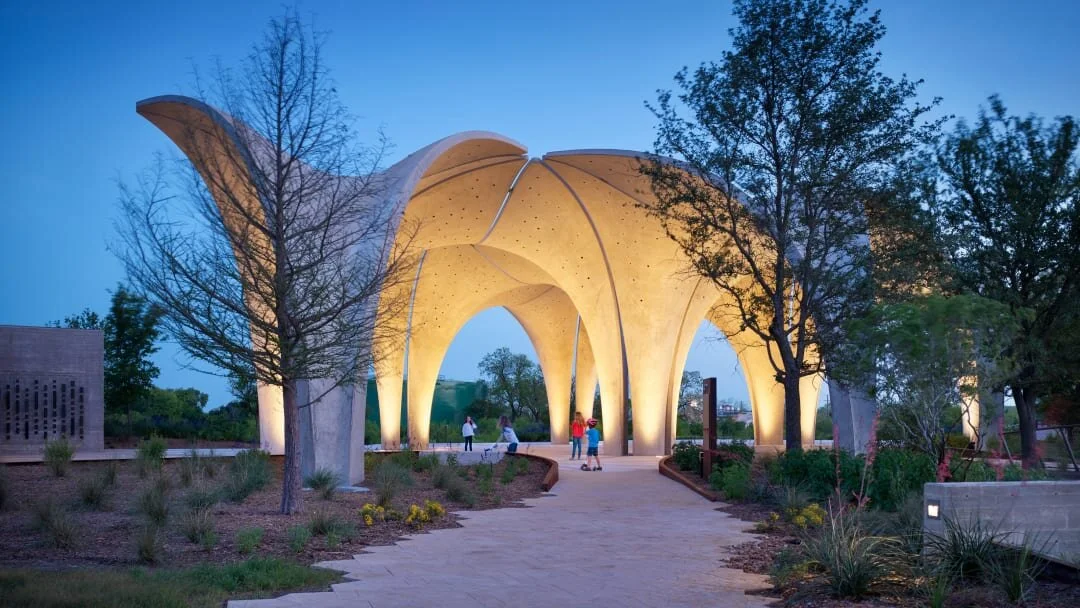
CONFLUENCE PARK, 2019 RECIPIENT OF THE ARCHITECTURE AWARD, AUSTIN, TEXAS, LAKE | FLATO ARCHITECTS + MATSYS
Each year, AIA celebrates the best buildings and spaces—and the people behind them—with some of the most prestigious awards in the built environment.
Currently open for submission
AIA Honors