
AIA BIKE TOUR / The Weird & Wonderful World of the Thames Path
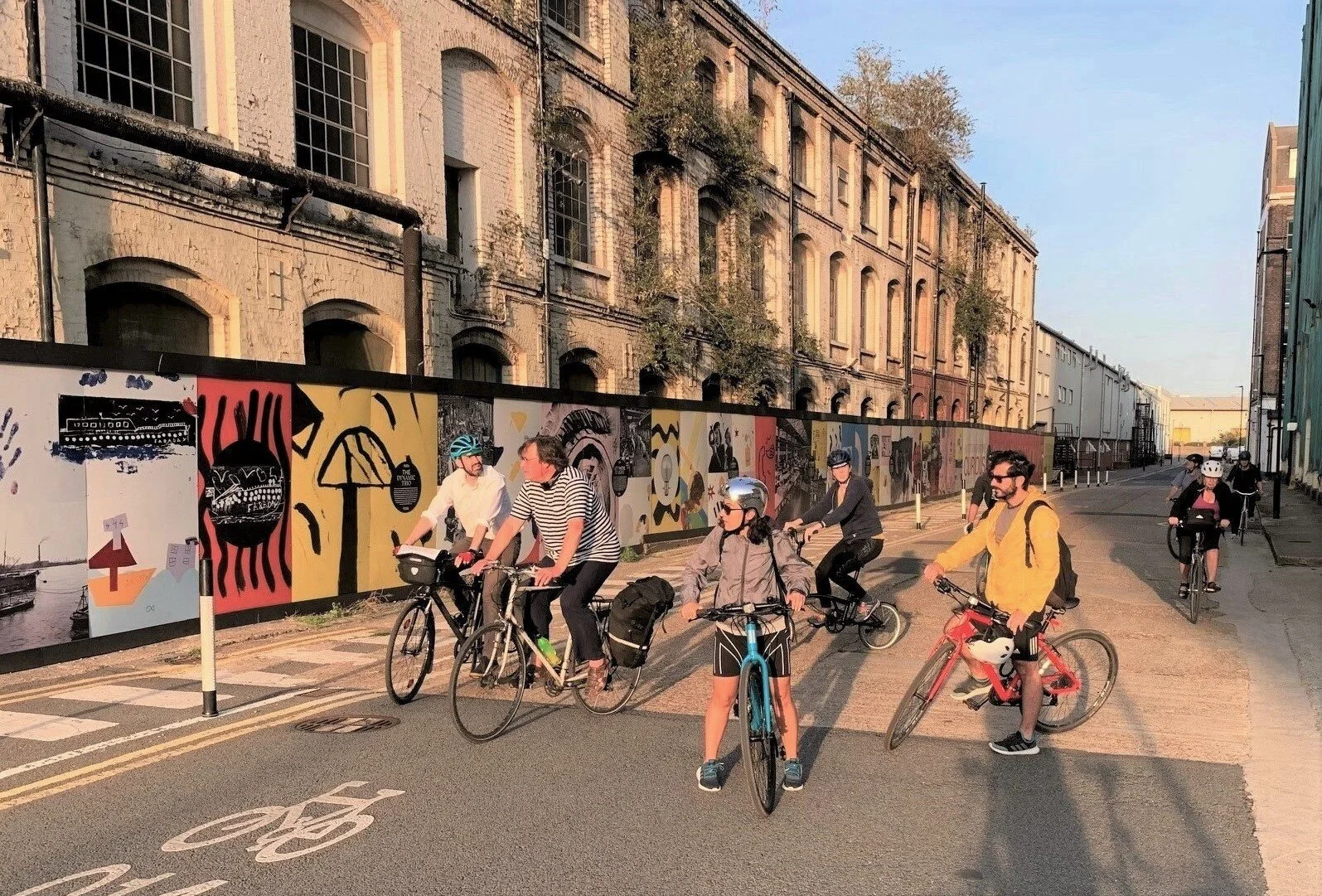
Part of the Siemens Complex, once on the forefront of modern communications technology. Photo credit: C Musangi AIA
The last AIA UK live event for 2020 was a movie night held on 10 March, 13 days before ‘lockdown’. Originally scheduled for July, the postponed bike trip was re-organised for 12 September, almost exactly 6 months after the last live event and just 2 days before the ‘rule of 6’ limiting social groups was imposed by the government. We made it just under the wire.
Given the uncertainty about the future direction of the covid pandemic, we still do not know at the time of writing whether this bike trip was a brief interlude in the world of social distancing or a foretaste of normality’s return. Either way, the group was determined to make the best of it.
Waiting in the obscure East London village of Slade Green as the full group gathered, we chatted incessantly about nothing in particular – traffic on the way, zoom headaches, random mother’s advice, frozen pasta, microwave cooking, refrigerator repairs, new bikes and – of course – the lucky, dry weather. And we continued chattering on and off for the next 8 hours. How wonderful to be with like-minded friends and colleagues after such a long break.
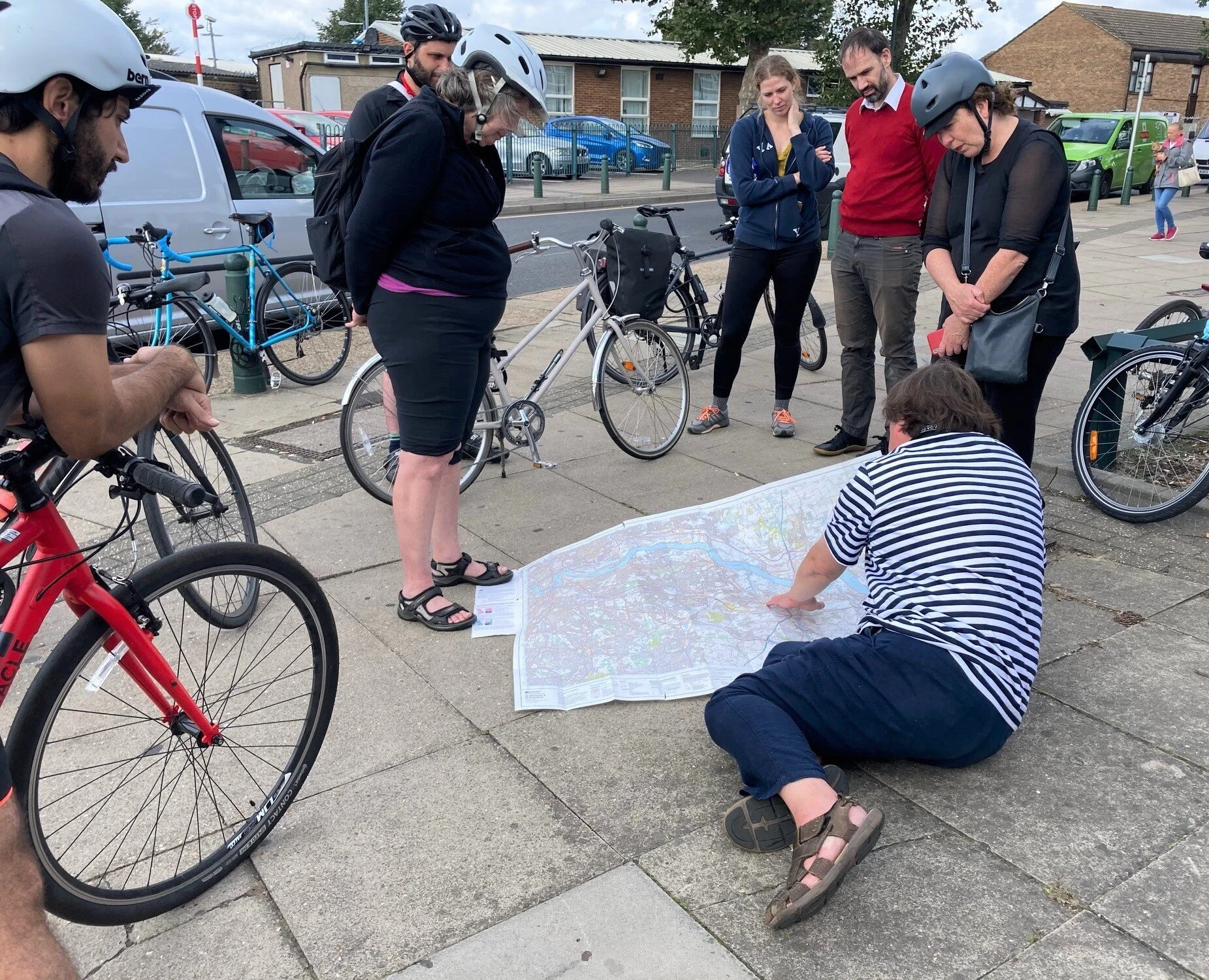
An inauspicious start from Slade Green... Photo credit: E Top, Int’l Assoc AIA
In theory had we not met the deadline, we might have been exempt from the ‘rule of 6’ given the outdoor nature of the tour or – even more appropriately – given its educational content. There is no denying that the 8 hours were jammed packed with information. Unlike previous bike trips, the Chapter was finally able to offer 2 HSW credits as part of the total 7 LUs (2 more than advertised) for continuing education.
As customary with a tour led by architect and historian, Ben O’Looney, architectural history was integrated with the social and economic background, so that the whole riverscape was connected in time and space. There were several themes interlinking the sights (inter alia):
Flood control and flood plain building precautions – tidal locks at tributary rivers, the Thames Barrier itself, Thamesmead surface water networks…
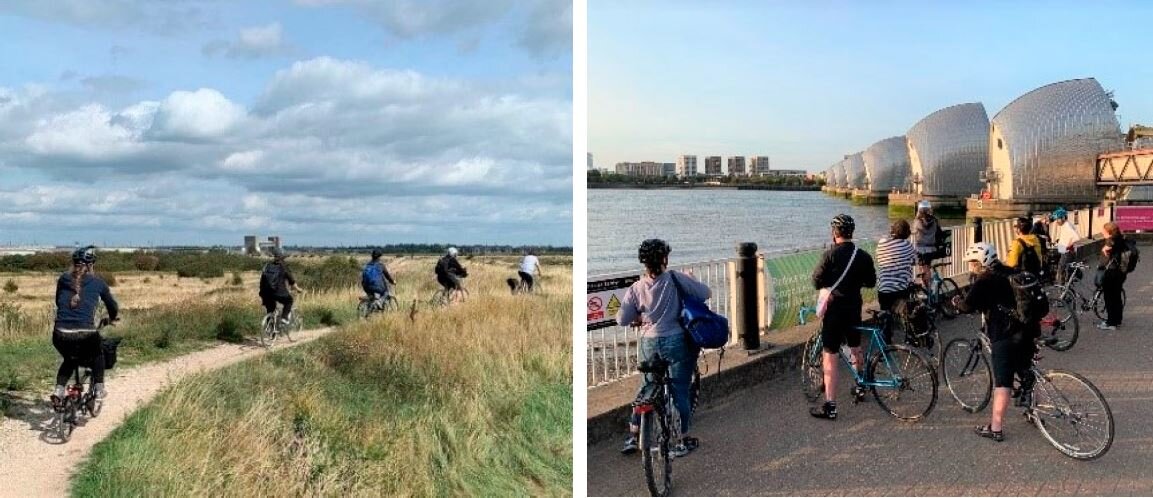
Protecting the flood plain. Photo credits: C Musangi AIA
Military ordnance and installations – medieval moats, ammunition manufacture and precautions (and explosive failures), cannon design, ship building, gun embankments, military barges, mulberry harbours…
Innovative industries, factories and conservation – the Erith Corn Oil Works (still operating), the Siemens complex (linking the world with underwater cables), Ford Dagenham plant (at one time the largest in Europe), continuing concrete works (London is still growing)…
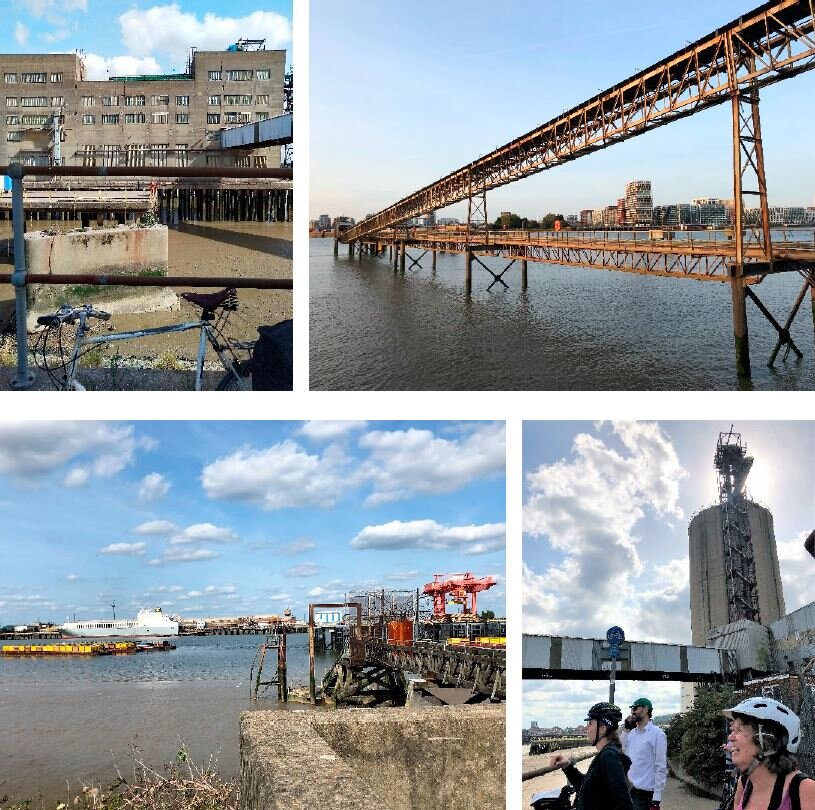
Industrial heritage of all sorts and sizes. Photo credits: A Miller AIA x 1 and E Fitzpatrick AIA x 3
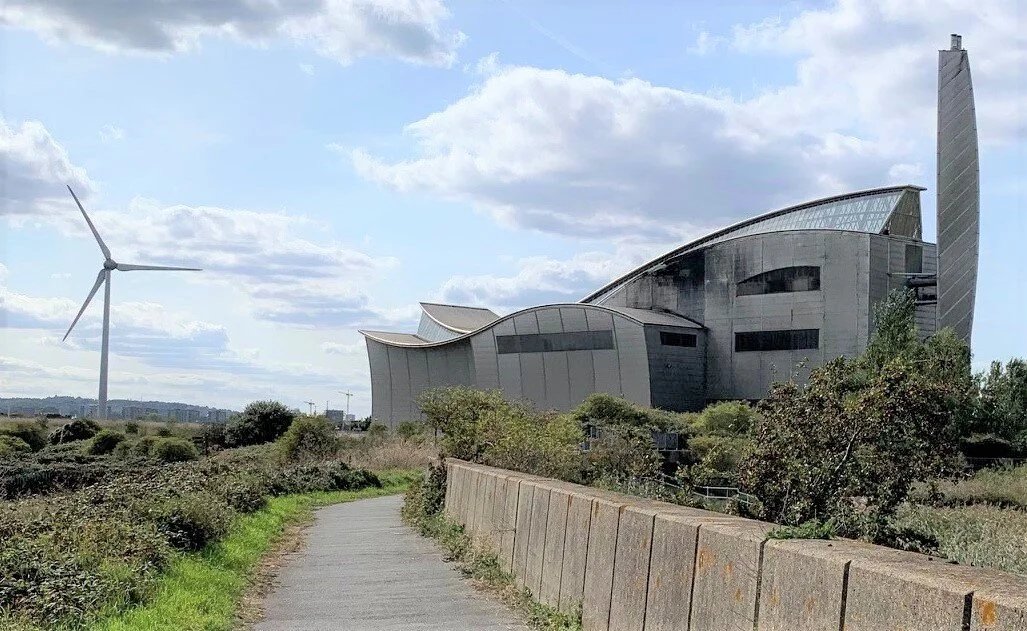
The sadly neglected Crossness Incinerator – with its futuristic curves - still plays an important environmental role. Photo credit: C Musangi AIA
River enjoyment – the Thames Path, the Thamesmead Loop, Diller Scofidio Renfros’ walkway (‘The Tide’), riverside sculpture, the Greenwich museums…
Residential growth – New city developments close to industrial sites, urban regeneration through historic conservation, controversial developments on Greenwich Peninsula…
The two vastly different Thames communities of Thamesmead and Woolwich Arsenal merited special attention.
Thamesmead mainly consists of social housing built from the mid-1960s onwards on former marshland, designed with an intent to solve the area’s social housing problems. Futuristic ideas included linking walkways, flood control measures and lakes and canals used as a calming influence.
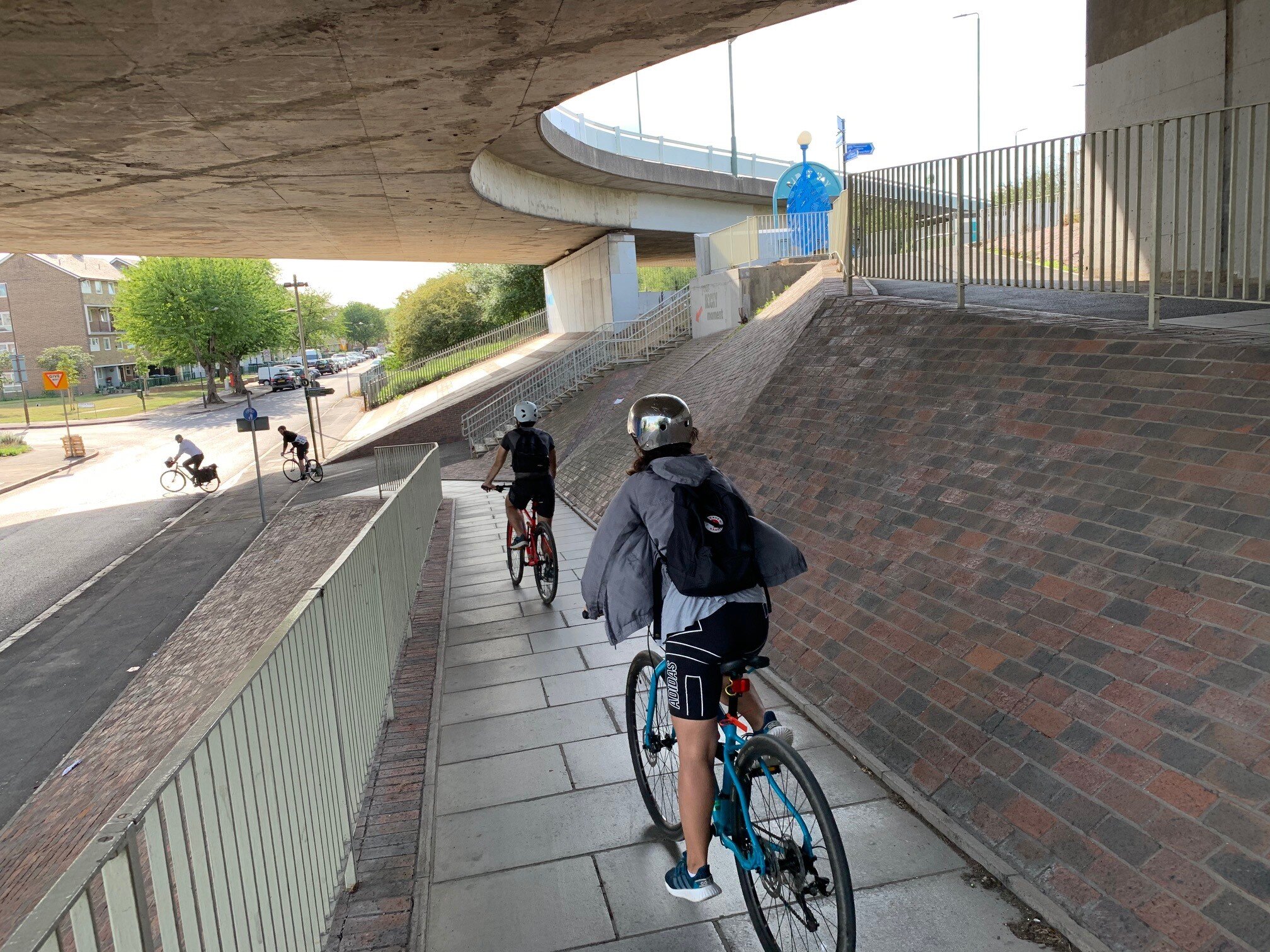
Wending through the Thamesmead walkways. Photo credit: C Musangi AIA
Since 2000, attempts have been made to overcome the problems with the original concept – such as the lack of community amenities and a cohesive centre. We found Thamesmead – with its bike route ‘loop’ and modern looking housing blocks – surprisingly pleasant as we stopped by a lakeside for lunch and sketching. But the main problem remains its transportation isolation - you seemingly cannot get there from anywhere.
Woolwich Arsenal on the other hand is blessed with links to everywhere and more obvious unban amenities. Not only is there Thames Clipper access, but it is also served by the DLR, National Rail and – awaiting completion – an Elizabeth underground connection.
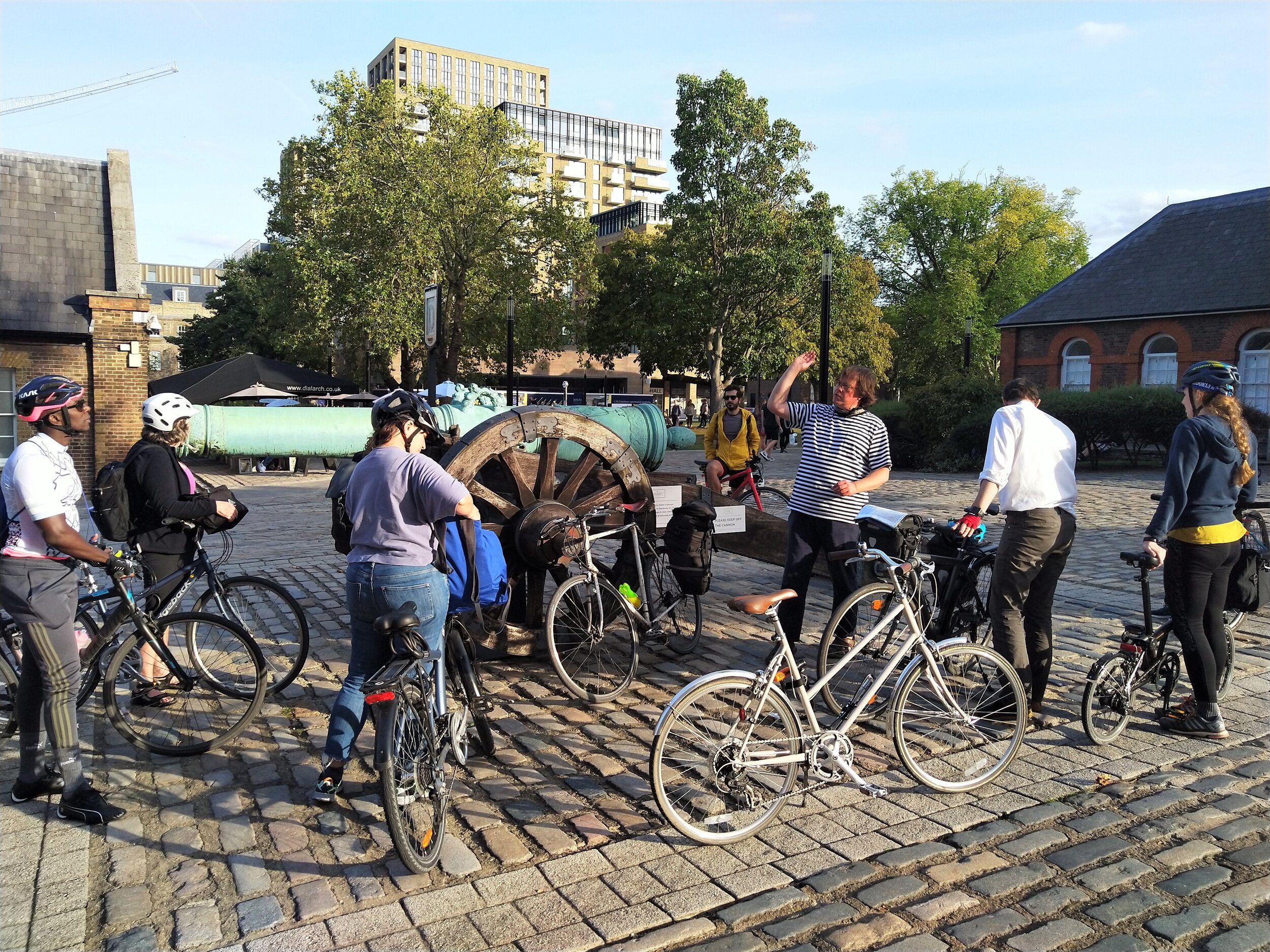
Cannon fodder in the Woolwich Arsenal historic district. Photo credit: A Miller AIA
The riverfront’s wide avenue of historic, well conserved buildings gives a unique feel of openness and charm to the thriving town.
The other side of biking enjoyment is – of course – the hard work. We ended up at Greenwich too late to enjoy the museums, but not too late to enjoy the refreshment potential of the Cutty Sark pub.
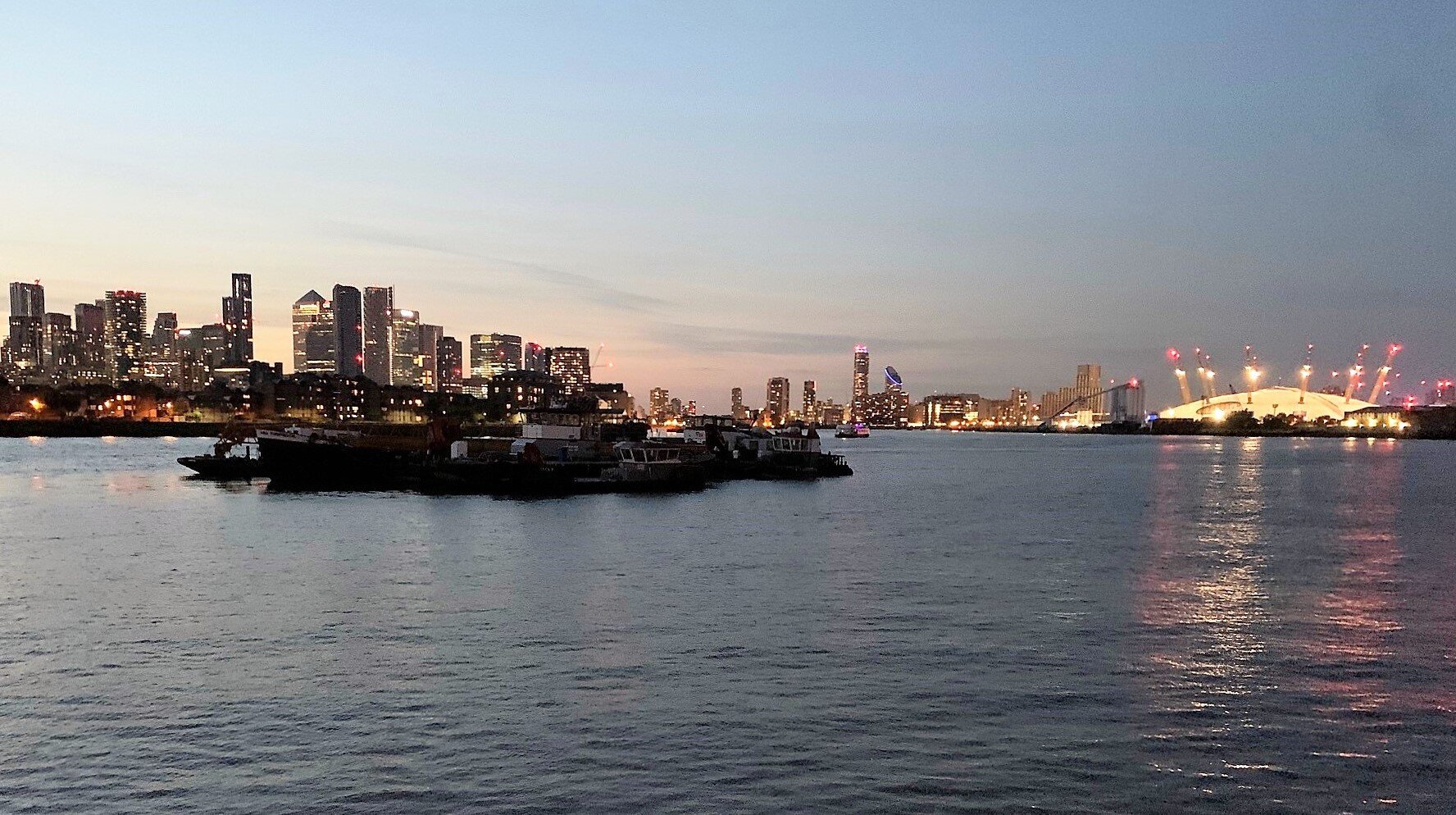
London in evening glory. Photo credit: C Musangi AIA
For those not familiar with Ben O’Looney – who teaches architecture for New York University’s London programme and leads architectural River Tours for Open City – check out his sketching video made for the Illuminated River Foundation HERE. Perhaps a future sketching session with Ben sans bike tour might be on the cards…
Follow the route via the ‘slide show’. Pictures contributed by all the AIA Chapter Board member participants: Etain Fitzpatrick, Lorraine King, Maria Loring, Alex Miller, Chris Musangi, Katharine Storr, Ecehan Top plus guests.
Written by Lorraine King, AIA
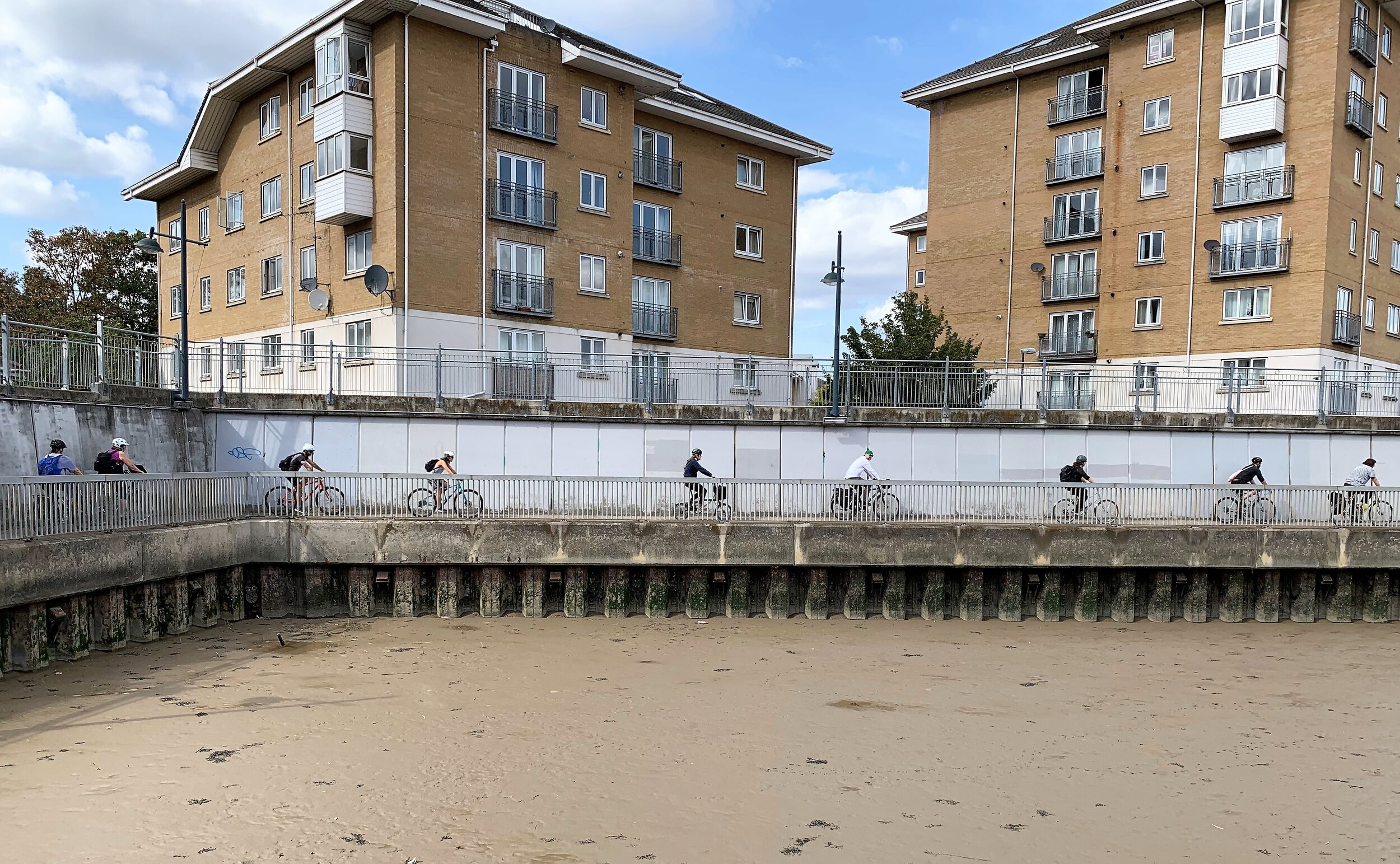
Social distancing in style; bike riding IS safe. Photo credit: C Musangi AIA
AIA UK Reduces Membership Dues
In an effort to keep AIA dues affordable, the AIA UK board of directors voted to reduce the 2021 chapter dues by the same amount the National dues are increasing. This means member dues for 2021 will be the same as 2020 (and the same as 2019), despite the increase in National dues.


Virtual Building Tour – 1 Finsbury Avenue
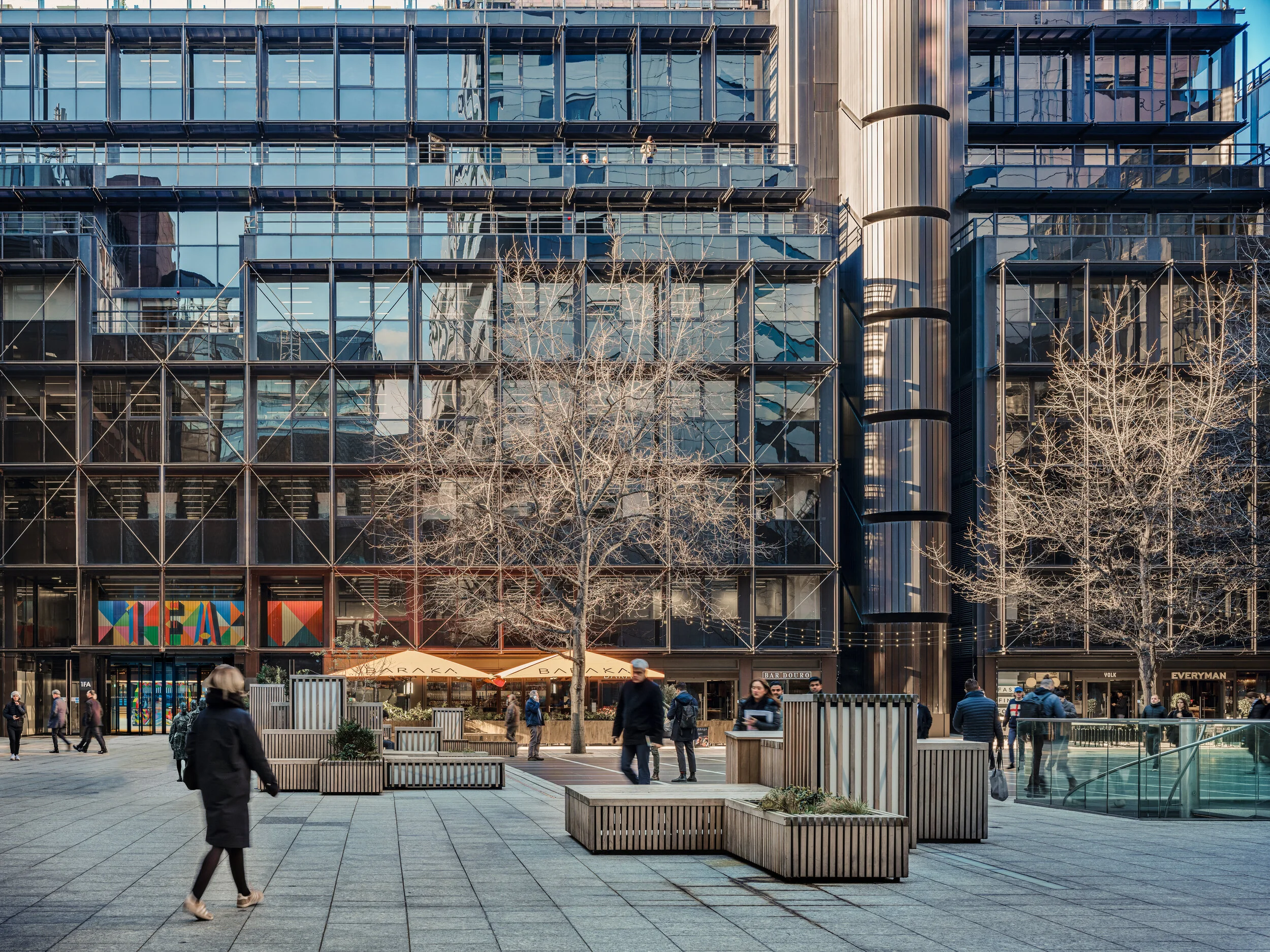
Following on from the successful launch of its “Virtual Building Tours” in July 2020, which replace live building tours currently curtailed as a result of the COVID-19 pandemic, the AIA UK Chapter held the second in its series on 13 Aug 2020. Paul Monaghan, a founding director of the RIBA Stirling Prize winning architecture practice Allford Hall Monaghan Morris (AHMM), led an informative and stimulating virtual tour of the recently completed 1 Finsbury Avenue, a Grade II listed building by Arup Associates (Peter Foggo, 1984). Paul was joined by Tom Wells, Senior Architect at AHMM and Morag Myerscough of STUDIO MYERSCOUGH, an artist and designer who was part of the overall design team.
The Arup Associates’ designed office block was built from 1982 to 1984 and is one of the 14 post-war office buildings to be given Grade II listed status by Historic England earlier this year. Paul Monaghan credited Arup Associates and 1 Finsbury Avenue as “having set the exemplar for future commercial architecture in the UK, introducing major innovations in construction methods and materials from the US and adopting a whole new approach to the design and planning of an office block.” The tour highlighted how AHMM’s signature retrofit of adapting a high-tech, high-finance icon to attract a younger, less corporate tenant mix. The refurbishment and restoration project highlighted an elegant transformation of a “corporate,” office environment into physical and virtual shared spaces and office services for entrepreneurs and companies.
1 Finsbury Avenue may be one of the most highly regarded office buildings within the City of London creating a new destination with an exciting mix of flexible workspaces, cinema, retail and restaurants. The refurbishment is part of the on-going reinvention of British Land’s Broadgate estate that will also include AHMM’s 1 Broadgate. British Land’s Broadgate development re-establishes the public route through 1 Finsbury Avenue as an important element in activating its ground floor and connecting the building with Finsbury Avenue Square and the broader Broadgate campus.
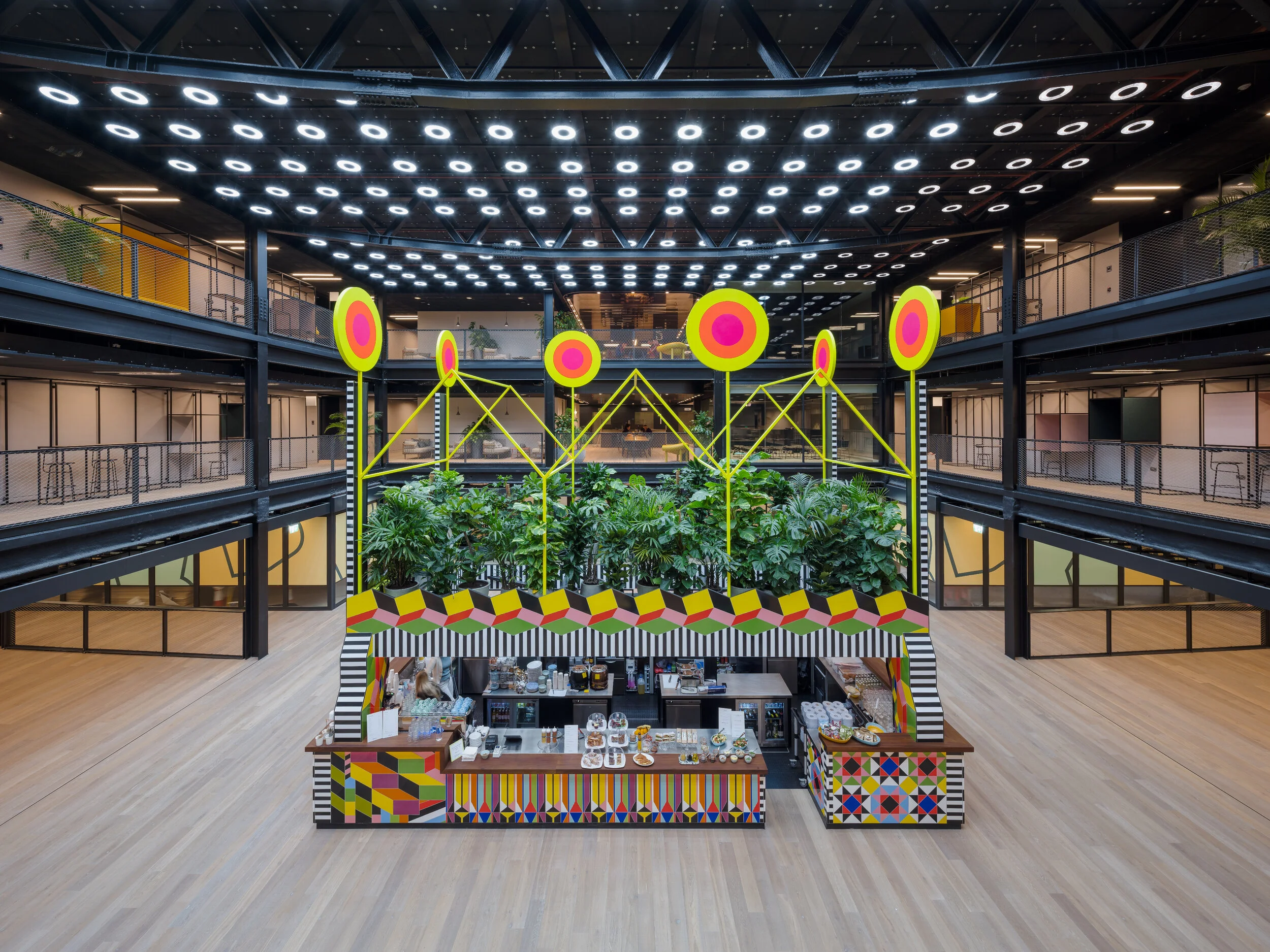
Delivering ‘Atoll’ - a new 7.5m tall mosaic tiled installation designed in collaboration with artist Morag Myerscough – to the centre of the lower atrium played an important part in the project’s place making. The installation is an inspiration, offering insight on how this architecturally important and flexible office building has been reimagined. No 1 Finsbury Avenue is setting a new aesthetic standard for a modern breed of speculative office buildings. Its repurposed, open, well-lit atrium is a rare element, providing the building with a series of internal facades and bringing life to its reinvented internal street.
The AIA UK Chapter will continue to host virtual buildings tours throughout the year offering architects the opportunity to visit notable buildings that have particular design interests in the UK and abroad.
Written by Gregory Fonseca, AIA
Form EWS1 – Unlimited Liability for Design Professionals Working on Highrise Buildings
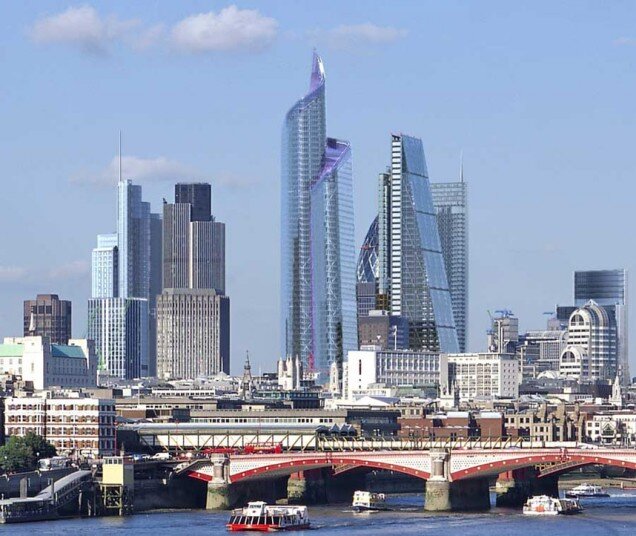
Solicitor Will Buckby and Ian Masser of Beale & Co warn consultants that they should avoid Form EWS1 - designed to provide assurance that a high rise building is fire safety compliant - which imposes unlimited liability on them. Professional indemnity insurance could be compromised by its use, they advise.This article was first published in Construction Law. To read the full article, please click on the link below.
Form EWS1 - A better solution needs to be found
Written by Will Buckby and Ian Masser
London Design Festival 2020

From 12 – 20 September, London Design Festival 2020 will take place across London and online and will be the first major design festival to take place since the coronavirus pandemic swept the world.
Returning for the 18th year, this year's festival will have a strong focus on London’s design scene and local designers. Freelancers in particular have been impacted by the pandemic, and the Festival wants to support this community by providing a voice to new talent and freelancers.
Read more and register here.
Free Live Courses on AIAU this September
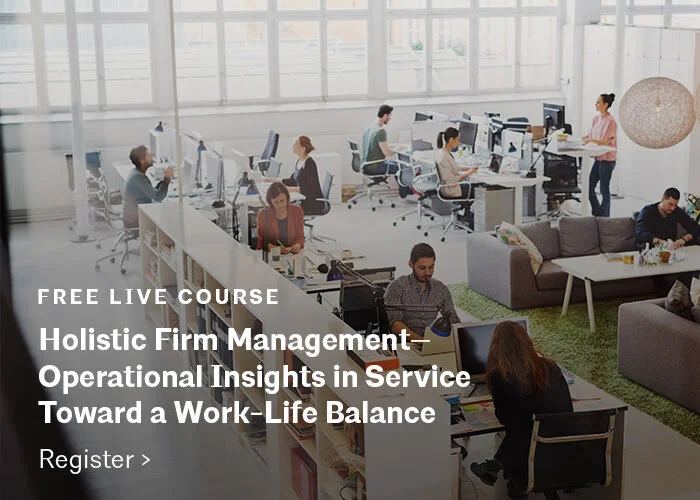
Live Course: Holistic Firm Management: Operational Insights in Service Toward a Work-Life Balance
Key Performance Indicators (KPIs) can be defined and implemented to guide you toward both professional and personal success. If you can’t measure it, you can’t track it, and you won’t know how to improve it. This fast-paced session will share with you the KPIs that reflect your progress and guide your future for these six essential components of every successful firm:
Strategic planning
Human resources
Business development and marketing
Architectural deliverables
Operational and financial systems
Work/life balance
As managing partners of their respective firms, both presenters have deep experience, understanding, and respect for culture, structure, discipline, data, and technology that are crucial in order for firms to remain competitive and profitable.
Date: September 23, 2020 at 12 PM EDT.
To Register, click here.
Live Course: Guidance from the Front Line of COVID-19 Care
This course presents the results of a study conducted with front line COVID-19 healthcare providers and subject matter experts in emergency medicine, intensive care, anesthesia, infection control, hospital operations, virology and research-based design. New design guidance for health care facilities was developed by translating input from clinician interviews and current literature that reveal urgent and essential adaptations to healthcare settings in order to reduce the risk of transmission to care providers, staff, patients, and visitors. The results are summarized in a checklist of design considerations and solutions that may be applied in a myriad of healthcare \and built settings. The value of translating subject matter expertise is clear as it supports informed decision making in response to the unique challenges of the novel coronavirus.
Date: September 22, 3:00pm EDT
To Register, click here