
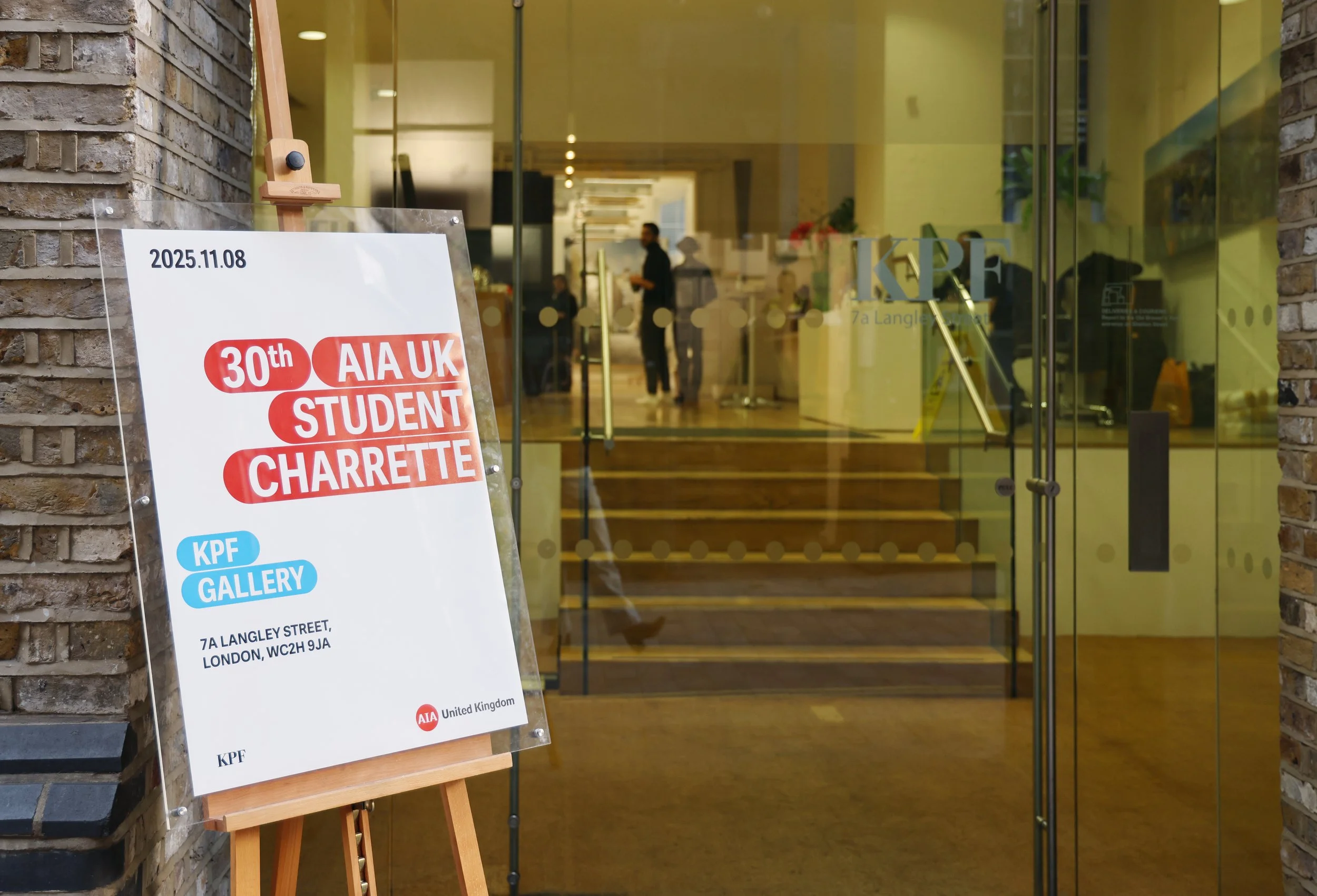
AIA UK Student Charrette - Reimagining the Strand Aldwych After Dark
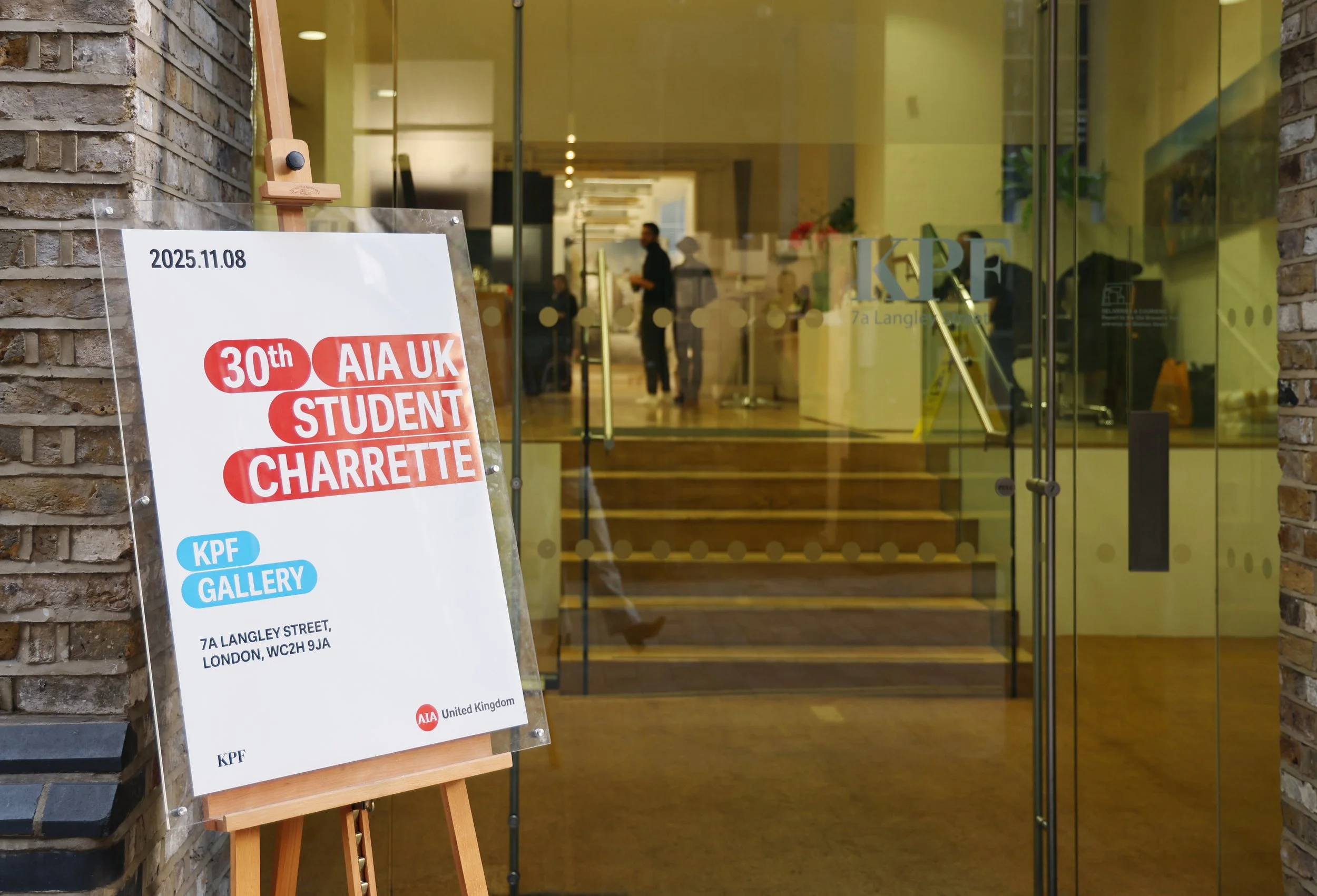
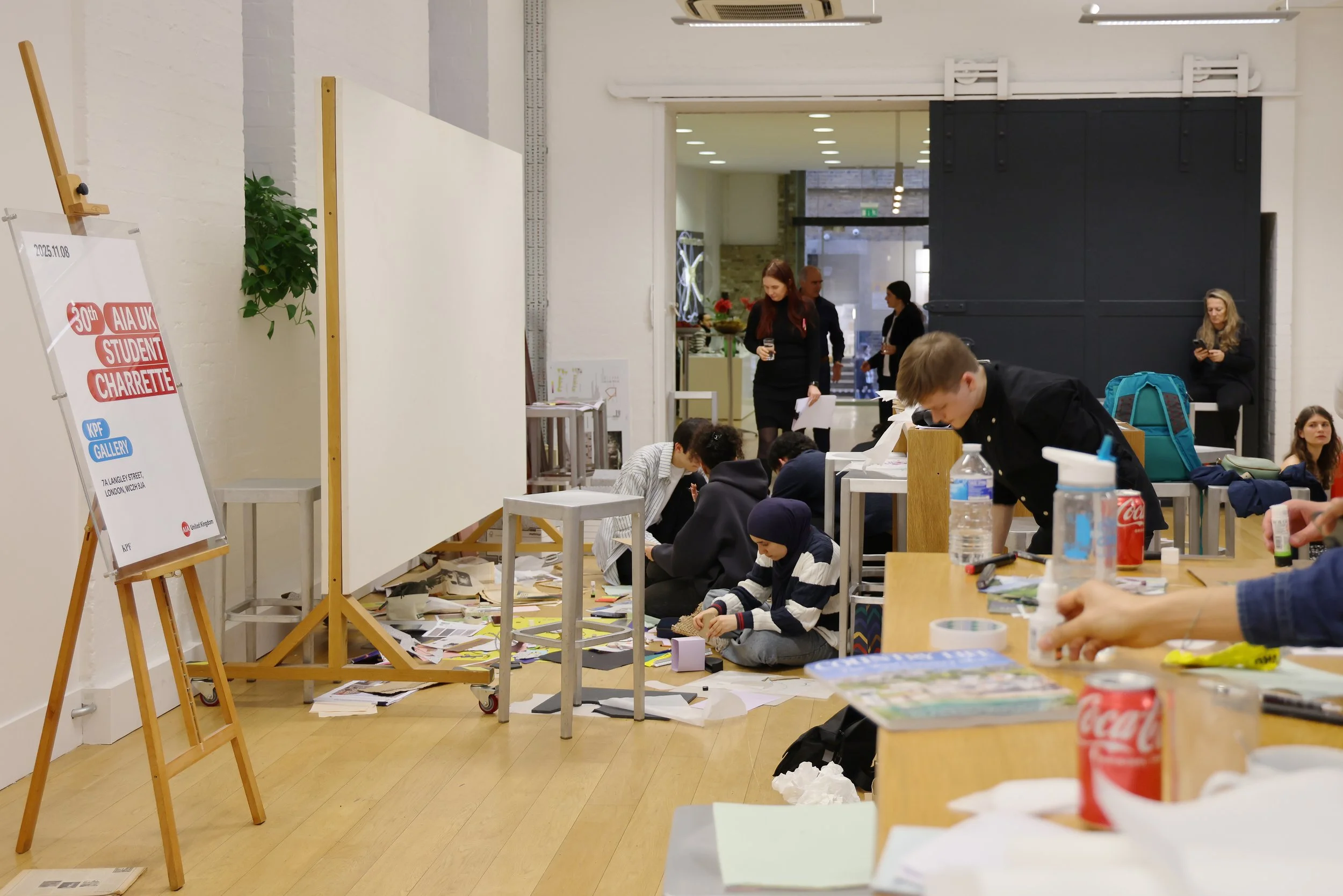
On November 8, 2025, the Kohn Pedersen Fox (KPF) gallery in London transformed into a dynamic workshop of ideas for the 30th edition of the AIA UK Student Charrette. For the third consecutive year, KPF opened its doors to sponsor and host the jubilee event, welcoming over 60 Part I architecture students from 13 universities across the UK to tackle one of London's most pressing urban challenges: designing for public space after dark.
The day-long design sprint challenged emerging architects to reimagine the Strand Aldwych area as part of Westminster's After Dark Strategy 2040, addressing critical issues of safety, accessibility, cultural vitality, and sustainability in the capital's nighttime economy.
A Brief for the Future
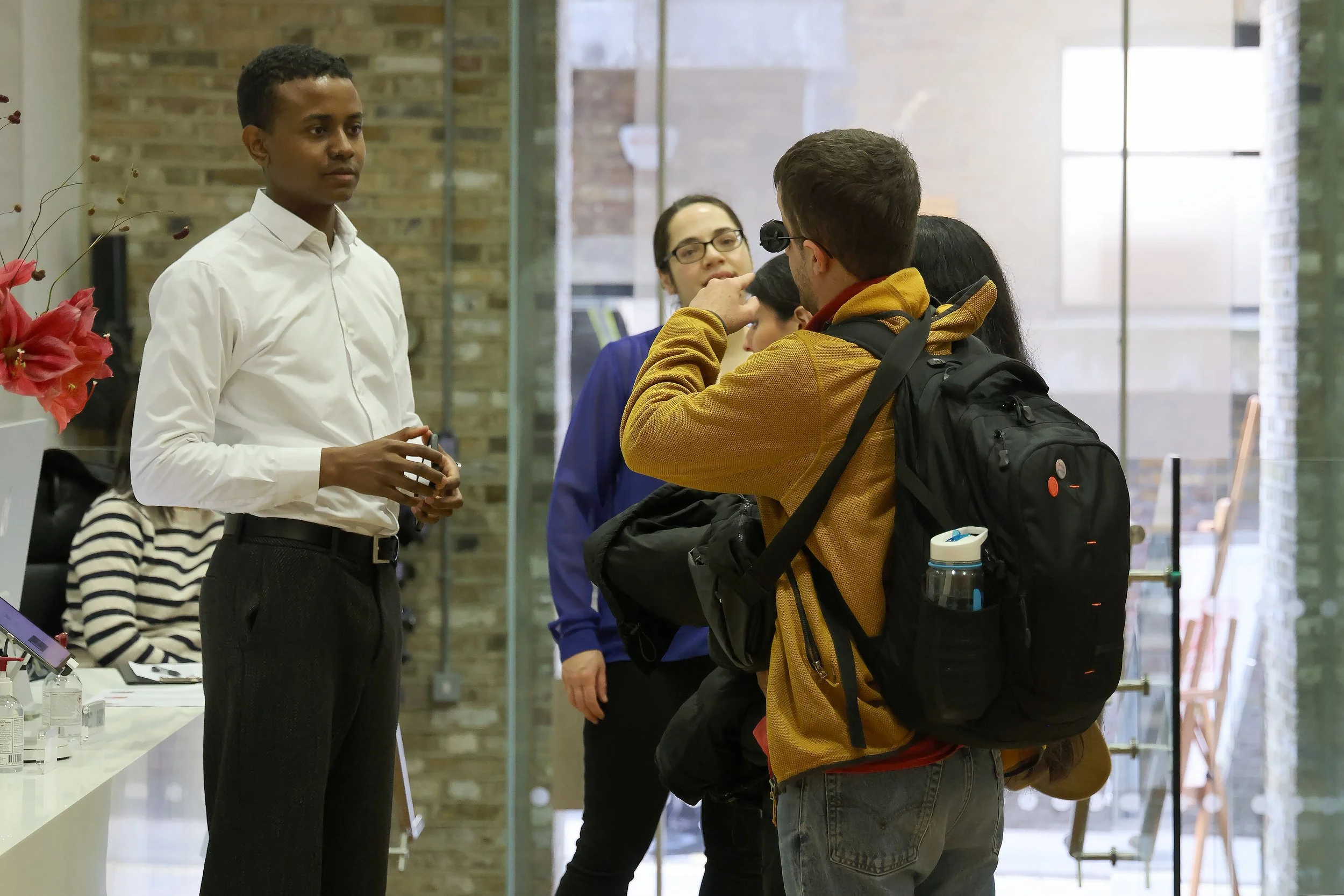
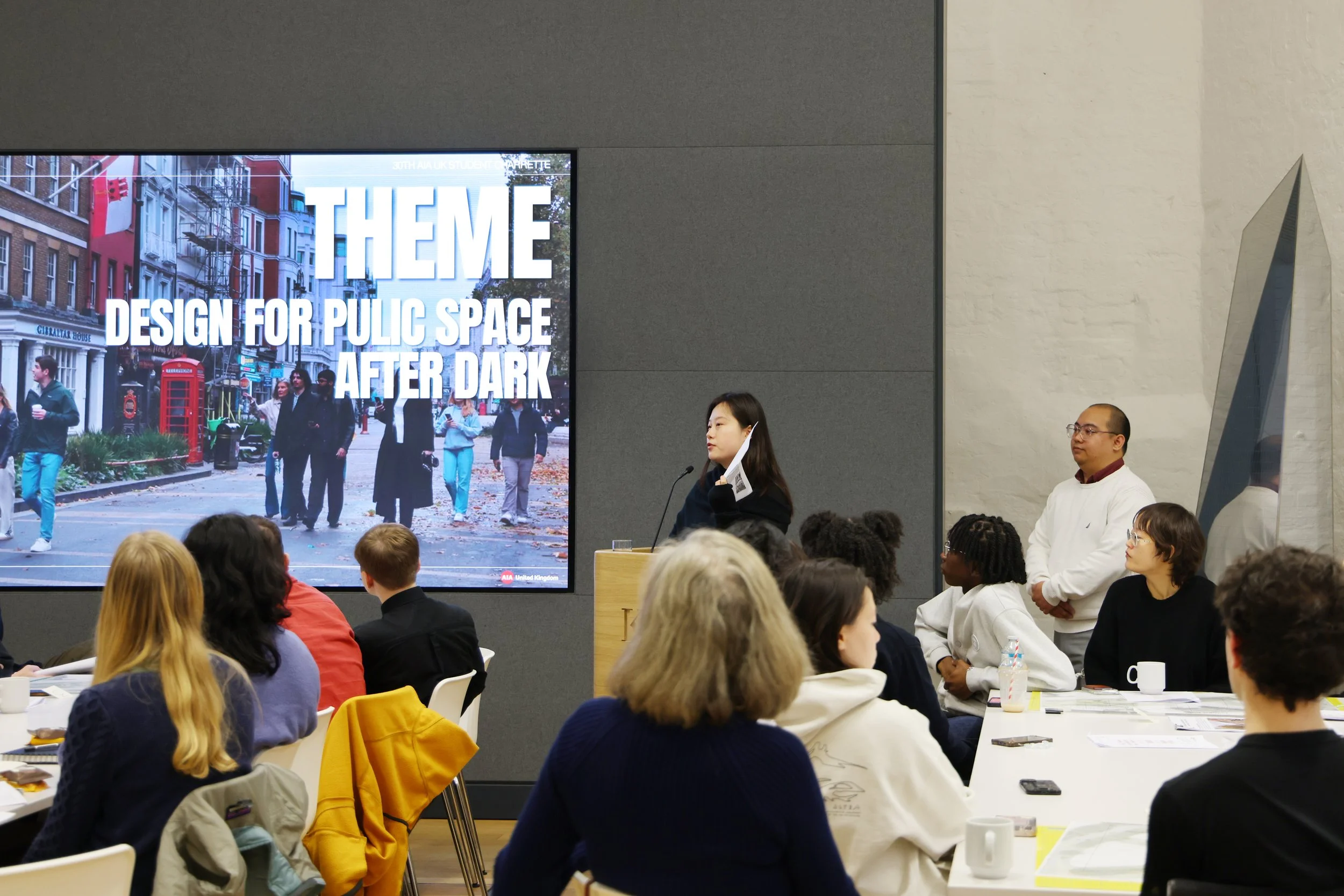
Following a welcoming breakfast reception that fostered connections between students, mentors, and jurors, Siyu Zhao of AIA UK unveiled this year's provocative brief: "Design for Public Space After Dark." The challenge tasked participants with transforming the Strand Aldwych—a historic thoroughfare steeped in cultural significance—into a vibrant nighttime destination that supports community engagement, cultural enrichment, and the physical and mental well-being of Londoners.
The brief responded to Westminster's ambitious 2040 strategy, which seeks to diversify night-time activities beyond traditional hospitality venues while maintaining the area's unique character and ensuring resilience and sustainability for future generations.
From Observation to Innovation
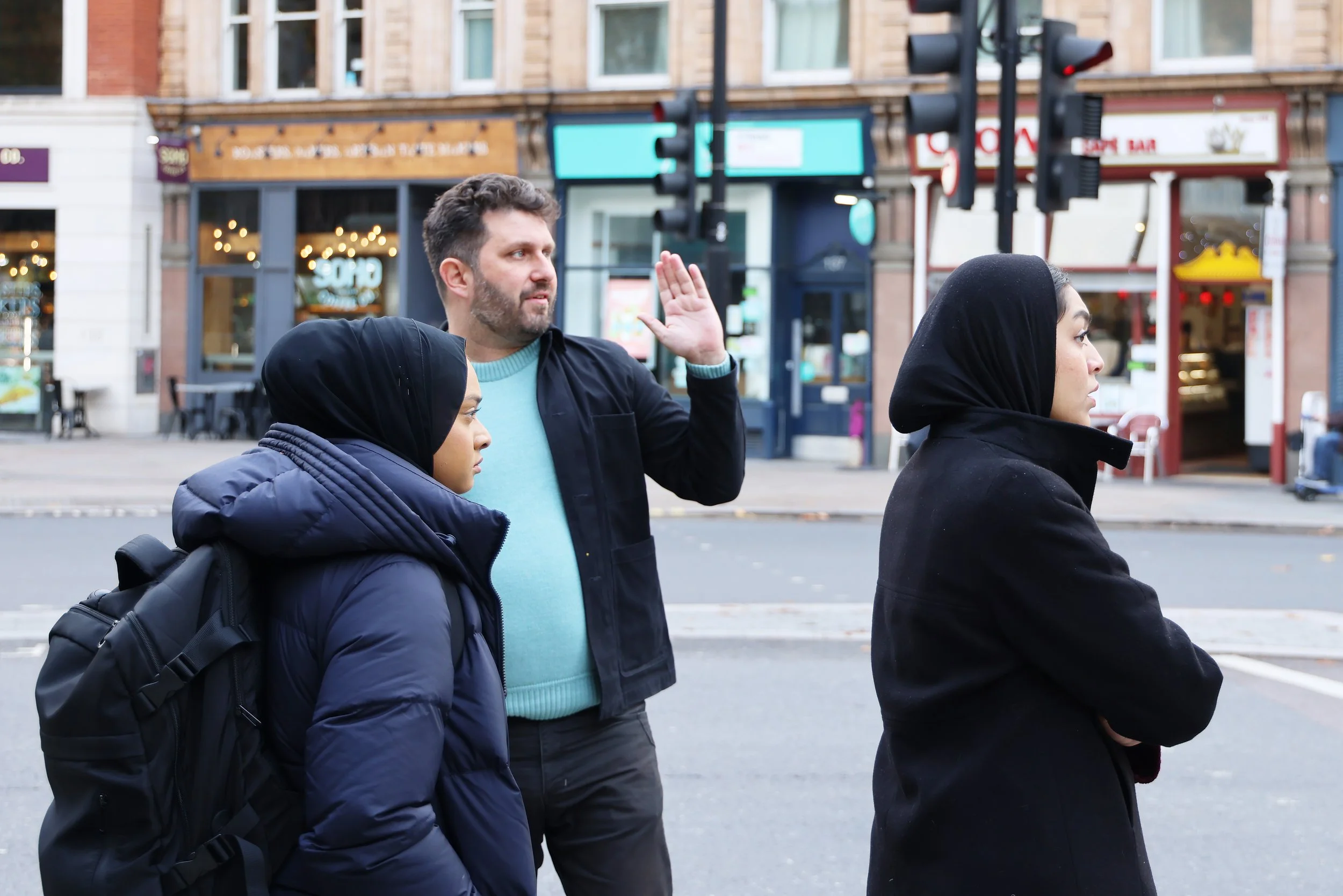
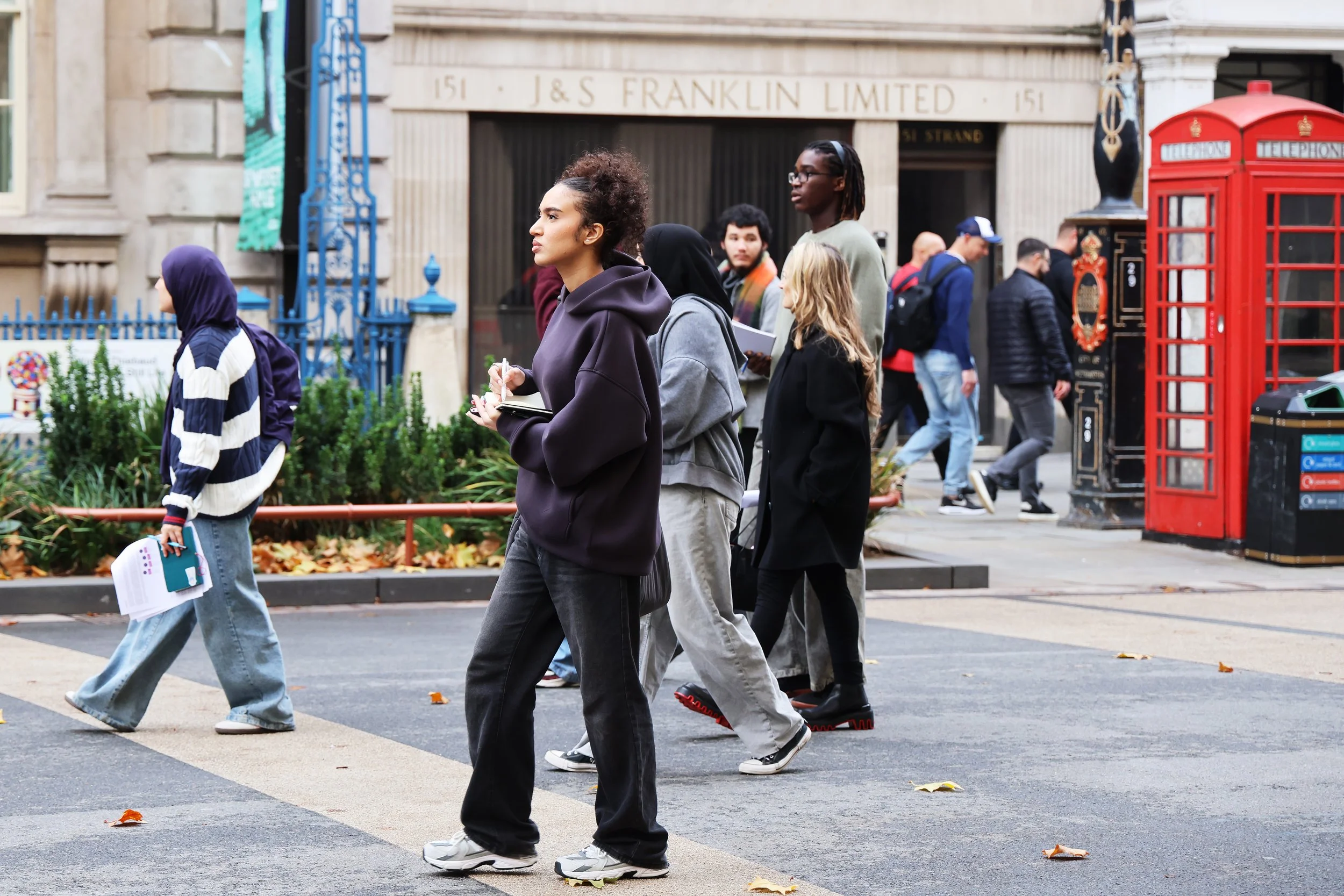
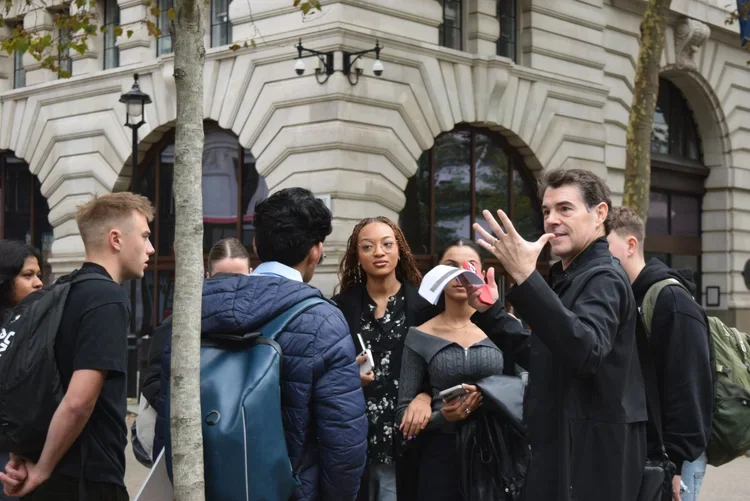
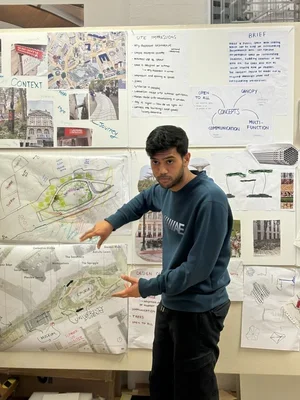
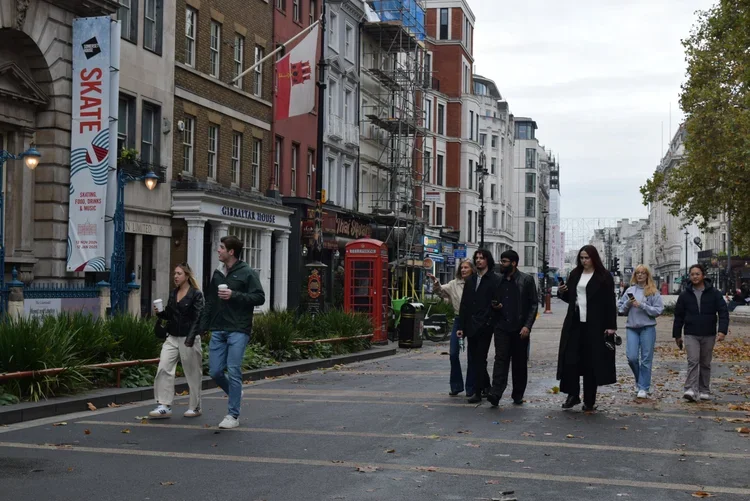
Armed with cameras and sketchbooks, student teams ventured into the streets of Strand Aldwych alongside their mentors, documenting the site's physical fabric, circulation patterns, and social dynamics. This immersive site analysis phase proved crucial, as teams observed firsthand how the historic district's character shifts dramatically between day and night.
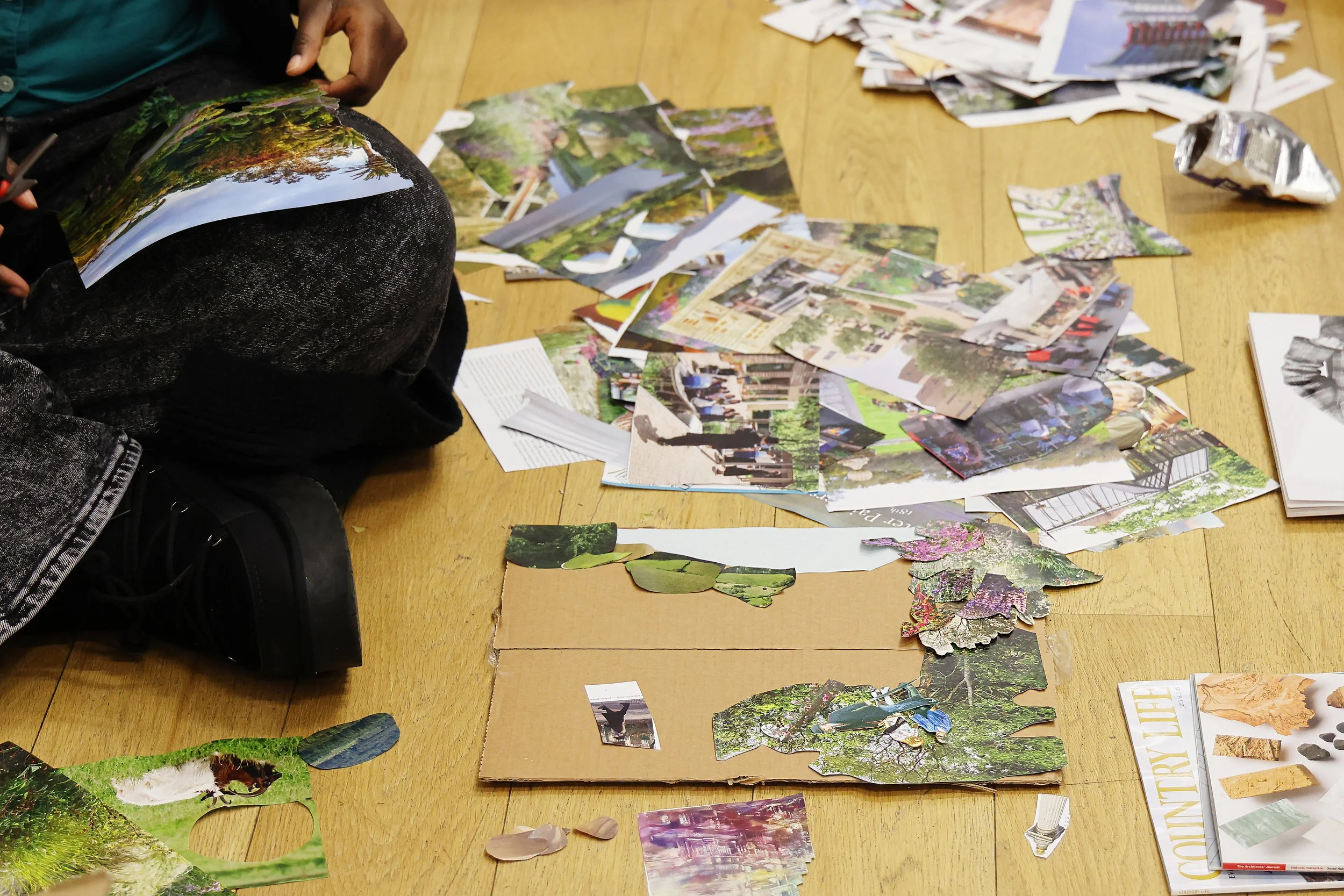
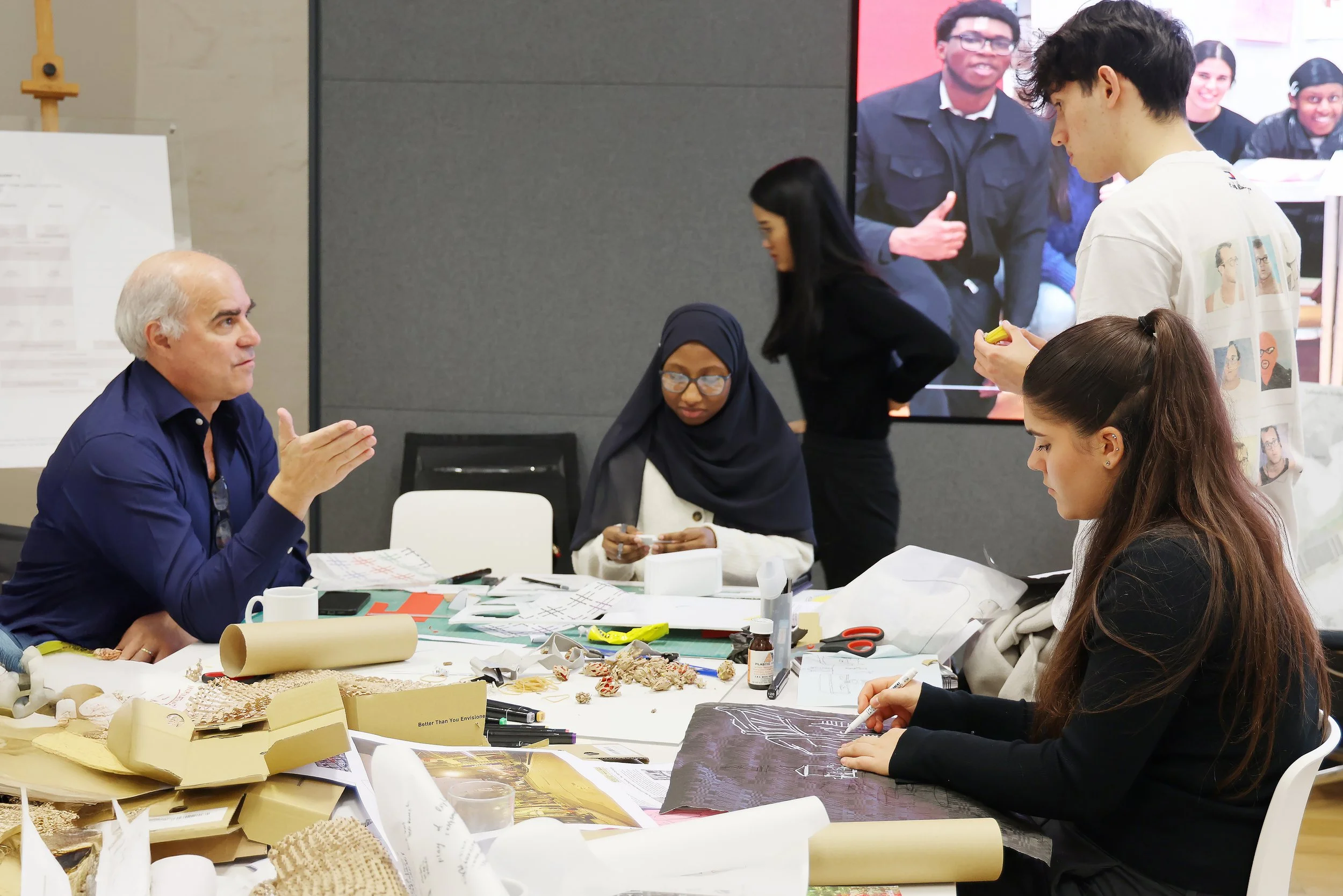
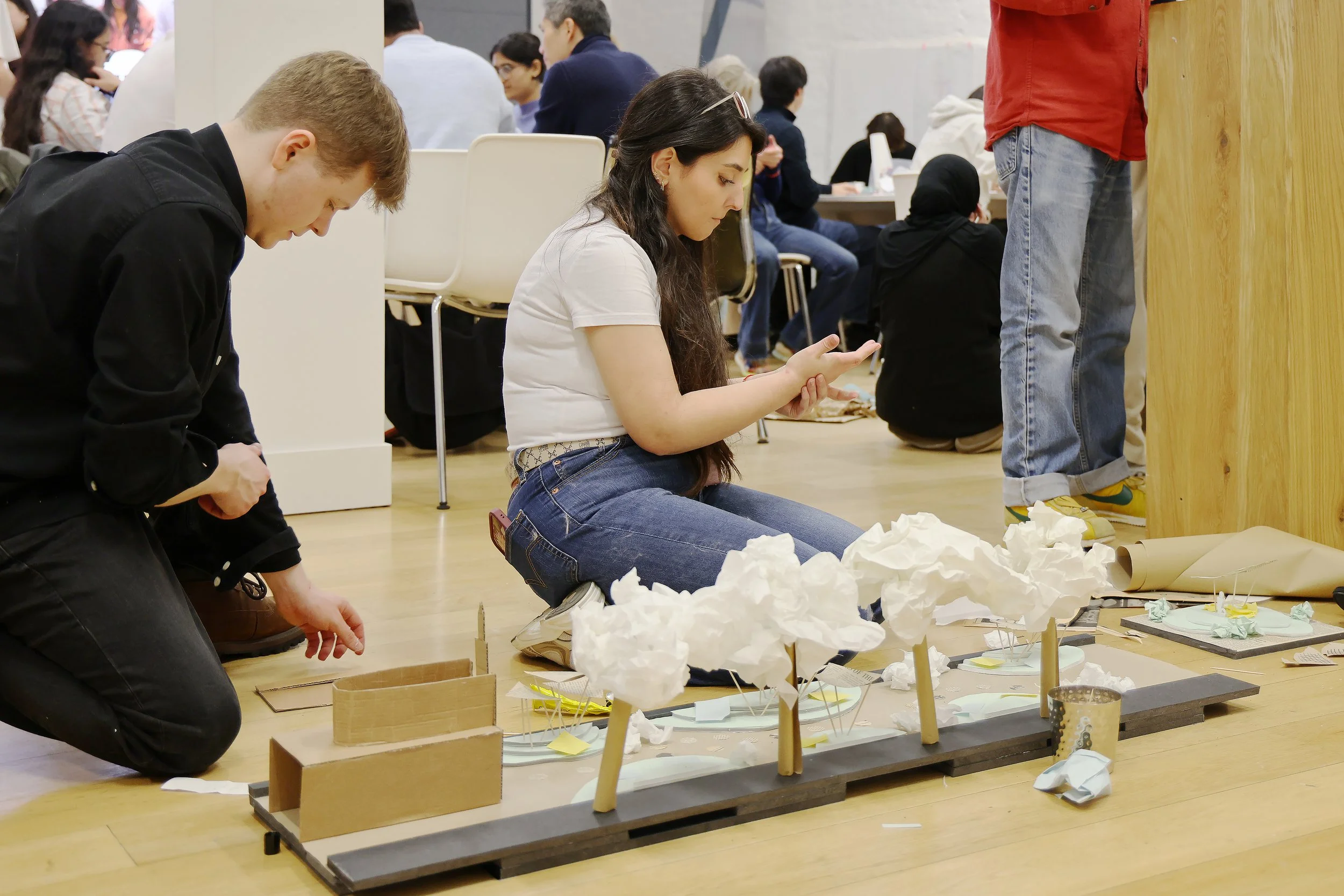
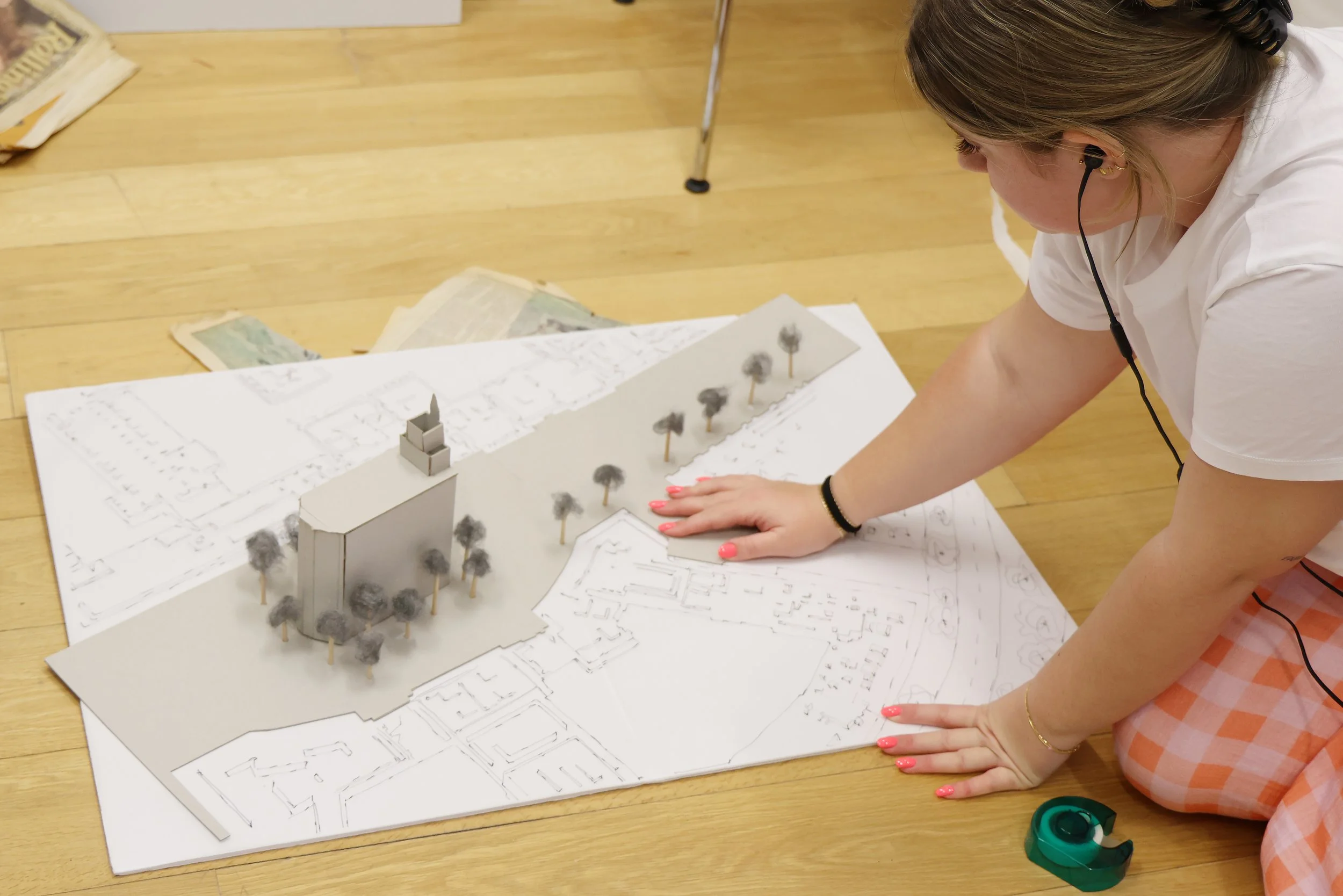
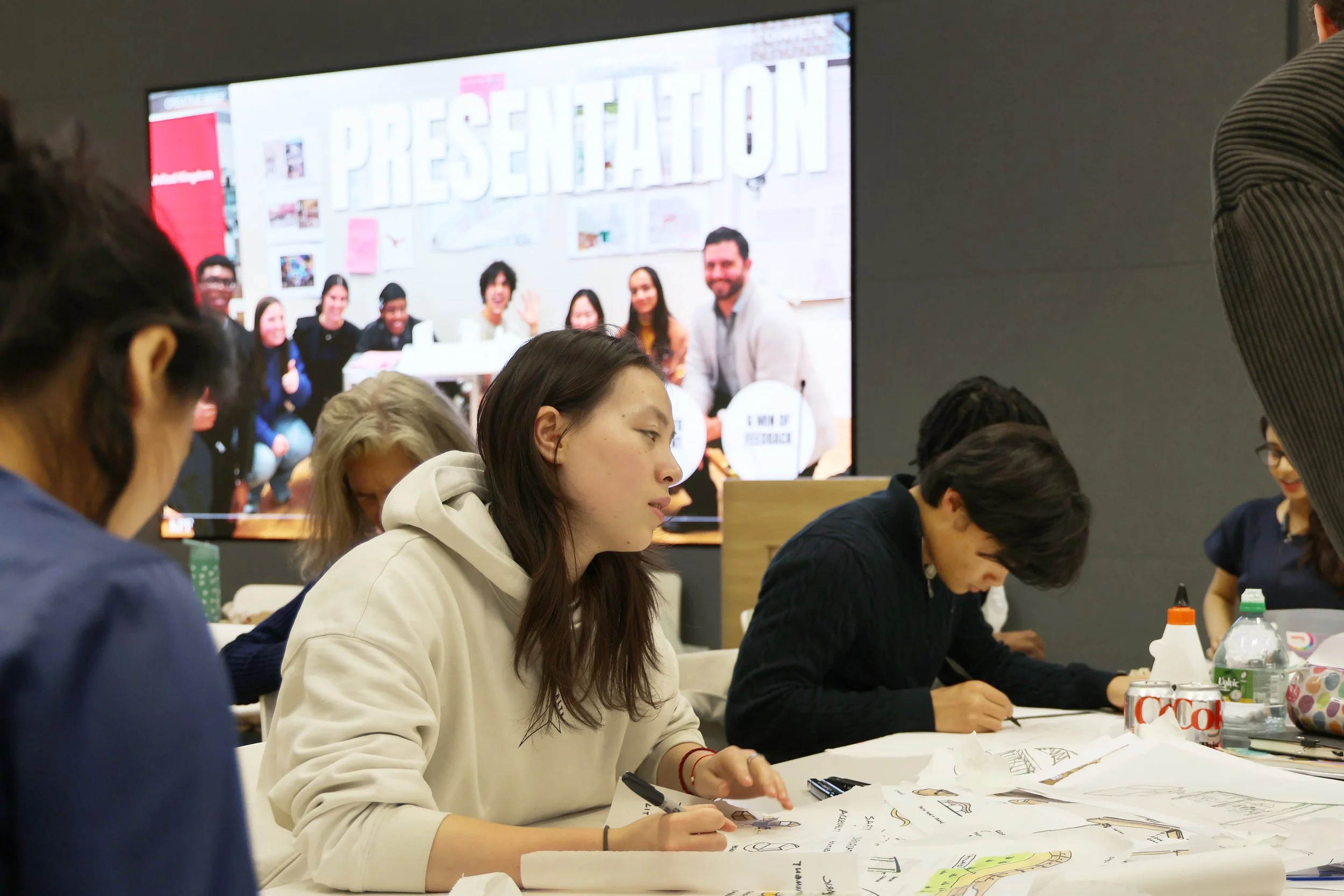
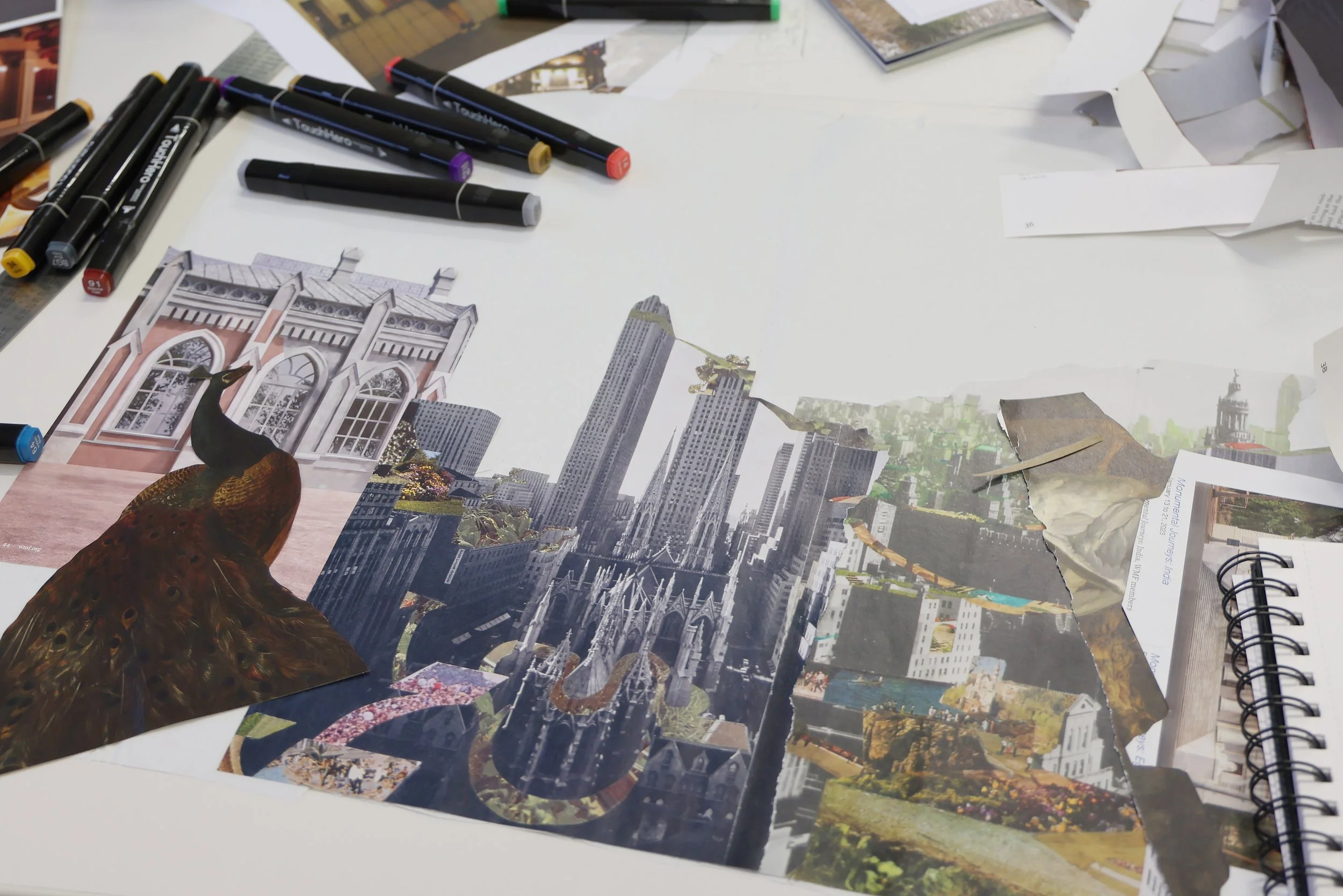
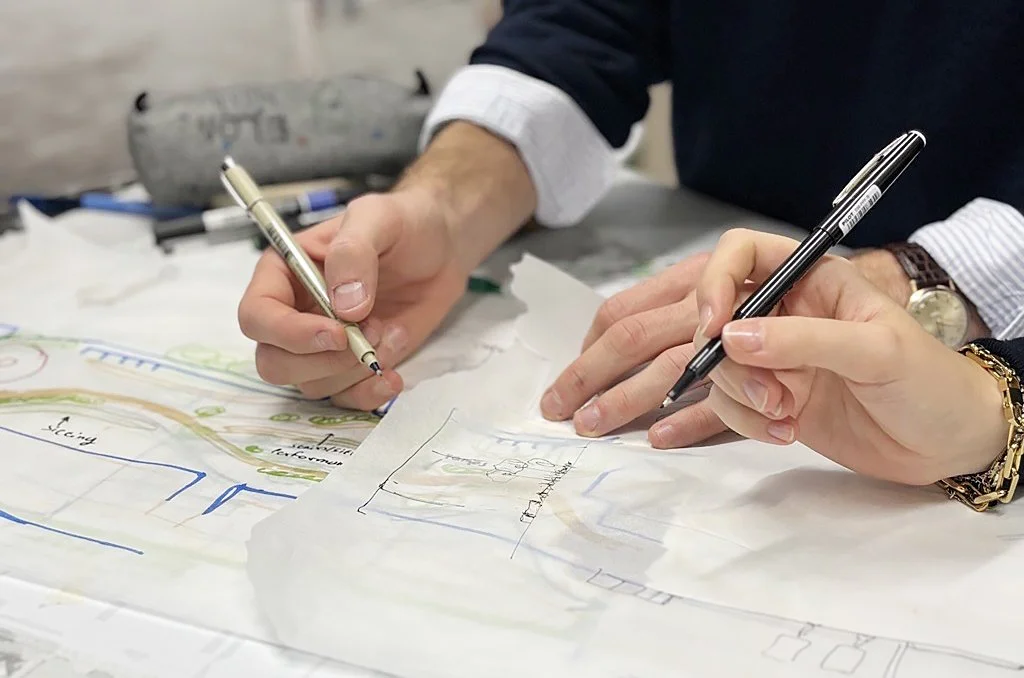
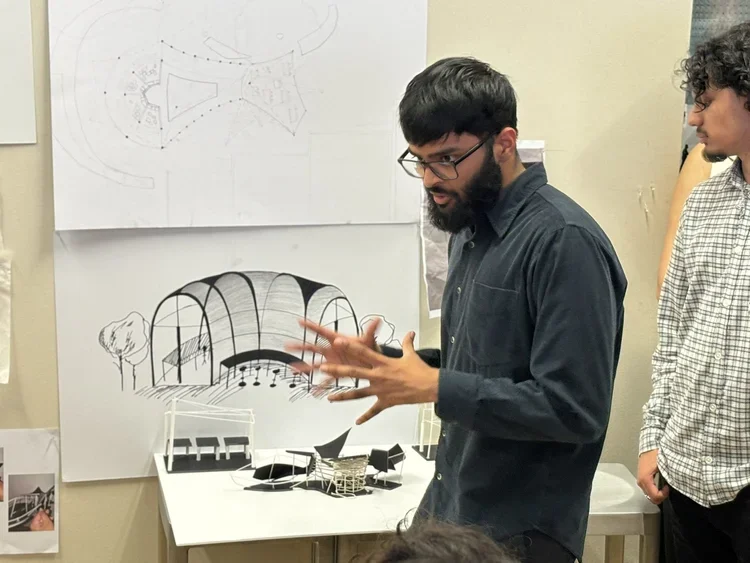
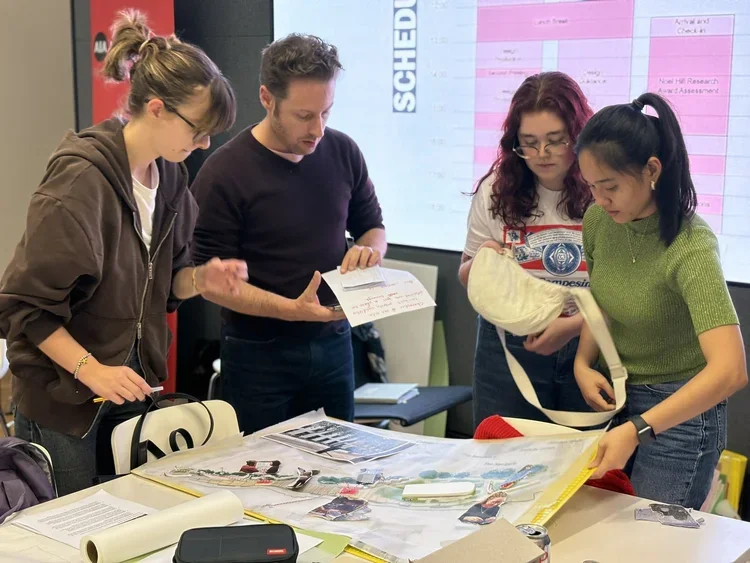
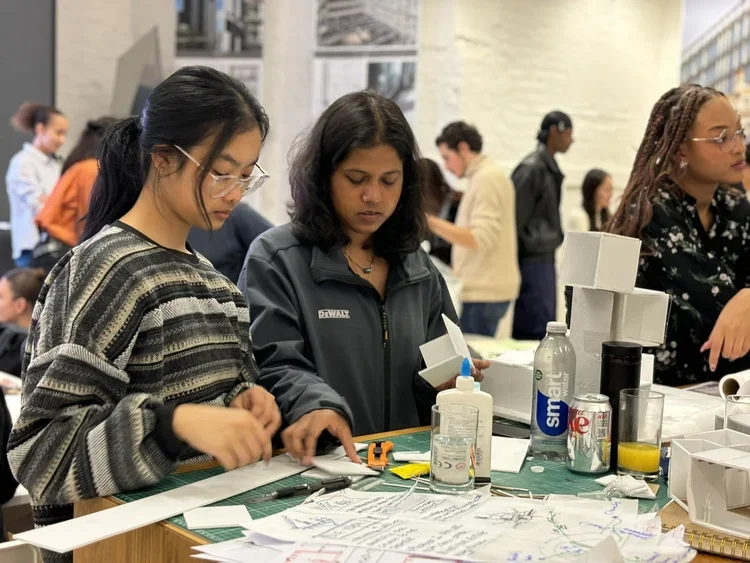
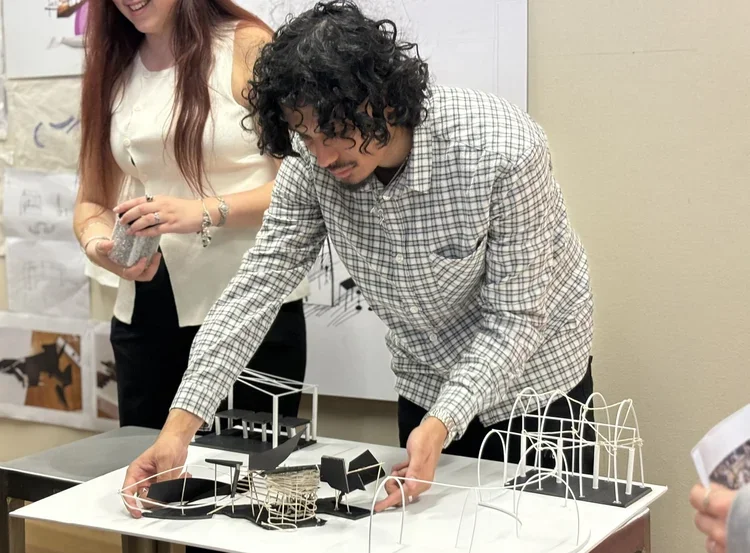
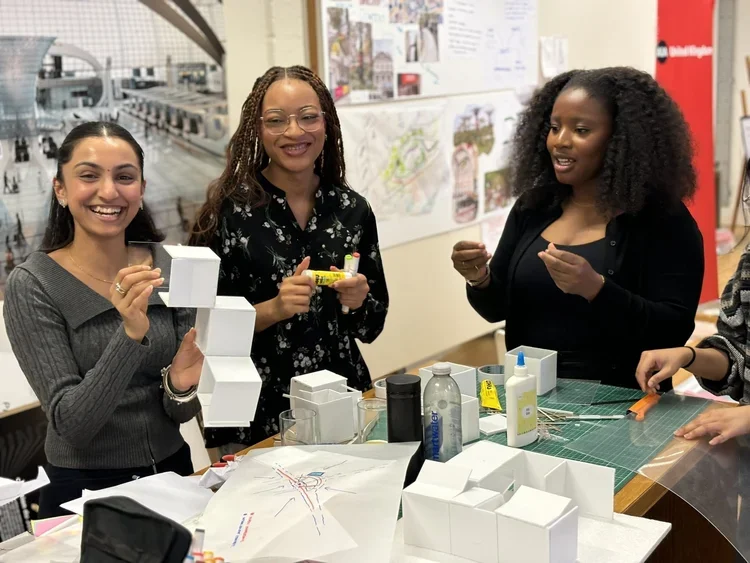
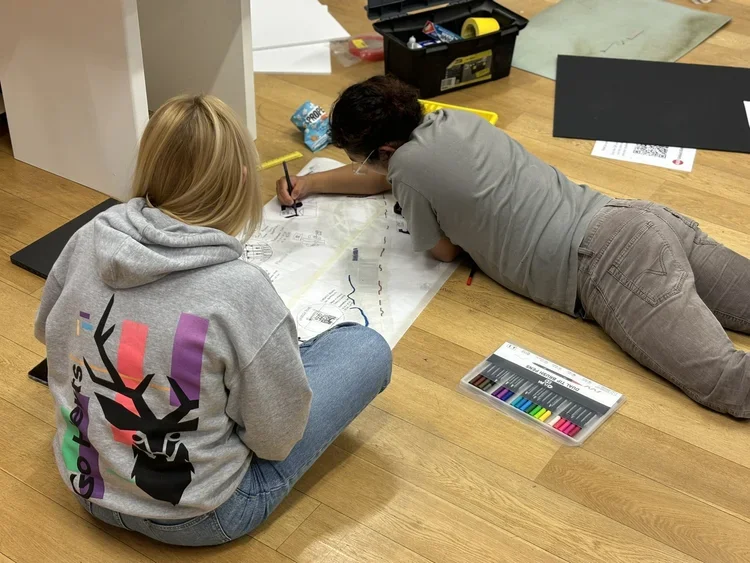
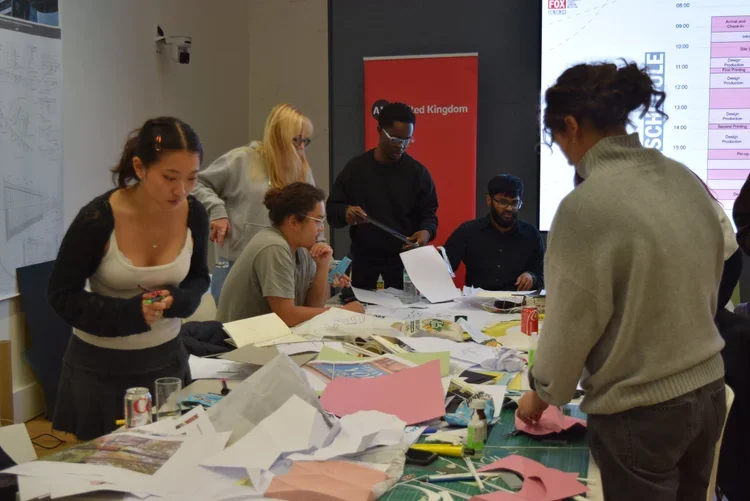
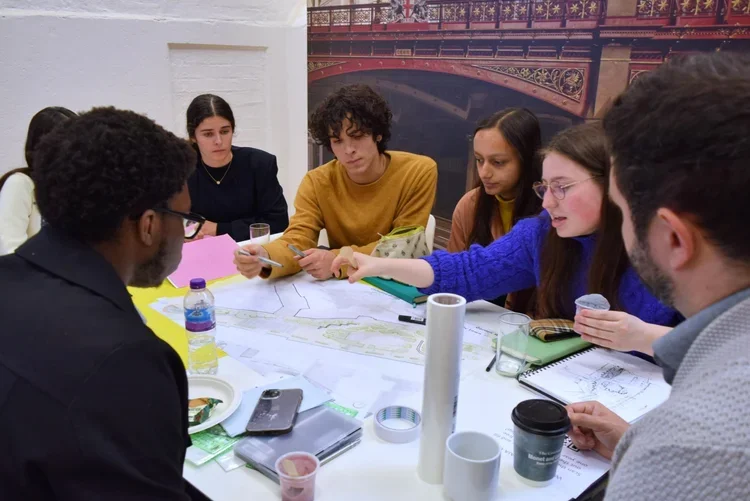
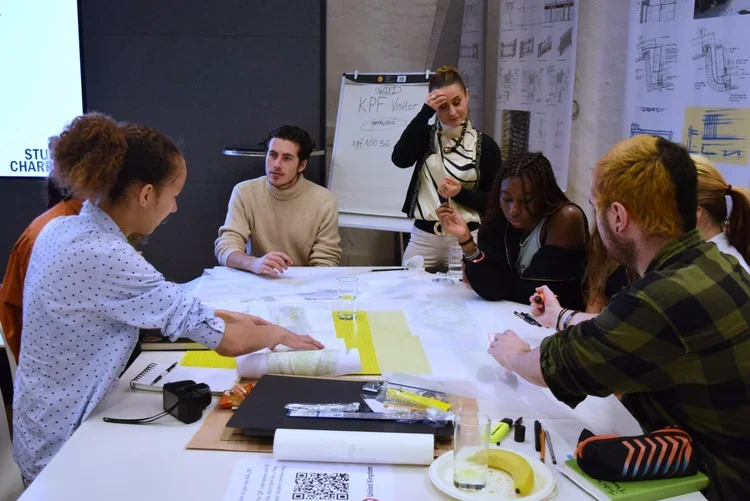
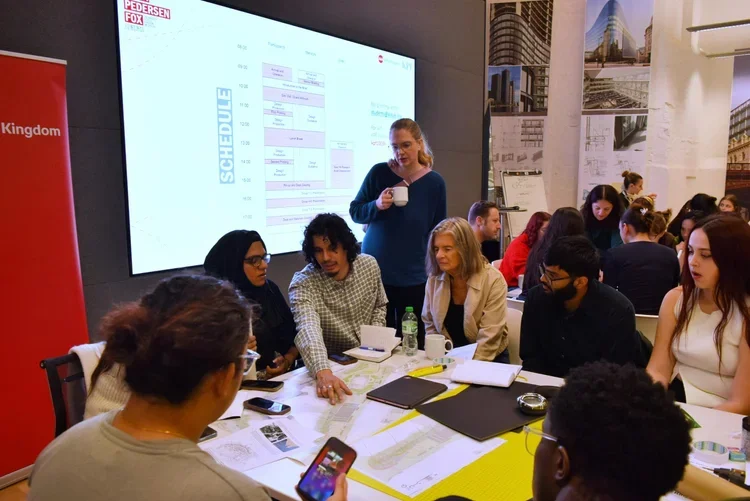
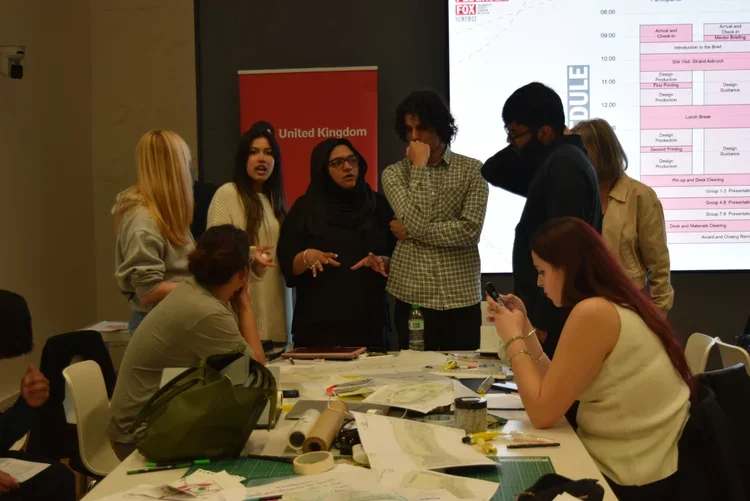
Returning to the KPF gallery, the real challenge began: a 4.5-hour analogue design sprint. In an era dominated by digital tools, the charrette embraced a CAD-free approach, pushing students to express their ideas through hand-drawn plans, sketches, and physical models. This constraint fostered spontaneity, collaboration, and a raw creativity that digital workflows often constrain.
Diverse Visions, Shared Values
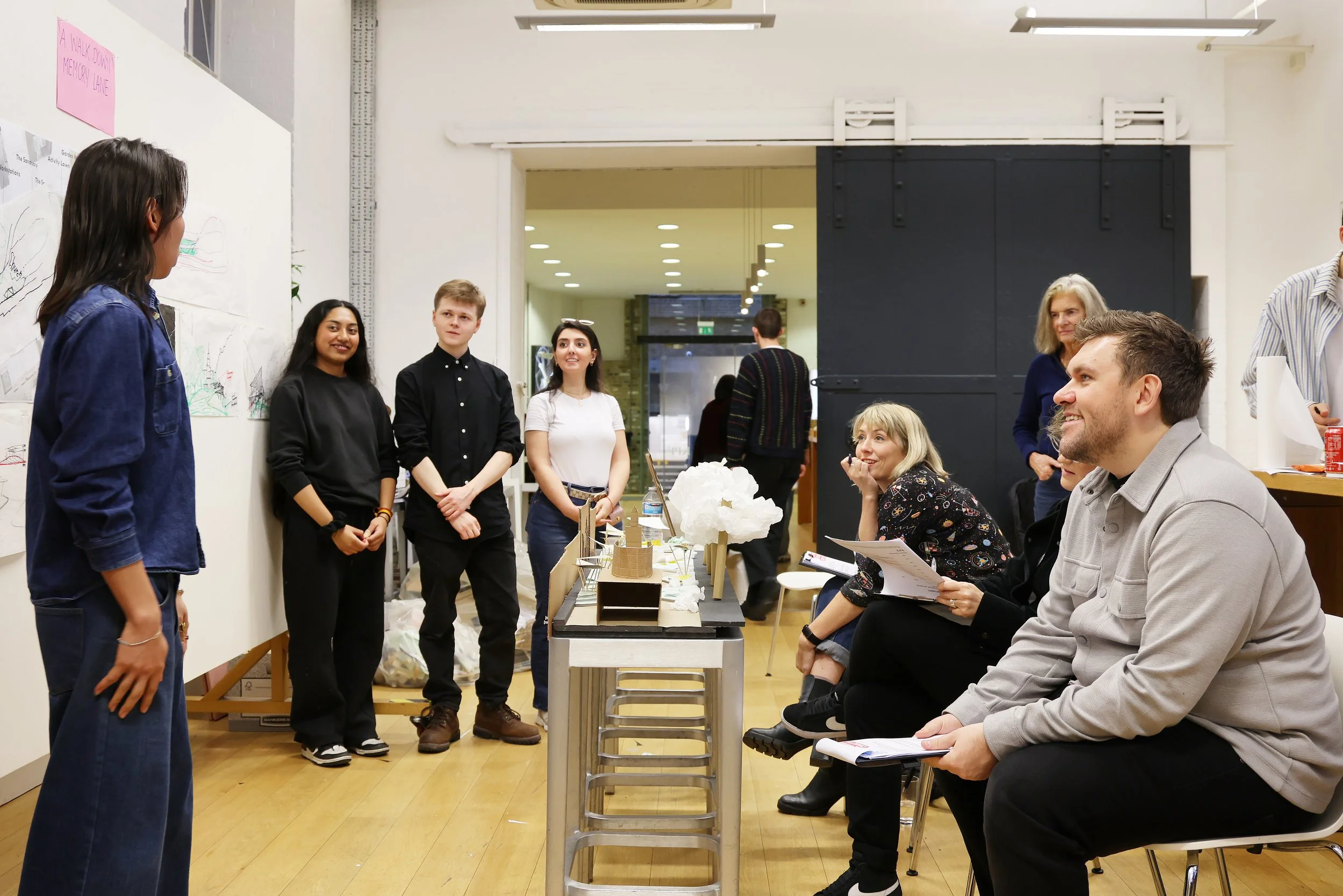
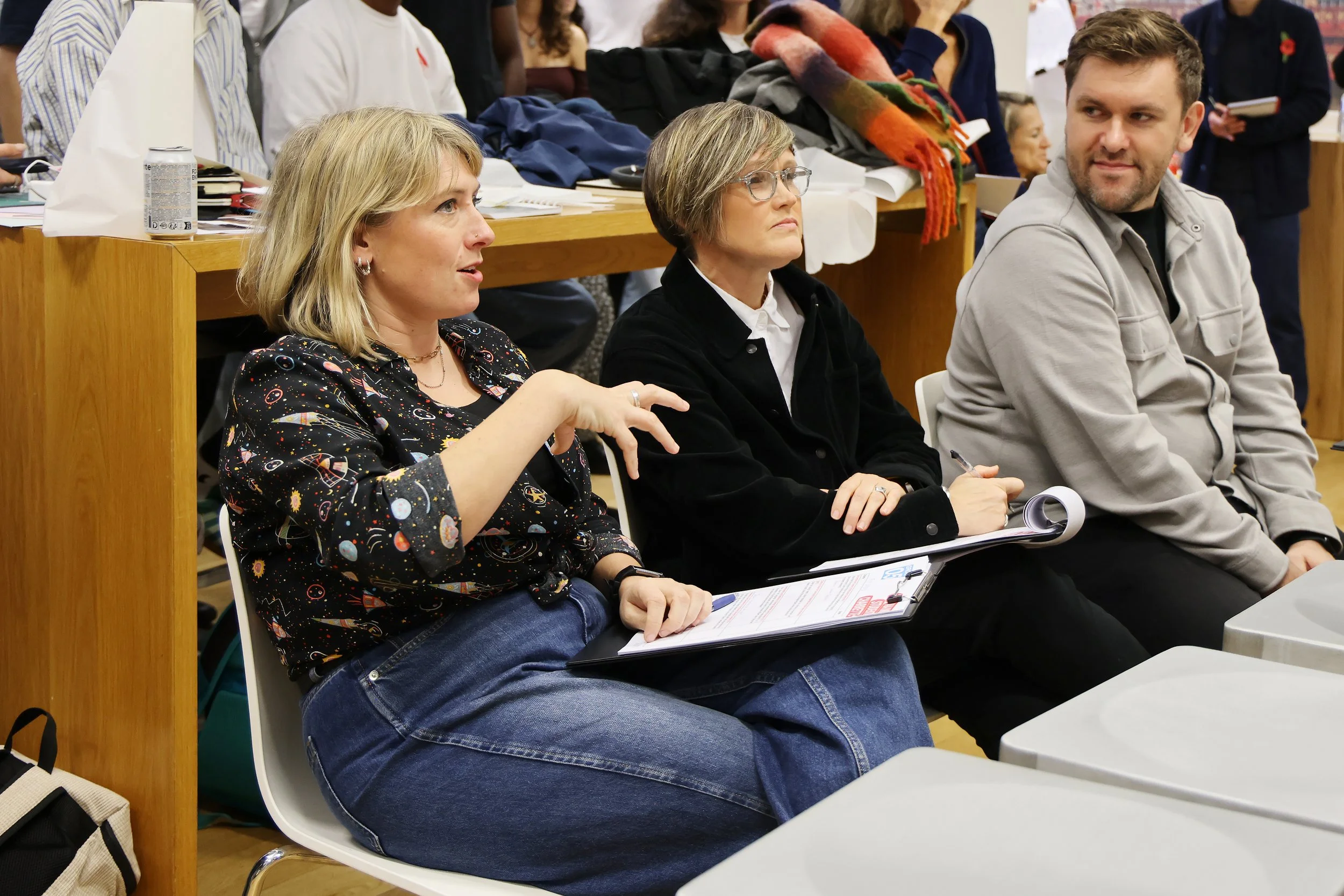
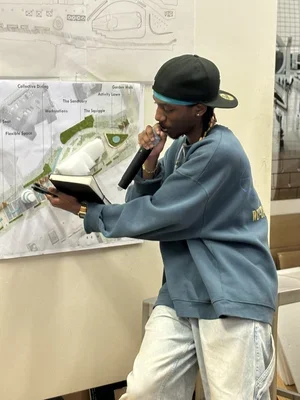
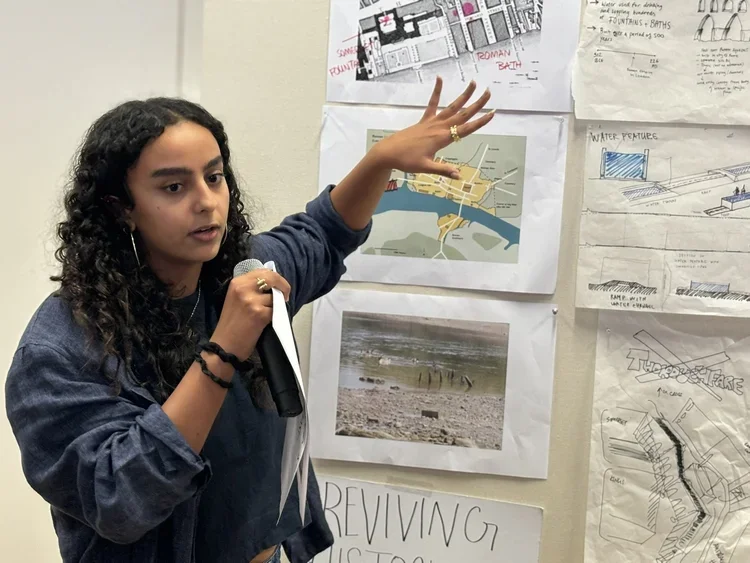
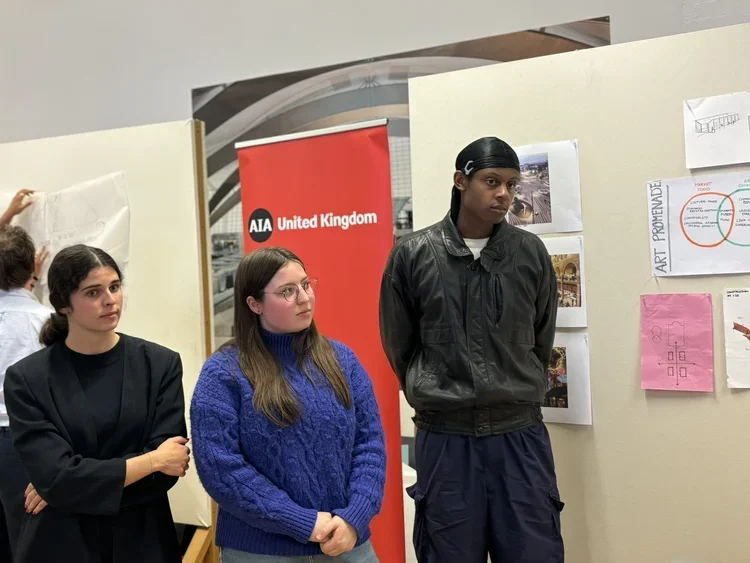
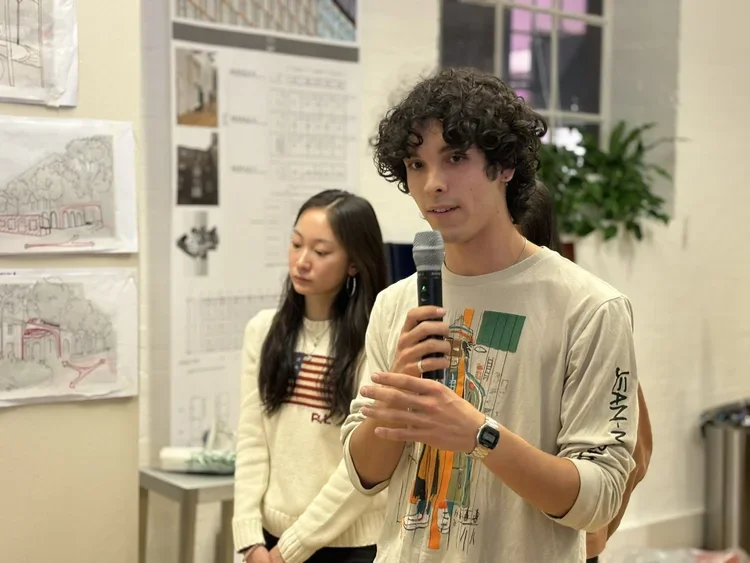
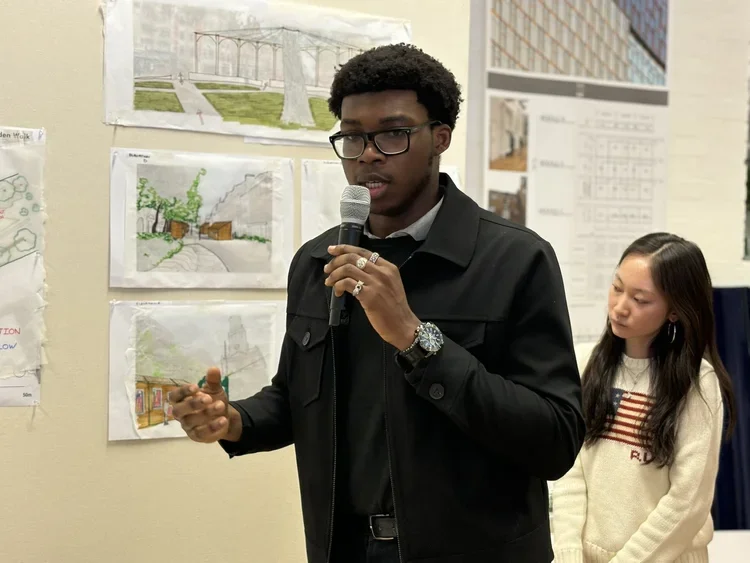
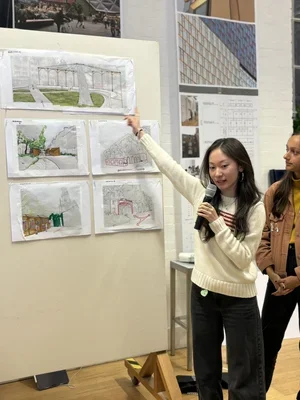
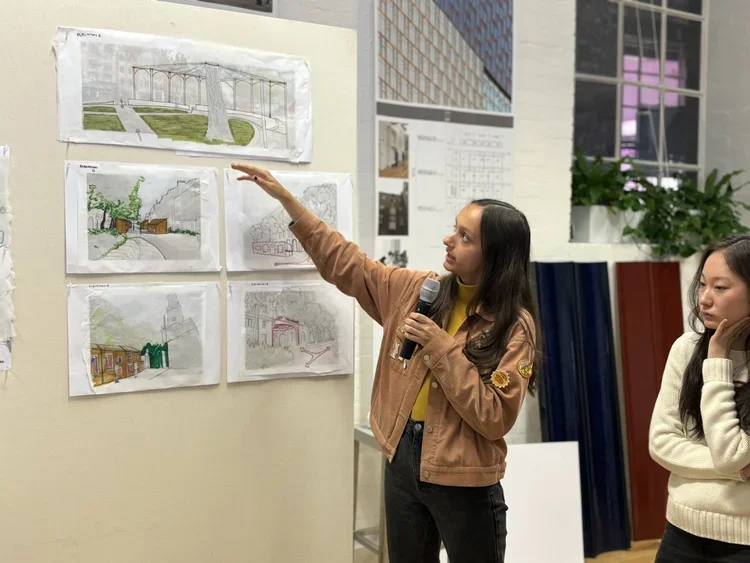
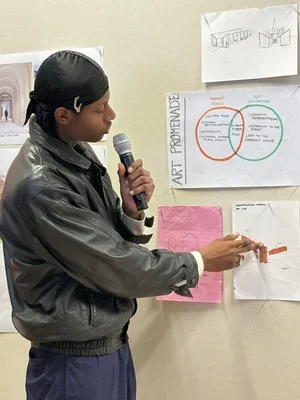
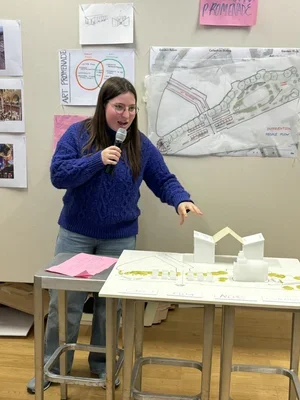
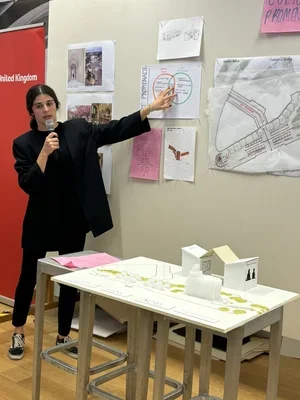
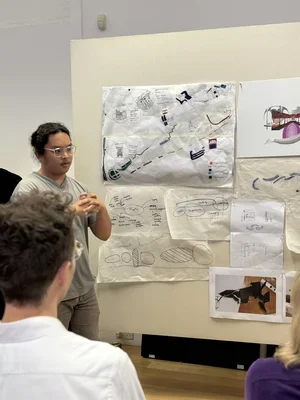
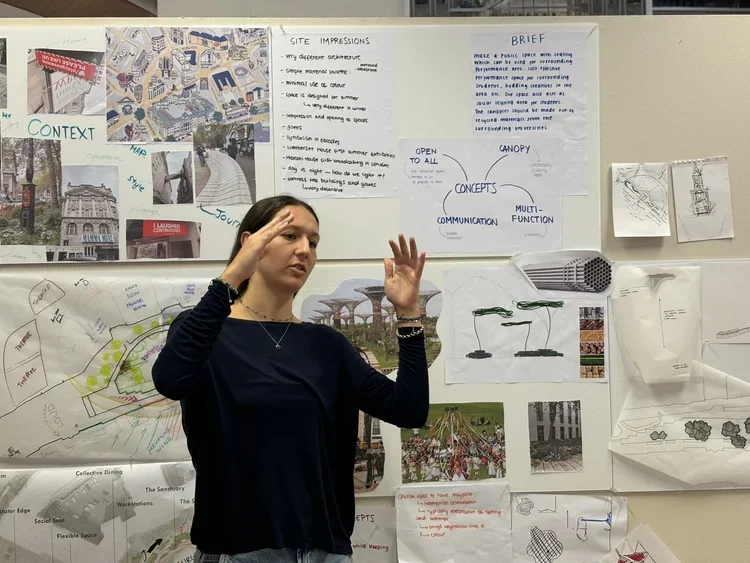
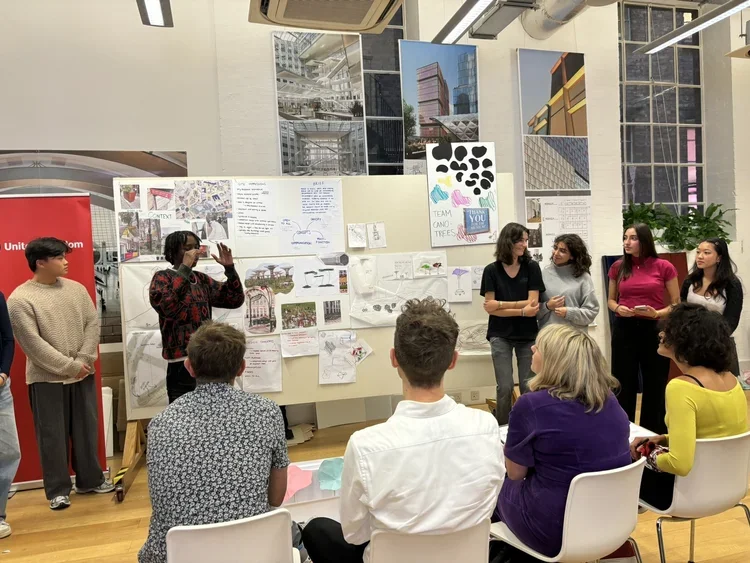
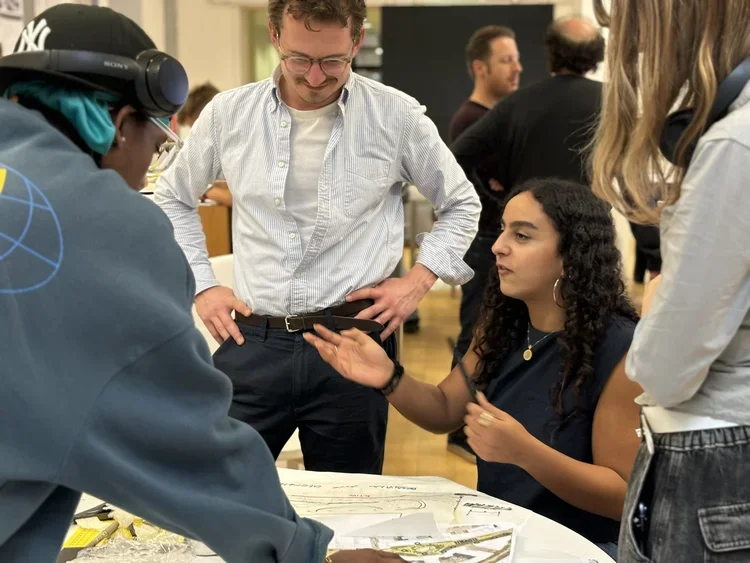
The afternoon culminated in presentations to a distinguished jury comprising Michelle Ludik from ADAM Architecture, Stephen Drew from Architecture Social, and Samantha Cooke from KPF. Each team's proposal demonstrated sophisticated understanding of the site's layered history and cultural significance, while offering bold visions for its nighttime transformation.
The jury praised the breadth of approaches, noting how students integrated public engagement strategies, inclusive design principles, and sustainable interventions into their proposals. From illuminated pedestrian networks to pop-up cultural programming, the designs reflected a generation of architects attuned to the social dimensions of urban space.
Celebrating Excellence
After thorough deliberation, the jury announced its winners:
First Place: Group 2
Students from Sheffield Hallam University, University of Kent, and University of Greenwich, mentored by Pierre Baillargeon, claimed top honours. Their proposal distinguished itself through a seamless integration of community engagement, environmental sustainability, and contextual sensitivity—demonstrating how nighttime activation can enhance rather than compromise a historic district's character.
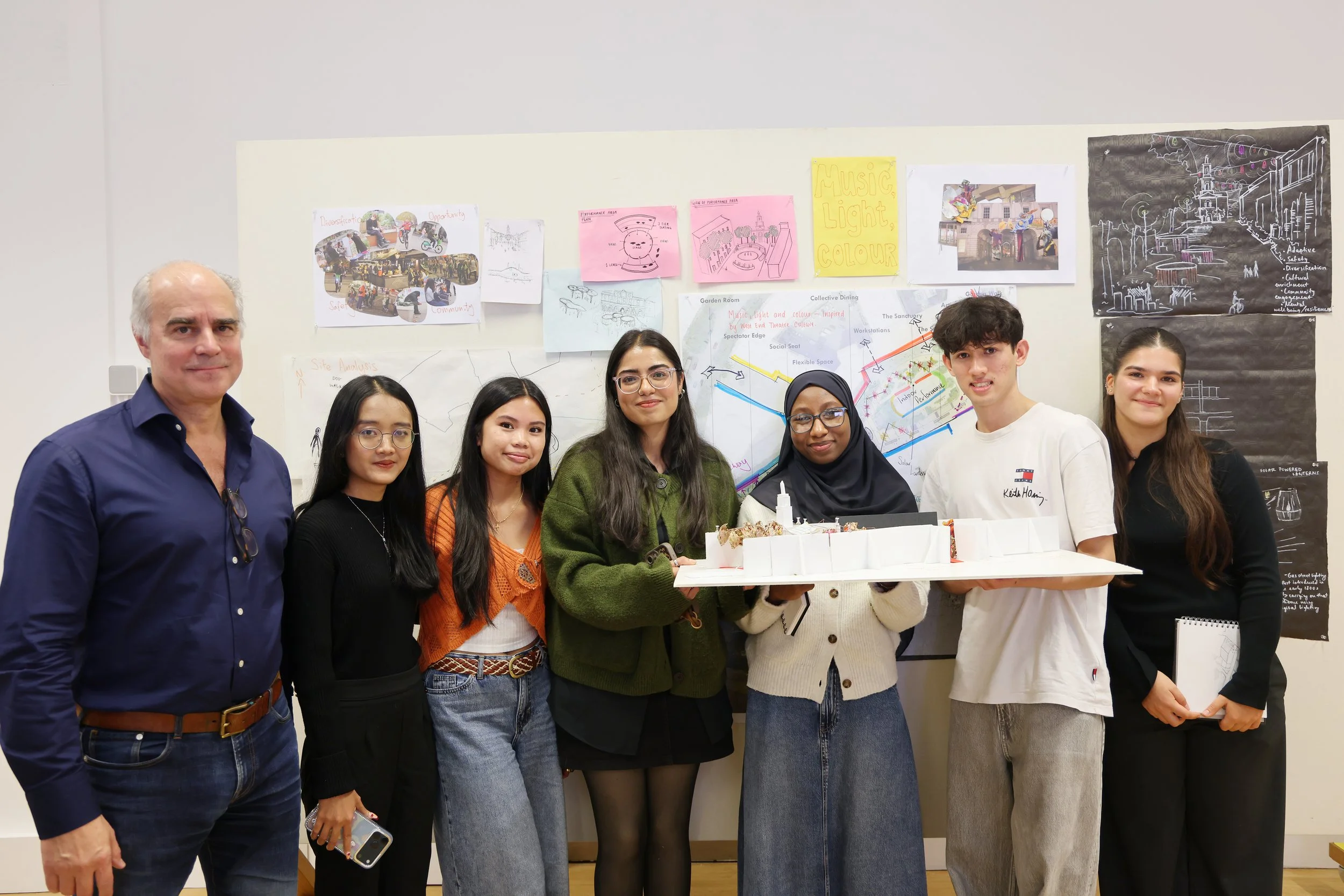
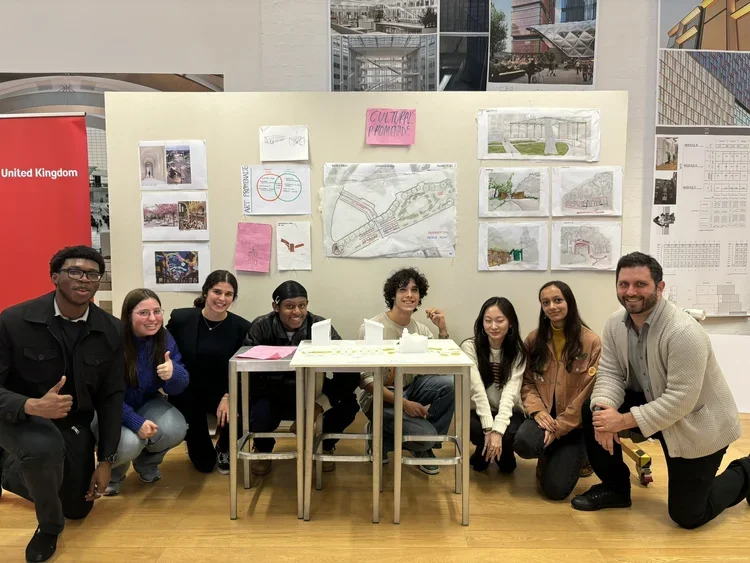
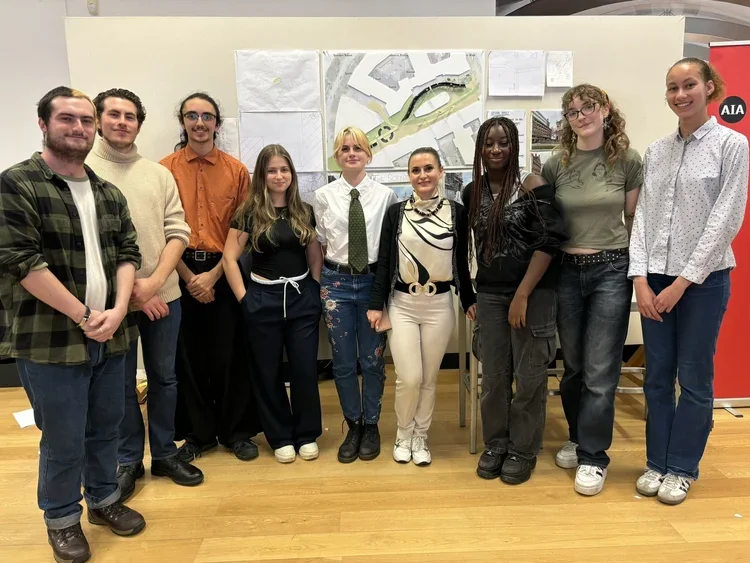
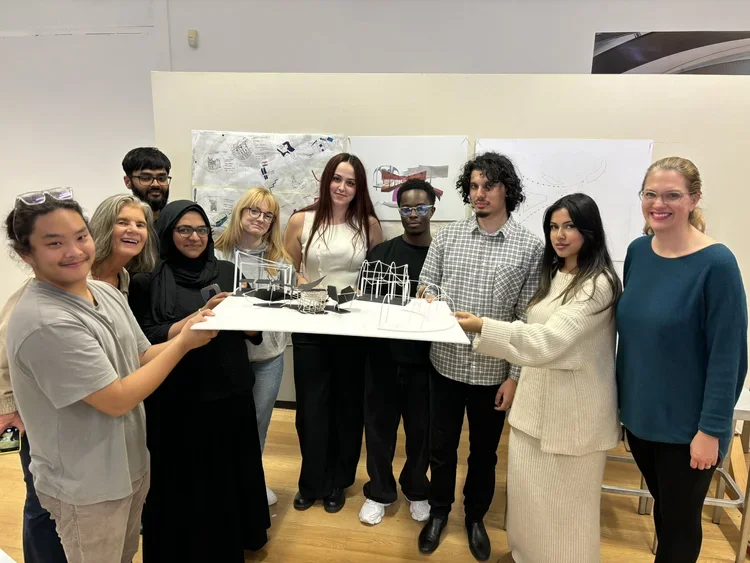
The winning team mentored by Pierre Baillargeon, AIA, NCARB, ARB, RIBA: Students from Sheffield Hallam University, University of Kent, and University of Greenwich: Aneeqa Hussain, Bea Barros, Riya Riya, Taqwa Elmrom, Ekaterina Andonova, Lucien Percy, Fatoumatta Ndure.
First Runner-Up: Group 8
A collaborative team from the University of Greenwich, University of Hertfordshire, and University of Westminster, guided by mentor Laura Petruso, earned recognition for their innovative approach to inclusive nighttime programming.
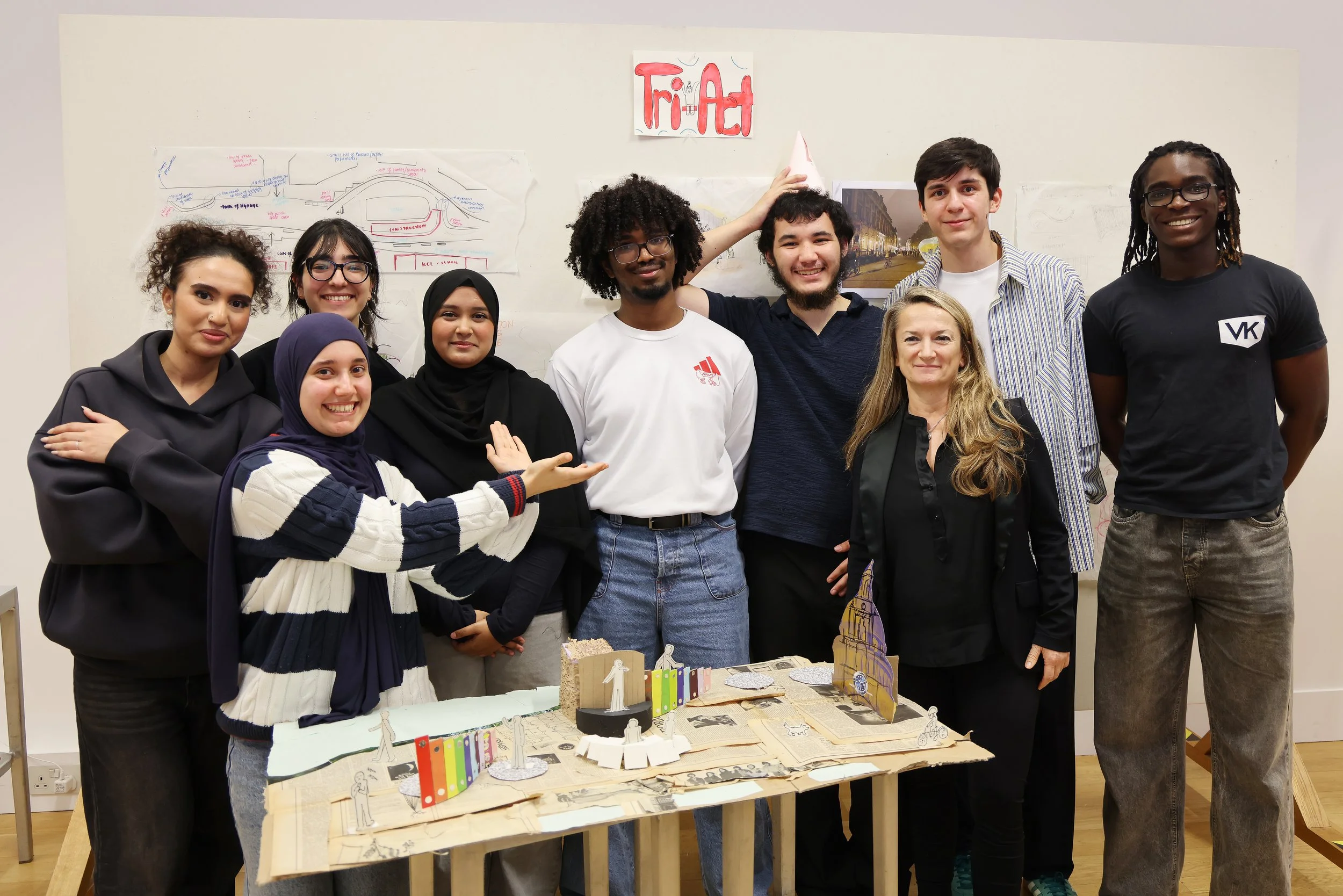
The 1st runner-up team mentored by Laura Petruso, AIA, ARB, OAC: Students from University of Greenwich, University of Hertfordshire and University of Westminster: Lamis Sami, David Akala, Abdulatif Ghani, Ayub Abdulkadir, Einas Heidari, Gamid Aliev, Sajida Akther.
Second Runner-Up: Group 6
Students from the University of Greenwich, mentored by Francis Hur, rounded out the podium with a compelling vision that balanced historical preservation with contemporary urban needs.
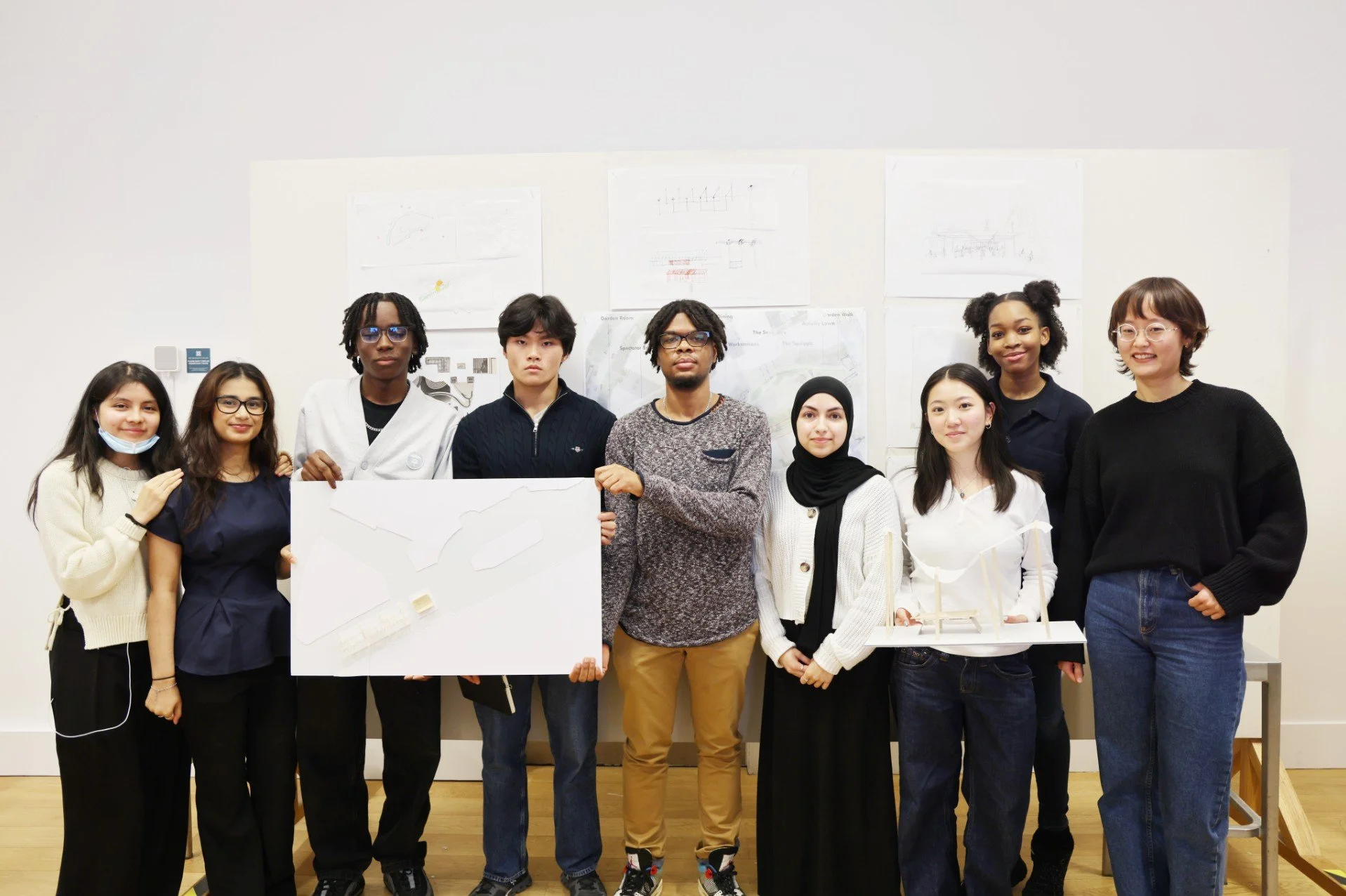
The 2nd runner-up team mentored by Mi Yao, AIA. Students from University of Greenwich:Alexander Ojejinmi, Firdowsun Nahar, Jaewoo Oh, Jessica Tirira Quezada, Jordan Jatto, Kaliah Henry, Madiha Payman, Sophia Tsui.
Celebrating 30 Years: Special Individual Awards
In honour of the 30th anniversary milestone, AIA UK introduced special individual recognition awards celebrating exceptional contributions throughout the day:
Early Bird Award: David Akala (University of Hertfordshire)
David arrived first and set a focused, energetic tone for the entire event. His early commitment and readiness to engage demonstrated the dedication that would characterize the day's collaborative spirit.
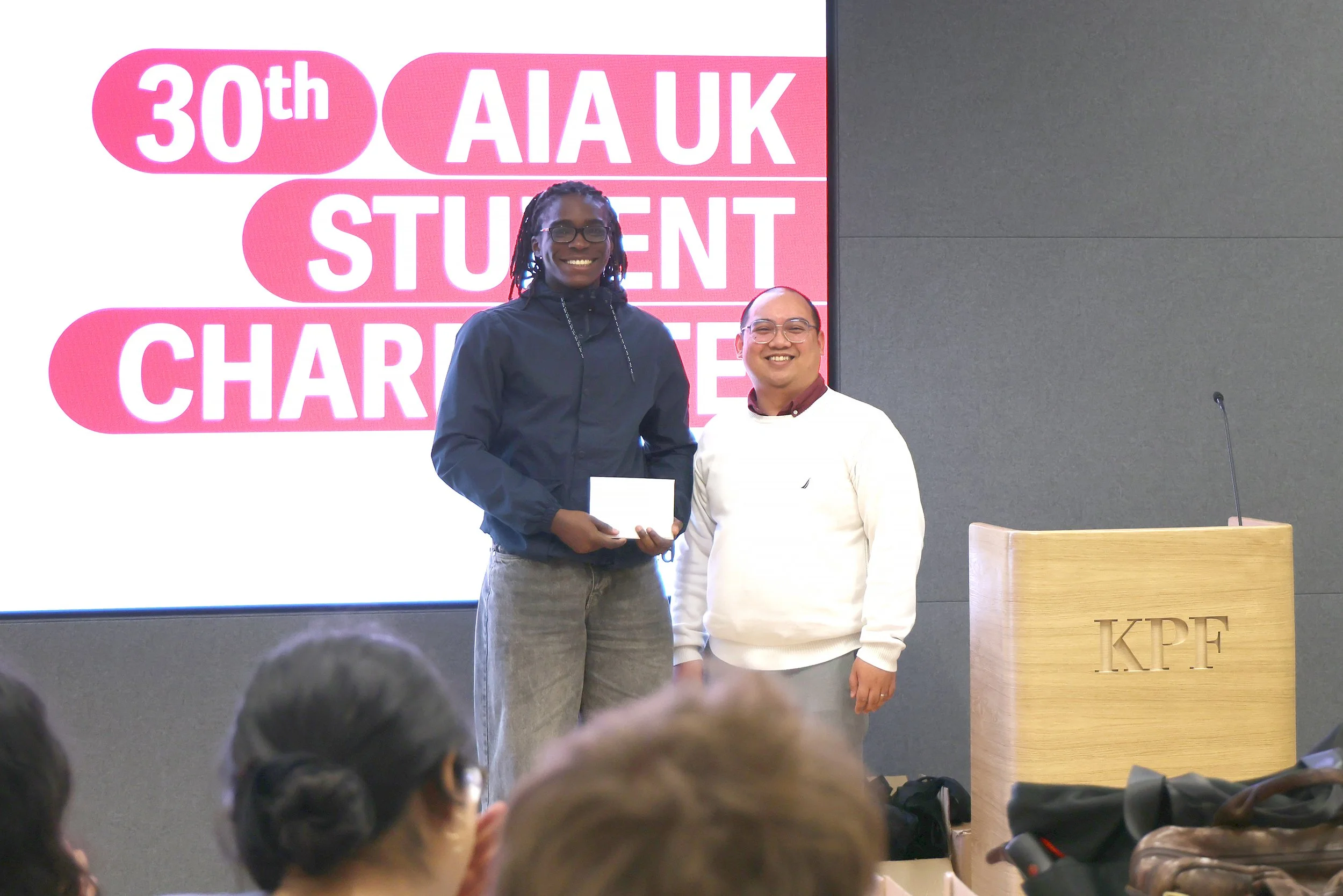
David Akala (University of Hertfordshire)
Presenters of the Year: Iain McCallum (University of Dundee) and Veronika Austin (University of Greenwich)
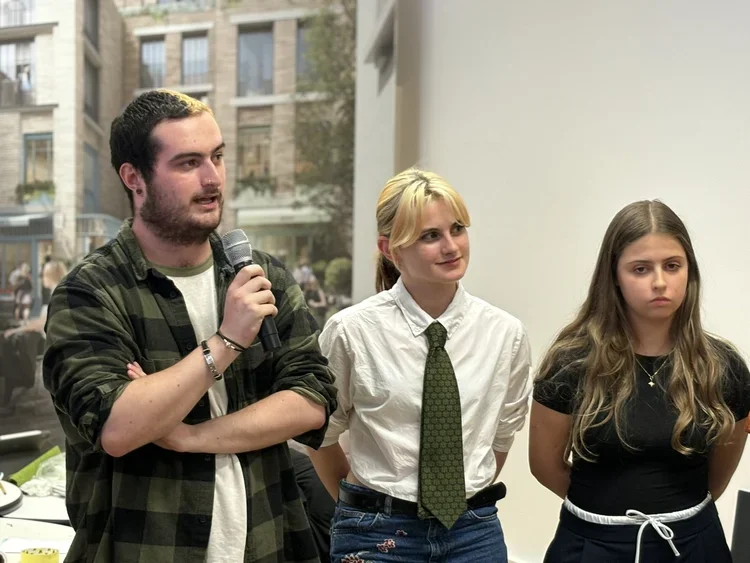
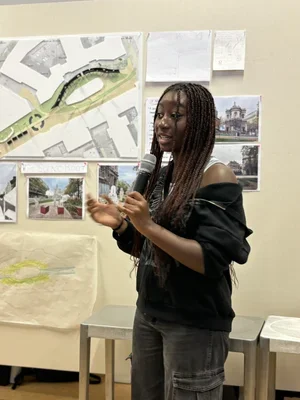
Both recipients delivered clear, structured presentations that captivated the jury and kept the room fully engaged. Their confidence and precision in communicating complex design ideas exemplified the communication skills essential to architectural practice.
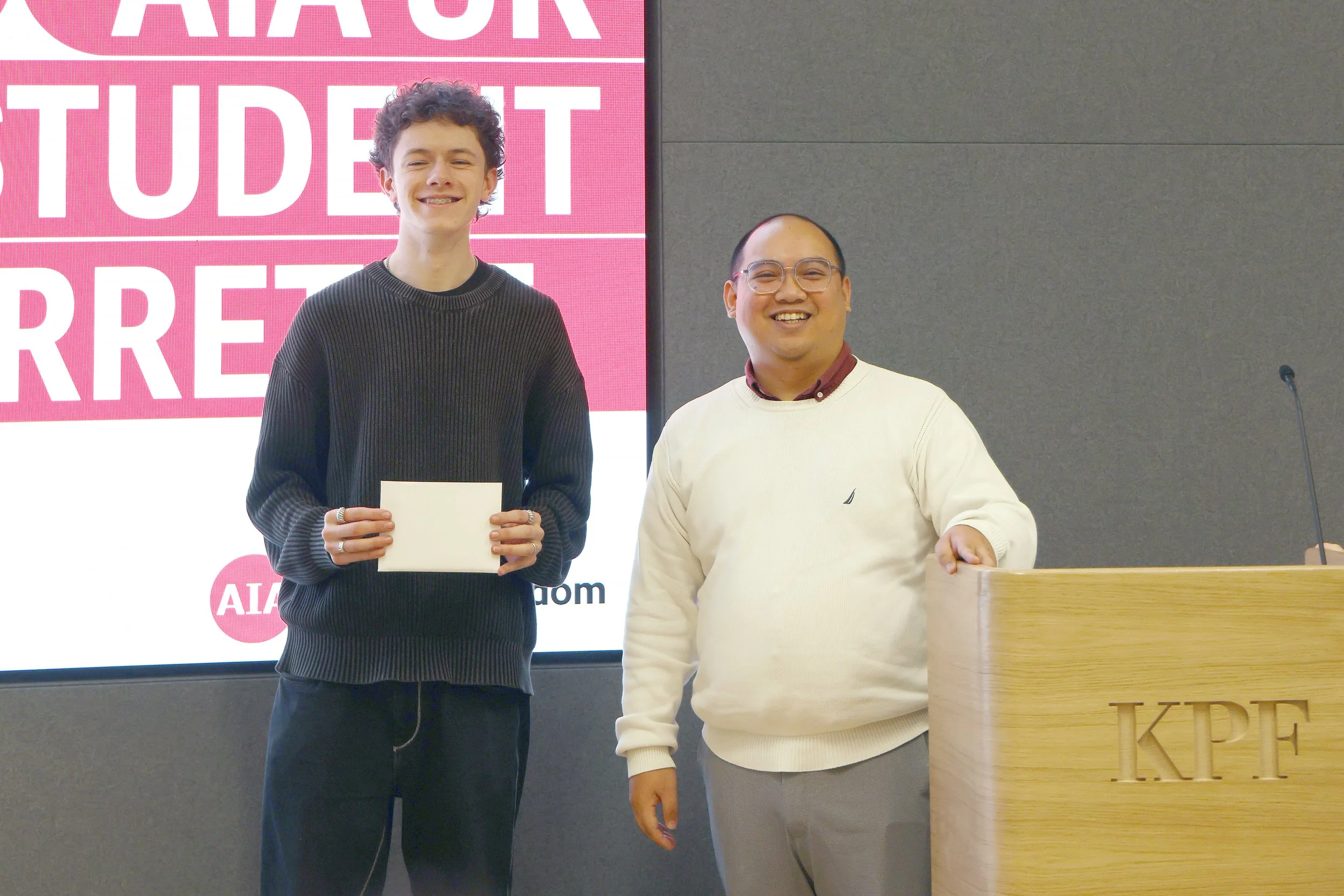
Iain McCallum (University of Dundee)
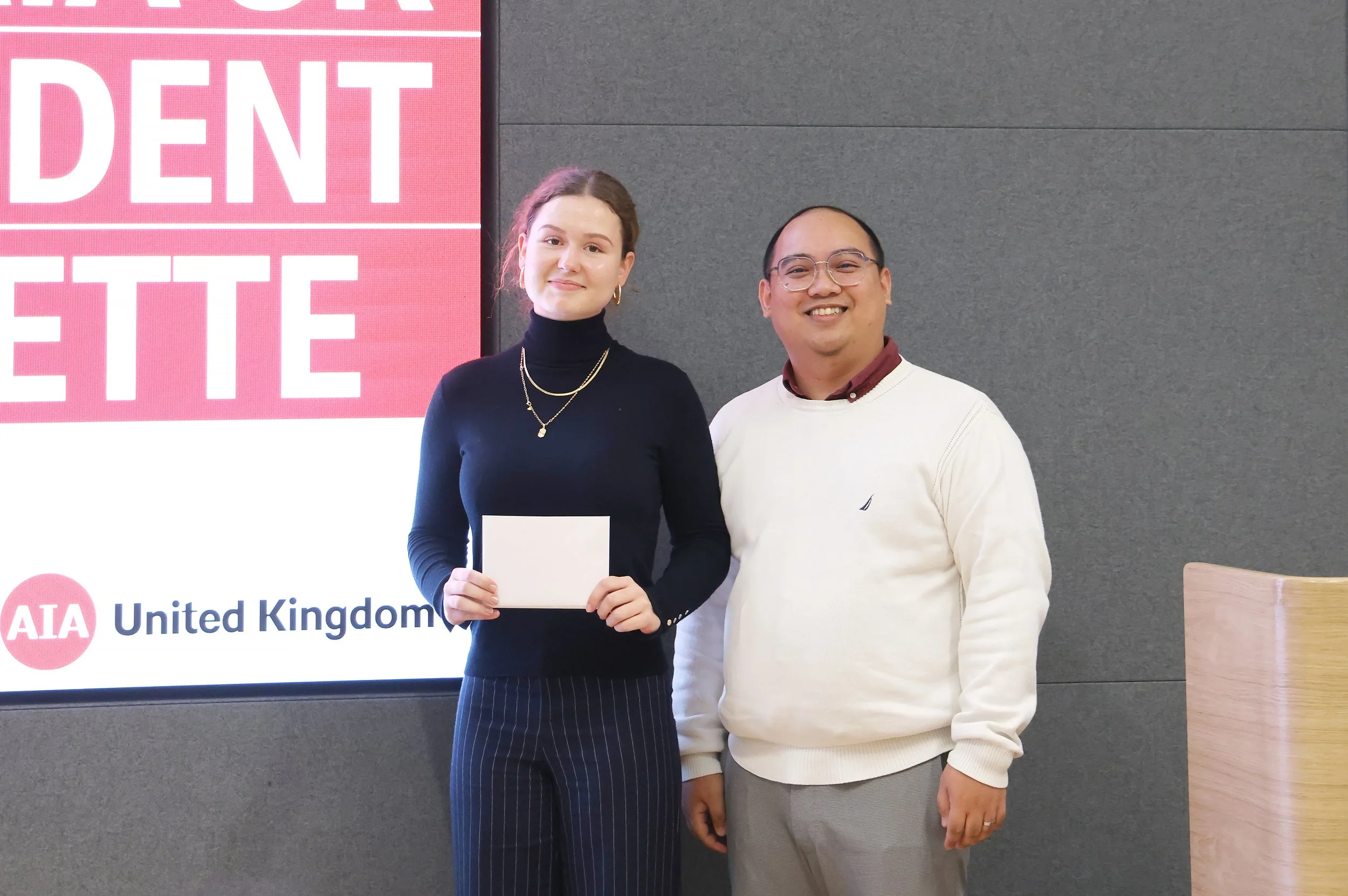
Veronika Austin (University of Greenwich)
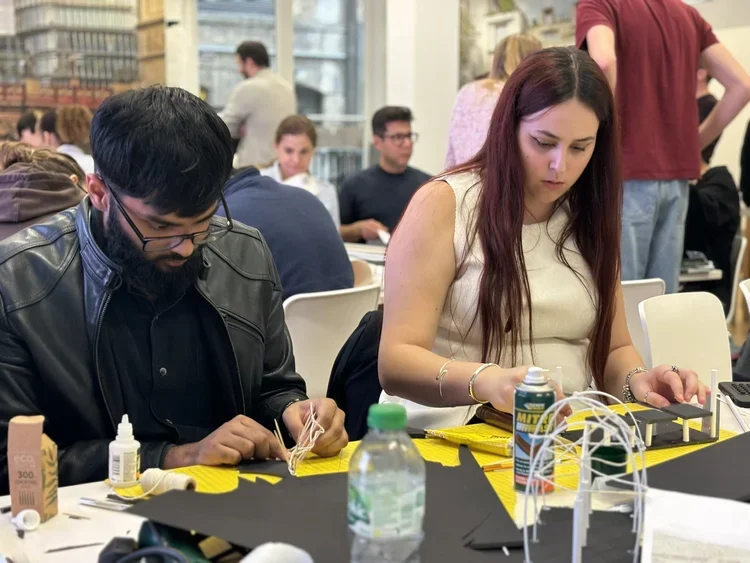
Most Immersed Award: Sobhia Boularas (University of Hertfordshire)
Sobhia remained fully absorbed in her craft from start to finish, demonstrating steady concentration and an unwavering drive to refine every detail of her model. Her dedication embodied the focused intensity that defines exceptional design work.
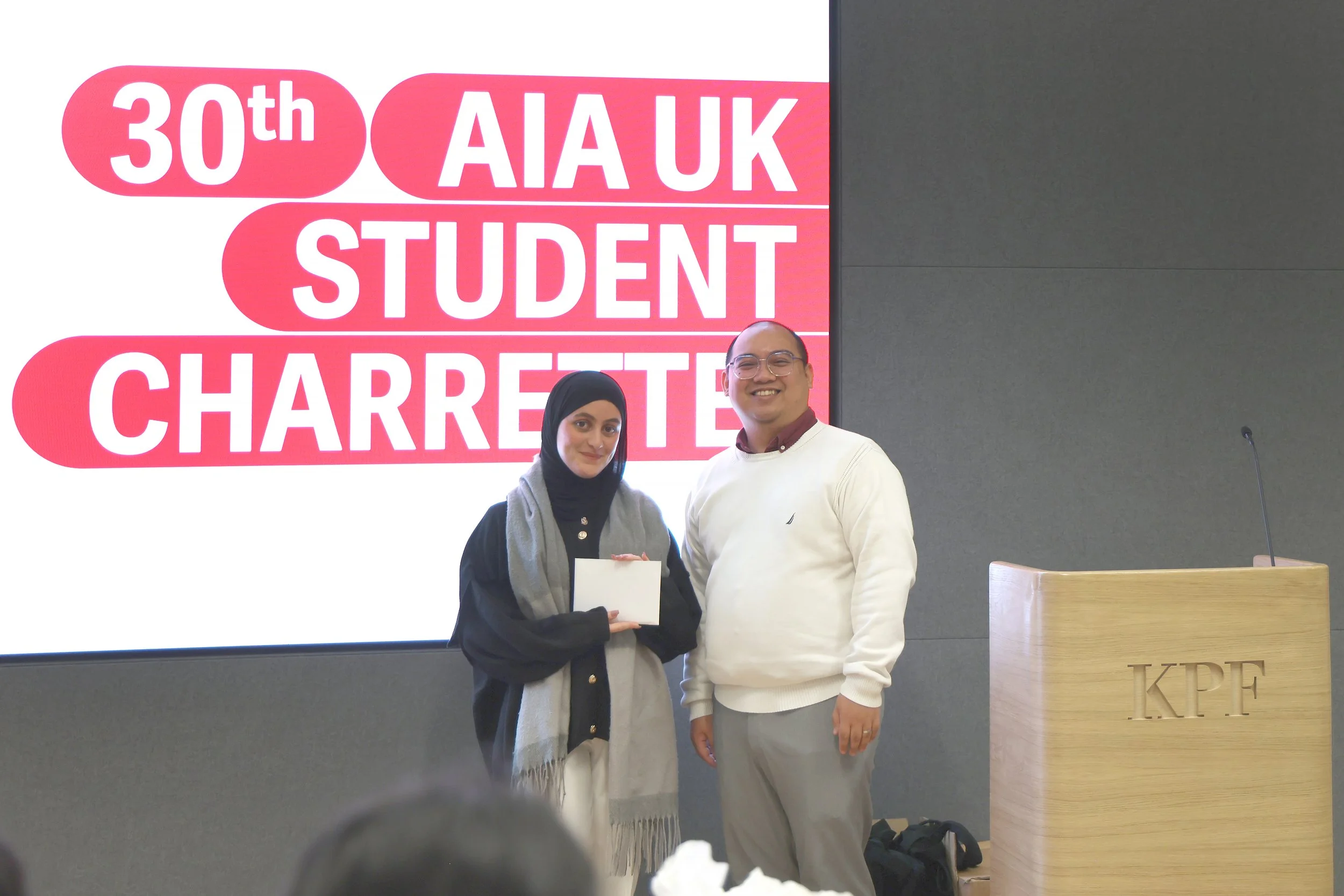
Sobhia Boularas (University of Hertfordshire)
The Power of Mentorship and Collaboration
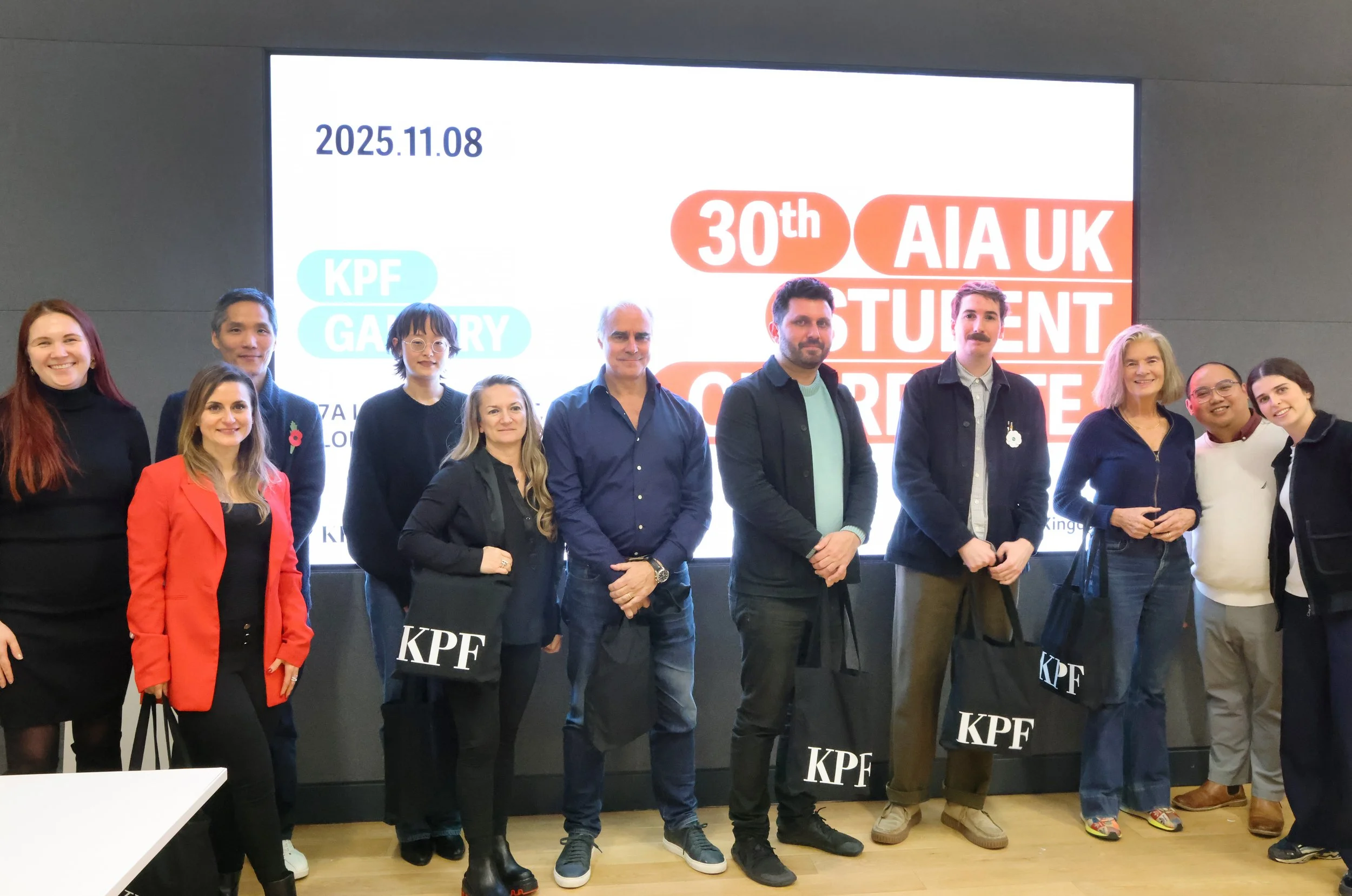
AIA UK extends heartfelt gratitude to the mentors who played an instrumental role in the charrette's success. Their expertise and guidance were essential in shepherding students through each phase of the design process, from initial site analysis through final presentation.
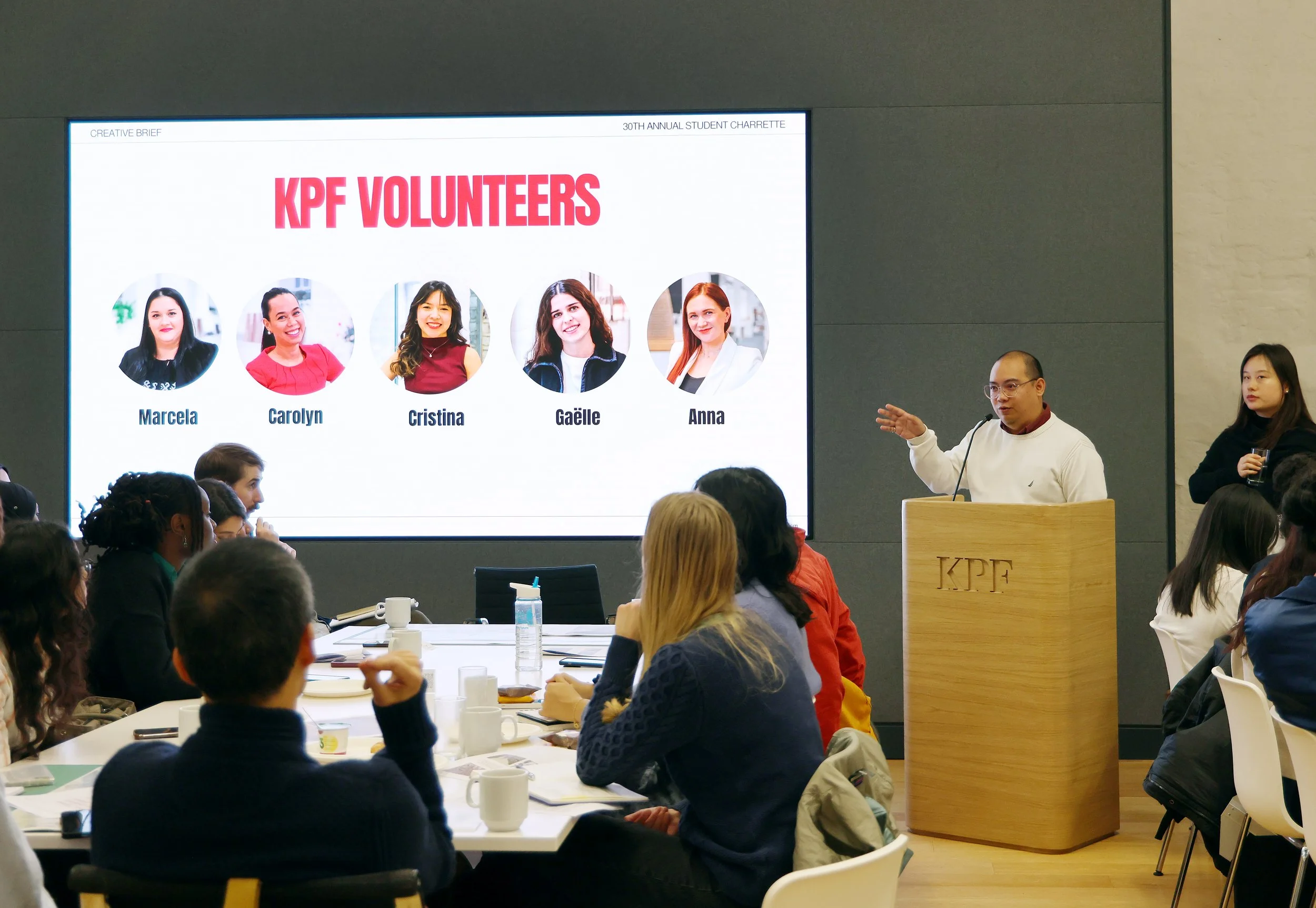
The event's success also depended on the dedication of its organizers and volunteers, including Paolo Mendoza from Benoy, Rishi Lal from HOK, and Siyu Zhao from ADAM Architecture. Special recognition goes to the volunteers from KPF London—Marcela Manole, Cristina Mock, Carolyn Ardaiz, Gaëlle Brohard, and Anna Mytcul—whose behind-the-scenes work ensured the day ran seamlessly.
Looking Forward: Analog Design in the Age of AI
The 30th AIA UK Student Charrette proved especially meaningful in an era increasingly shaped by artificial intelligence and digital automation. By requiring hand-drawn work and physical model-making, the event reminded participants of the irreplaceable value of tactile exploration, spontaneous sketching, and direct material engagement in the design process.
"This event was very special for AIA UK and for the students," organizers noted. "We are motivated to continue this tradition and deliver amazing results through many more upcoming years."
As London grapples with the evolution of its nighttime economy—balancing safety concerns, cultural vitality, and residential quality of life—events like the AIA UK Student Charrette demonstrate how emerging architects can contribute fresh perspectives to longstanding urban challenges. The proposals generated on November 8 may be student projects, but the questions they address are urgently real: How do we create public spaces that serve diverse communities around the clock? How can design foster safety without surveillance? How might historic districts embrace contemporary nightlife while preserving their character?
The 30th charrette proved that the future of London's public realm is in capable, creative hands.
2025 Mentors
We thank our 2025 mentors for their support of our students!
Alex Miller (Senior Associate Principal at KPF), Bea Sennewald (Article 25), Francis Hur (Director at Francis Hur Architecture), Laura Petruso (Founder Director at Alpex Architecture), Lucia Piccinini (Principal Architect at Arkinnovation), Mi Yao (Project Manager at KPF), Paolo Mendoza (Assoc AIA, LEED AP ND, Senior Urban Designer and Masterplanner at Benoy), Pierre Baillargeon (AIA NCARB ARB RIBA, Managing Director at Mixity Studio), and Thomas Grove (Associate at ADAM Architecture).
Project Credits:
● Event Organizer: AIA UK
● Host & Sponsor: Kohn Pedersen Fox (KPF)
● Brief Coordinator: Siyu Zhao, AIA UK
● Jury: Michelle Ludik (ADAM Architecture), Stephen Drew (Architecture Social), Samantha Cooke (KPF)
● Organizers & Volunteers: Paolo Mendoza (Benoy), Rishi Lal (HOK), Siyu Zhao (ADAM Architecture)
● KPF London Volunteers: Marcela Manole, Cristina Mock, Carolyn Ardaiz, Gaëlle Brohard, Anna Mytcul, Jamar Rock.
● Participants: 60+ Part I architecture students from 13 UK universities
● Date: November 8, 2025
● Location: KPF Gallery, London
Special thanks to KPF for their continued support of architectural education and their generous provision of gallery space for this milestone event.
Written by Anna Mytcul, Associate AIA
Photos by Cristina Mock, Associate AIA
Correction made 14 July 2026: Second runner up team photo updated and mentor previously incorrectly stated as Francis Hur.
AIA UK 29th Annual Student Charrette: Shaping the Future of London’s Public Spaces Through Creative Collaboration
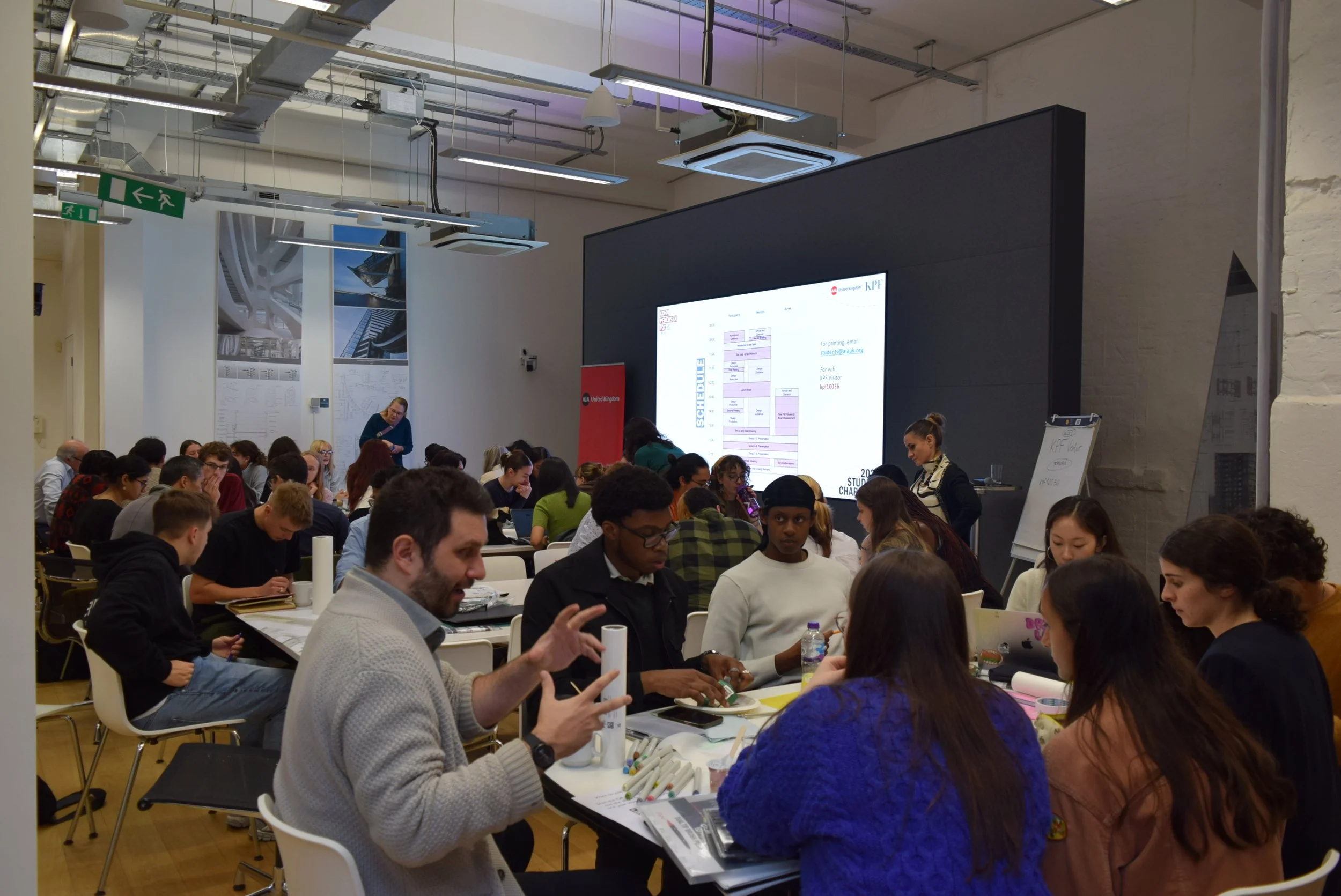
On 26 October 2024, the Kohn Pedersen Fox (KPF) gallery in London was transformed into a hub of creativity and collaboration for the 29th AIA UK Student Charrette. With over 70 Part 1 architecture students from 14 universities in attendance, the event embodied the power of participatory design to reshape public spaces for inclusivity, sustainability, and community vitality. Special thanks to KPF for sponsoring this year’s event and graciously opening their gallery space for the day, helping bring this ambitious vision to life.
The morning began with a warm breakfast reception, setting an inviting tone for the students, mentors, and jurors to connect and exchange ideas. Paolo Mendoza, AIA UK’s Emerging Professionals Director, then introduced this year’s brief, centered on “Empowering the Next Generation in Participatory Urban Design,” a call for future architects to contribute to London’s vibrant cultural landscape. Students were tasked with reimagining the Strand Aldwych area—a site steeped in history and cultural significance—as a dynamic public space. Their designs needed to respond to the area’s heritage while prioritizing sustainability, resilience, and inclusivity. The brief challenged students to embrace participatory urban design, encouraging them to create installations that engage the community in co-creating spaces that reflect their needs.
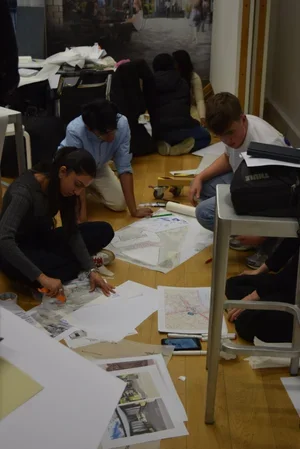
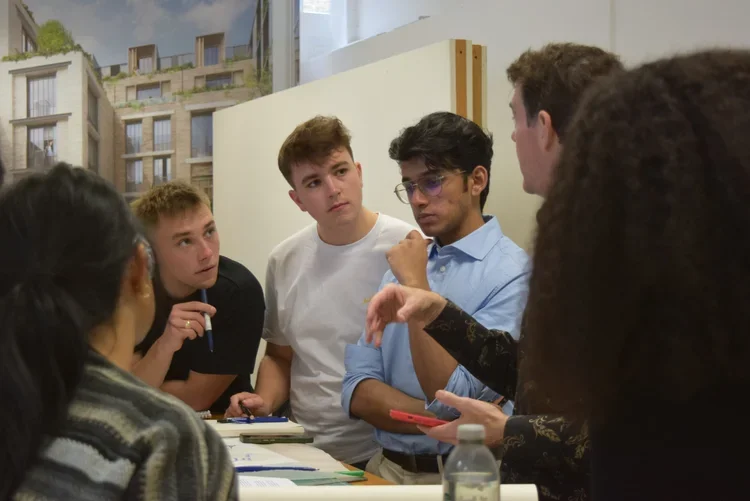
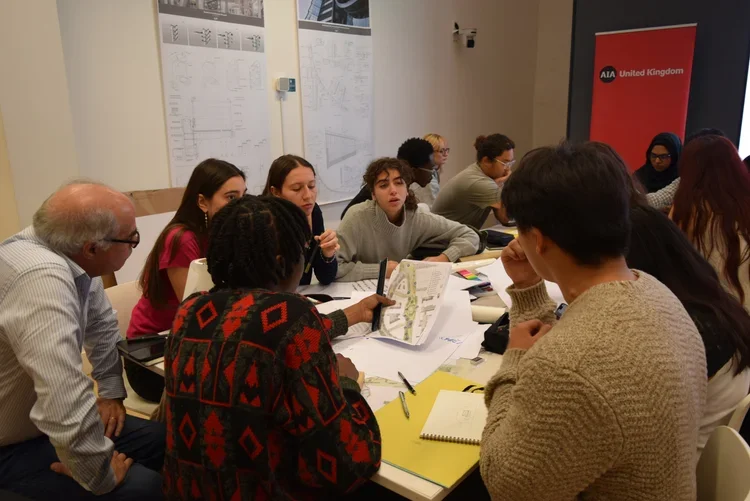
Equipped with cameras and notebooks, the teams embarked on a site visit, accompanied by their mentors, to observe and document the site’s physical and social dynamics. After returning to the KPF gallery, students launched into a 4.5-hour design sprint. During this phase, Martyn Corner from Hopkins Architects offered expert guidance on model-making techniques, helping teams refine their physical representations. Working within the constraints of an analogue, CAD-free charrette, the students produced hand-drawn plans, sketches, and physical models that expressed their vision and creativity.
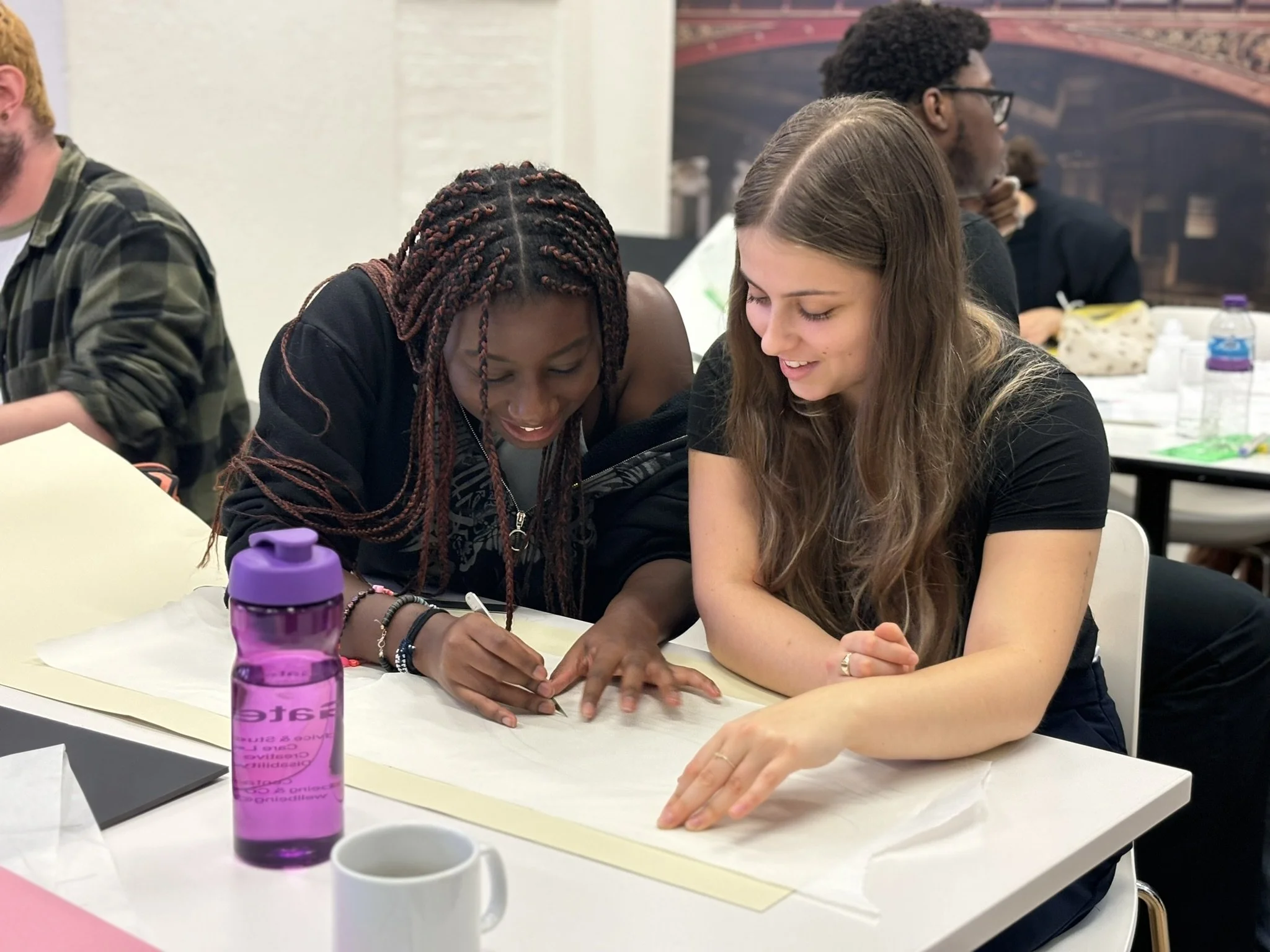
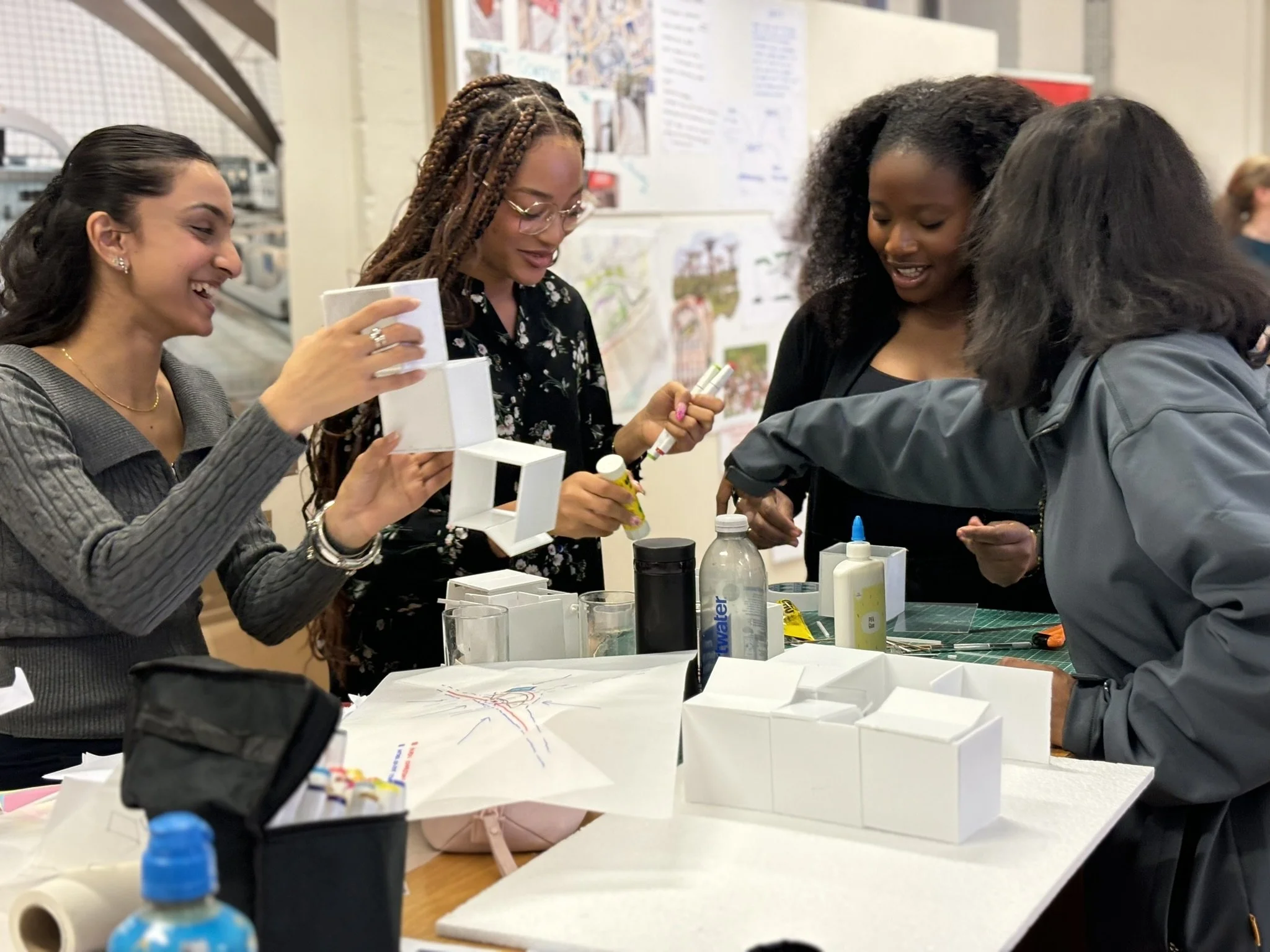
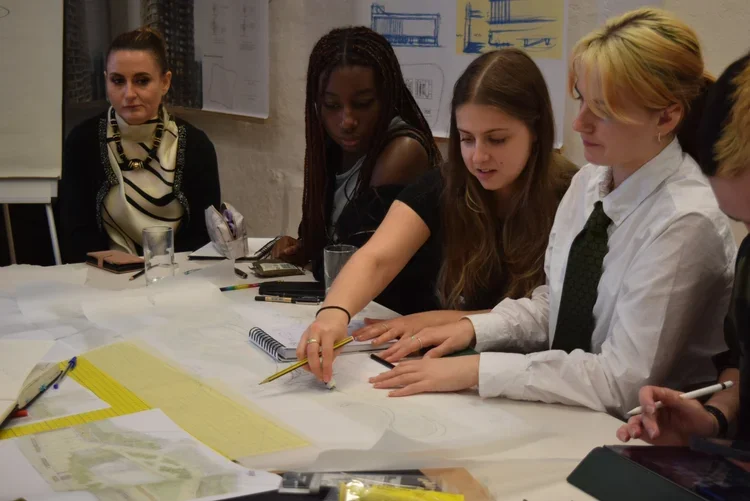
As the design time concluded, the teams presented their proposals to a distinguished jury: Taylor Rogers from Hopkins Architects, Karla Montauti from Benoy, Samantha Cooke from KPF, and Mark Breeze from the Architectural Association. The jury commended the teams for their creative approaches and attention to the nuances of the site. Each team’s proposal demonstrated a clear understanding of the Strand Aldwych’s unique cultural and historical character, with compelling visual representations and thoughtful models. The jurors highlighted the inventive ways the students integrated public engagement into their designs, noting a range of inspiring ideas to make the space more accessible, inclusive, and interactive.
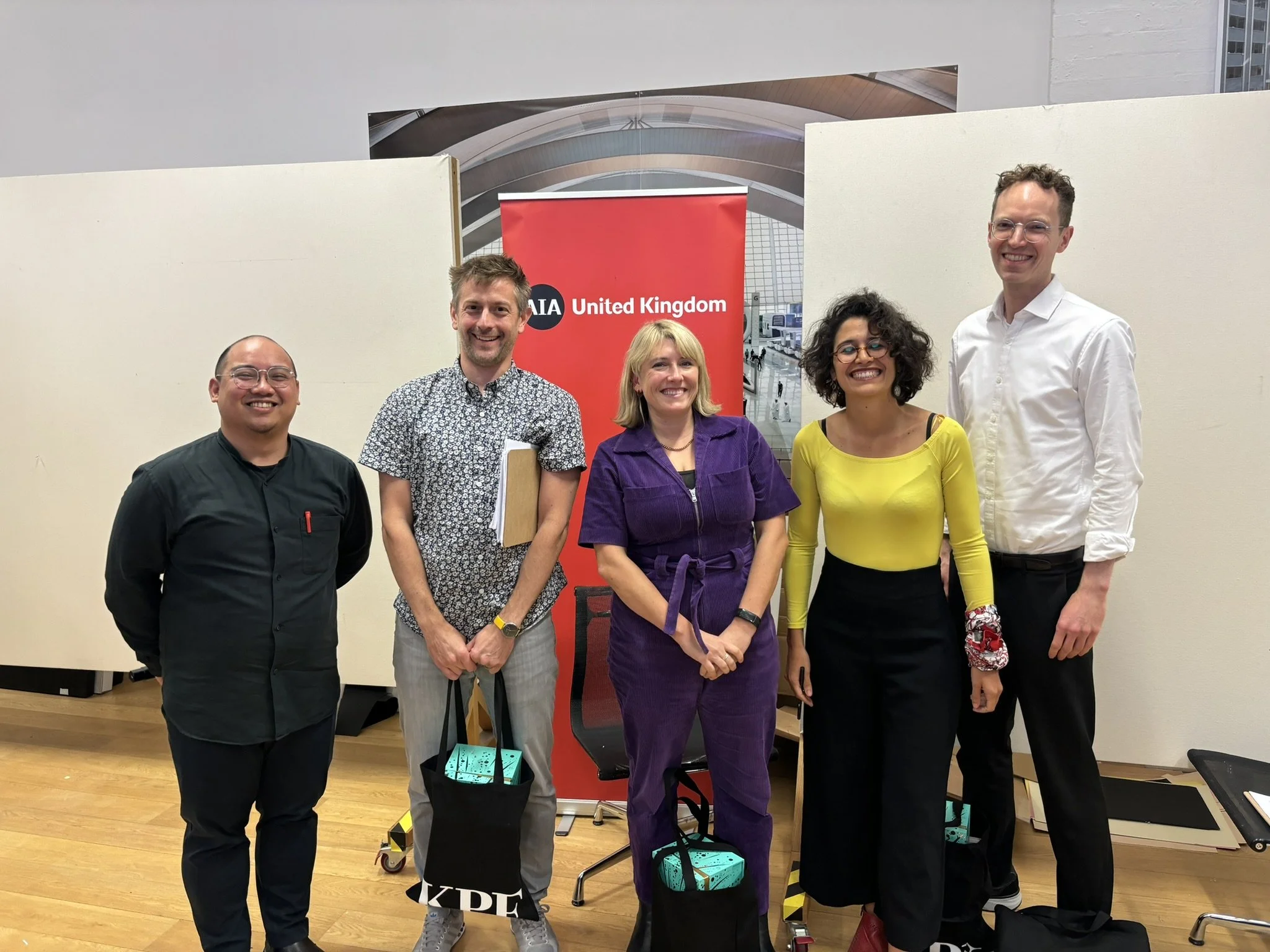
AIA UK Emerging Professionals Director, Paolo Mendoza with the 2024 Student Charrette jurors: Taylor Rogers (Hopkins Architects), Samantha Cooke (KPF), Karla Montauti (Benoy), and Mark Breeze (Architectural Association).
After a thorough and spirited deliberation, the jury awarded first place to Group 8, a team of students from the University of Westminster, University of Reading, and University of Dundee, mentored by Gregory Fonseca. Their proposal stood out for its seamless blend of community engagement, sustainability, and sensitivity to the site’s context. The 1st runner-up was awarded to Group 4, consisting of students from the University of Bath and London Metropolitan University and mentored by Francis Hur. The 2nd runner-up went to Group 2, which included students from the University of Greenwich and the University of Hertfordshire, guided by mentors Elizabeth Dailey and Bea Sennewald.
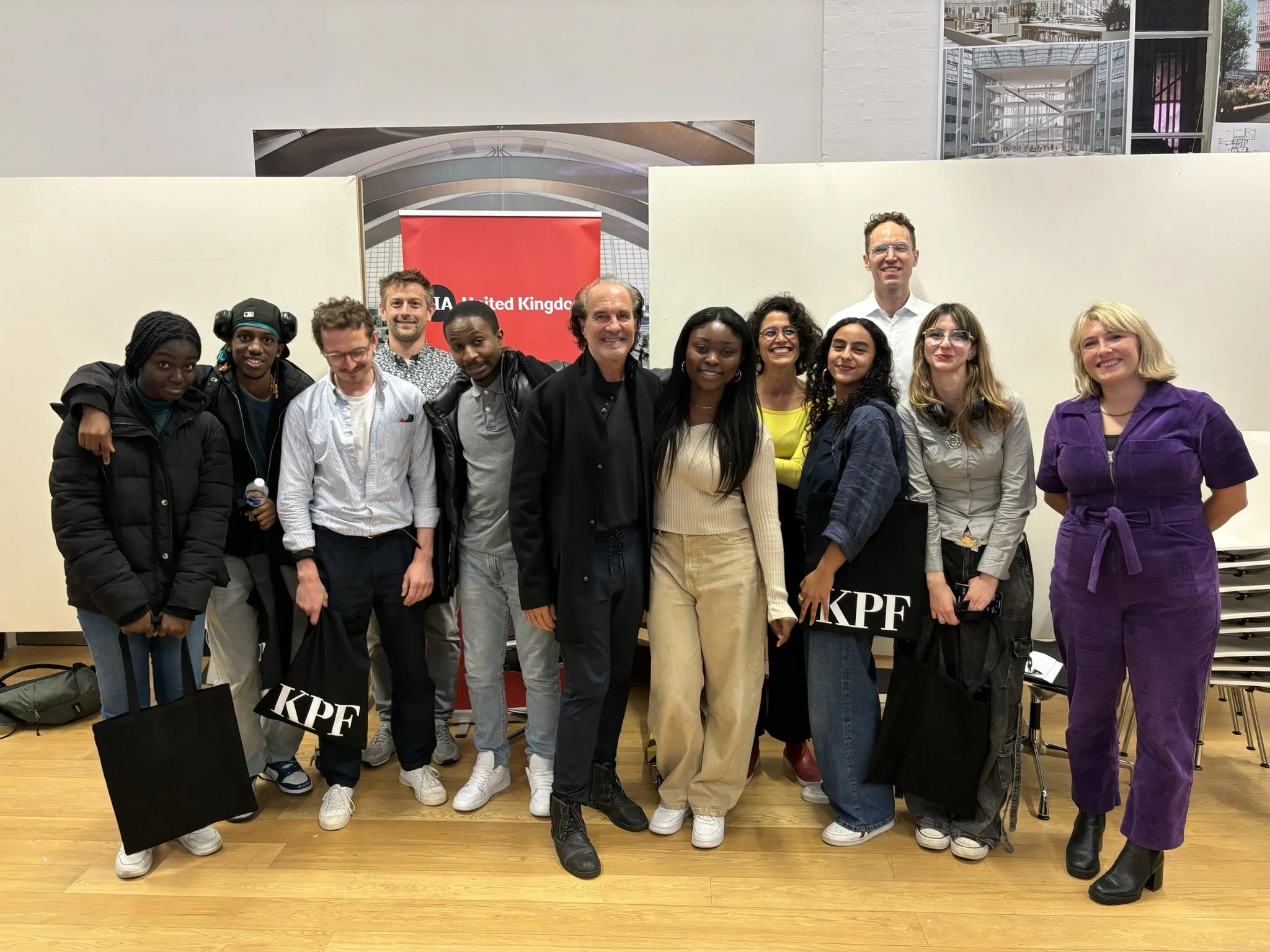
The winning team mentored by Gregory Fonseca, AIA: Students from the University of Westminster, University of Reading, and University of Dundee: Fiona Gyamfi, Maame Frimpong, Clevy Bento, Robert Timberlake, Sarah Tolba, Hristislava Arabadzhieva, Benjamin Hanyecz.
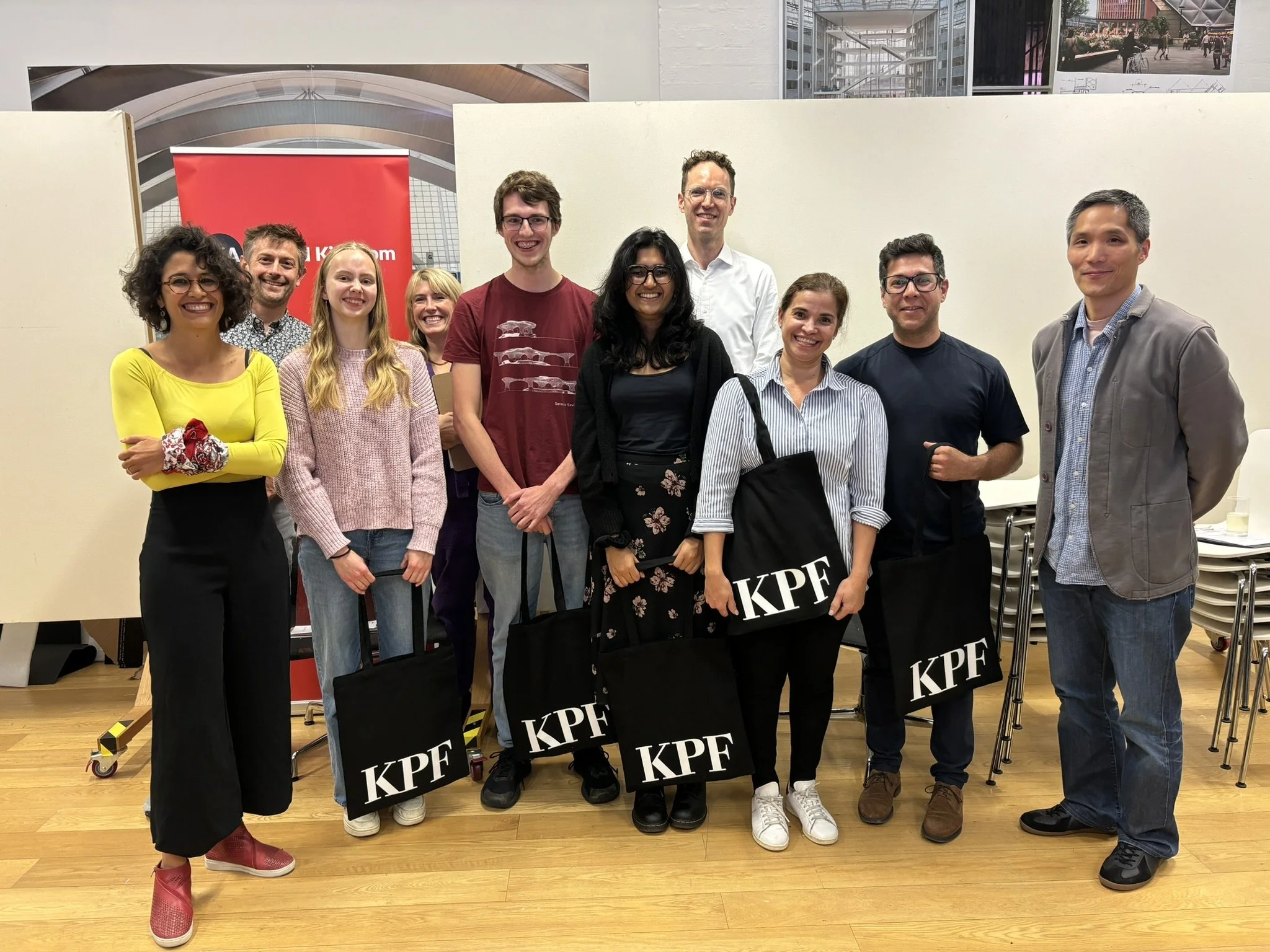
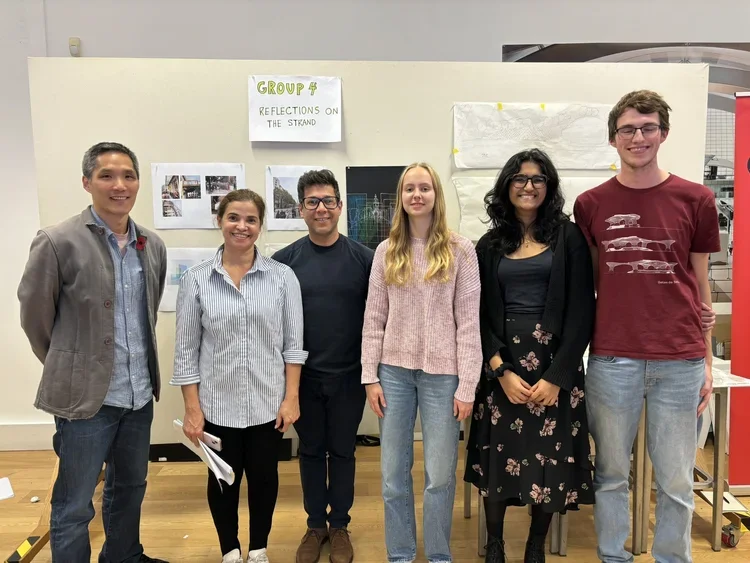
The 1st runner-up team mentored by Francis Hur, AIA: Students from the University of Bath and London Metropolitan University: Emma McCook, Aaron Horwood, Caroline Rodrigues, Henri Toniolo, Fabiane Lonardelli.
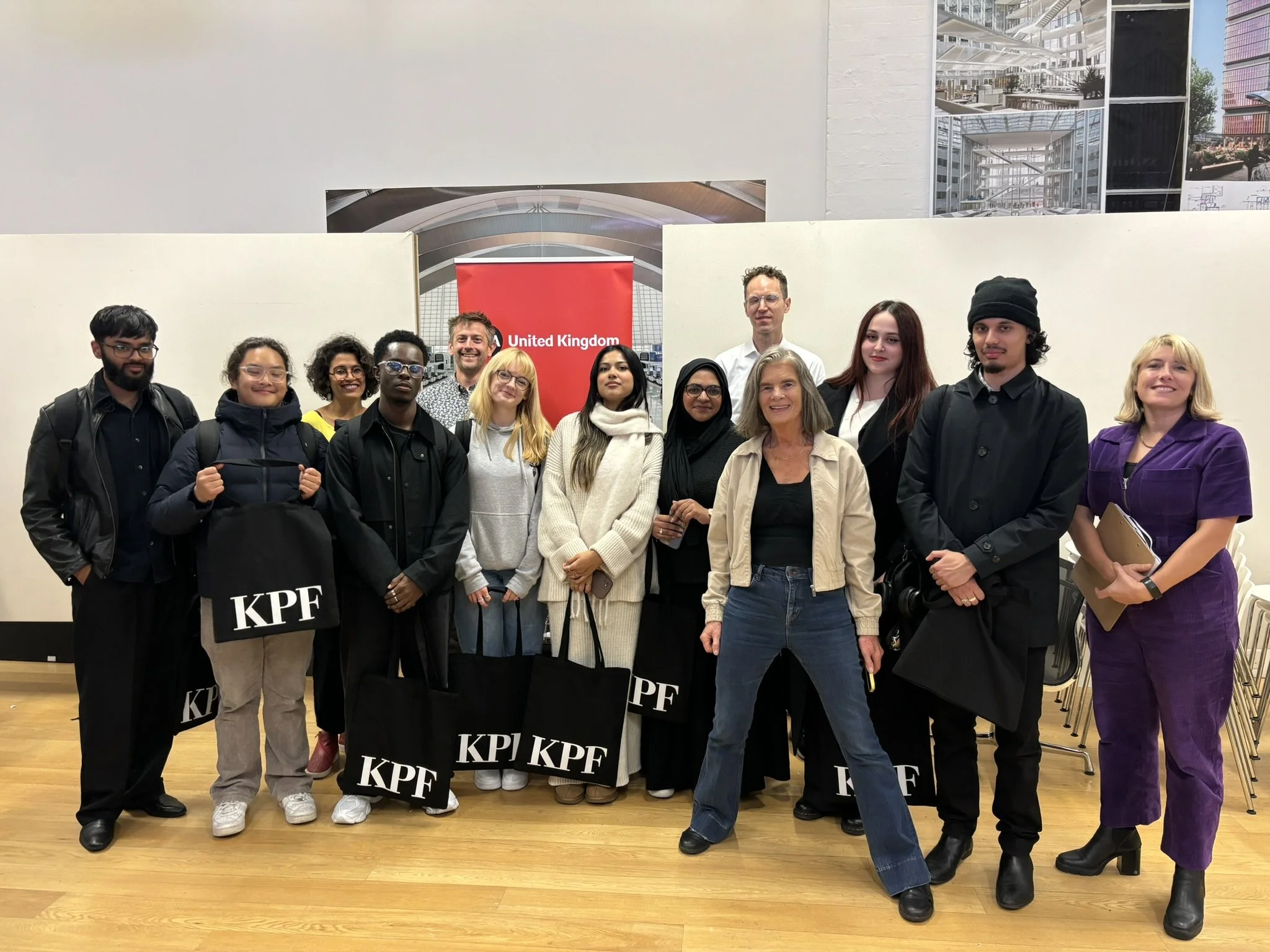
The 2nd runner-up team mentored by Elizabeth Dailey, AIA and Bea Sennewald, AIA, RIBA: Students from the University of Greenwich and University of Hertfordshire: Ermiona Rousi, Zaid Shanawaz, Idris Mooradun Aisha Hussain, Iraj Syeda, Luke Buckman, Cydney-Ellen Thorold, Sushant Gurung.
AIA UK extends heartfelt gratitude to the mentors who played an instrumental role in the charrette’s success. Their expertise and mentorship were essential in guiding students through each phase of the design process. The mentors included Pierre Baillargeon from Mixity Studio, Elizabeth Dailey from Pilbrow & Partners, Bryan Oknyansky from Studio Moren, Francis Hur from Francis Hur Architecture, Eric Beard-Sackett from Whitman, Requardt & Associates, Lucia Piccinini from Lucia Piccinini Architect, Alex Miller from KPF, Gregory Fonseca from Mobius Design, and Bea Sennewald from Article 25.
The creativity, vision, and dedication displayed by these students are incredibly inspiring. Their proposals not only respect the historical essence of the Strand Aldwych but also bring innovative ideas for a more inclusive, sustainable, and resilient future.
This charrette leaves a lasting impression on all involved, paving the way for a momentous 30th AIA UK Student Charrette in 2025, which promises to inspire and engage the next generation of architectural talent.
Written by Paolo Mendoza, Associate AIA