

NO UNDO: AIA UK, NOMA UK and Archisource’s First Collaboration
NO UNDO: AIA UK, NOMA UK and Archisource's First Collaboration
Supporting emerging professionals and architecture students works best when organisations team up. This summer, AIA UK, NOMA UK and Archisource ran a joint event for the first time, alongside xFigura, who sponsored the students' prizes. We called it NO UNDO. The collaboration itself proved just as valuable as the event we hosted.
Why we built it
I've helped organise AIA UK's signature Student Charrette for three years. Every year, I watch the same pattern unfold. Talented students arrive ready to design, then spend the first few hours figuring out how to work with strangers or how to finish a drawing instead of endlessly refining it. By the time they find their footing, half the day is gone.
With NOMA UK and Archisource on board this year, we decided to tackle this before Charrette even started. That is how NO UNDO began.
The idea
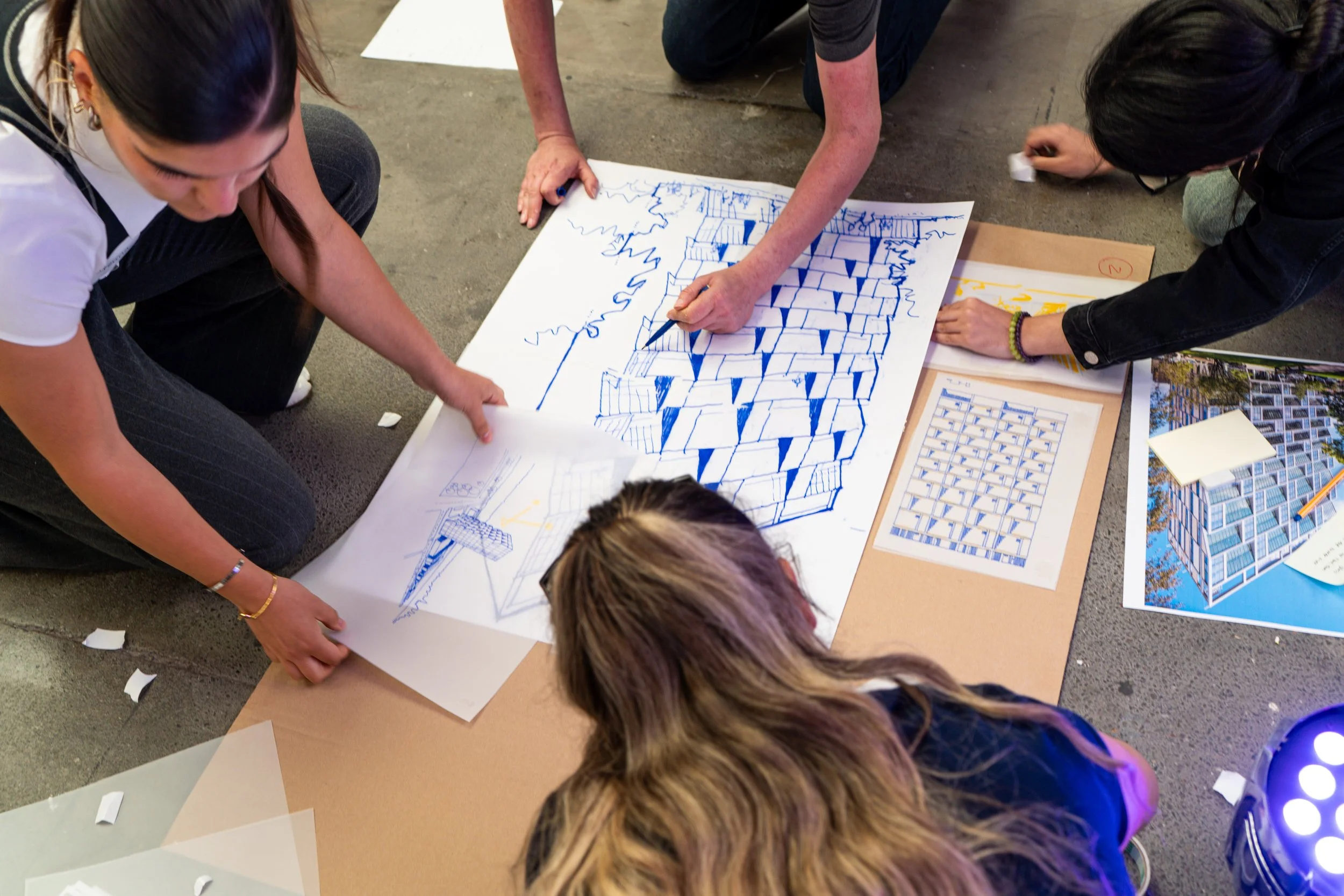
On 18 July, thirty-three architecture students and young professionals came to the Old Truman Brewery with pencils, markers, ink and watercolour. We banned laptops and software. We built the day around one constraint: once you make a mark, it stays.
I don't think screens are the enemy. I would never tell a student to abandon the digital tools they need for daily practice. My concern is the slow erosion of hand-sketching as a way of thinking. When we lose that, we also lose the harder skills that don't show up on a rendering, like critical thinking under pressure and genuinely collaborating with people you just met. Students struggle with these at Charrette year after year. NO UNDO gave them a low-stakes place to practise before the real thing.
How the day worked
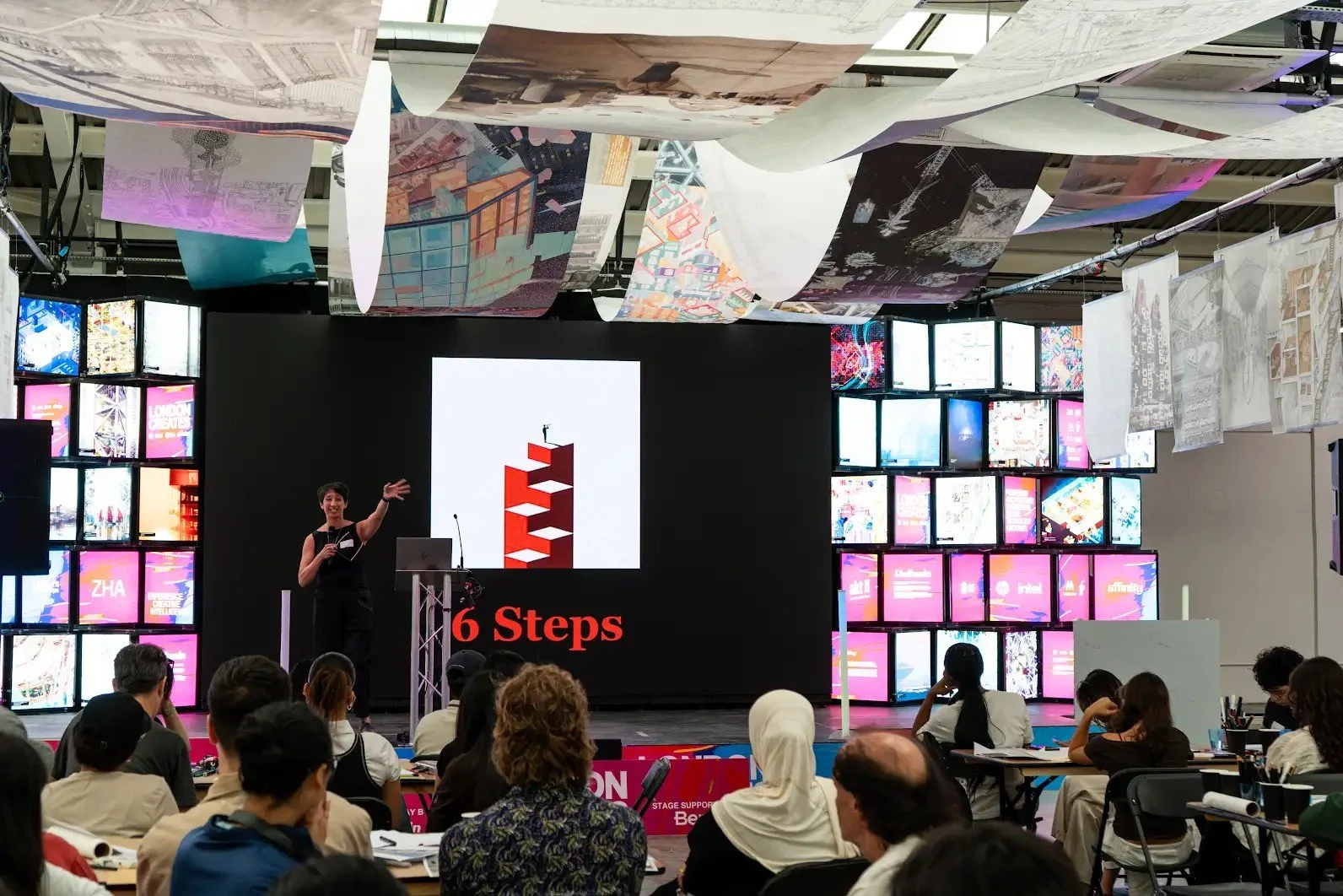
We structured the event in three stages. Karen Fugle opened with an hour on team-building.
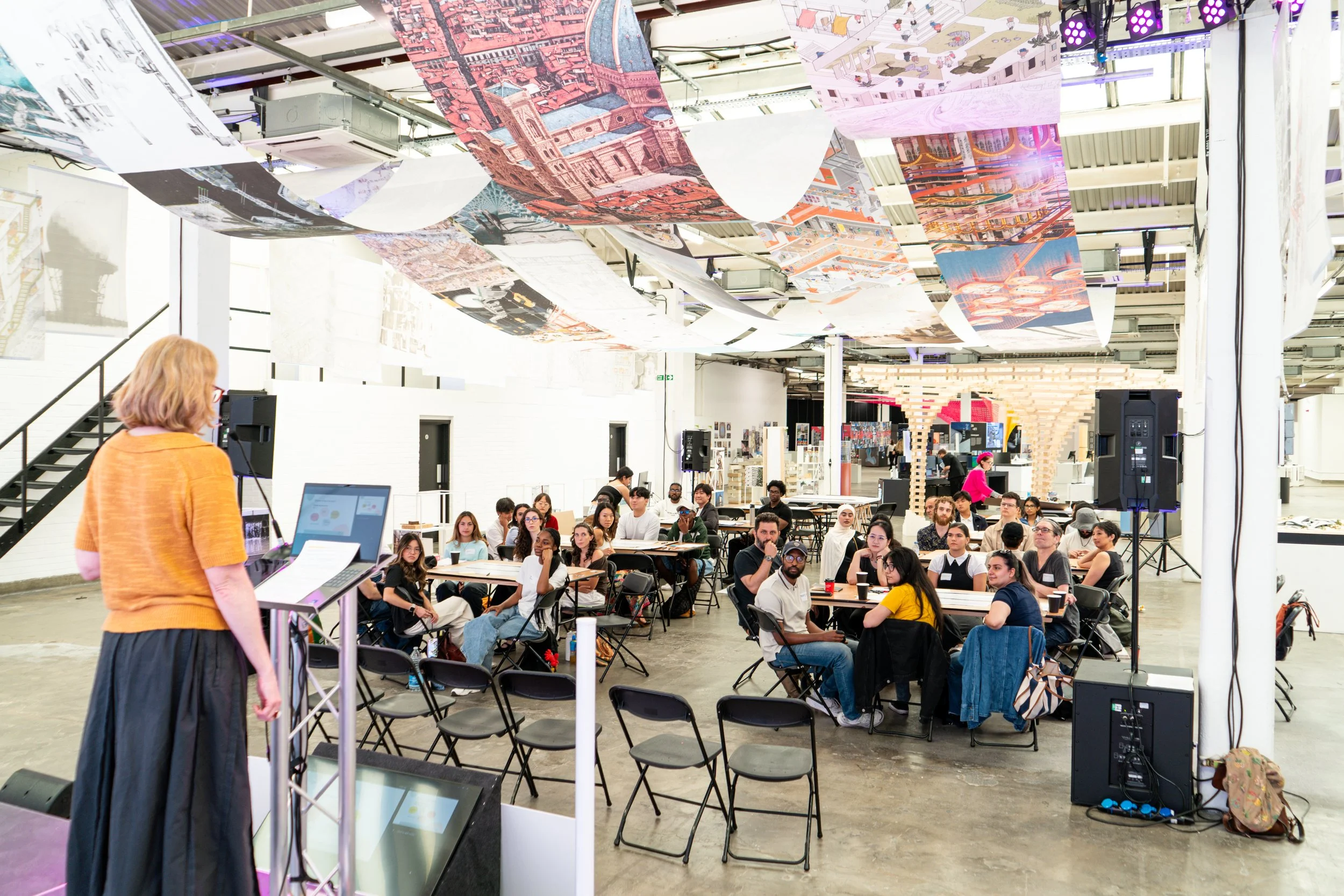
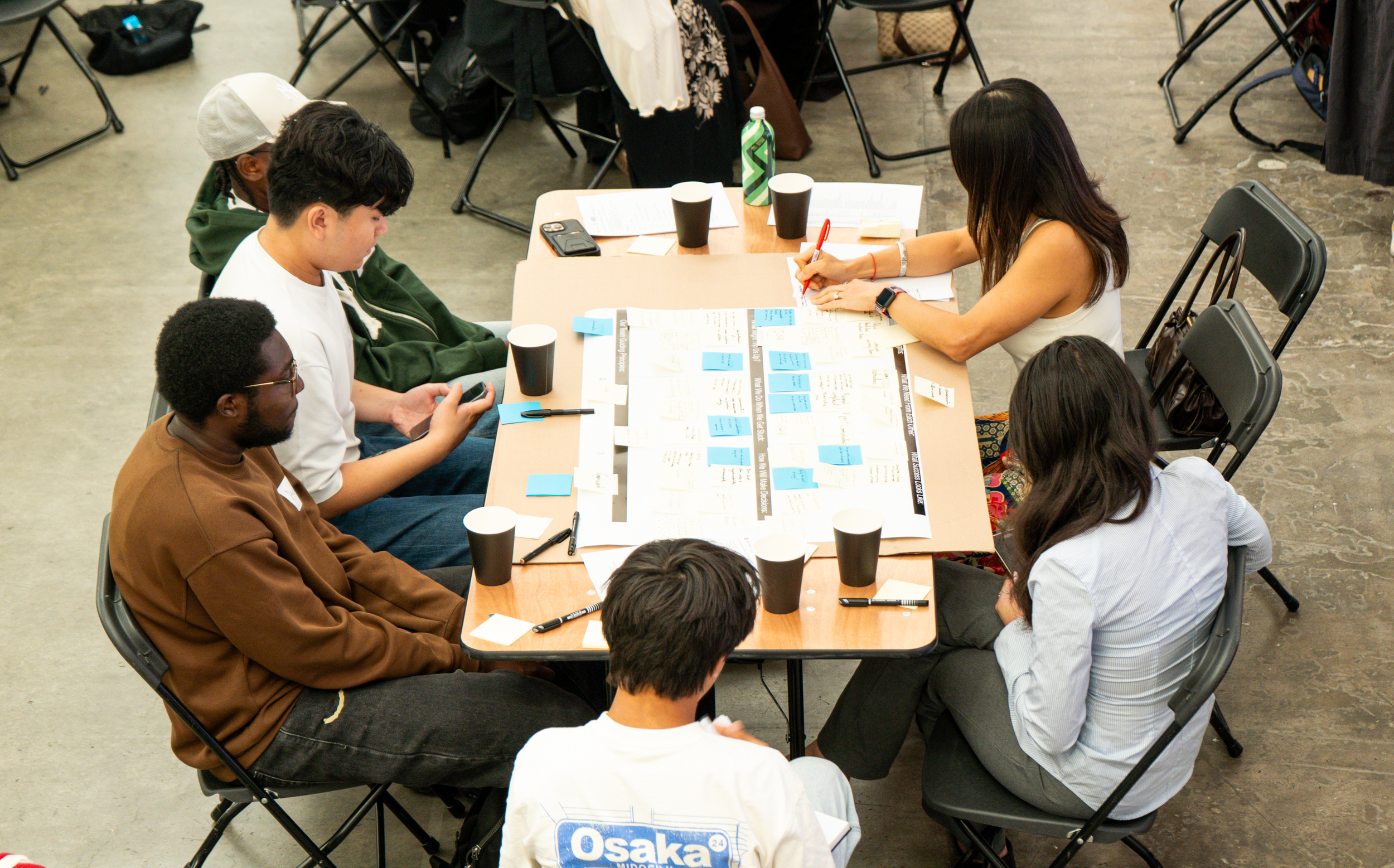
Forty people who had never met had to become a working team before drawing a single line. They put together Team Charters setting out their strengths and how they would make decisions under pressure.
Philip Buckingham followed with a hands-on session covering materials and composition.
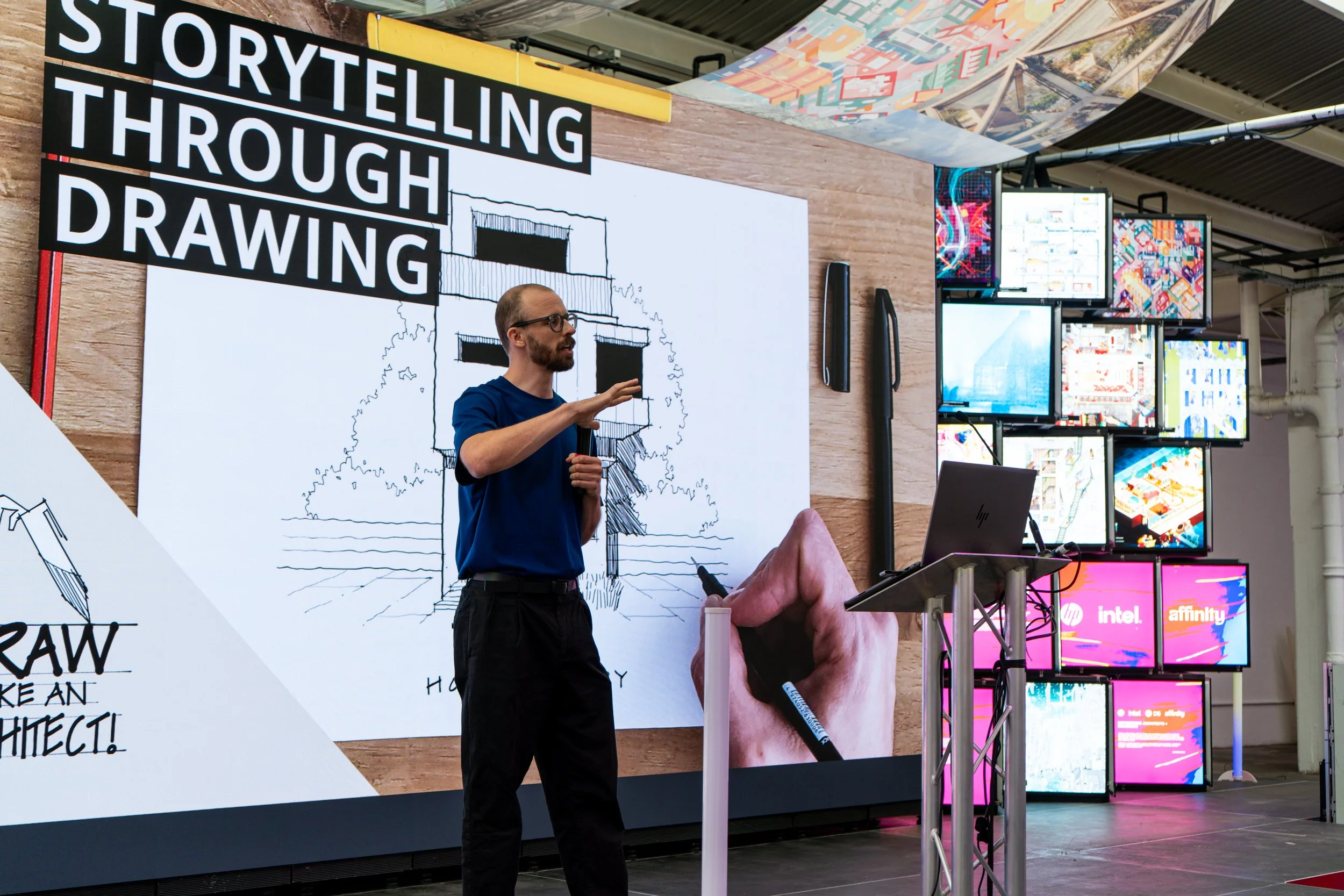
Working with markers, ink, pencil and watercolour is unfamiliar territory for students used to a rendering pipeline.

Laura King closed the prep with a session on project execution, getting teams ready to deliver a final product.
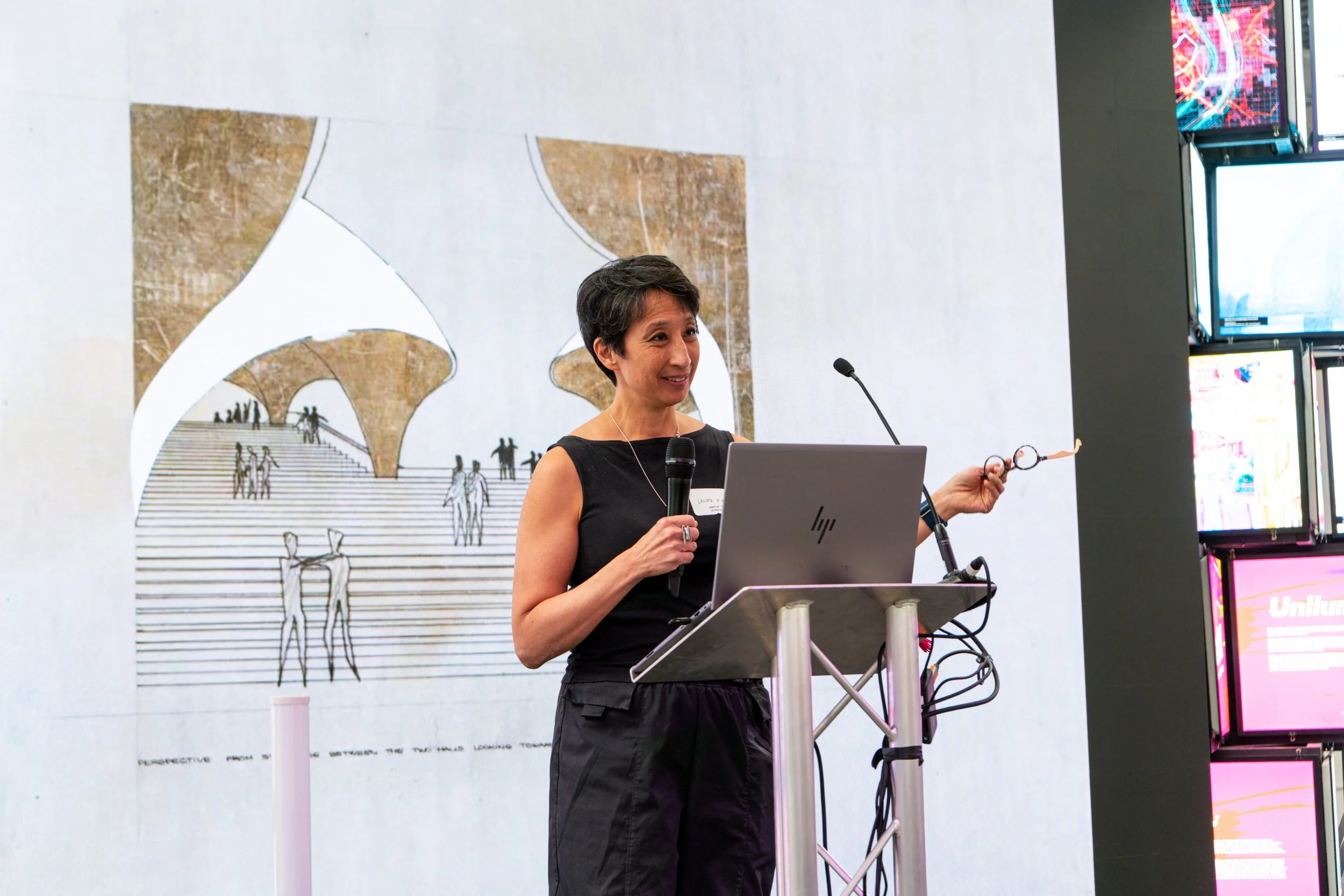
Before lunch, each team blindly drew an envelope containing the building they had to represent. The goal was straightforward but difficult: go from first sketch to a five-minute jury presentation as a team in just two hours.
The mentors
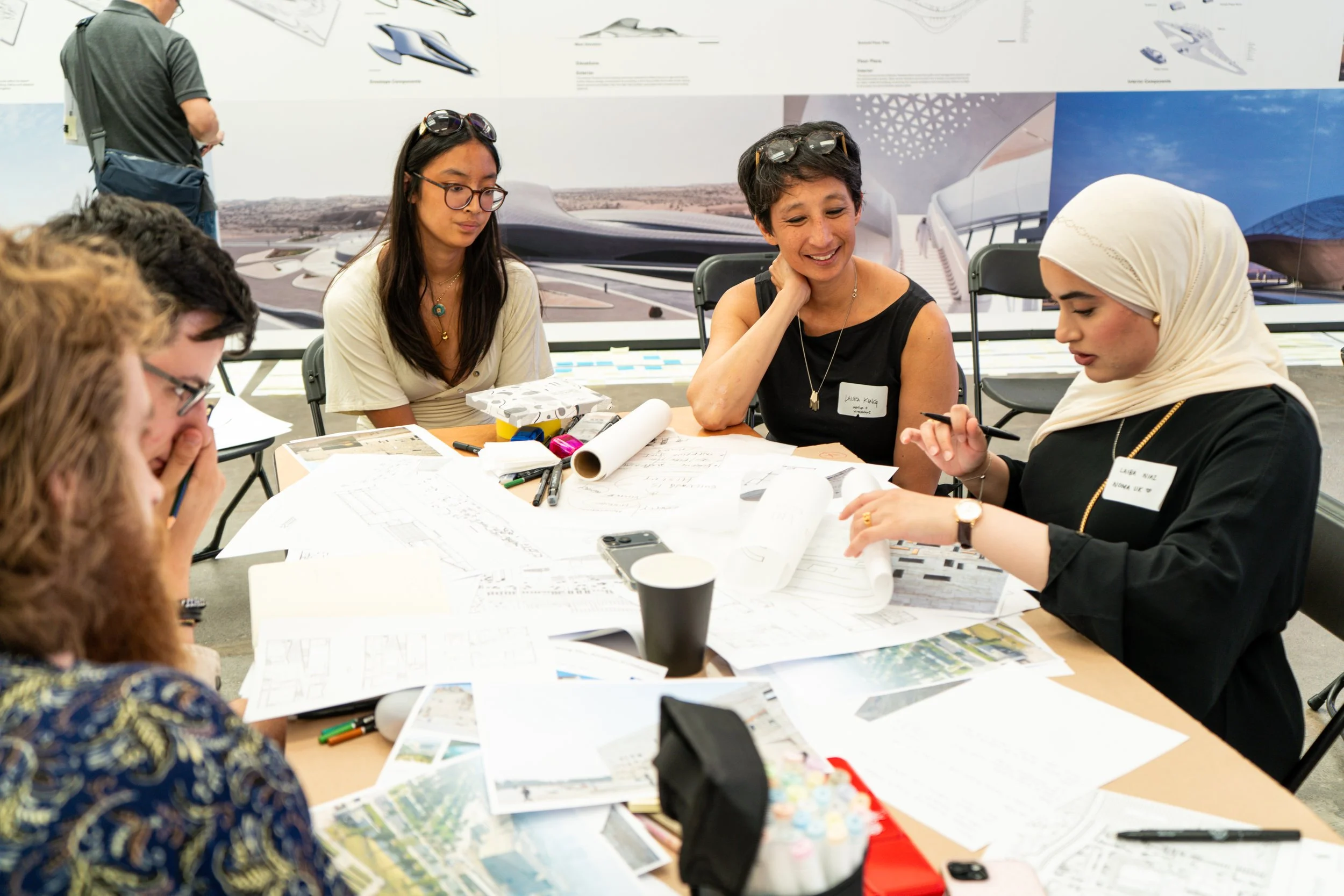
The mentor involvement set NO UNDO apart from Charrette. They didn't just advise from the sidelines; they sat down and sketched alongside their teams. It made the day fun and highly educational. Students watched experienced architects think through a drawing in real time, make a call, and move on.
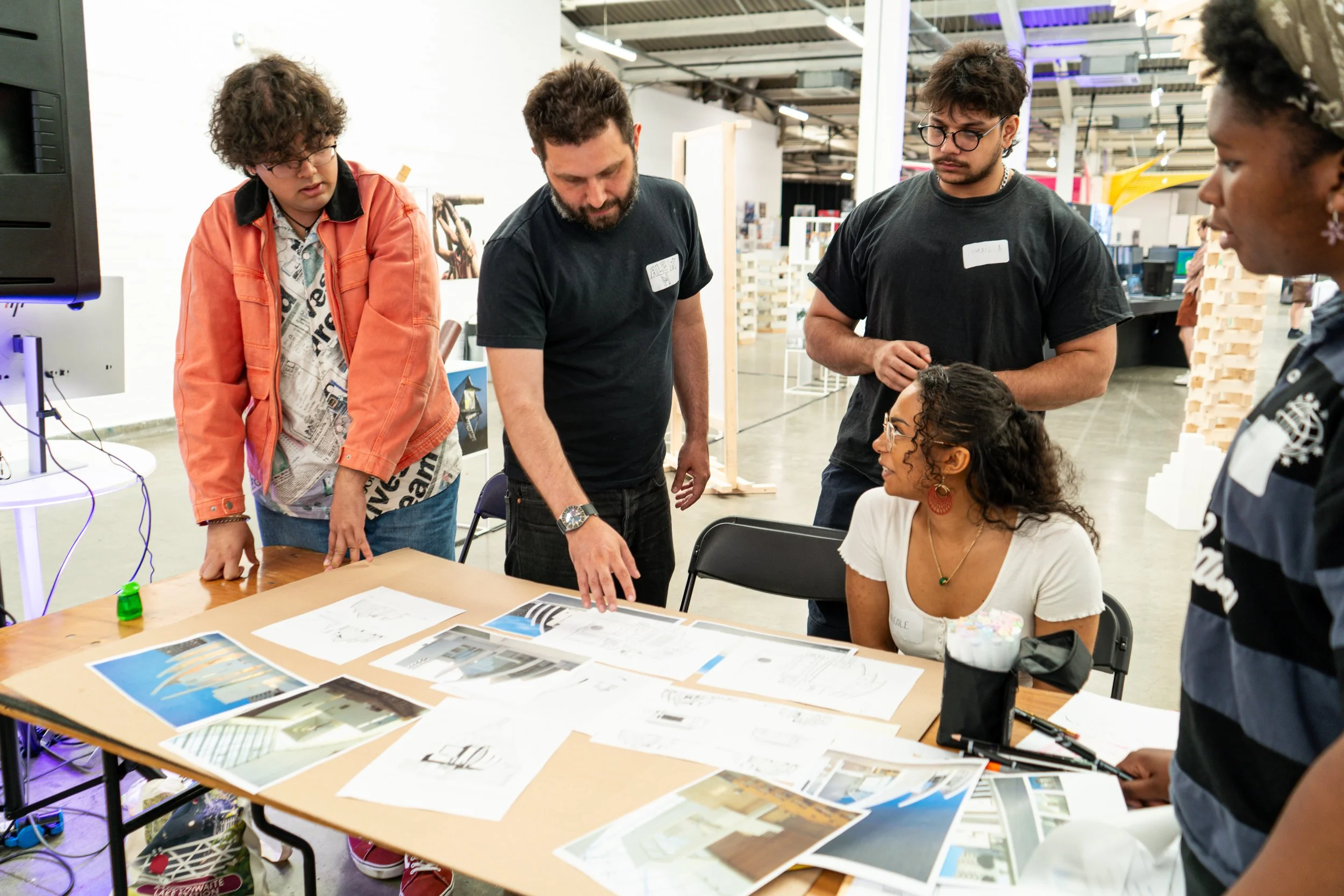
This day wouldn't have happened without the people who led these teams to final submission:
Gregory Fonseca, Architect, Treasurer, AIA UK
Ken Suriyachat, Creative Concept Artist at AFKSTUDIOS, NOMA UK
Kevin Flanagan, Architect, AIA UK
Lulu Yang, Designer and Real Estate Project Manager at TikTok, AIA UK
Martin Grinnell, Architect, NOMA UK
Cristina Mock, Designer at KPF, Leader of YDF, AIA UK
Laura King, Management Director at KPF, Leader of KPF+, AIA UK
Mi Yao, Architect, Project Manager at KPF, AIA UK
Alex Miller, Director at KPF, AIA UK
The two-hour sprint taught the students how to plan time when there is none to spare. They learned how to boil a building down to one clear idea and build a board that sells a project to a jury.
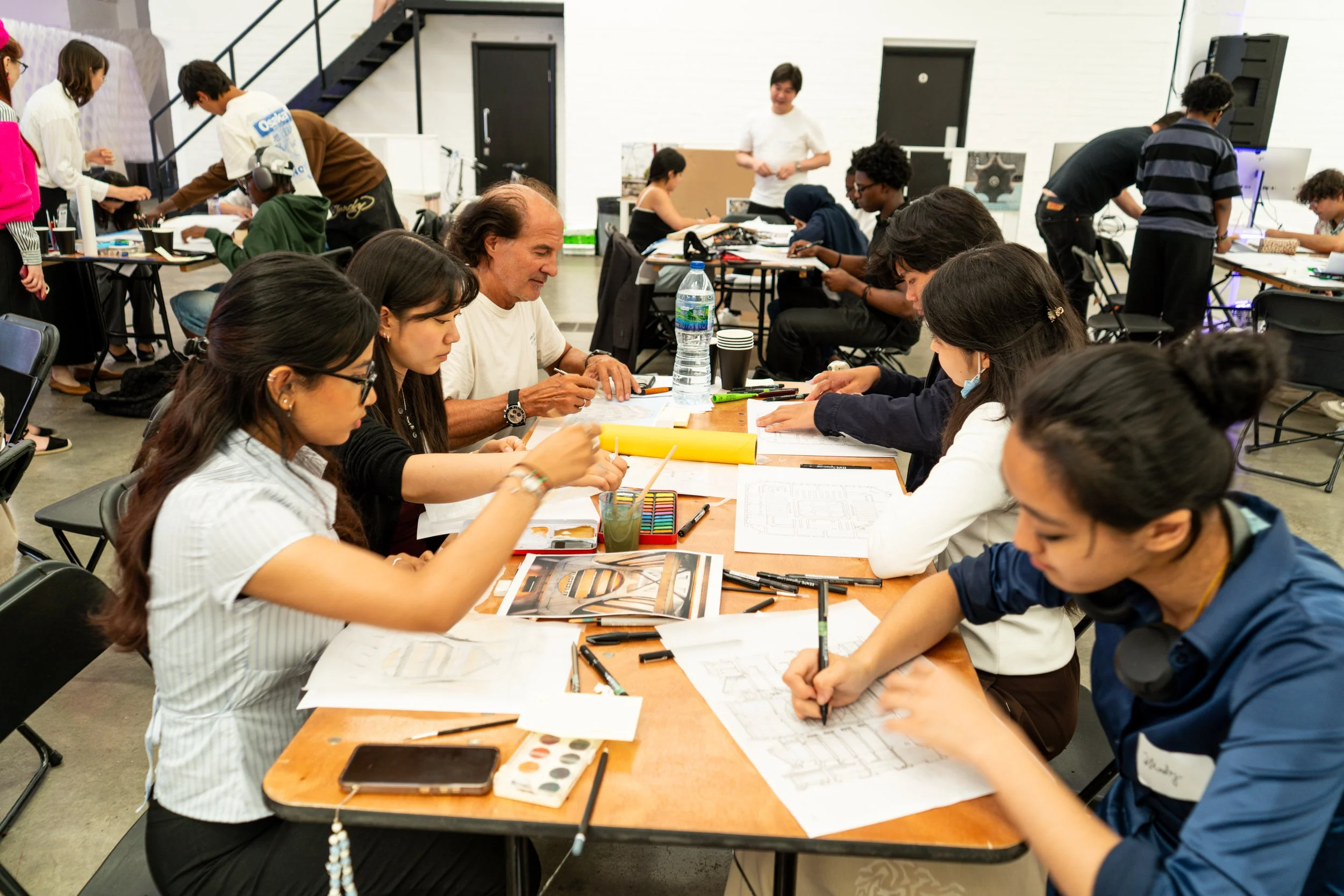
Watching mentors get absorbed in sketching alongside their students – trading a pencil back and forth or arguing over a line – was the most fulfilling part of the day for me.
Pin-up and the jury
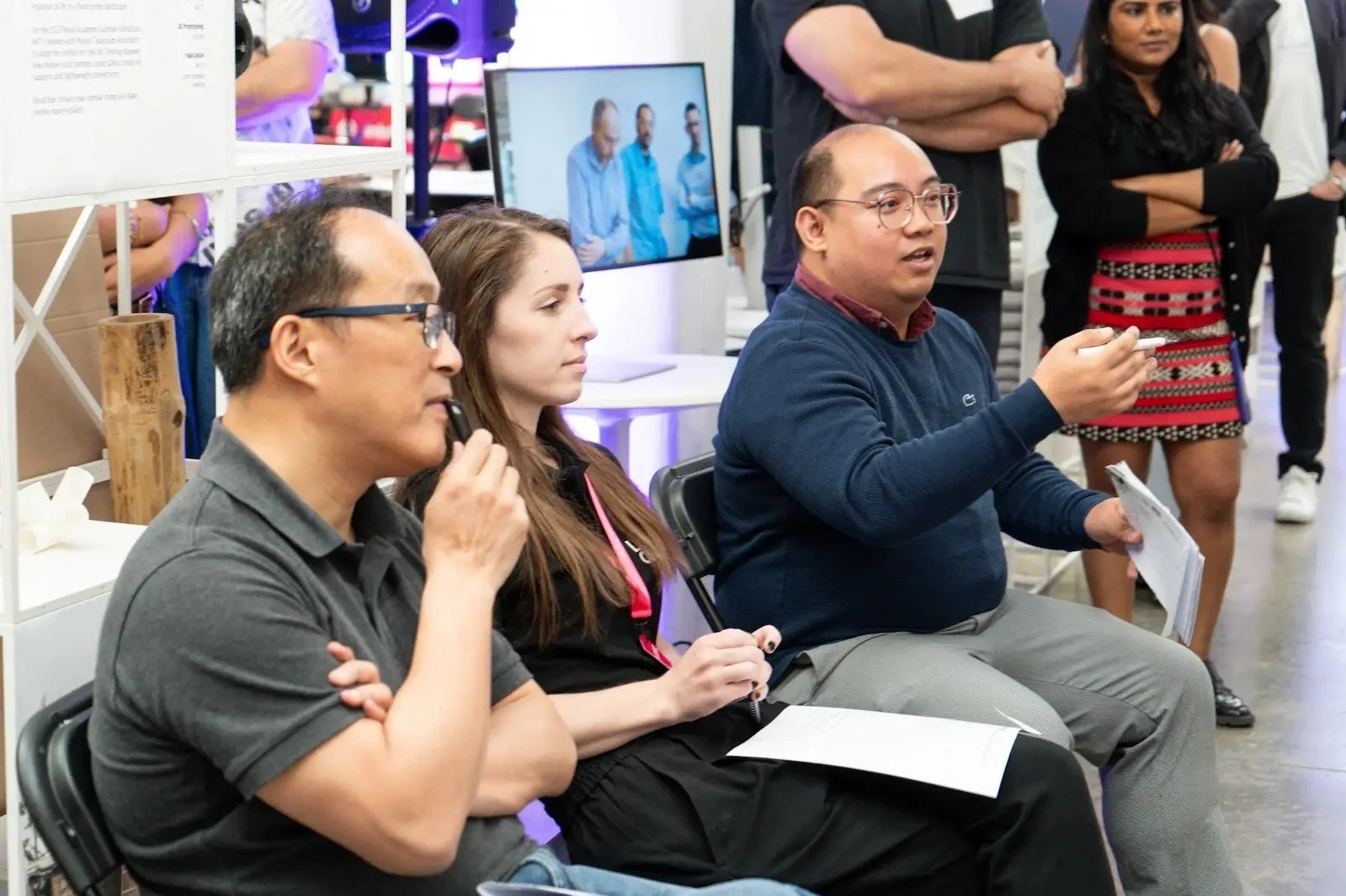
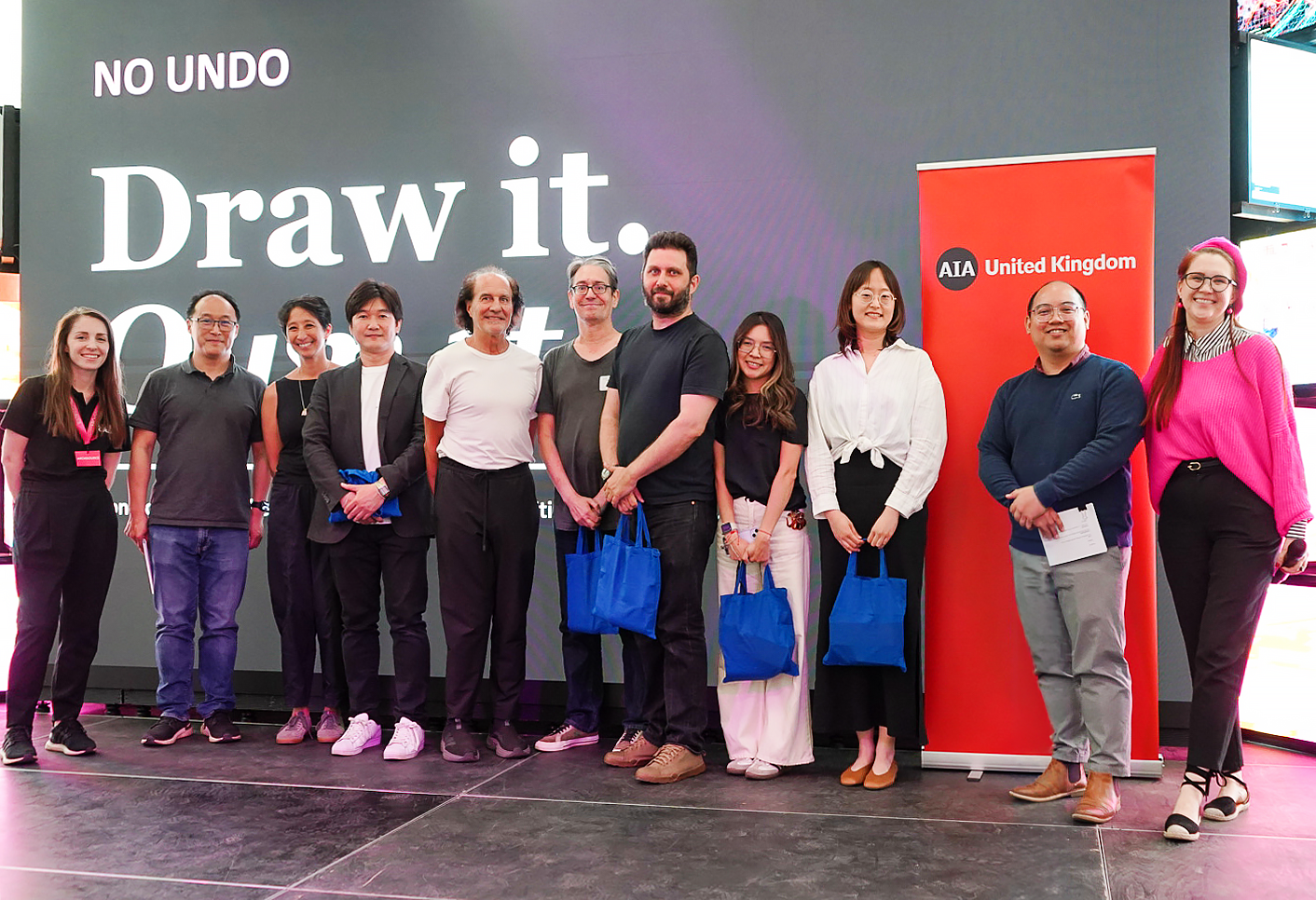
Once the two hours were up, we went straight into pin-up. Our jurors were:
Paolo Mendoza, Senior Design Leader in Urban Strategy and Masterplanning at Benoy, and 2026 Vice President and President-elect on the AIA UK Board.
Emily Glynn, Architect and Co-founder of Archisource and the Drawing of the Year Awards.
Ming Cheng, RIBA-registered Architect, Chartered Town Planner and Urban Designer, Associate Director at Benoy, and tutor at The Bartlett School, UCL.
They assessed every A0 board against three criteria:
Craft – the quality and confidence of the drawing
Communication – clarity and storytelling
Teamwork – how well the group collaborated
The winners
After all presentations, we had our results:
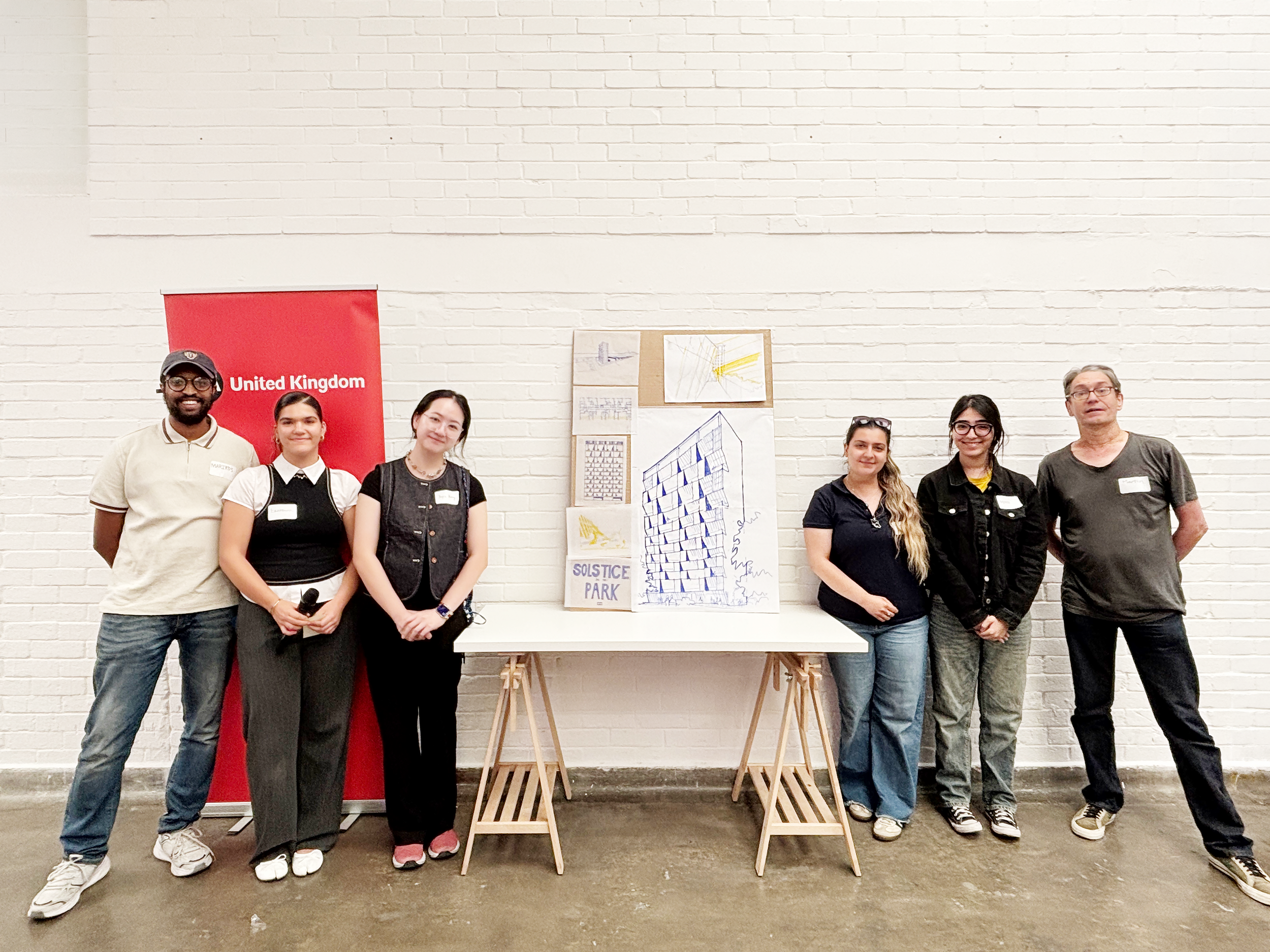
1st place – mentor Martin Grinnell / Group 2: Ekaterina Andonova, Joyce Bing, Mitra Mehani, Fatemeh Nikzad, Marikos Tecleab with the project Solstice on the Park, Chicago by Jeanne Gang
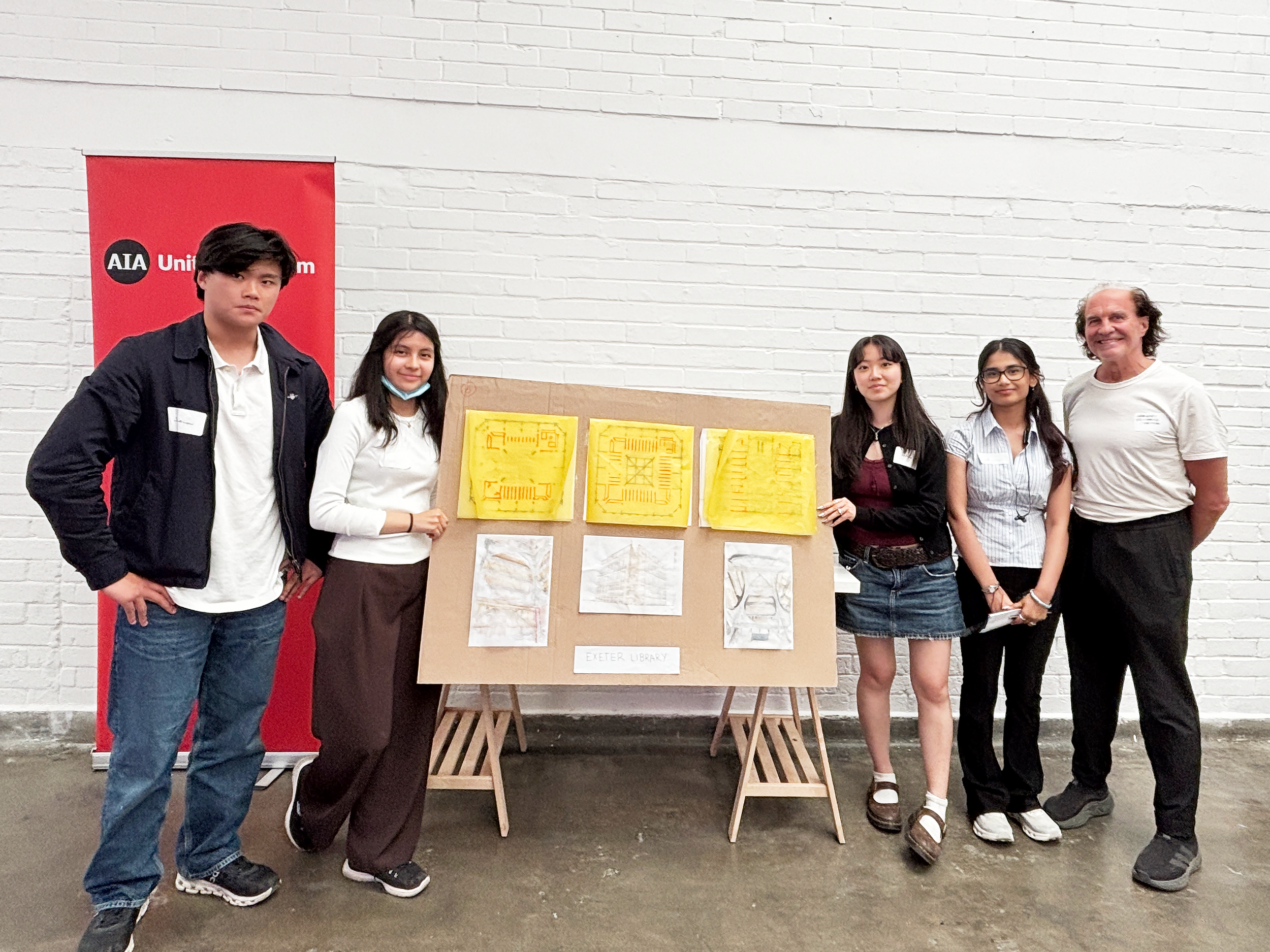
2nd place – mentor Gregory Fonseca / Group 6: Xinlin Li, Firdowsun Nahar, Jaewoo Oh, Jessica Tirira, Sophia Tsui with the project Exeter Library by Louis Kahn
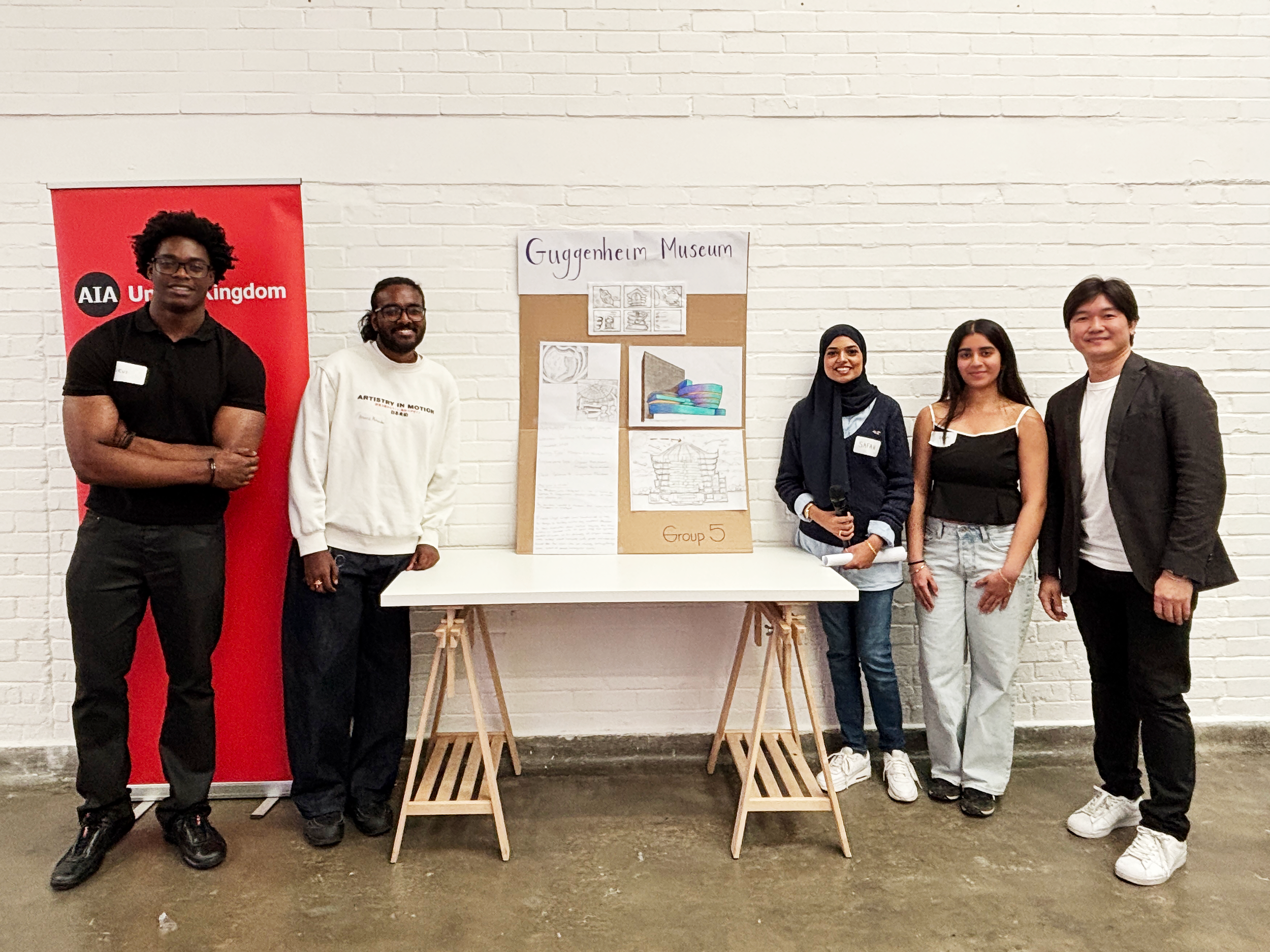
3rd place – mentor Ken Suriyachat / Group 5: Safah Aslam, Sevi Dzotsi, Aravind Mahendran, Khushi Pruthi with the project Guggenheim Museum by Frank Lloyd Wright
Thank you!
A huge thank you to our sponsors: xFigura for the presents, AIA UK and NOMA UK for the event supplies, and Archisource for hosting us within the exhibition and providing lunch.
An equally huge thank you goes to the volunteers who ran the day from early morning until 7pm: Hrisi Arabadzhieva, Genie Khmelnitski, Yashil Mudaliar and Stefanos Chrysanthou.
Why it's worth repeating
The feedback from mentors and participants was genuinely warm. People talked about how quickly the room came together, how much they missed drawing by hand, and how the ticking clock forced conversations that usually get skipped. That is exactly what I hoped for.
My goal now is for NO UNDO to become a fixture ahead of every Charrette. It gives students a way to arrive already comfortable making a decision, defending it, and working with people they don't know yet. Craft and collaboration need practice just like anything else.
Written by Anna Mytcul, Associate AIA, Director, Student Events
Photos by Hrisi Arabadzhieva

Nerdworking with RIBA
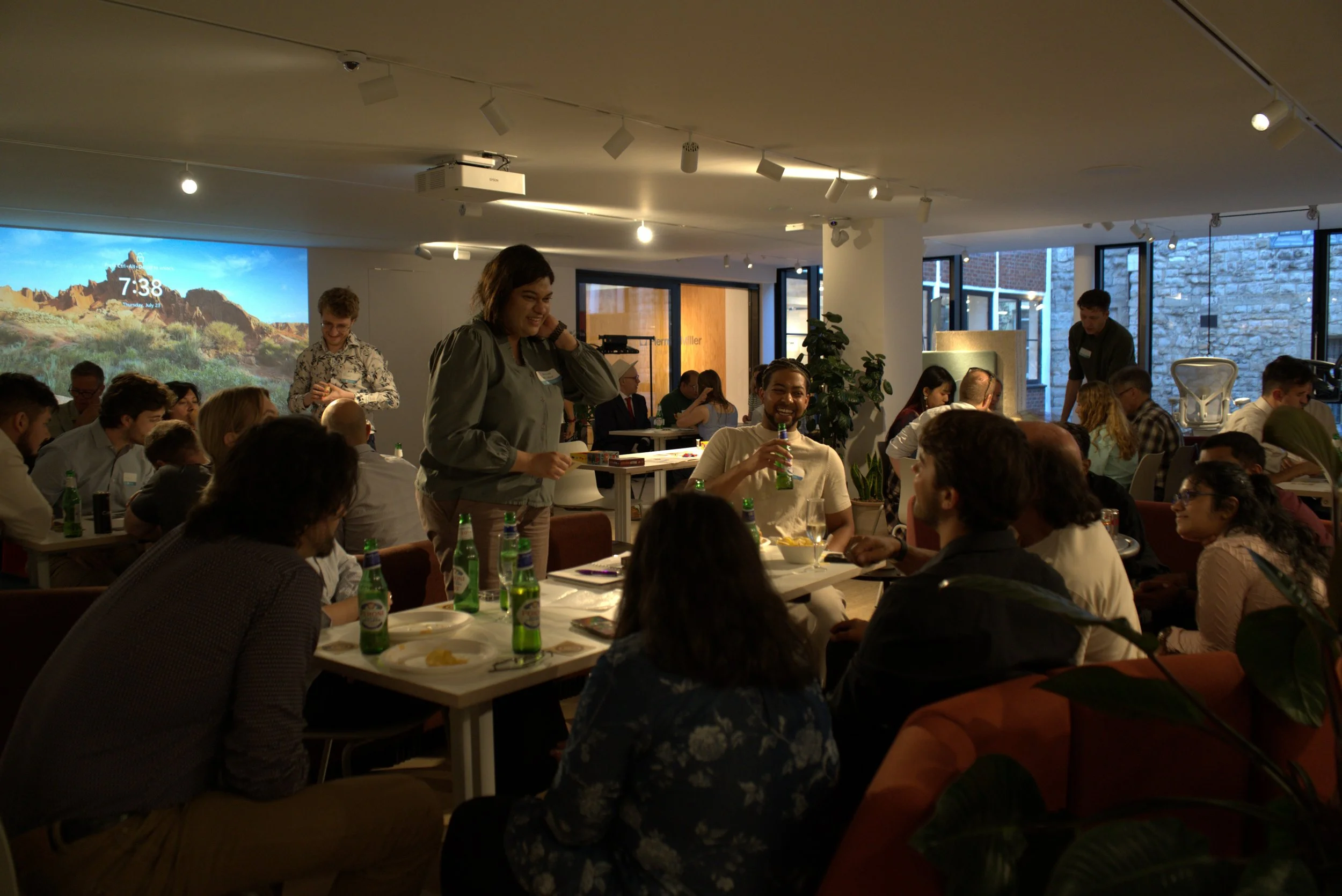
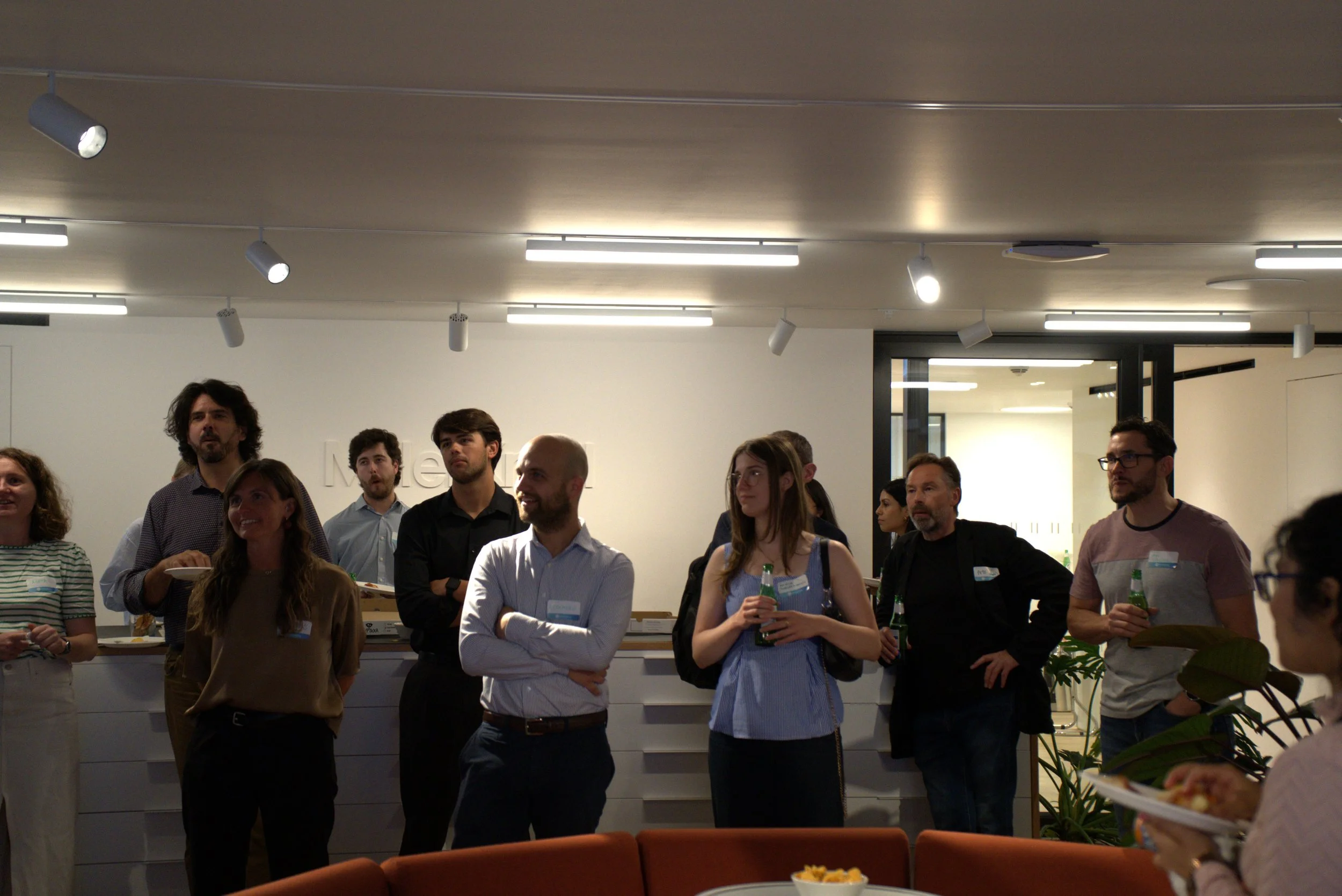
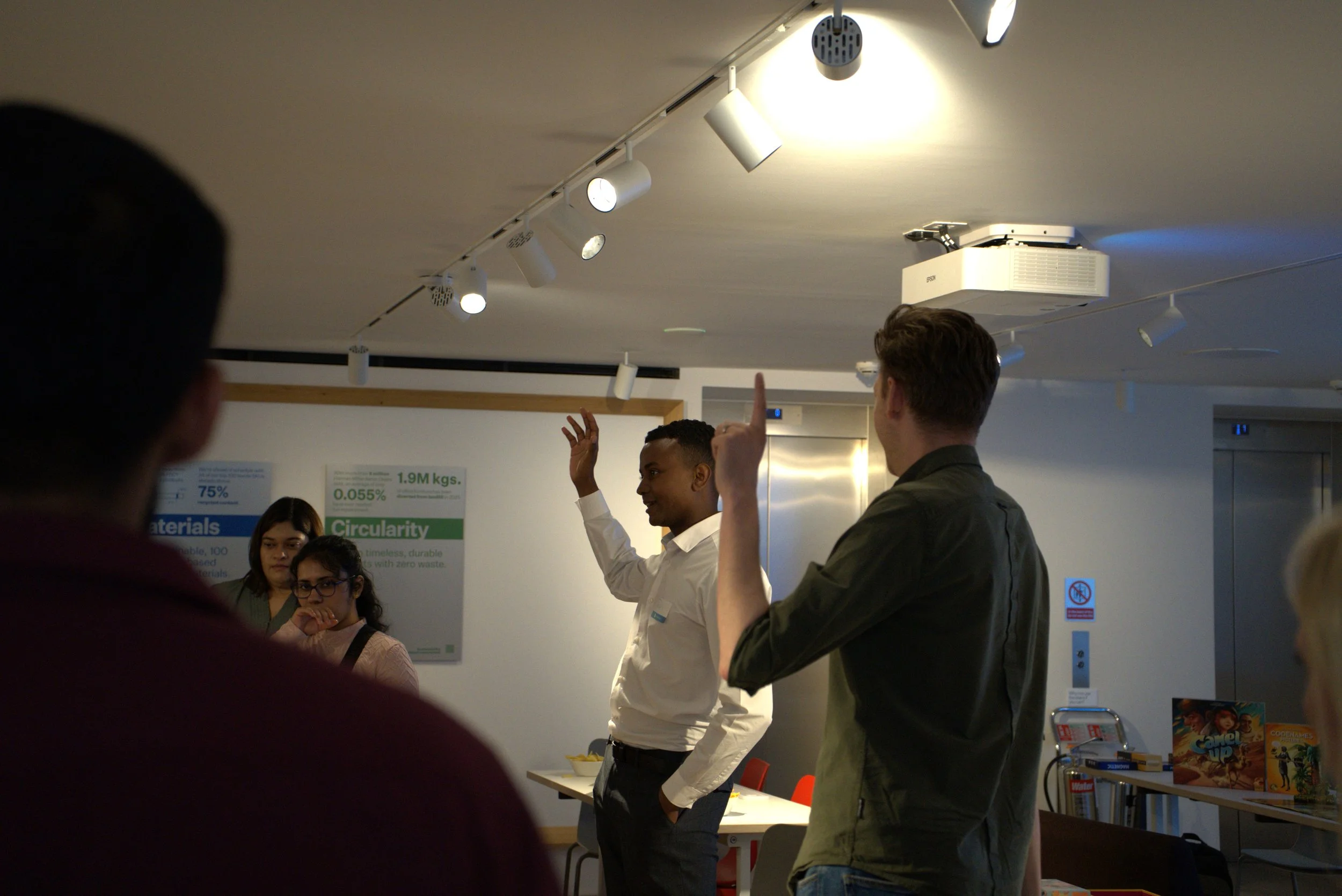
AIA UK recently collaborated with Nerdworking to host a very lively event in partnership with RIBA London at Herman Miller’s showroom. It brought together both the AIA and RIBA communities across London for an evening of conversation, food, drink and games on July 23rd.
Nerdworking takes a different approach to professional networking, creating opportunities for people to connect through informal games and activities rather than traditional presentations or structured networking sessions.
One of the highlights of the evening was a particularly lively game of Werewolf, which quickly became a test of persuasion, suspicion and strategic thinking — and perhaps revealed a few unexpected talents!
Events such as these are particularly valuable within the context of the wider relationship between AIA and RIBA, including the Mutual Recognition Agreement (MRA) between the UK and US architecture professions. As opportunities for architects to work and develop their careers internationally continue to grow, creating contemporary spaces for professionals to connect across organisations, practices and countries is increasingly important.
Thank you to everyone who joined us and contributed to the evening. A special thanks also to Herman Miller for hosting in their amazing showroom.
We look forward to continuing to create collaborative opportunities for the AIA UK community to connect, collaborate and build genuine professional relationships.
Written by Rishi Lal, RIBA, AIA Int’l Assoc.
Photos by Hrisi Arabadzhieva
Tips for ARE Testing in London / A Personal Account

The ARE (Architect Registration Examination) is a key component of the architectural licensure process in the United States, managed by the National Council of Architectural Registration Boards (NCARB). This article discusses the topic of sitting the ARE while abroad in the UK. If you are interested in connecting with our emerging professionals to learn more or join a study group please reach out to emergingprofessionals@aiauk.org.
Written by Natalie Williams
Like many young designers, I’ve recently started the daunting (and exciting!) process of taking the ARE (Architect Registration Examination). Of course, before reading any contracts or making flashcards, my first step was to ask my studio friends back in the US for advice. They pointed me in the right direction for books, websites, and testing strategies. However, one question they couldn’t answer was “where and how do you test from abroad?”
Well, hopefully I can help those of you wondering the same thing by providing some tips and telling you about my recent experience.
Booking an Exam
All exams are scheduled through your NCARB account. You have two options - either to test in person at a registered center, or to test virtually at home.
At a Registered Center Personally, I still have the same old laptop from high school and she’s barely hanging on. I didn’t want to take the chance of something going wrong on my end, so I decided to test in person. There are a number of testing locations in and around London, listed below:
1) Synod Solutions Ltd - LONDON - Tottenham, N17 9TA
(This is the one I chose as it was in a reasonable location and had a significant number of appointment options.)
2) Synod Solutions Ltd - LONDON - Eltham, SE9 1TD
3) PSI - CROYDON - CR0 9XP
(I almost booked this one, but at the time it didn’t have any appointments for the next few months - unsure as to why.)
4) Synod Solutions Ltd - MAIDSTONE, ME15 6LU
5) Spark Exam Centre - READING, RG11 DX
6) Online Exams PSI Gov SO - PETERBOROUGH, PE1 5PP
7) Mobile Testing Solutions PSI Gov SO - COVENTRY, CV6 5SF
8) Pitman Training - BRISTOL, BS2 0PL
Test Virtually at Home If you do choose to test at home, be aware that you will need to set up a separate appointment beforehand to verify your setup and computer. This can be scheduled via your NCARB account as well.
Before the Exam
Double check the time of your exam. When I booked it, the confirmation said 12pm GMT. However, we are in British Summer Time now, so I was concerned about either being way too early or way too late. I opted for the former, and the proctor was nice enough to let me take the exam earlier than my slot. But - if in doubt - call your testing center to confirm ahead of time.
“Dress well, test well”. This saying I heard for the first time in high school carries through to the professional world. It helps build confidence in yourself when you’ve taken the time to get ready. On top of that, wear something cool and comfortable. The room at Synod was quite warm with no open windows (plus this is mid-summer in the UK we’re talking about).
Leave your notes at home. Maybe do a light review the night before or morning of, but know that cramming on the Underground on the way to the exam won’t help. Give your mind a break and go into the exam calm and well rested.
Bring a water bottle. It should be clear, unbranded, and not have text on it so you can take it into the exam room with you. Also consider bringing a snack for your break as a little pick-me-up since it is a long day. There are lockers at the testing center where you can safely store your belongings during the exam.
After the Exam
Hit submit. Once you hit submit, you will go through a few pages and then have the option to view your provisional feedback. It will either say “you will likely pass this division” or “likely fail”. As described by NCARB, these results are accurate, but not official. Before it is official, they have to certify the results and make sure there was no foul play. Read more about provisional feedback and score reports HERE.
Get your Results Your official results will be posted to your NCARB account within 7-10 business days, but sometimes sooner. I took mine on a Monday and received the official results the following Monday. Luckily, it was a pass! One down, five to go.
Celebrate Finally, let out the breath you’ve been holding, celebrate (or regroup), and get mentally ready for the next one. You’ve got this!
Good luck!
The AREs evaluate candidates on knowledge and skills necessary for the responsible practice of architecture pertaining to a professional standard of care. The ARE comprises several divisions, each focusing on different aspects of architectural practice. Although the ARE is a US-based programme, it is also administered overseas to expatriate and international architects seeking US qualification. Architects who register through the US process are now eligible to register in the UK (and vice versa) through the Mutual Recognition Agreement between both countries. It is worth noting that the ARE study material is also invaluable for international architects liaising with the US construction market as a reference for local construction standards and laws. For more information on the ARE and the US architectural licensing process, including eligibility, please visit the NCARB website at www.ncarb.org or contact emergingprofessionals@aiauk.org.