
Annual Cycling & Sketching Tour 2026 - On Two Wheels Through Time: Cycling the Dengie Peninsula
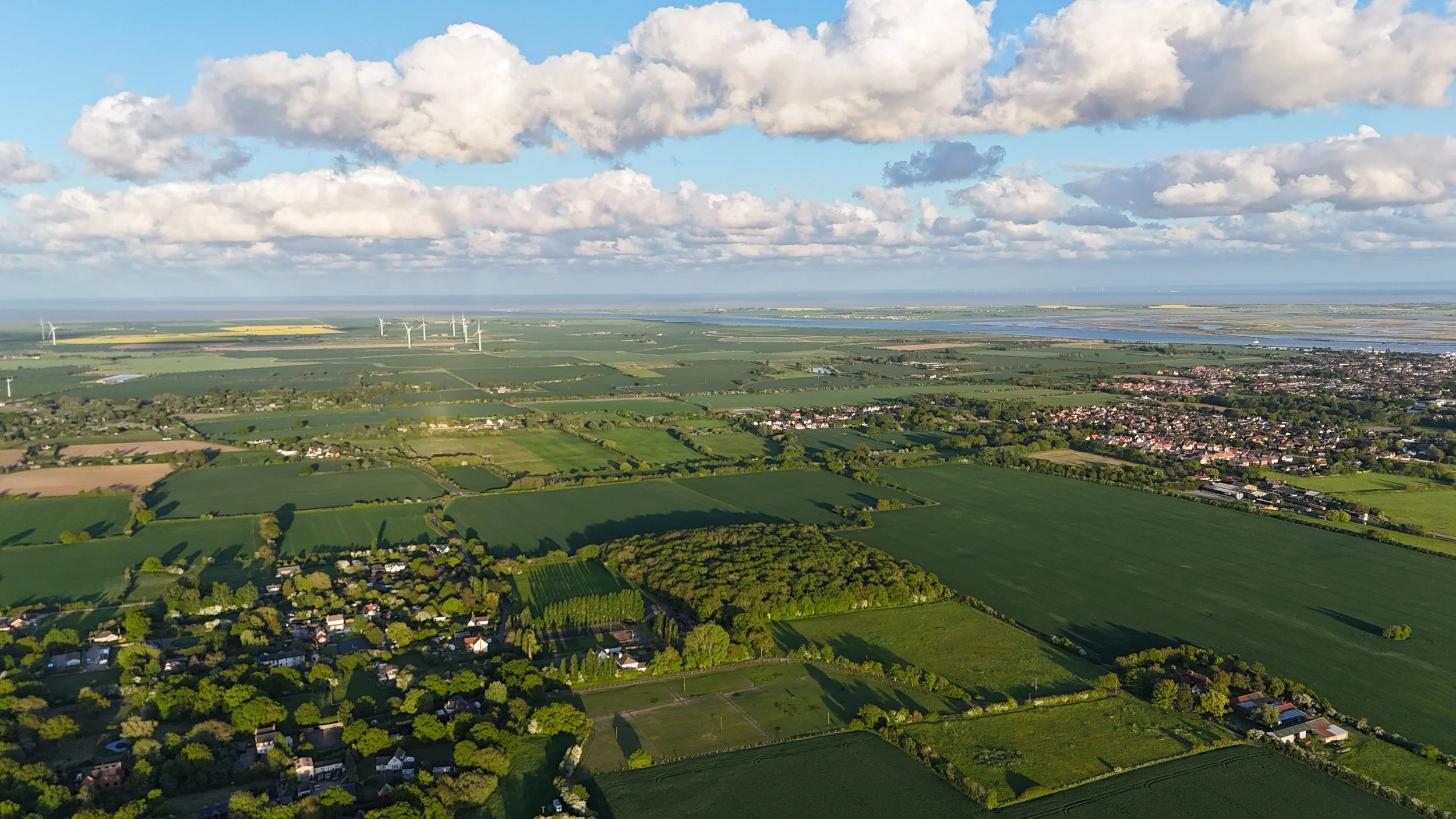
Photo by Benedict O'Looney
A landscape of reclaimed marshes, medieval churches, railway buildings and one of England’s oldest surviving Christian sites made the Dengie Peninsula the setting for this year’s AIA UK Annual Cycling and Sketching Tour.
There are few better ways to understand a landscape than by moving slowly through it.
On the 27th June during the second heatwave the AIA UK cyclists made their way to Burnham-on-Crouch with their tour guide, Benny O’Looney briefing the group on the train ride. We were missing a few regulars, but gained two newbies. Equipped with as much bottled water as we could carry and covered in copious amounts of sunscreen, we began our adventure to an area we had not yet explored.
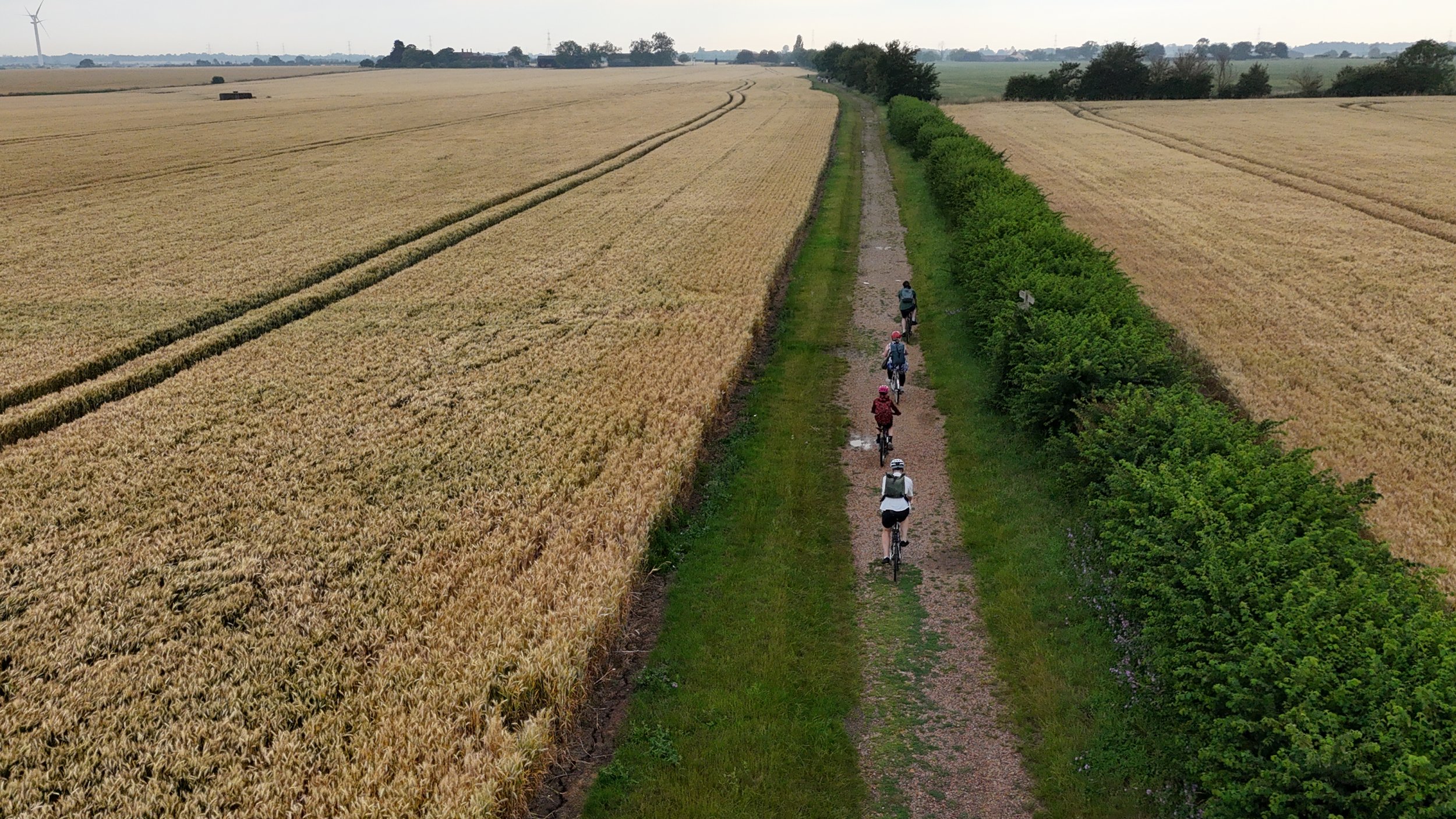
We crossed the Dengie Peninsula in eastern Essex, following quiet roads and lanes between the wide estuaries of the Blackwater and Crouch. Along the way, we stopped at historic sites — looking carefully at buildings, landscape and the layers of history embedded in both.
The Dengie is deceptively gentle. Its rolling agricultural landscape is the product of centuries of human intervention, with large areas reclaimed from the sea from the 16th century onwards. Beneath today's fields and roads lie traces of much earlier settlement, transport and industry.
The tour offered an opportunity to read that landscape through its architecture.
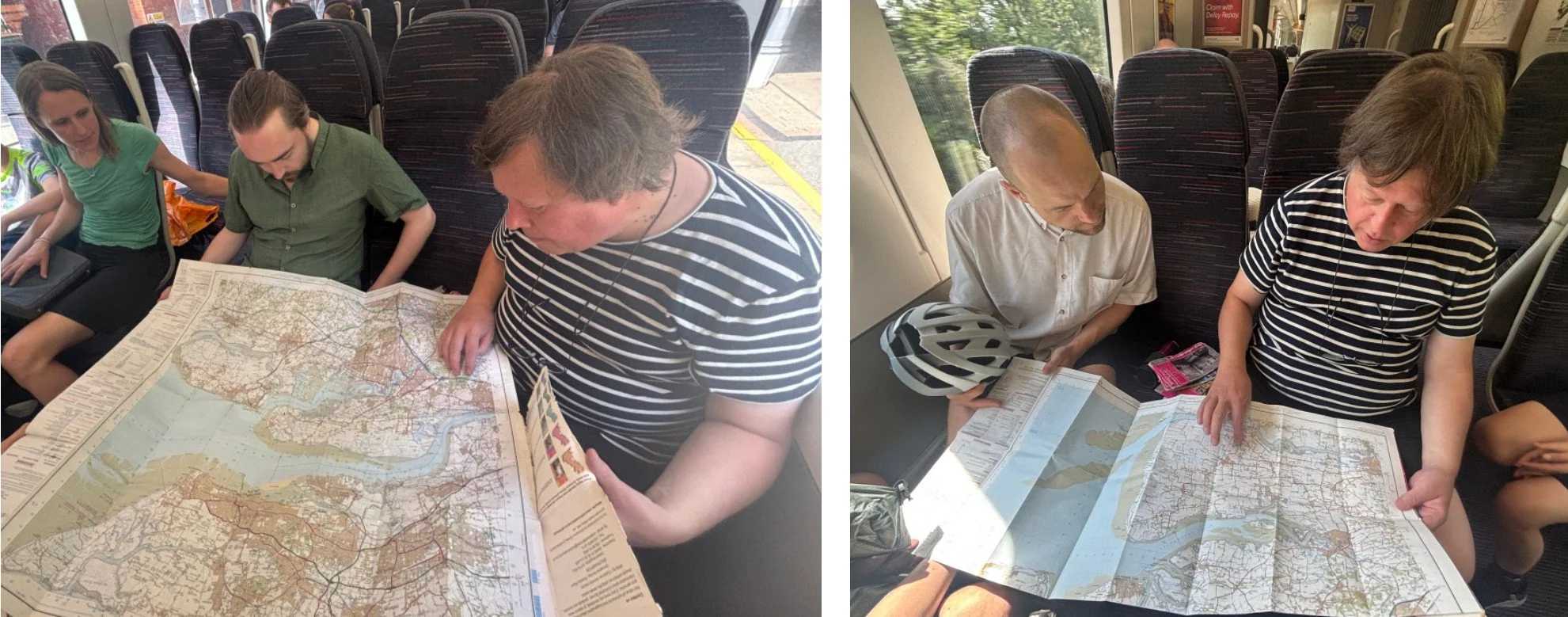
Cycle tour briefing on the train with Benny, photo by Etain Fitzpatrick
A railway station that travelled
The first stop was Mangapps Railway Museum, a remarkable working railway collection established on a farm outside Burnham-on-Crouch.
At first glance, a railway museum might seem an unlikely destination on a tour of historic architecture. Mangapps quickly dispelled that idea.
The collection is one of Britain's most comprehensive, bringing together railway vehicles, signalling equipment, posters, artefacts and — most importantly for architects — a remarkable group of historic railway buildings.
Mangapps Station, originally built at Horham on the Mid-Suffolk Light Railway around 1904, now stands far from its original location. Nearby is a former ground-frame signal box from Billericay, built by the LNER in 1937 and now serving as a first-class waiting room. The collection also includes the former Brampton waiting room from the East Suffolk Line.
These buildings tell a story not only about railways but about preservation itself. Removed from their original contexts, they have acquired new lives while retaining the evidence of their former functions.
For the group, they offered an opportunity to look closely at railway construction, planning and detailing — and to consider the possibilities and limitations of relocating and adapting historic structures.
Historic railway buildings at Mangapps Railway Museum, including the former Horham station building, relocated and preserved as part of the working museum:
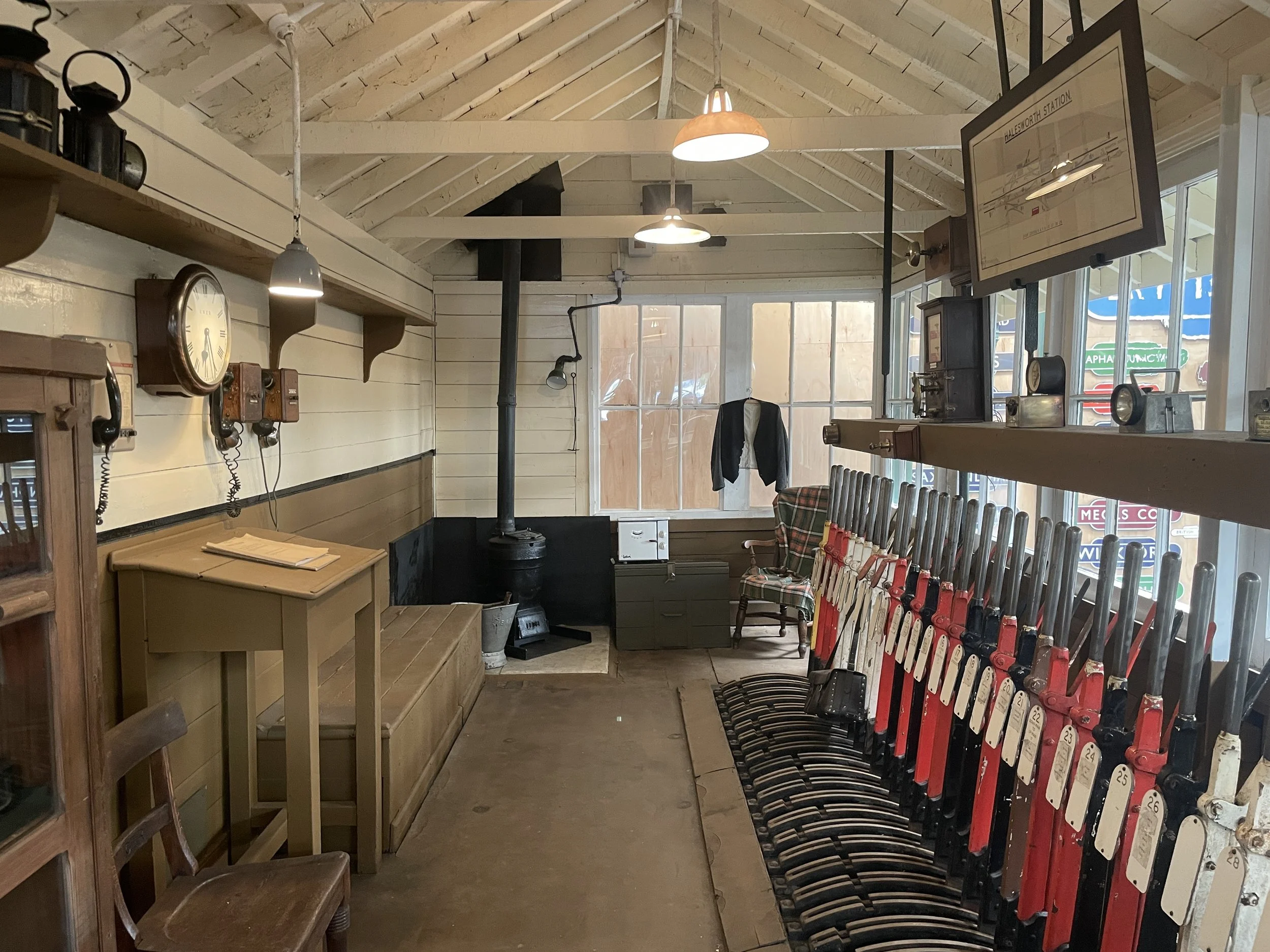
Mangapps Railway Museum, photo by Benedict O'Looney
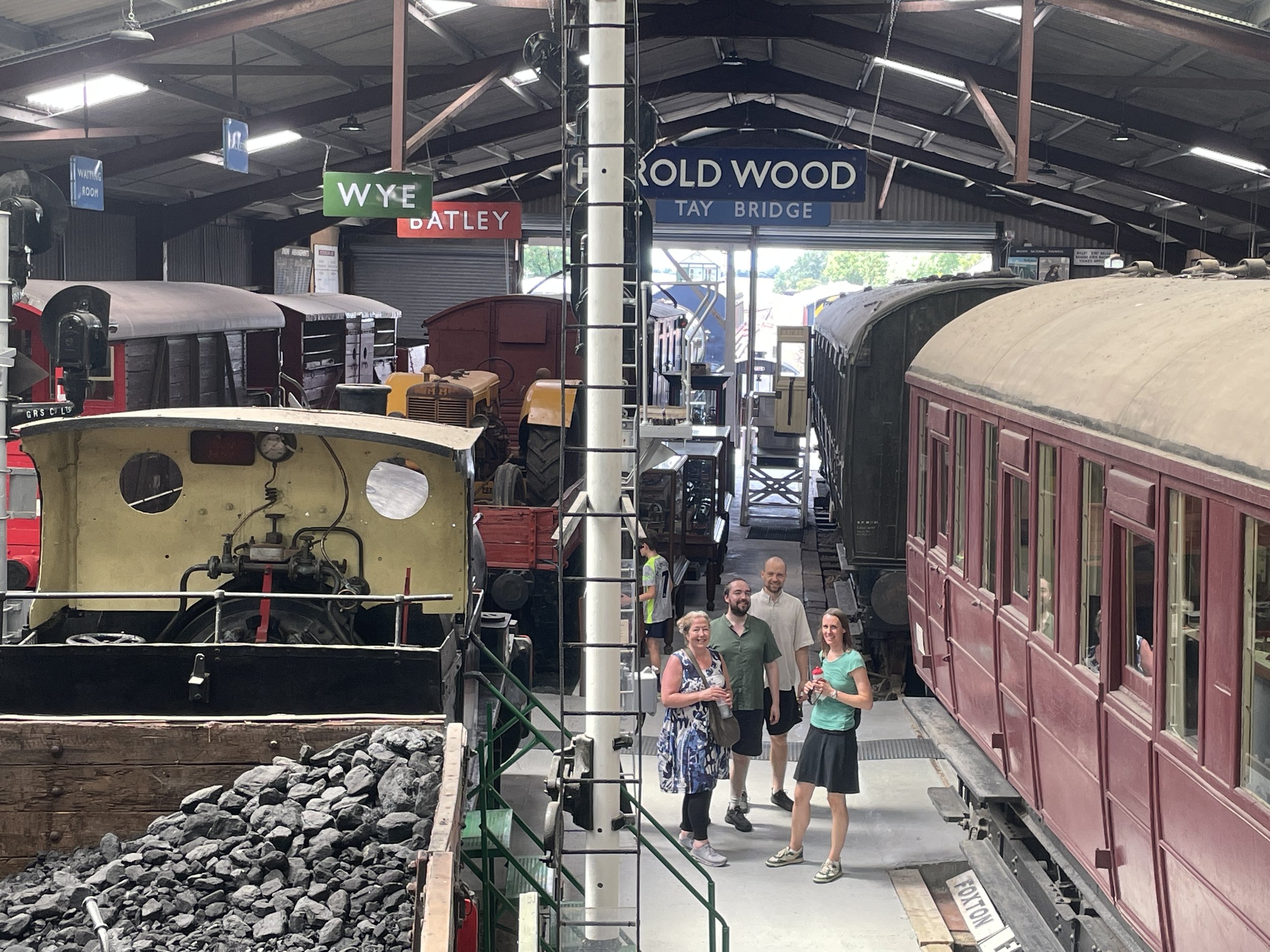
Signal Room, photo by Benedict O'Looney
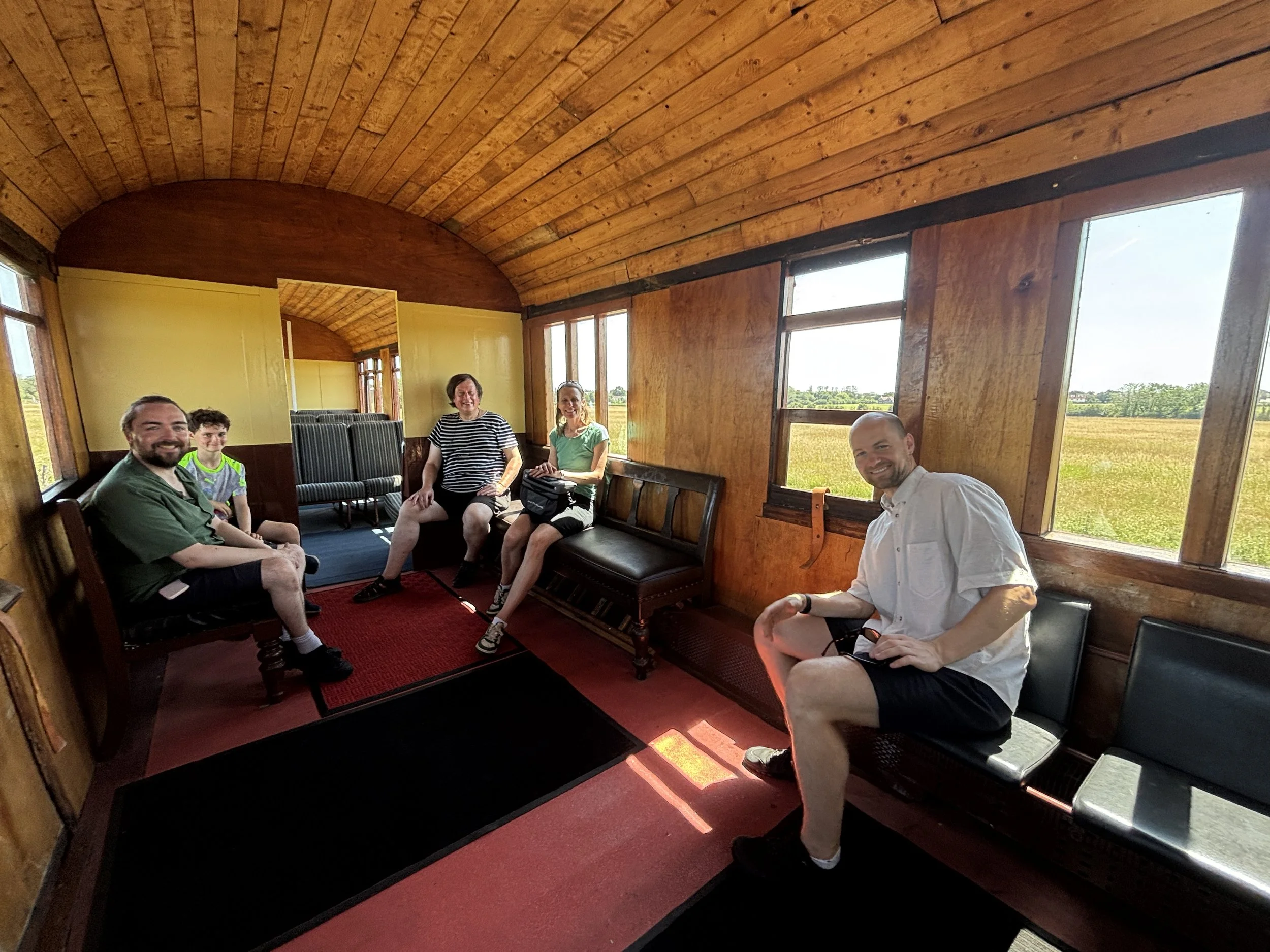
‘All aboard!’ A short train ride through the fields of the farm and back was a memorable highlight, photo by Etain Fitzpatrick
Reading the medieval town
From Mangapps, the bicycles headed towards Burnham-on-Crouch and the Church of St Mary the Virgin.
The Grade II* listed church has a history stretching back to the 12th century, although much of what stands today dates from the 14th century. Its unusual unified nave and chancel give the interior a distinctive character, while a 12th-century Purbeck marble font provides a tangible link to the church's earliest history.
But perhaps the most revealing feature of St Mary's is the evidence of change.
The tower and south aisle were added in later centuries. Then, in 1774, disaster struck when fire destroyed the medieval roof. The following year brought a major restoration and the distinctive plaster barrel vault that remains one of the church's defining features.
The church is therefore less a snapshot of one period than a record of continual adaptation — medieval construction followed by additions, fire, Georgian intervention and restoration.
There was another connection waiting to be discovered here: Alexander John Scott, once a curate at St Mary's, later became chaplain to Admiral Lord Nelson and was present at Nelson's death at Trafalgar.
That story would follow the group further around the peninsula.
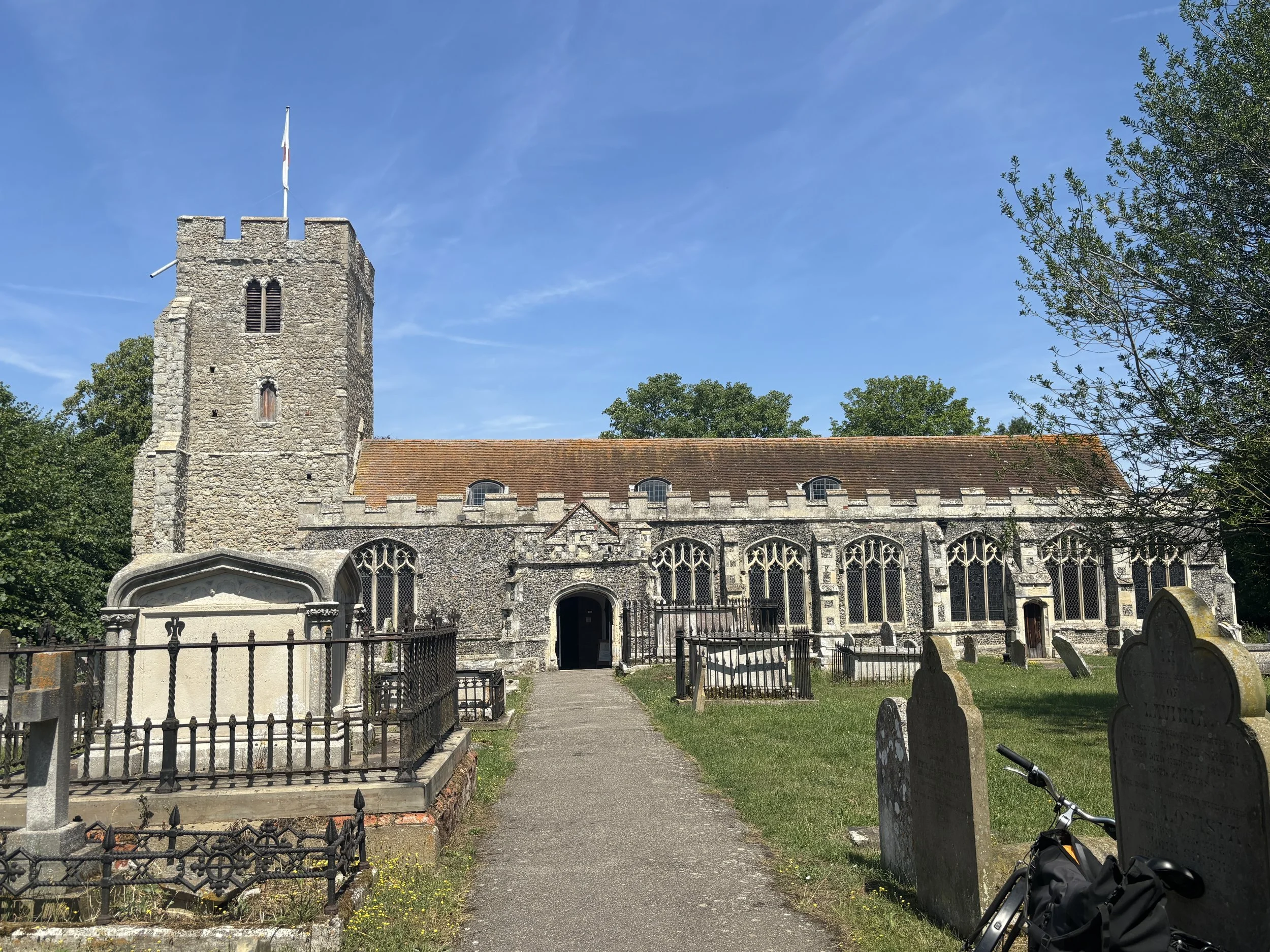
St Mary the Virgin, Burnham-on-Crouch, photo by Etain Fitzpatrick
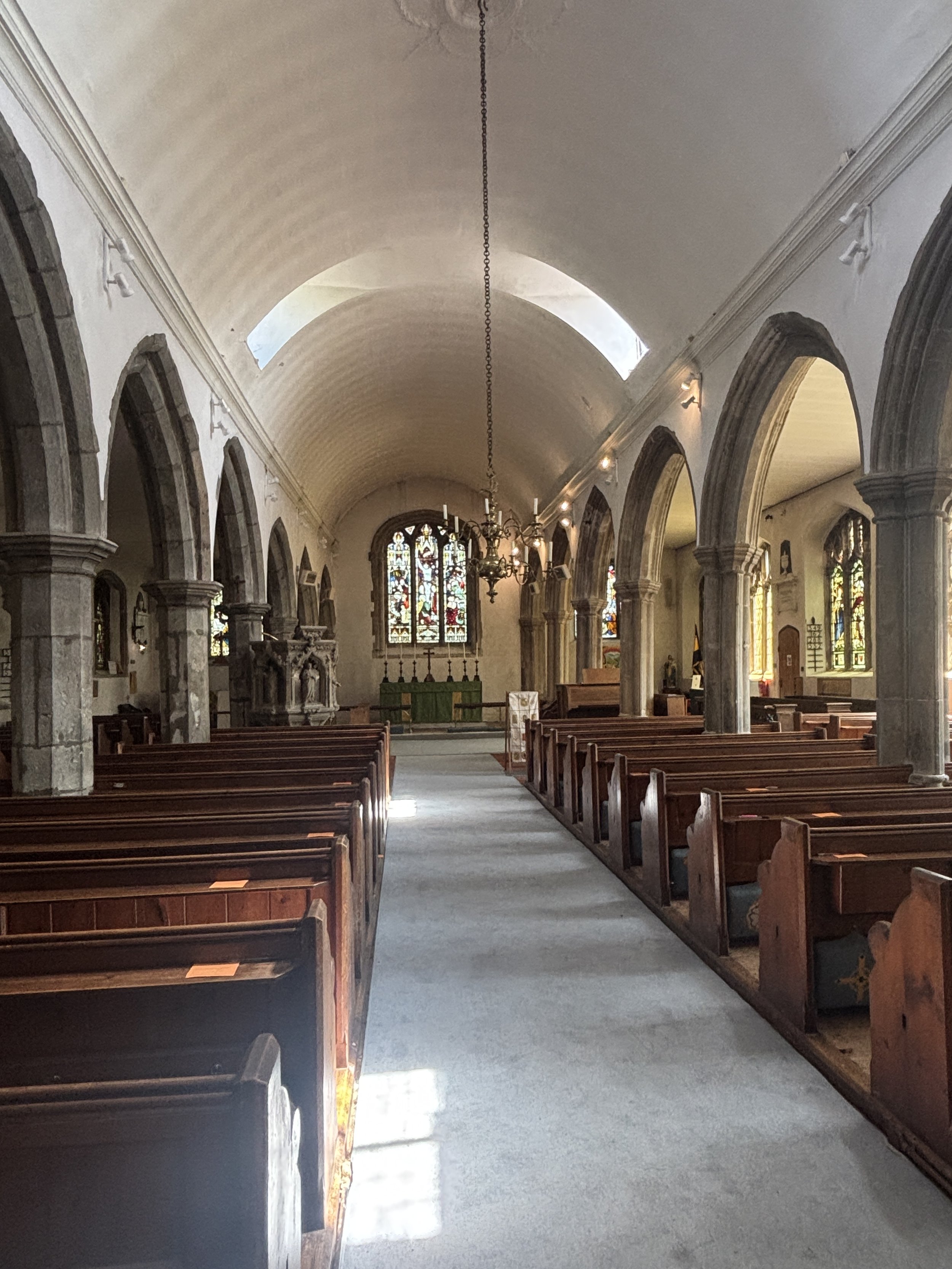
The distinctive plaster barrel vault at St Mary the Virgin, Burnham-on-Crouch, installed following the church fire of 1774, photo by Etain Fitzpatrick
Layers of history at Southminster
At St Leonard's Church, Southminster, the architectural story continued.
The Grade II* listed church has Saxon origins, although its earliest surviving fabric dates principally from the early 12th century. Much of the present structure was rebuilt in the 15th century, including the substantial north porch and its upper priest's room.
The unfinished west tower, with its massive southwest buttress, is particularly striking.
As at Burnham, later history is written directly into the building. In the early 19th century, Rev. Alexander Scott — the same figure associated with Nelson — used the 1818 Church Building Act to raise the church walls in brick.
The building also houses the so-called Nelson Relics, objects associated with Scott and his relationship with the admiral.
The result is a church where architecture, personal history and national history overlap in unexpected ways.
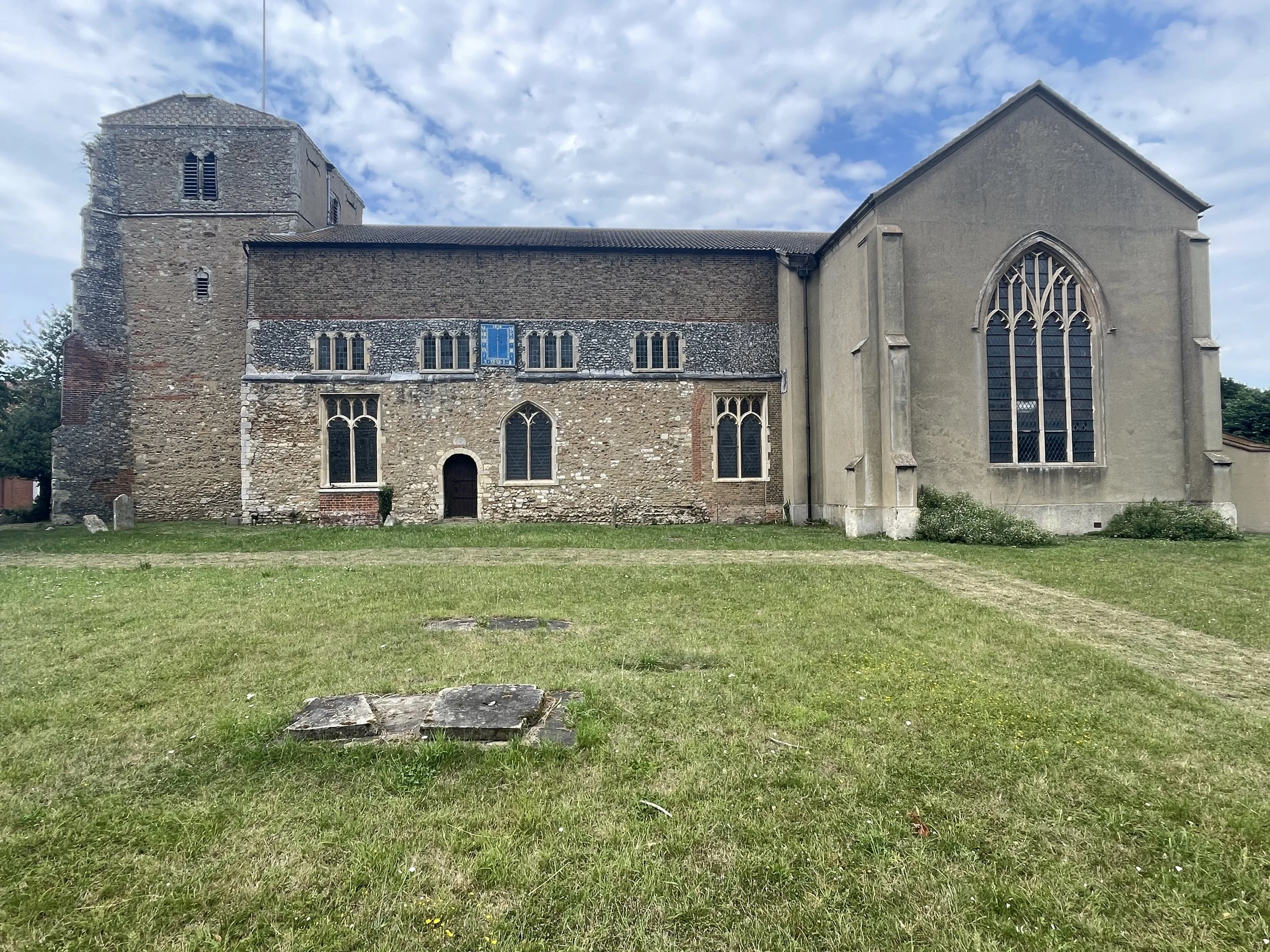
St Leonard's Church, Southminster, where medieval fabric, later additions and the unfinished west tower reveal centuries of architectural change, photo by Benedict O'Looney
Towards the coast
The route continued towards Bradwell-on-Sea and St Thomas Parish Church, another Grade II* listed building.
The church was established to serve the medieval settlement and occupies a strategic position near the Blackwater quayside and historic coastal routes. Its fabric records repeated episodes of rebuilding and reuse. The nave was rebuilt in 1706, the red-brick tower followed in 1743, and inside are a 14th-century octagonal font, a 19th-century stone pulpit and an organ dating from around 1840.
Perhaps most intriguing is the timber south porch. Originally part of the demolished Church of St Mary Magdalene at Shopland, the 14th-century porch was moved to Bradwell in the 1950s.
Once again, the group encountered architecture that had survived precisely because it was capable of being given another life. Even the bells have a story. Five of the church's six bells were cast by Robert Catlin in 1744 and remain part of the building's continuing life.
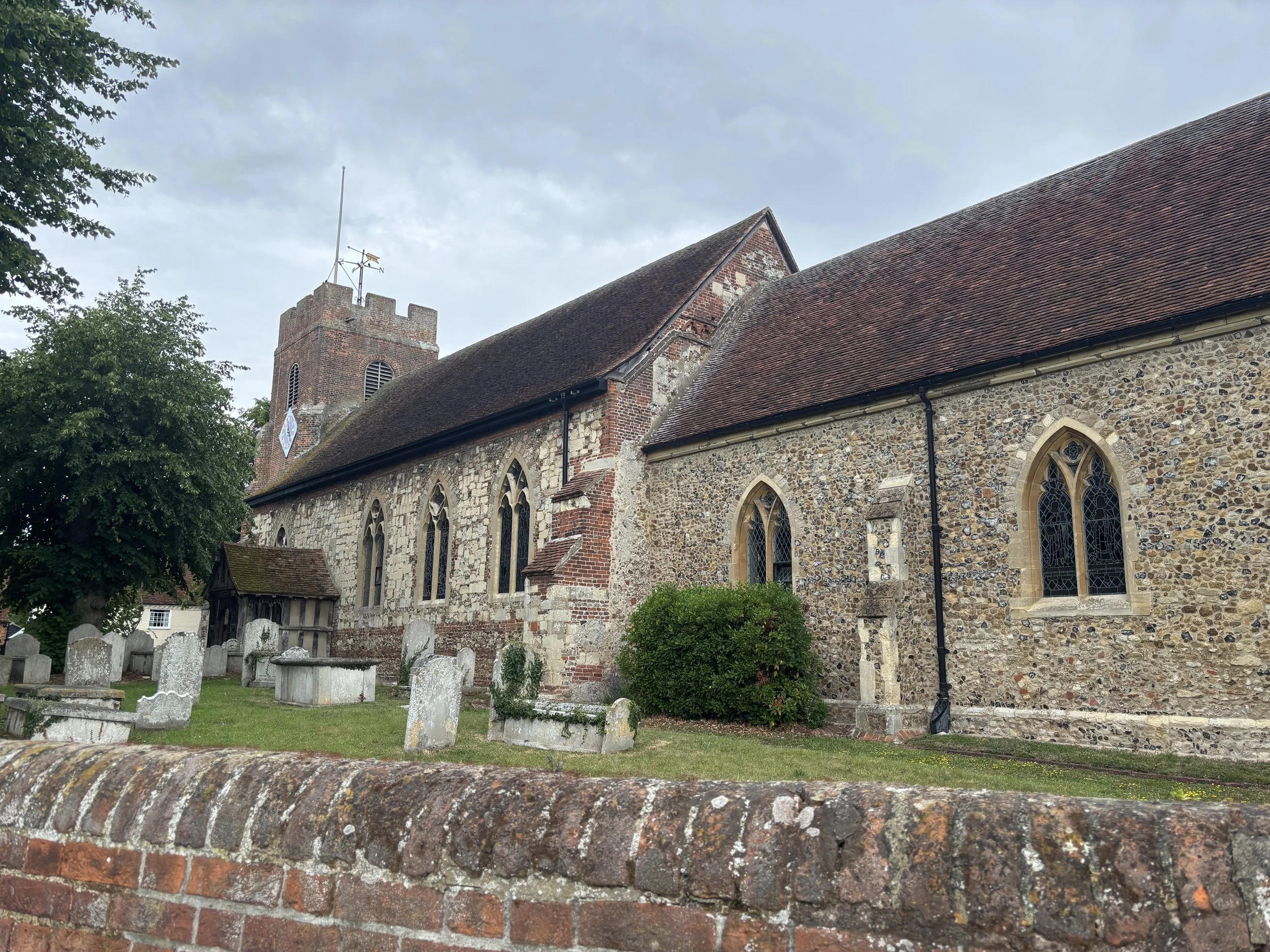
The 14th-century timber south porch at St Thomas, Bradwell-on-Sea, relocated from the demolished church at Shopland in the 1950s, photo by Etain Fitzpatrick
At the edge of the Roman world
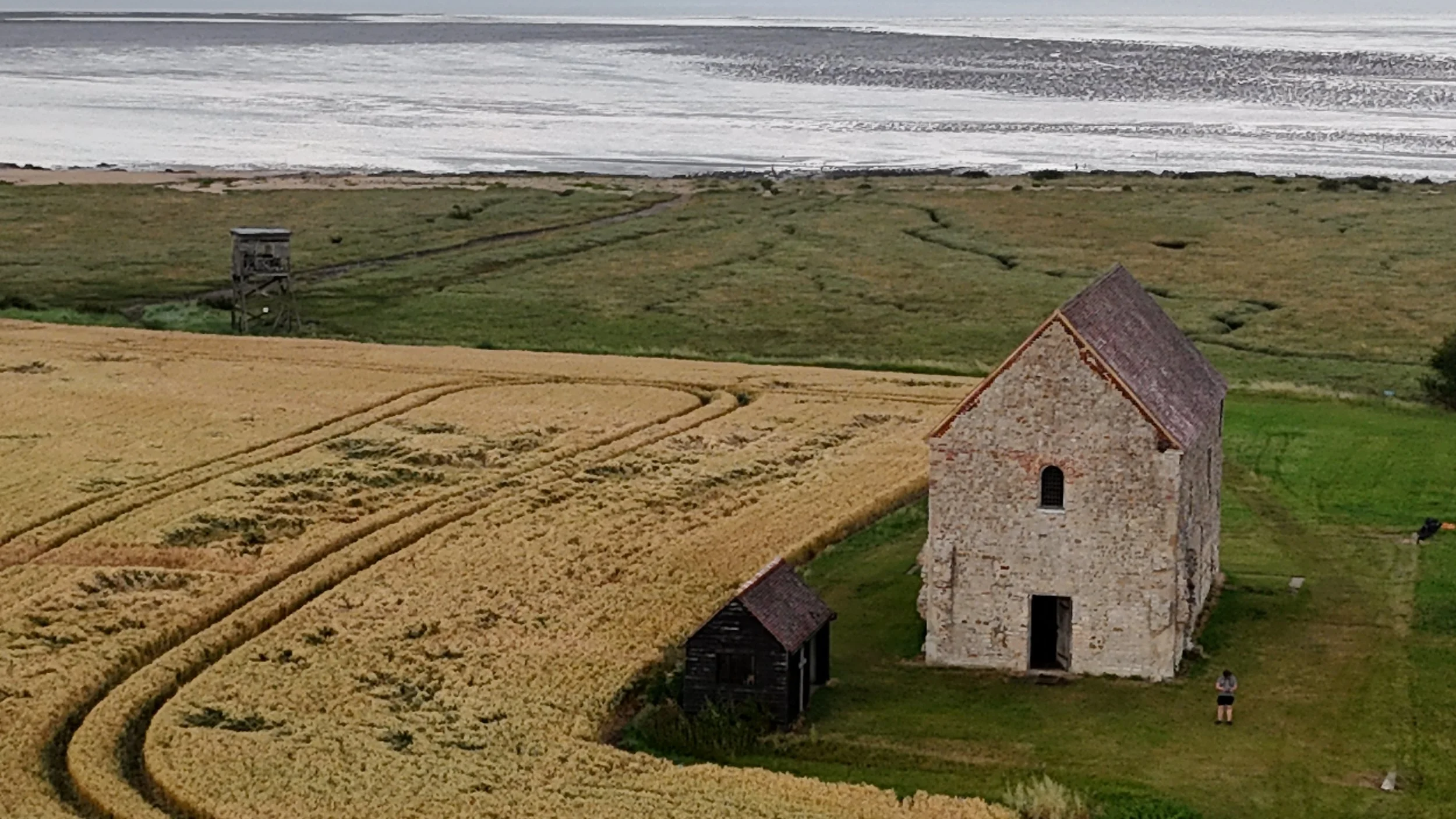
Then came the journey's most ancient destination. Beyond Bradwell-on-Sea, standing alone against the expansive coastal landscape, is St Peter-on-the-Wall.
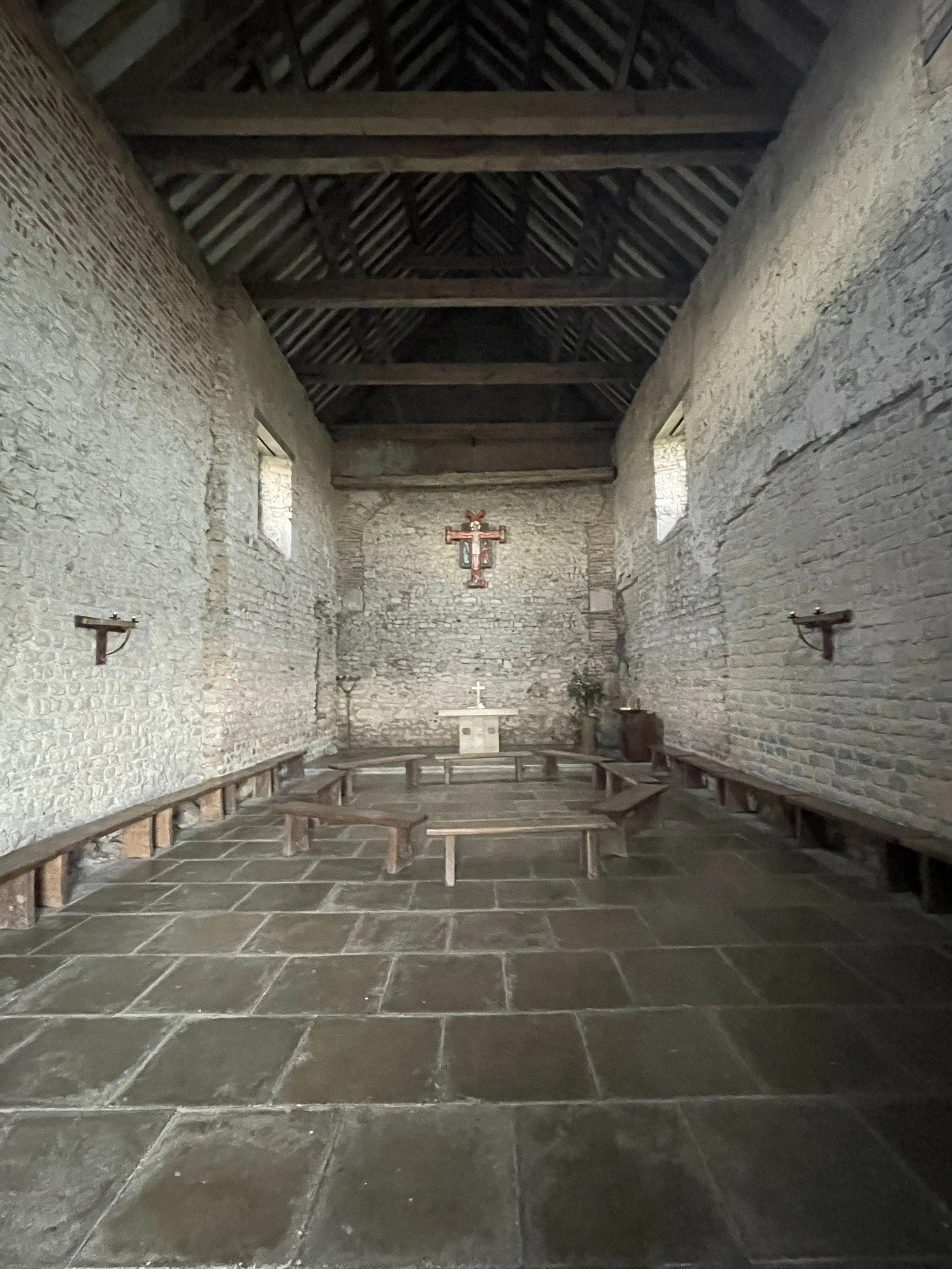
Built in AD 654 by St Cedd, an Anglo-Saxon missionary from Lindisfarne, the Grade I listed chapel is one of the oldest surviving Christian churches in England. Its simplicity is deceptive. The chapel was constructed over the western gate of the abandoned Roman fort of Othona, reusing stone and brick from the earlier structure. Standing inside it means encountering two very different worlds at once: the Roman military landscape and the emergence of Christianity in Anglo-Saxon England.
The building has also experienced a remarkable sequence of changing uses. After Cedd's death in 664, the chapel gradually fell from prominence. By the 15th century it had suffered fire damage and was reported to be unusable. Eventually it ceased to function as a church altogether and became a barn. The former agricultural use can still be read in the architecture. Large barn openings on the north and south sides were subsequently filled in when the building was restored.
In 1920, St Peter-on-the-Wall was restored and reconsecrated.
Few buildings demonstrate so clearly that conservation is not simply about freezing architecture at a particular moment. This is a building that has been a church, fallen into disuse, become part of an agricultural landscape and then returned to religious use.
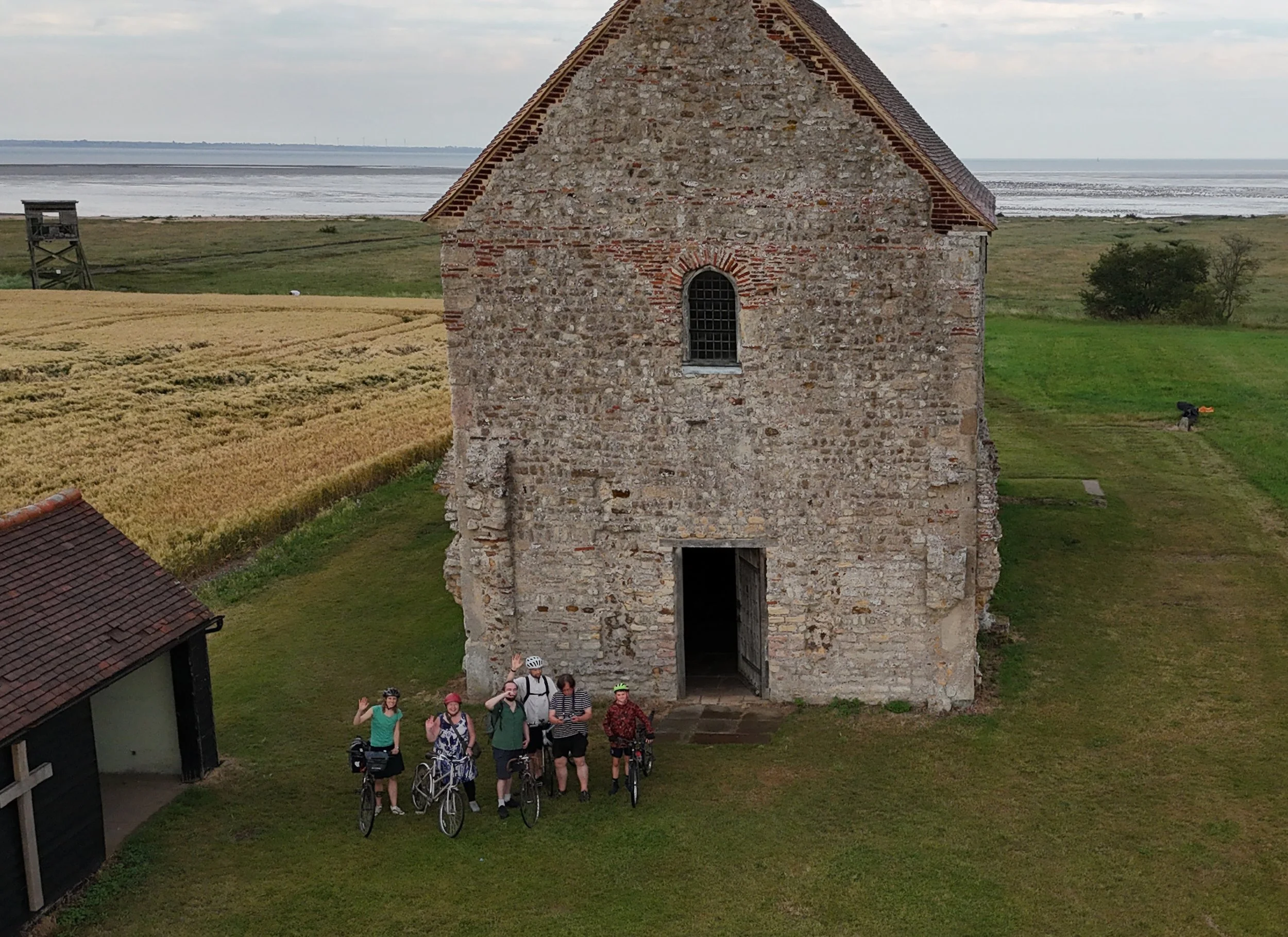
St Peter-on-the-Wall, Bradwell-on-Sea, built by St Cedd in AD 654 over the western gate of the Roman fort of Othona:
Architecture in the landscape
By the end of the ride, the individual buildings had begun to form a larger picture.
The railway buildings at Mangapps spoke of industrialisation, mobility and the challenges — and opportunities — of architectural reuse.
The churches at Burnham, Southminster and Bradwell revealed how medieval buildings are rarely purely medieval. Their walls contain evidence of rebuilding, fire, changing architectural fashions, legislation, migration of building elements and generations of community use.
And at St Peter-on-the-Wall, Roman archaeology, early Christian architecture, agricultural reuse and modern conservation could all be read within a single structure.
The bicycle was an important part of the experience. Travelling between the sites made the landscape itself part of the tour. The reclaimed fields, drainage channels, coastal roads and estuaries were not simply scenery between architectural destinations; they were essential to understanding why the buildings were there and how the communities around them developed.
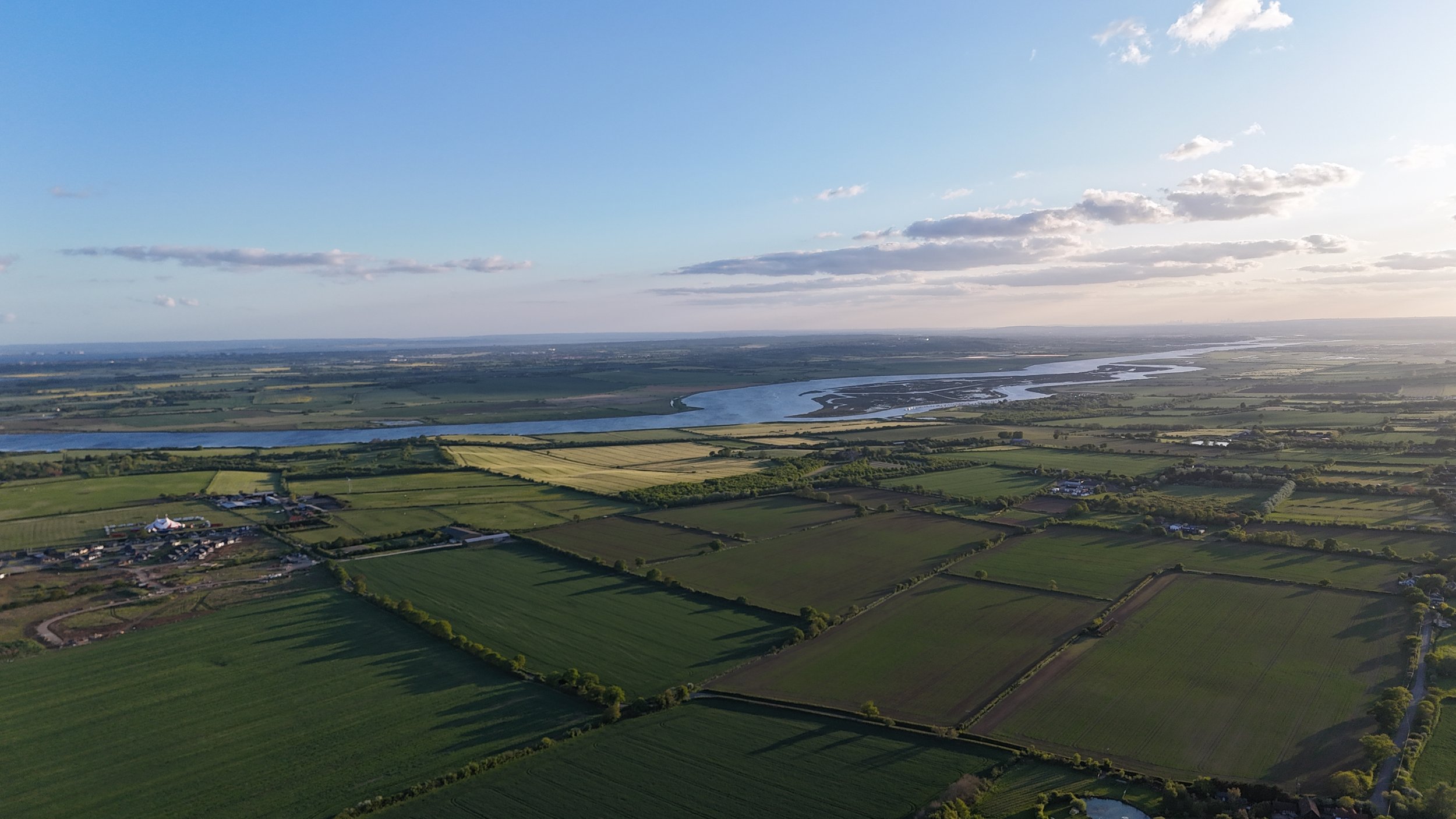
Cycling through the Dengie landscape, with historic buildings understood in relation to the roads, fields, waterways and settlements that surround them, photo by Benedict O'Looney
A landscape worth looking at twice
The Dengie Peninsula rewards close attention.
What initially appears to be a quiet agricultural landscape is, on closer inspection, a remarkably dense architectural palimpsest. Roman fortifications lie beneath an early Christian chapel. Medieval churches carry Georgian interventions. Railway buildings have travelled across counties to find new lives. Ancient structures have become barns and then churches again.
The day's cycling made these layers visible.
And perhaps that was the most valuable lesson of the tour: architectural history is not confined to monuments or dates. It is written across the landscape — in roads and fields, in reused timbers and altered walls, in buildings that have survived because successive generations found new reasons to use them.
On the Dengie Peninsula, the best way to read that history was to get on a bicycle and start exploring.
Written by Etain Fitzpatrick, AIA
