
AIA UK Sustainability Series – Innovative construction through Bio-Based Materials
The construction industry is responsible for 40% of global emissions with materials like concrete and steel requiring huge amounts of resources to produce. New technologies are being developed to reduce construction’s impact on the environment. As part of the AIA UK’s Sustainability Series, this webinar took a more detailed look at specific construction materials. The webinar explored the development of new bio-based construction materials and how their use can have a significant impact on reducing the carbon footprint of the built environment. Organized by new Chapter sponsor Axalta Powder Coating Systems, this webinar took place on the 26th of June 2024 with presentations by three leaders in the Bio-based materials field.
BIOCORE Powder Coatings
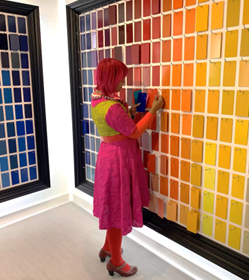
Dami Babalola, who is the UK Specifications Leader for Axalta, discussed Axalta Powder Coating’s brand-new range of powder coating solutions derived from non-food organic waste. Called BIOCORE, this new technology enables a 25% reduction in CO2 emissions, yet offers the same performance, finish, and warranty compared to existing products based on fossil fuel based polyester resins.
Axalta is a global leader in the coatings industry, providing customers with innovative, colourful, beautiful and sustainable coating solutions. With more than 150 years of experience in the coatings industry, the global team at Axalta continues to find ways to serve more than 100,000 customers in 130 countries with the finest coatings, applications systems and technology.
Sugarcrete ®
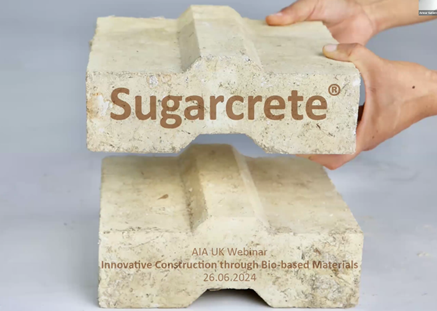
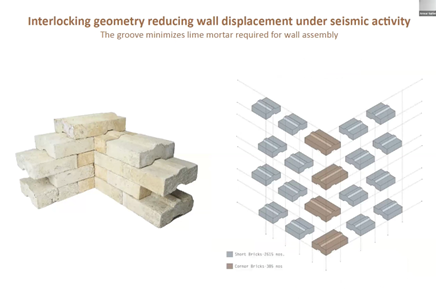
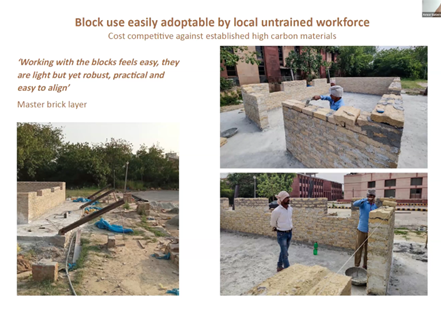
Armor Gutierres Rivas, a senior lecturer in Architecture at the University of East London, detailed his work on biocretes using Sugarcrete® as a case study. Sugarcrete® provides a low-carbon alternative to bricks and concrete blockwork developed by the University of East London (UEL). The material combines sugarcane fibres left over after sugar production, with sand-mineral binders to produce bricks that have a carbon footprint six times smaller than traditionally made clay bricks. The aim of the project is to develop ultra-low carbon building components using sugarcane bio-waste, allowing the storage of biogenic carbon from fast-growing plants in construction materials as an effective strategy to delay carbon emissions.
The first commercial manufacturing plant has been established in India. This is producing 400 blocks per day and provides work for the local labour force. Alternative uses are being developed such as street furniture and thin shell structural enclosures.
Bio-Based Materials
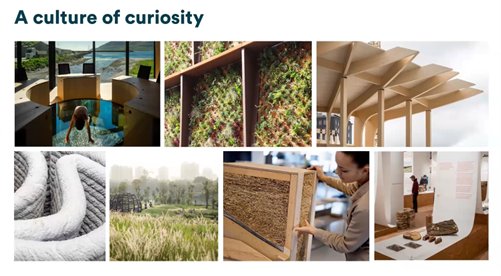
Architect Angelika Chantzopoulou presented Copenhagen based architectural practice, Henning Larsen’s, work and their strategies regarding the use of materials. Their work explores different bio-based materials including wood, straw, eelgrass, mycelium, reused bricks, low-carbon concrete, and clay. Henning Larsen focuses on research and new methodologies. They have an R&D department that is integrated into their design studios. Henning Larson also makes extensive use of their model shop to study and choose materials through all phases of design.
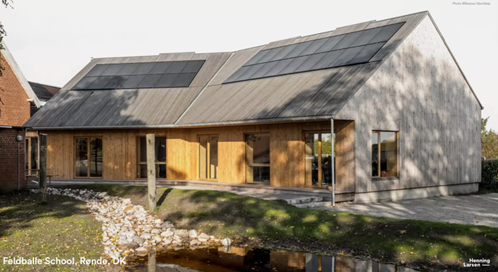
Angelika profiled the Feldballe School in Ronde, Denmark. This completed project utilized a prefabricated wall panel system constructed of compressed straw. This offered enhanced acoustics, thermal insulation and rapid construction.
Henning Larsen Architects is an international architectural firm based in Copenhagen, Denmark. Founded in 1959 by Henning Larsen, it has over 600 employees in studios based in eight countries around the world.
This fascinating webinar concluded by responding to questions from the attendees.
Webinar presented 26 June 2024.
Written by Michael Lischer, FAIA
2024 Bike Trip / Gravesend to Rochester (via Hoo)
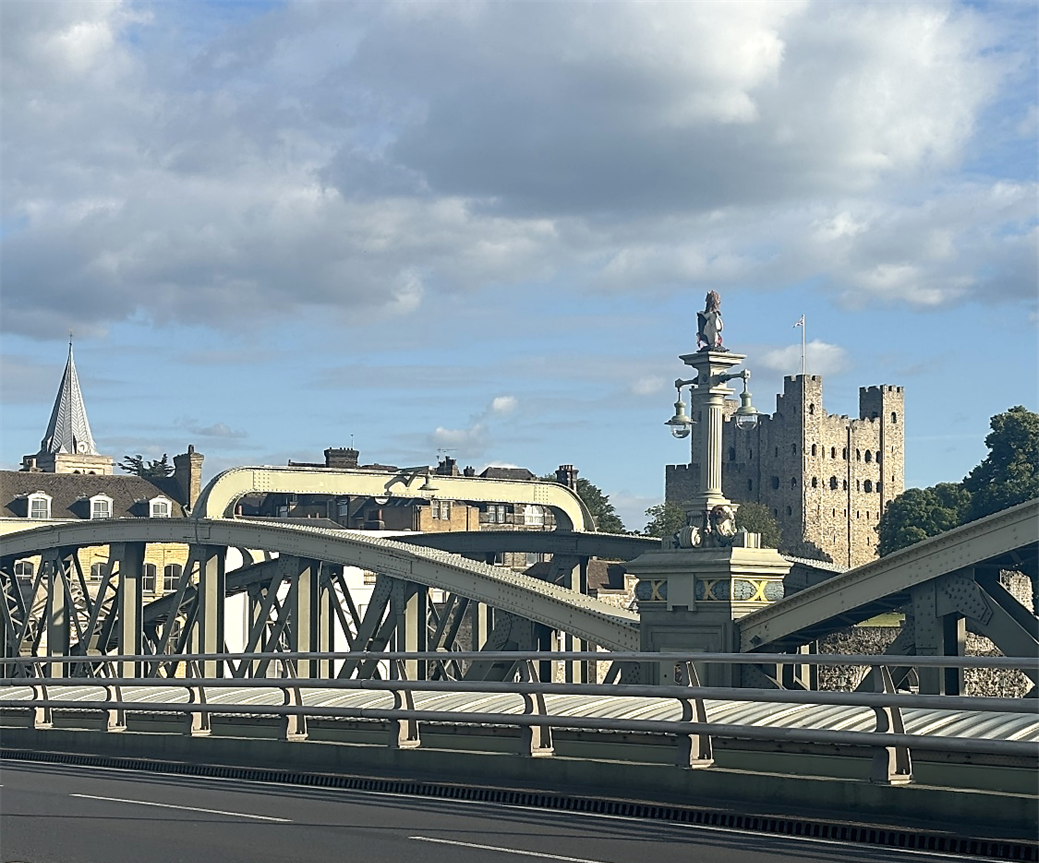
The Road to Rochester. Photo Credit: E Fitzpatrick, AIA
Of course , a Bike Trip from Gravesend to Rochester – 8 miles or so along a busy A227 and a frantic A2– would certainly not be worth writing home about. But - throw in the Hoo Peninsula twix that town and that city - and we have a day trip to remember.
Not one of the AIA bikers had any idea what to expect on the way to the Hoo peninsula or even – for that matter – how to pronounce its name. Is it WHO, or is it HOE, or is it somewhere in between? In any event, AIA bikers trust their favourite architect tour guide, Benedict O’Looney, to chart a day’s journey full of sights of unexpected interest interspersed with gentle English countryside. Gravesend, in fact, proved an auspicious beginning for the 2024 Bike Trip.
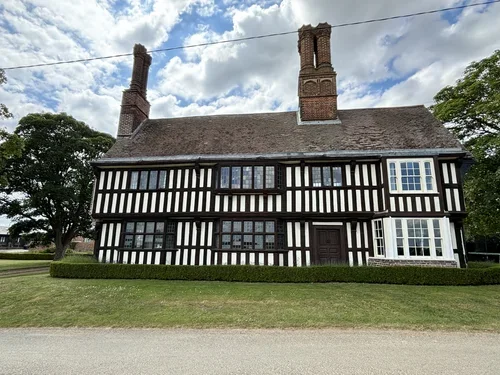
Who (or hoe) could have anticipated the range of Gravesend’s abundant architectural heritage until its historic, strategic location on the Thames was explained. Today, it now has high speed rail link to Central London to give it a renewed chance to shine.
A memorial to Pocahontas, the Native American ‘Princess’, who died passing Gravesend on her way back to America in 1617.
The Gravesend Town Pier, oldest surviving (1834) iron pier, and its mate from (1844).
A Light Ship Gallery and St Anders Art Gallery on the Thames.
One of the oldest surviving Borough Markets (Chartered in 1268), still a busy destination on a Saturday afternoon.
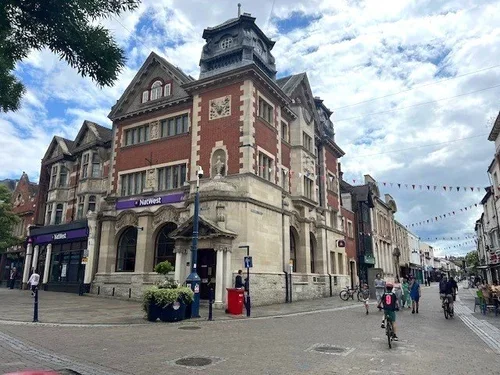
A surprising Victorian High Street.
A City Hall with a robust Doric façade.
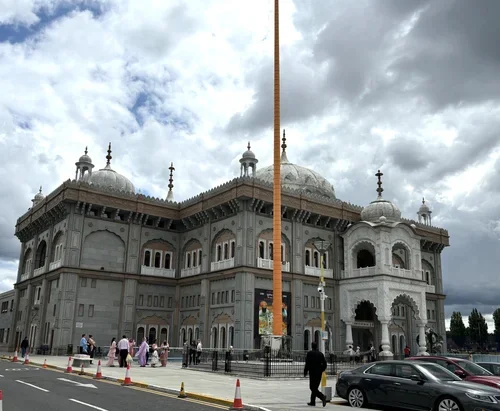
A thriving, major Sikh Temple (15% of Gravesend population is Sikh).
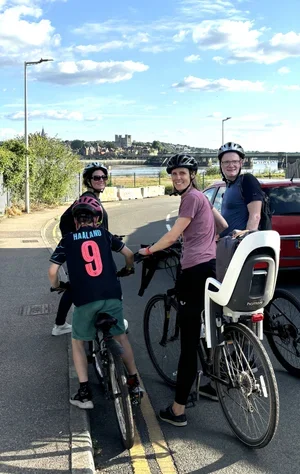
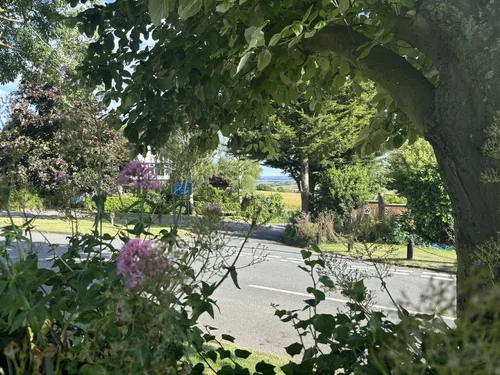

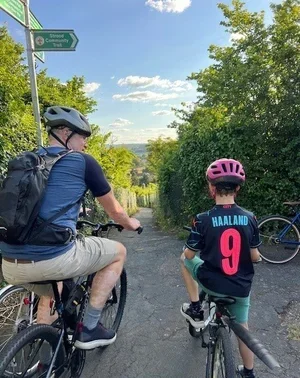

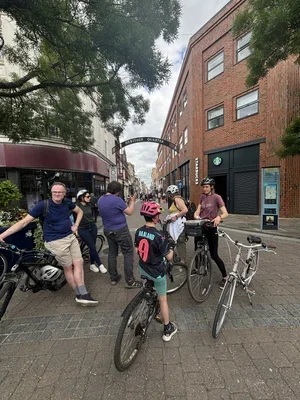
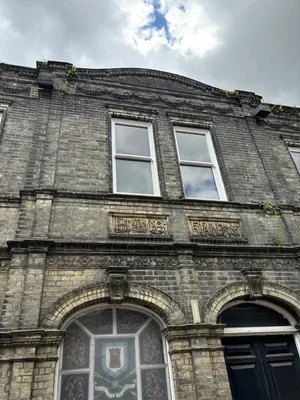
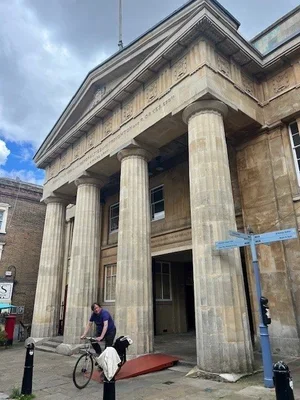
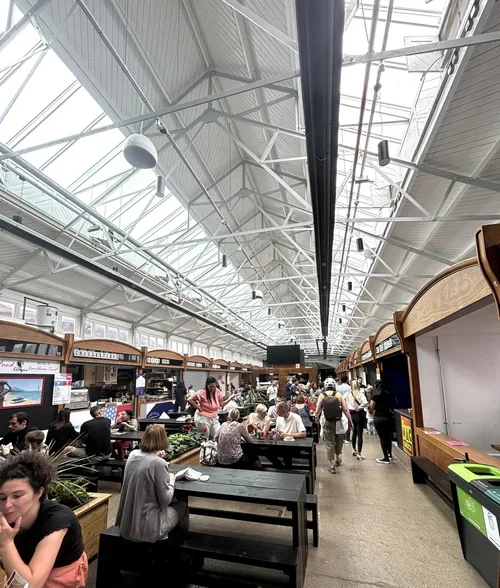
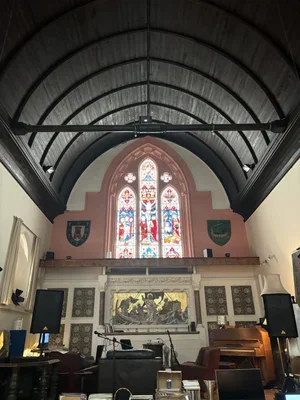
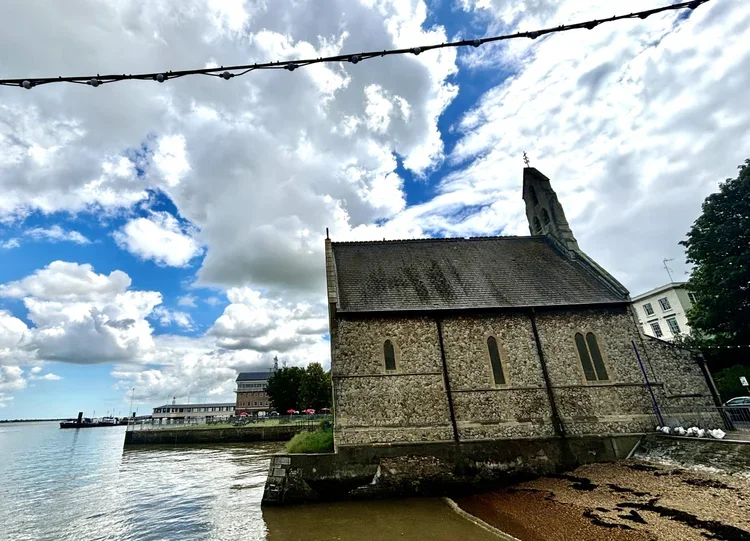
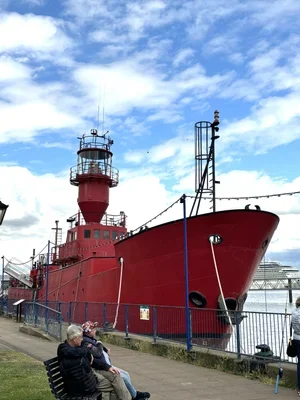

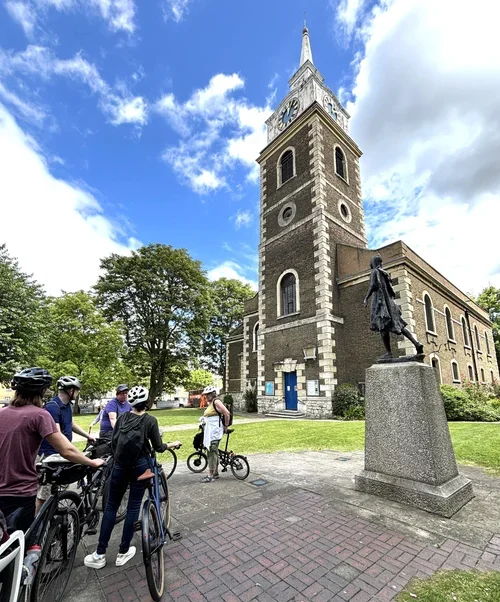
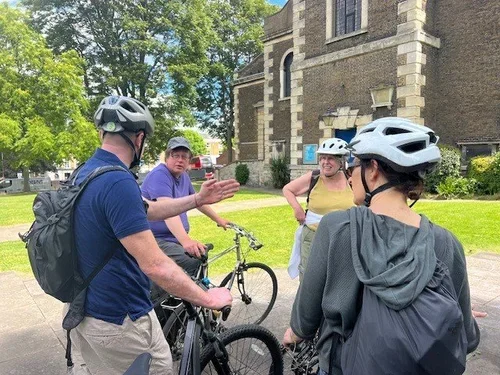
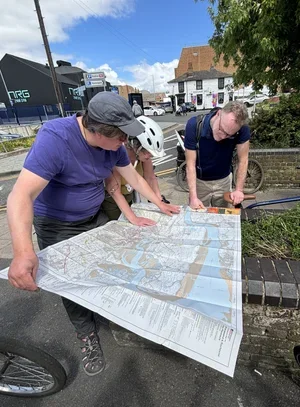
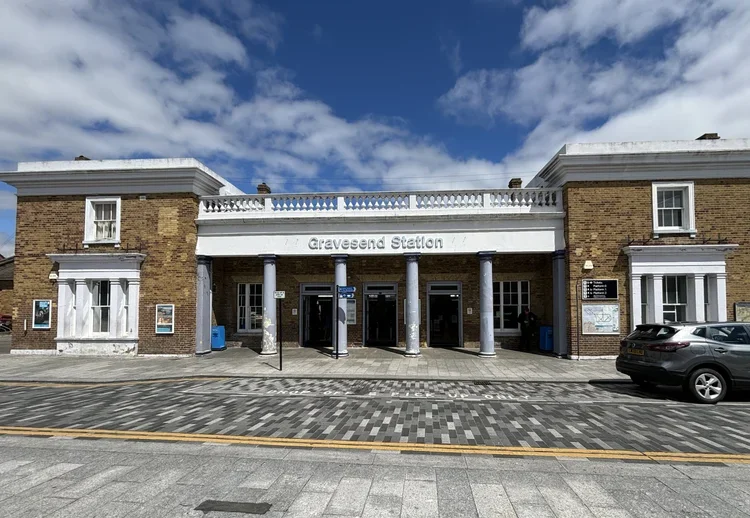
The Bikers left Gravesend later than expected alongside the now defunct Thames and Medway Canal. The canal was built to speed up transport between the military sites on the two rivers, but it did not open until 1824 - too long after the Napoleonic wars ended to be a great commercial success. However, biking on a long, flat, straight, obscure and unpopulated tow road on the way to the Hoo Peninsula was an excellent start to the bucolic second stage of the Bike Tour.
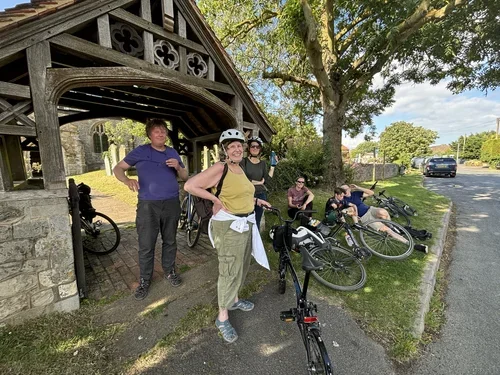
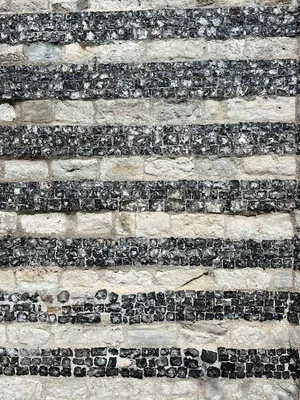
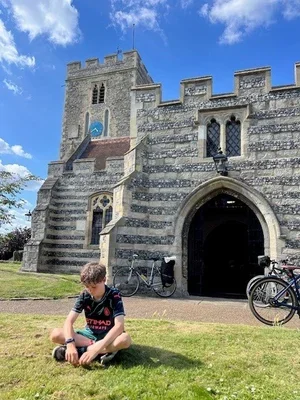
Stops on the Hoo Peninsula included Cliffe, a village of Angle Saxon origin with a surprisingly significant 13th century church, St Helens, indicating that Cliffe was once an important post on the Thames riverfront. The river has receded so Cliffe now overlooks rather dreary marshland. However, glimpses seen through the trees across the Thames to the Tilbury Docks and Canvey Island were enticing.
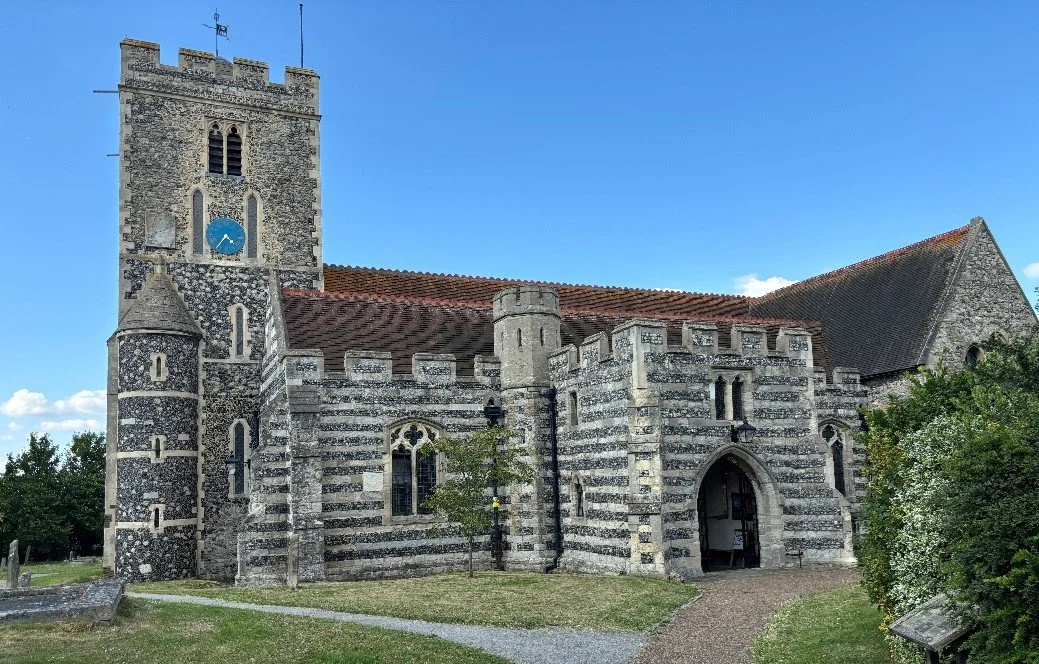
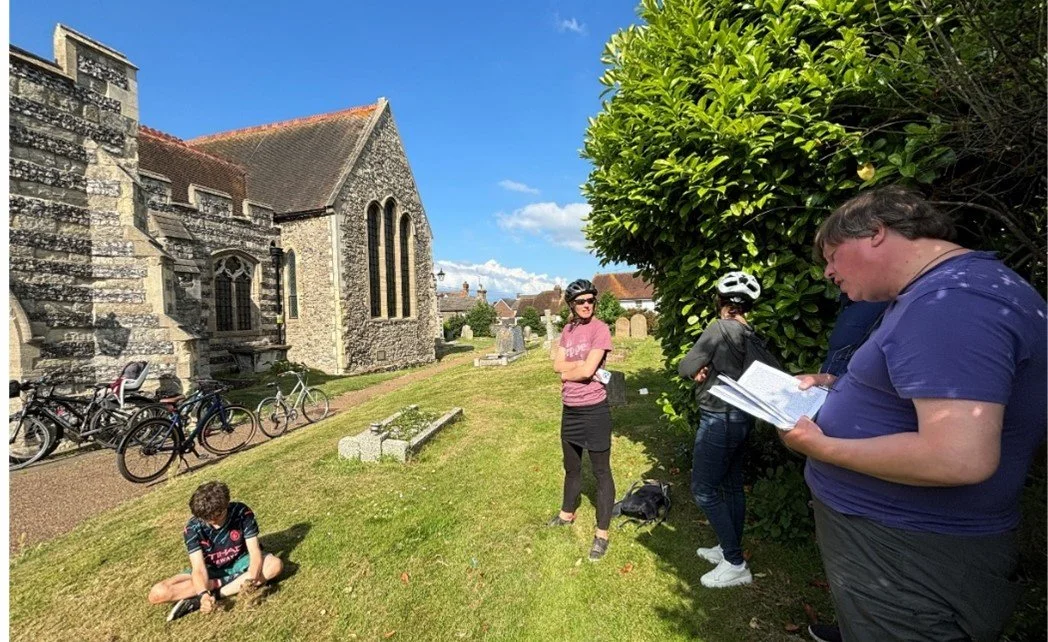
Cliffe Church was large and elaborate. Photo Credits: E Fitzpatrick, AIA
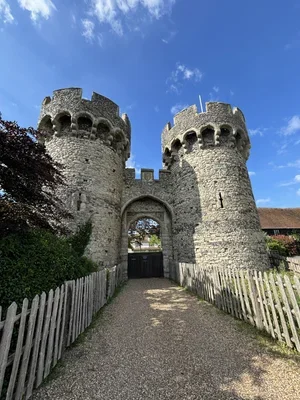
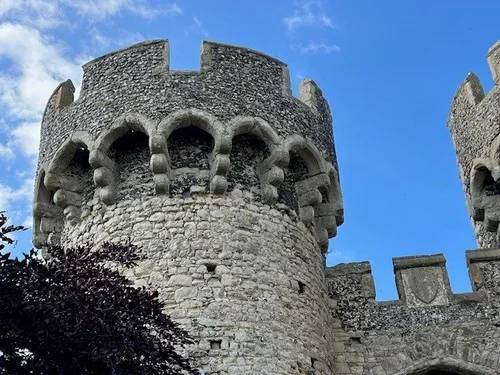
After Cliffe and an excellent Saturday pub lunch, the roads led ever so slightly upwards again to Cooling and its 14th century castle, built to guard against French raiders from across the Channel.
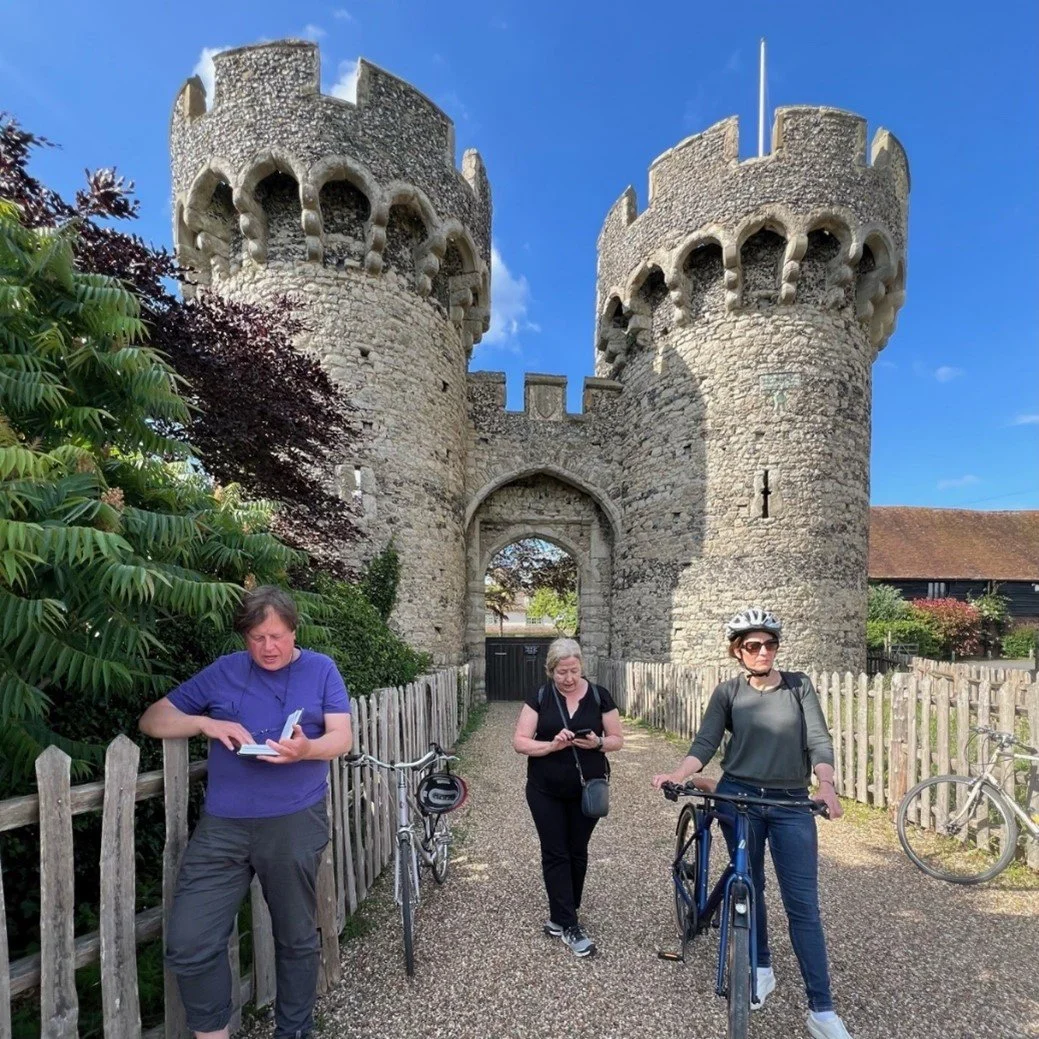
As with St Helen Church, Cooling Castle looked slightly out of place away from any large population areas. Photo Credit: Brianne Hamilton.
The climb became steeper on the way to Hoo’s summit at High Haslow, where the Bikers stopped to admire the church and agree on the best route of several options DOWN to Rochester.
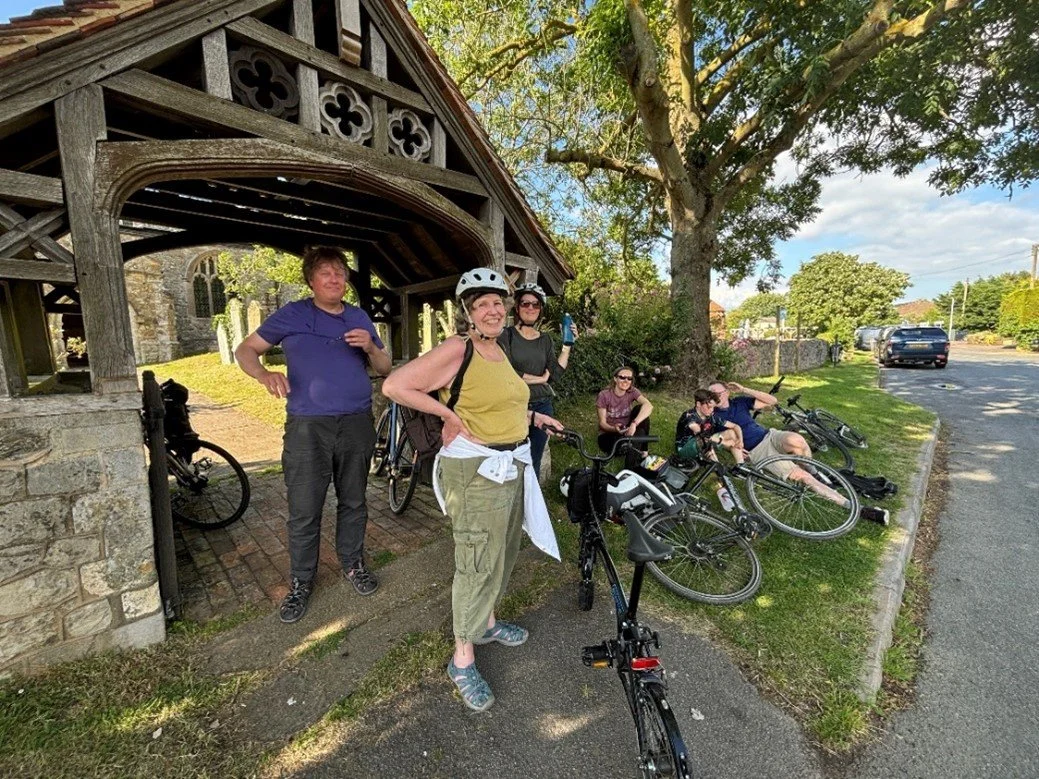
Several bikers rest after reaching the highest point of the Hoo Peninsula. Photo Credit: E Fitzpatrick AIA.
There were fewer participants on this year’s bike trip than the last one on 2022, due to scheduling conflicts for expected three ‘regulars’. Along with Ben O’Looney, past organiser, Lorraine King, and current organiser, Etain Fitzpatrick, attended and new Board Director Kristy Sels and her husband, Ludwig joined for the first time. Brianne Hamilton joined with her 10 year old son, Patrick. Patick hung in with the adults – a show of remarkable resilience – both physical and social.
Etain Fitzpatrick – in a show of remarkable navigation skills – eventually brought the group through a series of back streets and bike trails to the Medway with Rochester Castle beckoning in the distance. It was the end of a long day of sunshine, exercise and architecture, and – incidentally – a sizeable number of Continuing Education credits.
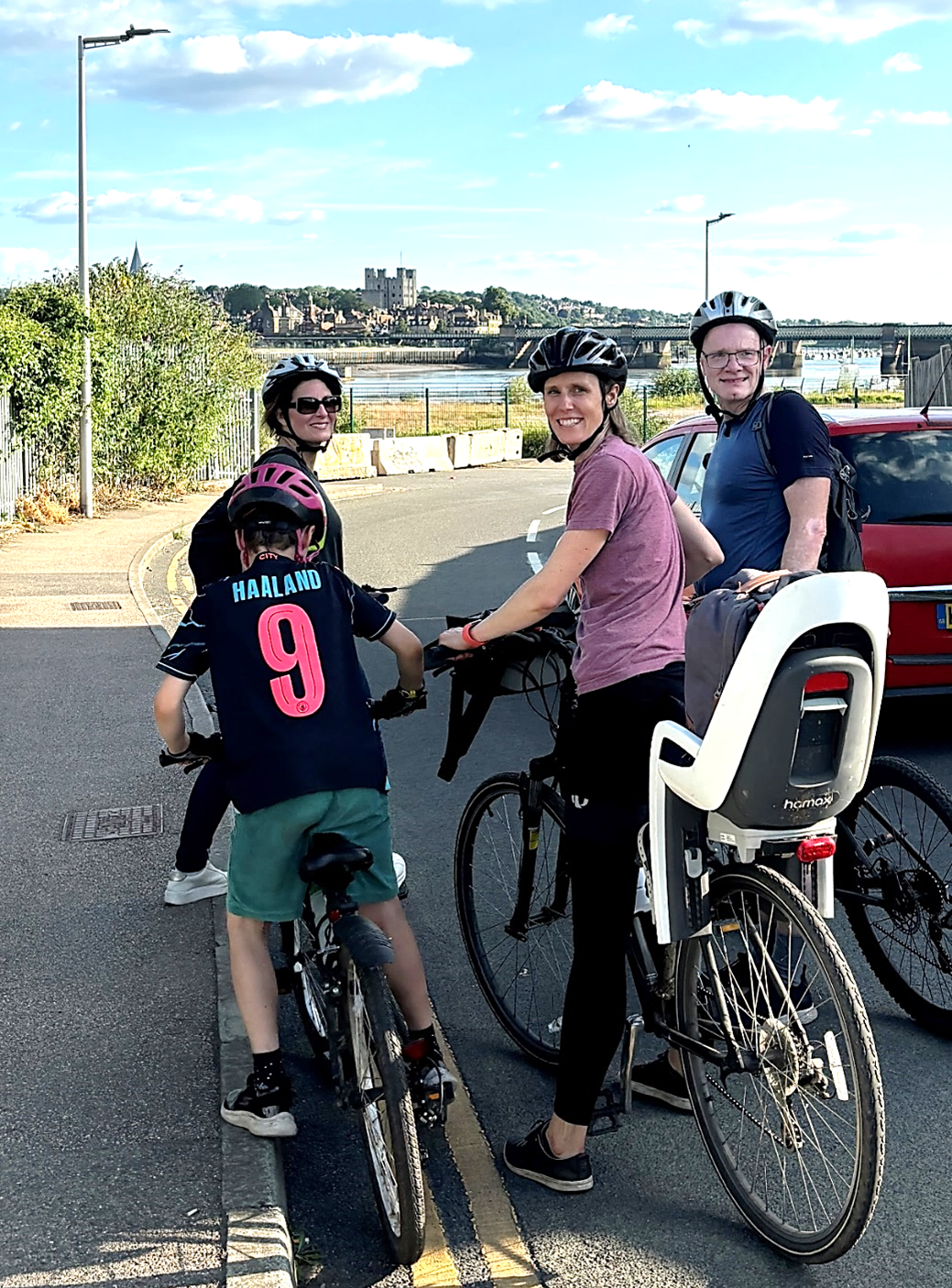
Rochester Castle beckons, but there is still a ways to go. Photo Credit: E Fitzpatrick AIA.

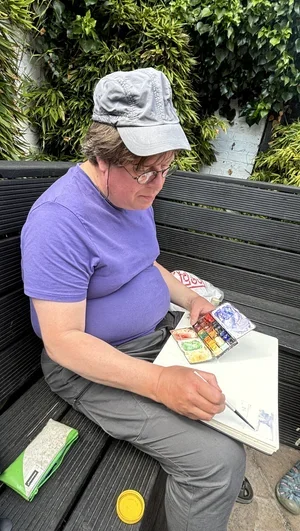
Crossing the Medway into Rochester itself, our guide, Benedict O’Looney, left us one of his quick sketches of Rochester as a lasting memento of the Bike Trip. You can learn more about his sketching techniques HERE.
Written by Lorraine King AIA
Beale & Co Hosts Architects’ Roundtable Discussion

Photo by Michael Lischer
Chapter sponsor, Beale & Co Solicitors, held their annual architects’ roundtable on the 10 of July. The AIA UK was invited to attend and was represented by Michael Lischer. Over 20 representatives from many of the larger practices in London and the RIBA participated. Beale lawyers led a lively discussion on three very topical subjects that impact the design profession. These were:
The use of Artificial Intelligence (AI) for Architects
Building Safety Act (BSA) – market approach, appointments and RIBA guidance
UK construction market post-election – what might the future hold?
The use of AI – This topic stimulated a good discussion. The key points included:
40% of UK architects are already using AI. This will grow to 60% in two years.
The UK government is advocating the use of AI for public sector work.
In 10 years, the use of AI by architects will be the “new norm”.
However, AI will be used to optimize what we are already doing, like creating room and door schedules. It will not be a paradigm shift.
There will be intellectual property issues. Who owns the output of the world wide web?
Big firms will have an advantage as they have many projects in their files to gain information from.
Use of AI will speed up many design processes. Will clients insist on paying smaller fees?
The Building Safety Act – The secondary legislation came into effect last November. There is not much guidance available from the government for design professionals. To provide this, the RIBA has just released new documents that provide guidance and tools to help minimize the risks. Points discussed include:
Generally, the profession appears to be “getting up to speed” with the new regulations.
The RIBA guidance is trying to prevent a “race to the bottom” in terms of services to be provided by architects.
The BSA does not lend itself to design-build procurement contracts.
There is a massive regulatory backlog and planning departments are struggling to cope with the additional demands.
Design contracts must insist on the client’s competence in fulfilling their requirements.
Architects are taking on more scope. This should be reflected in higher fees.
The UK construction market post-election – The main topic of discussion was the government’s promise to build more homes. The labour manifesto states 1.5 million new homes will be built in 5 years. Is it possible to build 300,000 dwellings per year? The roundtable thought it doubtful! Points discussed included:
The amount of construction labour currently available is not adequate.
It is doubtful planning departments will be able to cope with the added workload.
This should be a boon to modular construction contractors. Unfortunately, several large ones have already gone bust, and others are struggling.
This needs a “new town” vision similar to the last century when new towns were built on the fringe of large cities.
The government will have to fund much of the construction as the private sector will be unable to raise the money. Think, council housing!
The main issues distil down to; who’s the client, where is the funding, and where is the labour.
The roundtable concluded with a drinks reception and further discussion!
Written by Michael Lischer, FAIA
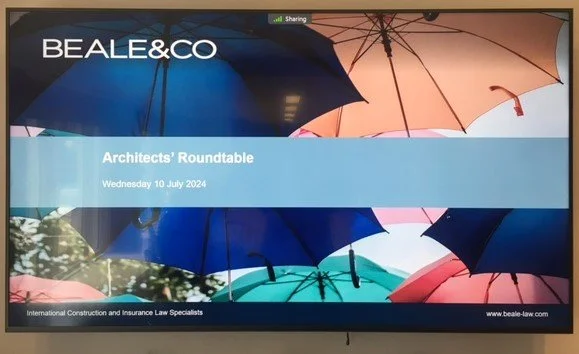
Photo by Michael Lischer
Building Tour - Tower Hamlets Town Hall with AHMM
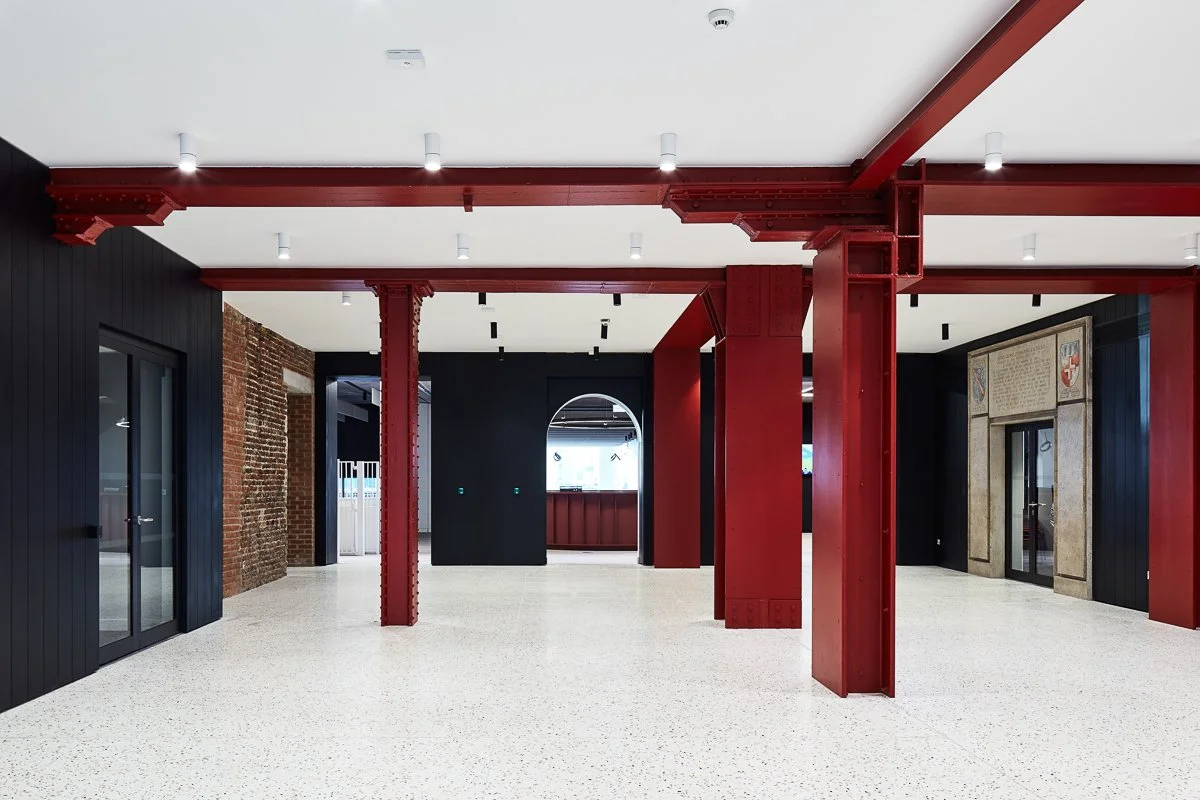
Interior photograph of the Tower Hamlets Town Hall. Photo by AHMM.
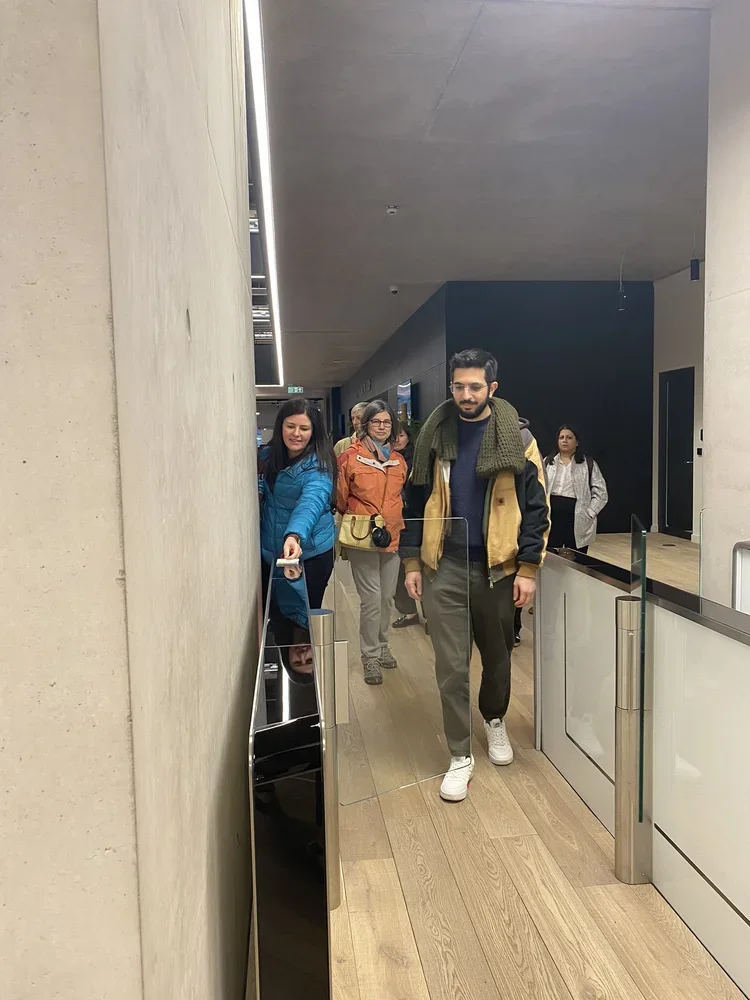
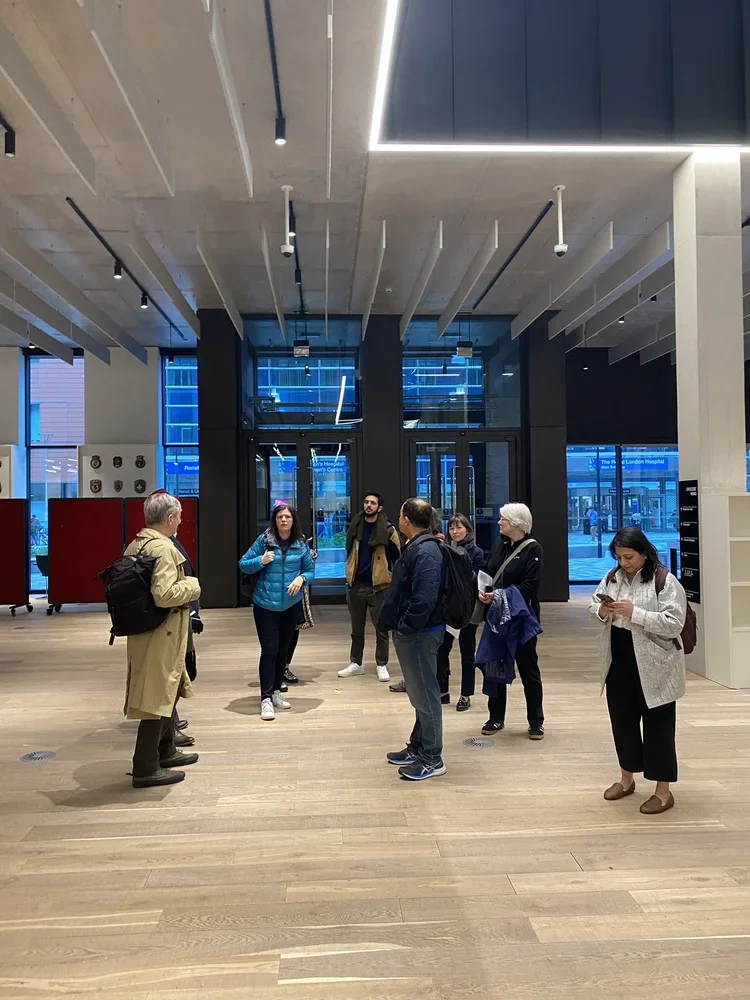
The AIA UK building tour at Tower Hamlets Town Hall was an engaging event, attracting a total of 22 attendees. Walking through the Grade II listed former Royal London Hospital building was like a step back in time, while the £124.7m modern re-imagining of the space into a town hall remained rooted in a contemporary Central-East London atmosphere. The Georgian facades stood as stoic witnesses to centuries of change, while the modern extension offered a glimpse into Tower Hamlets' aspirations for the future of municipal governance.
Two tour groups were led by AHMM architects Eleonora Gallenzi and Ben Leach, exploring both the interior and exterior of the building. The guides highlighted the palimpsest of old, older, and brand-new features that occasionally created unique design challenges. A notable example was adapting the surrounding site to allow for multiple points of step-free access and integrating the previously quarantined hospital complex with the surrounding public walkways. In general, the AHMM renovation adopted a highly practical and cost-effective approach, but also exhibited architectonic creativity and innovation alongside a bold colour scheme of reds and blues.
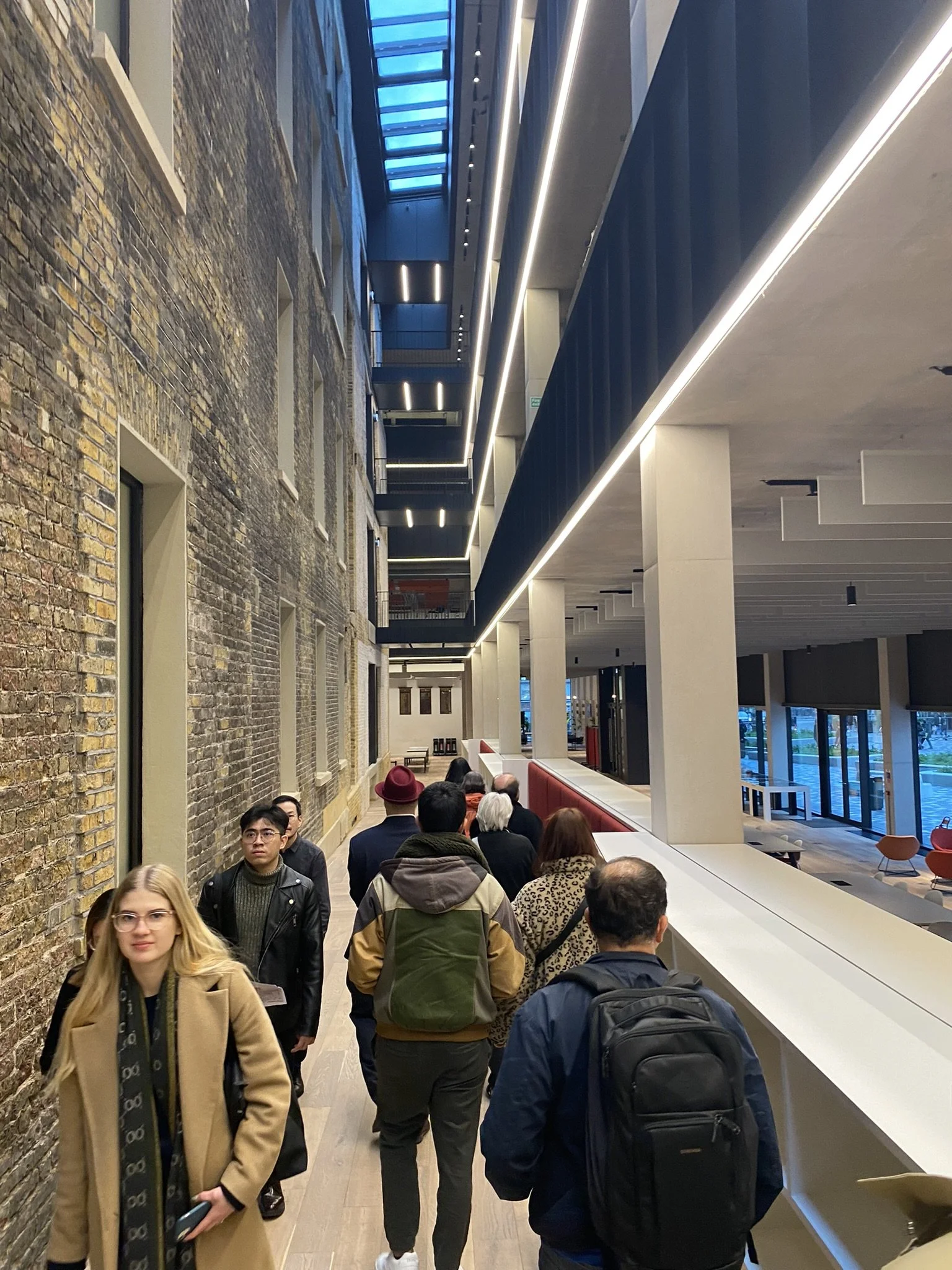
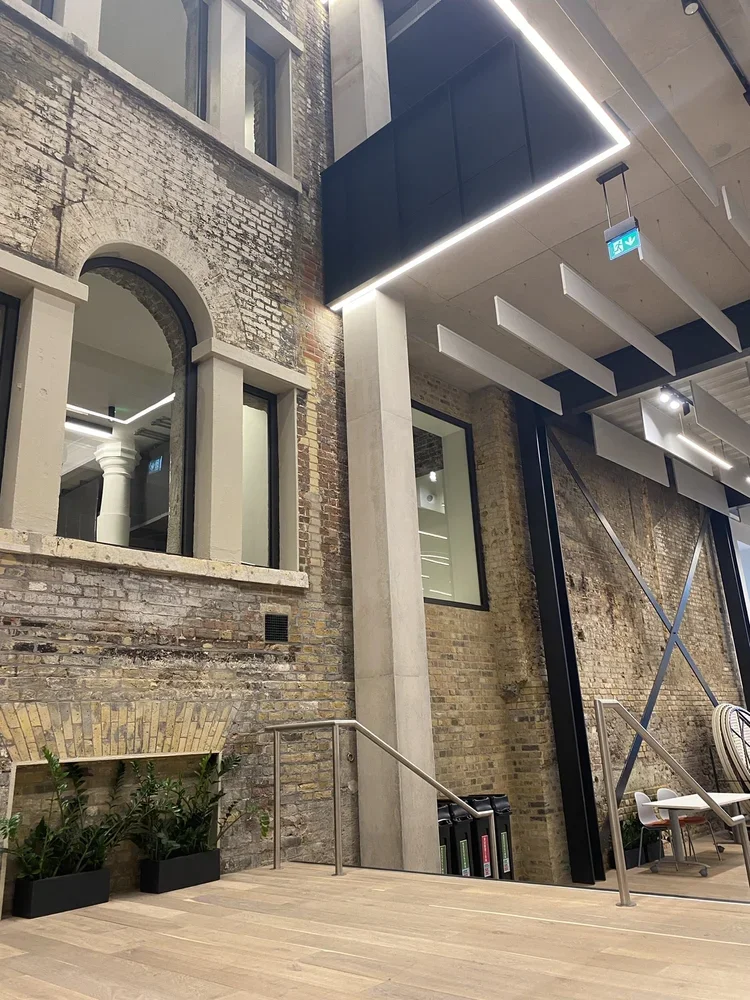
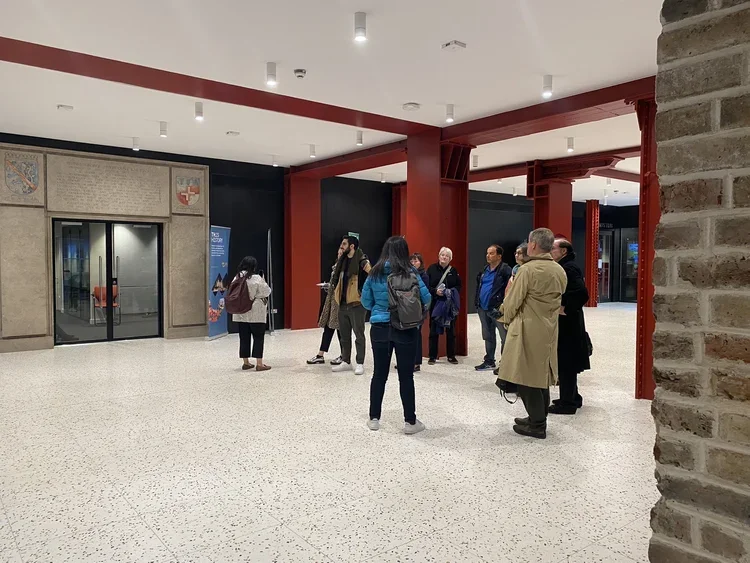
The AIA UK tour groups crossing paths while walking through the intermediate ramped hallway, located between the extension and the old building. This open hallway articulates the existing façade (left) alongside a multi-story height, linear artificial accent lighting, and a roof skylight overhead. Photo by Adelina Koleva, AIA.
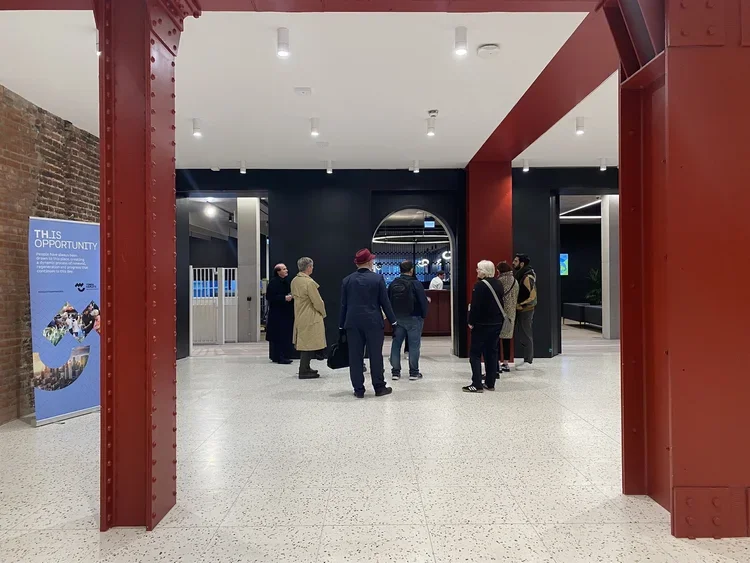
Questions were raised particularly about the history of the original building and extensions, as well as the choice of colour schemes. The vibrant red theme on the ground floor sparked intrigue among the guests – Gallenzi explained that the red emerged from the original brickwork while the blue wayfinding hues were sourced from the original terrazzo flooring on the second floor. These details tell intelligent stories of the past, not only adding to the historic theme of the tour but enhancing the value of the modern upgrade to an oftentimes conservative and discerning public.
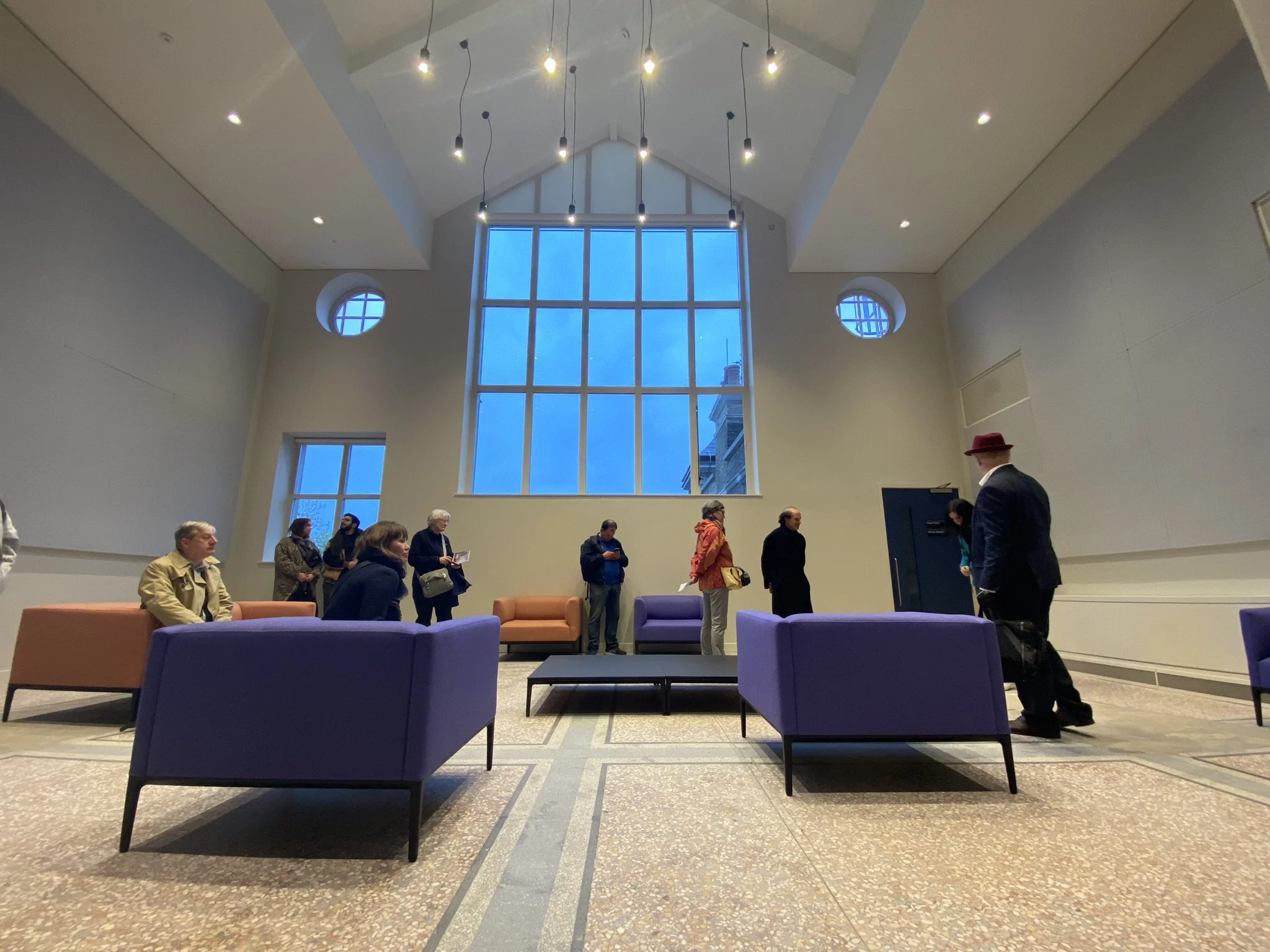
A refurbished part of the old building on an upper floor, repurposed as an office break-out space. Note the original terrazzo flooring, one of the key historic features which provided the architects with colour inspiration for the renovation. Photo by Adelina Koleva, AIA.
At ground level, the council chamber serves as a pillar not only of democracy – but also of accessibility and flexibility. These principles were reflected in the wheelchair route to the chamber floor and the integrated storage units along the walls. The former hospital building might not have originally been intended for such purposes, but the architects aimed to provide these amenities to improve both public engagement and customer service on behalf of their client.
As the tour concluded, guests parted ways with a newfound knowledge and appreciation for AHMM’s Tower Hamlets Town Hall – as well as some well-earned continuing education credits! Thank you to everyone who participated in the exploration, and special thanks to Etain Fitzpatrick and Gregory Fonseca for organising this event, and our tour guides from AHMM for sharing the building with us. The AIA UK looks forward to welcoming more architectural enthusiasts on our future Building Tours.
Written by Adelina Koleva, AIA
The Ultimate Guide to AIA24 for Students & Emerging Professionals
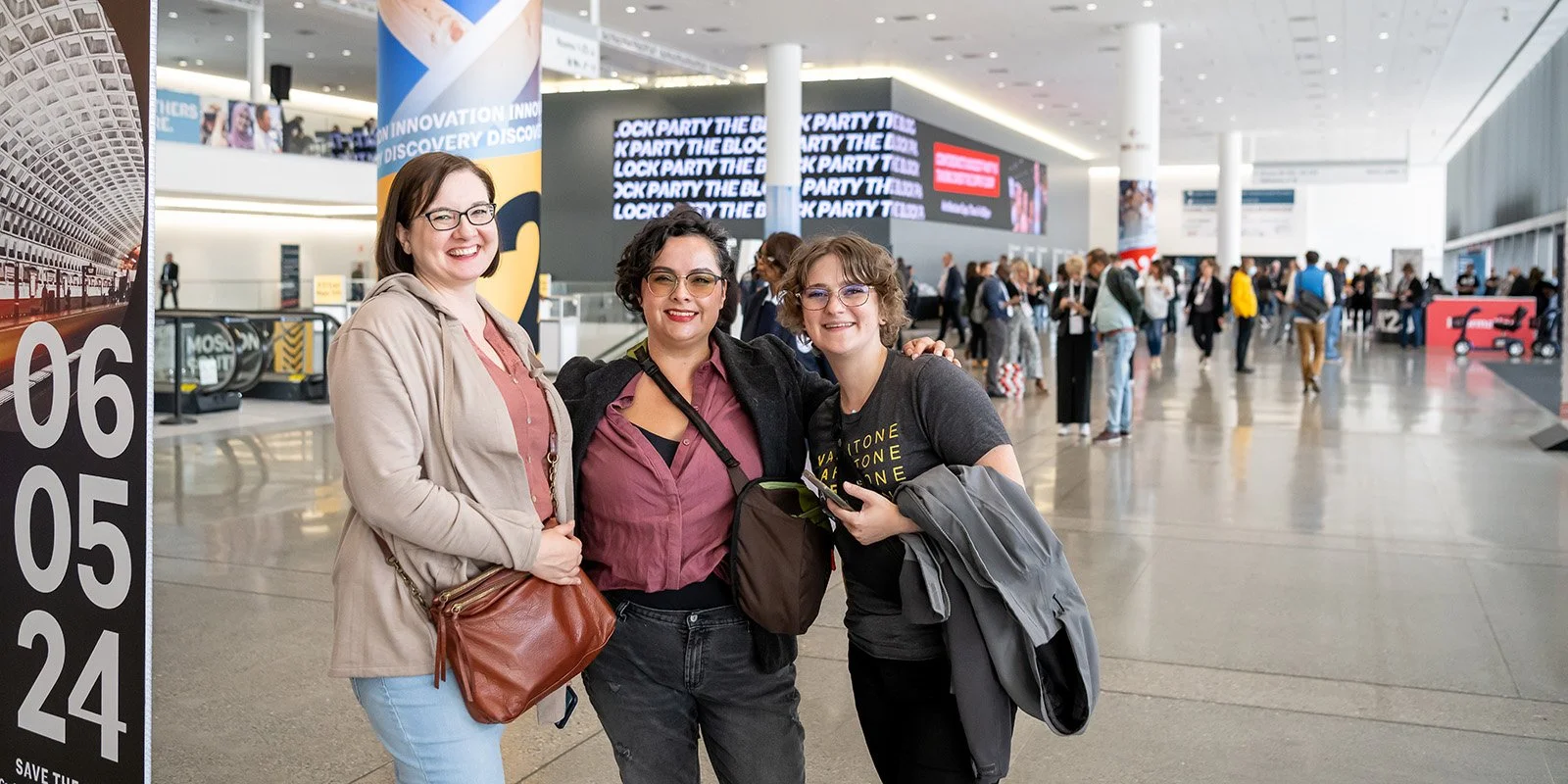
Colt Brock, Assoc. AIA, has written a helpful and thorough guide for young designers attending the AIA annual conference. Click the button below to learn about student tickets, recommended sessions and tips for navigating the event itself.
Vote in the 2024 USA Elections

As you know, 2024 is an election year in the USA. Living in the UK does not affect your right to vote but may take a bit of planning. If you are already registered to vote in your home state, you need to contact your local election board and ask for an absentee ballot or go to www.fvap.gov to obtain the standard form. This must be done for each year that you plan to vote. If you aren’t registered to vote, or you’re not sure, go to www.votefromabroad.org to register and request your ballot for 2024. As we saw from the last presidential election, every vote counts. It is important to exercise your right to vote!