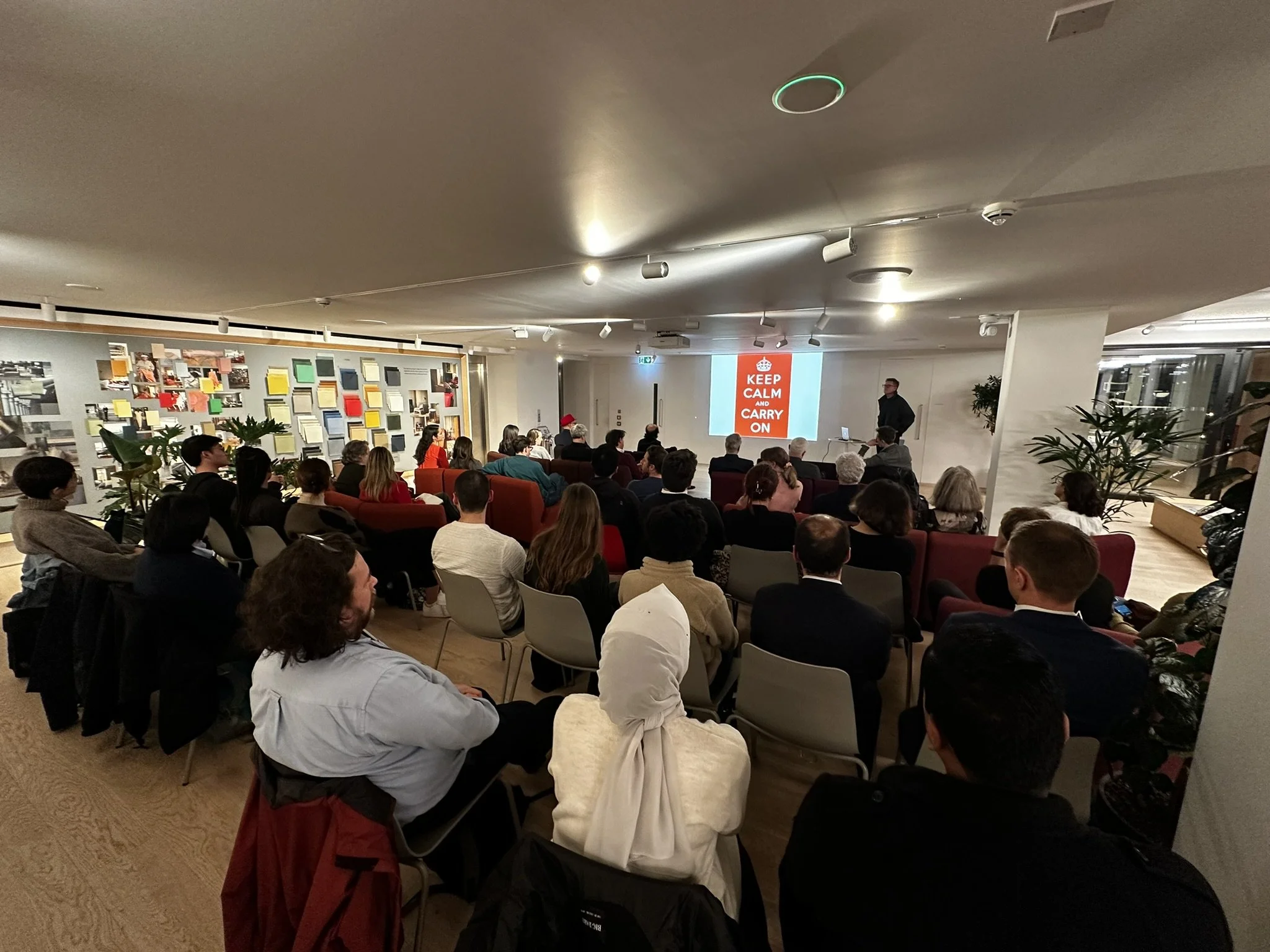
Transforming Architectural Visualization: Mixed Reality at KPF and Arkio in Action
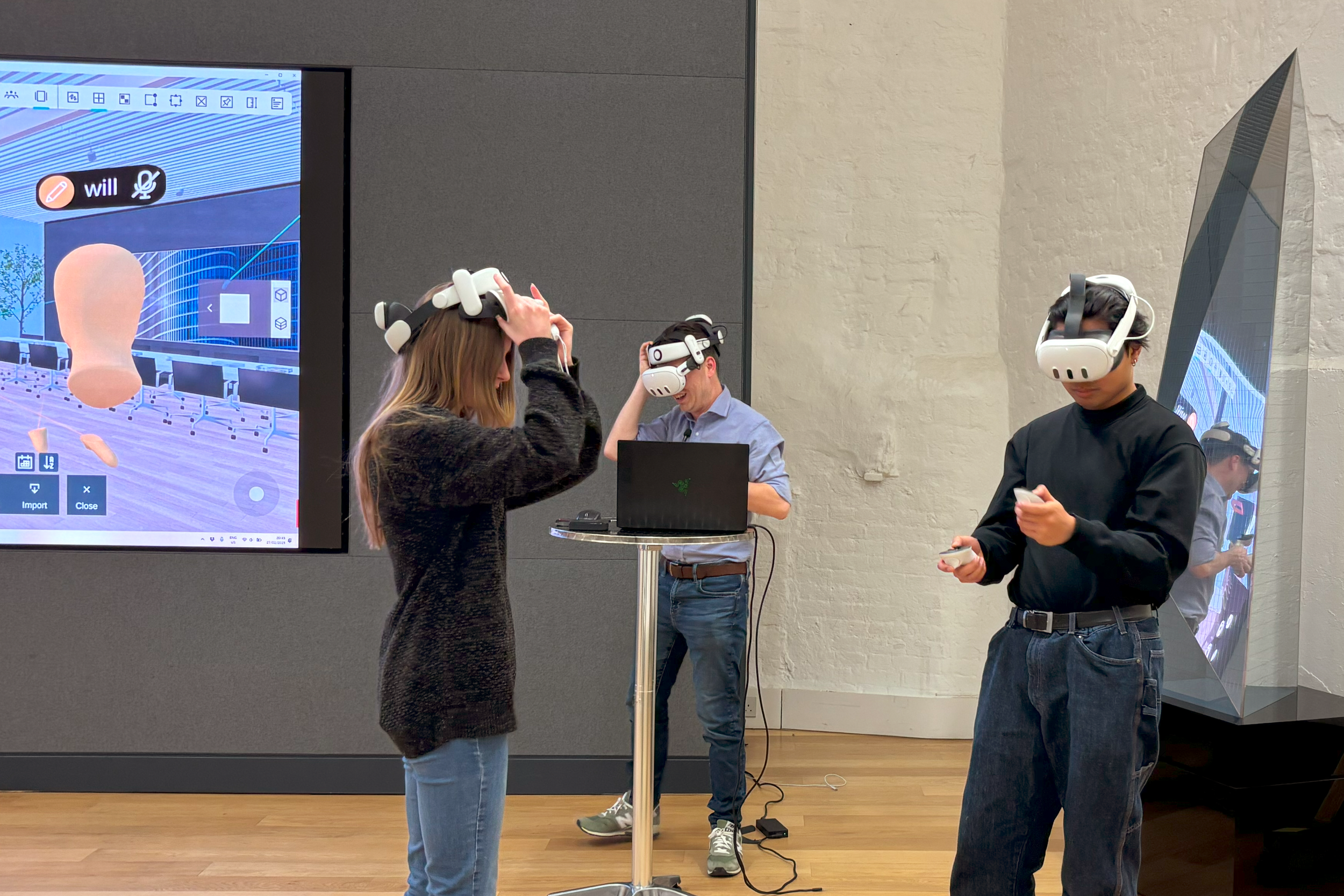
Photo by Anna Mytcul, AIA.
For centuries, architecture has grappled with the challenge of representing space in a way that faithfully translates into built reality. At AIA UK’s recent event, it became clear that Mixed and Virtual Reality have the potential to redefine not just visualization, but the way architects design, communicate, and experience space. Led by Anna Mytcul of KPF and Johan Hanegraaf of Arkio, the session offered a compelling look at how these emerging technologies are fundamentally altering architectural thinking.
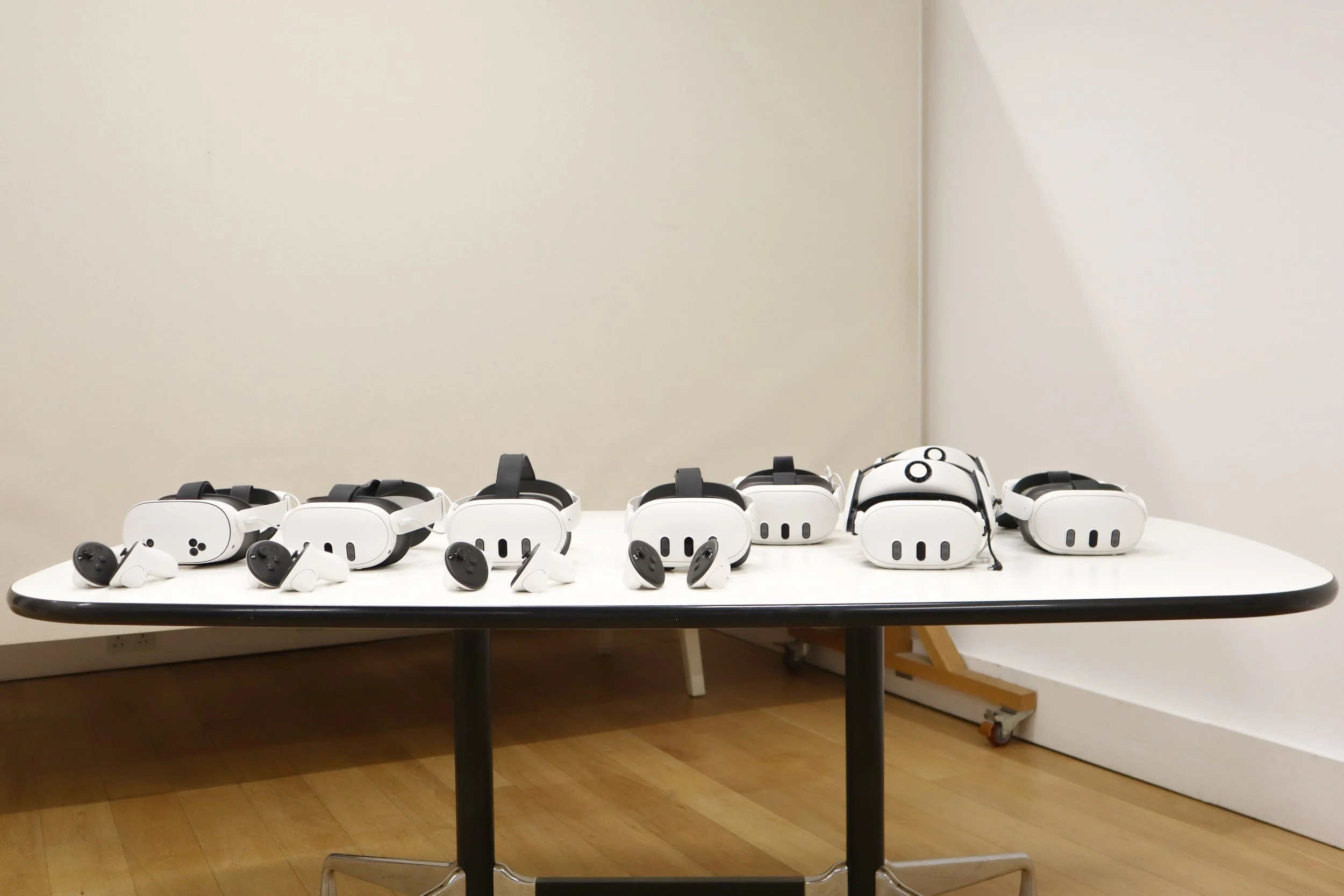
Photo by Cristina Mock, AIA.
Anna’s presentation showcased how VR and MR introduce a more intuitive and immersive dimension to architectural design. By integrating these tools into public consultations and client meetings, architects can bridge the cognitive gap between two-dimensional drawings and three- dimensional space, fostering a deeper level of engagement and understanding. Her case studies from KPF illustrated how these technologies are already being used to create more interactive, dynamic design reviews that go beyond static renderings or physical models.
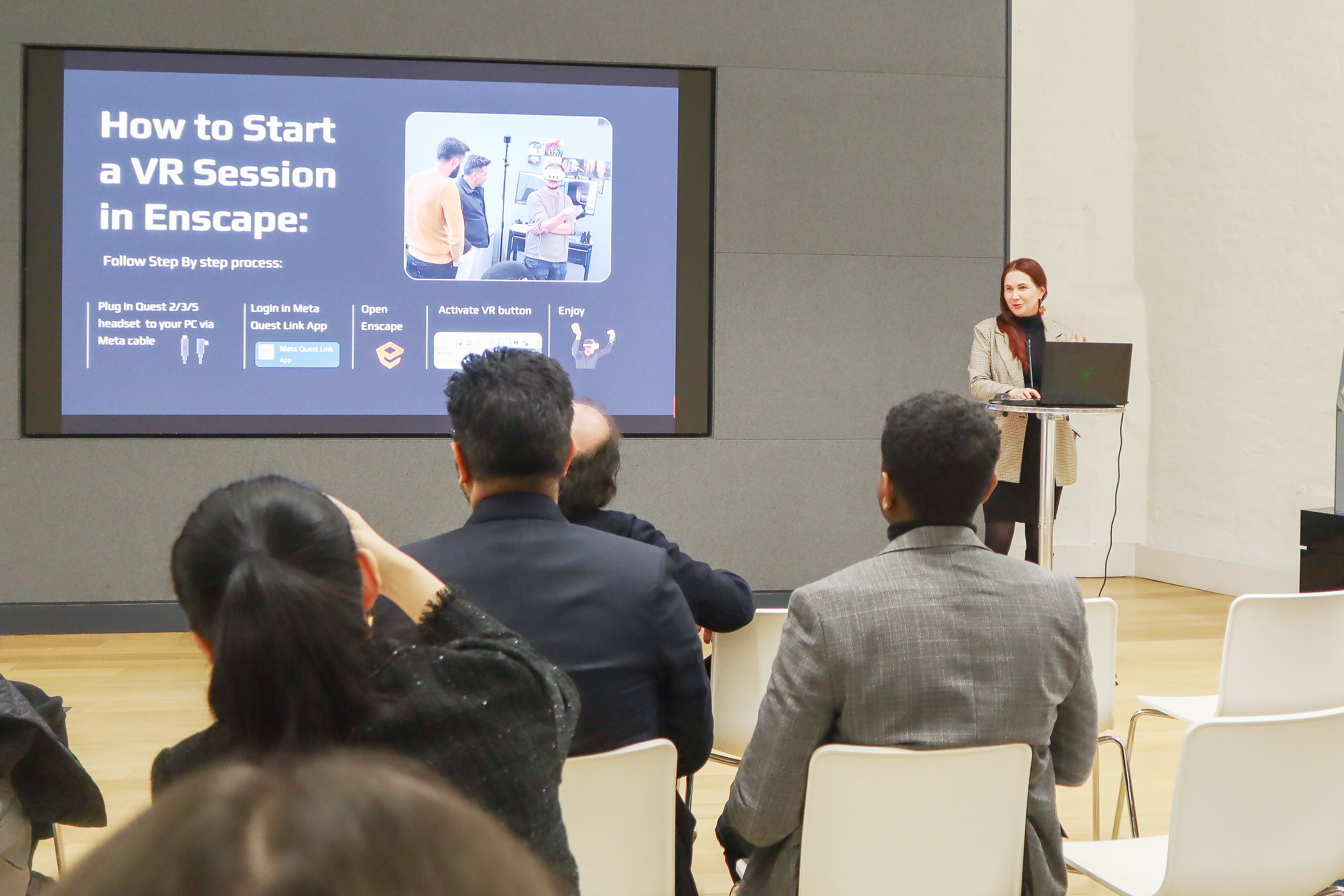
Photo by Cristina Mock, AIA.
The event’s hands-on session, led by Johan Hanegraaf, was a highlight, providing participants with an opportunity to experience Arkio’s capabilities firsthand. This intuitive XR tool enables architects to sketch, manipulate, and inhabit their designs in real-time, eliminating the historic lag between conceptualization and spatial experience. By merging the physical and digital realms, Arkio allows for a new kind of architectural interaction—one that is more fluid, iterative, and collaborative than ever before.
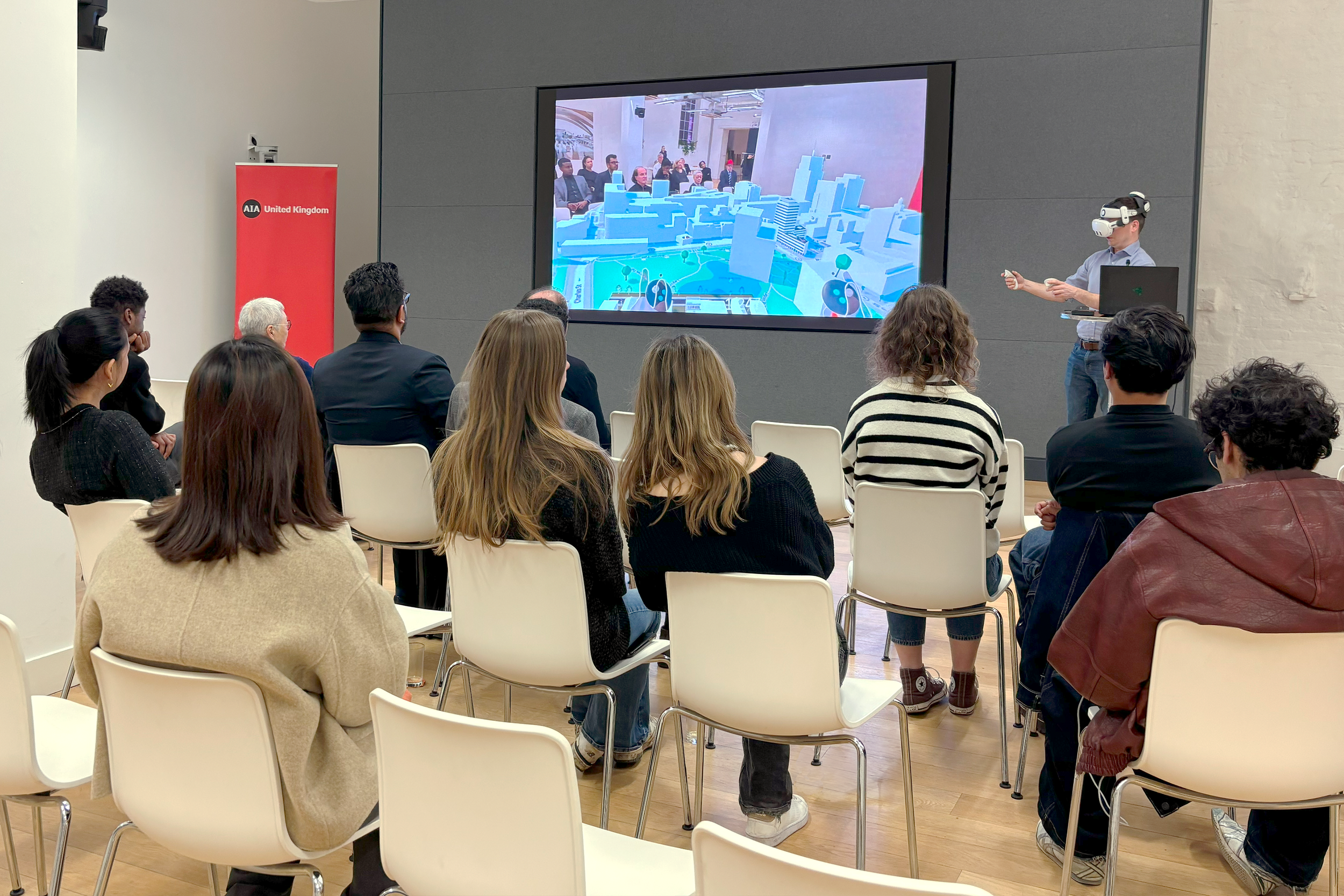
For many attendees, this event marked their first encounter with XR as a practical design tool rather than a speculative novelty. Beyond the excitement of experiencing VR and MR in action, the session underscored an important takeaway: XR is not merely an add-on to architectural practice; it is quickly becoming an essential medium for ideation, iteration, and presentation. As these technologies continue to evolve, they will undoubtedly play a crucial role in shaping the future of architectural design and discourse.
AIA UK looks forward to continuing the conversation and fostering innovation at the intersection of architecture and emerging technologies.
Written by Anna Mytcul, AIA
My MRA Experience: Bryan Oknyansky on Licensure

Before the MRA, I was resigned to never being a qualified (equivalent to “licensed” as we say in the US) architect in the UK. I heard too many stories from skilled, talented and experienced American architectural professionals that started on the traditional 3-part UK Architectural Registration Board (ARB) path to qualification that ended with a lot of money and time spent only to be denied a qualification through an opaque determination process. And then, to this day, the only silver lining of Brexit is that the UK was able to negotiate directly with the US on reciprocity via the Mutual Recognition Agreement (MRA).
I was sceptical of this process as it was expensive and administered through the same organisation that administered the aforementioned traditional qualification process. I had a desire to be the, or one of the, first to become qualified through the MRA route. Alas, I waited to see how others faired before setting the costly process in motion. Eventually, after about a year had passed, I took the plunge and started the process to become the 14th applicant for qualification under the MRA.
At first glance, there seemed to be minimal criteria to submit information for consideration during the qualification process – a CV and a reflective career summary with specific references to learning outcomes and competencies found within appendices in the ARB qualification handbook. Given my past experience with the traditional 3-part qualification route, I felt I had to go above and beyond with the information I provided in response to the qualification requirements – better safe than sorry.
Eventually, a meeting was scheduled following payment of the MRA fee, a sort of pow wow with tribal elders, which is something I feel is more appropriate to gain an architectural qualification than a standardised test. The proctor’s requirement to make no indications as to how the meeting was going for the applicant notwithstanding, they wanted to get to know me, ask me about how architectural education and licensing works in the US, and learn that the professional and ethical values prized by NCARB are virtually identical to those prized by the ARB. It was great to be finally done with tip-toeing around the use of the title “architect” in the country I’ve come to call home for 14 years at that point.
Written by Bryan Oknyansky, AIA, ARB
2025 Annual General Meeting
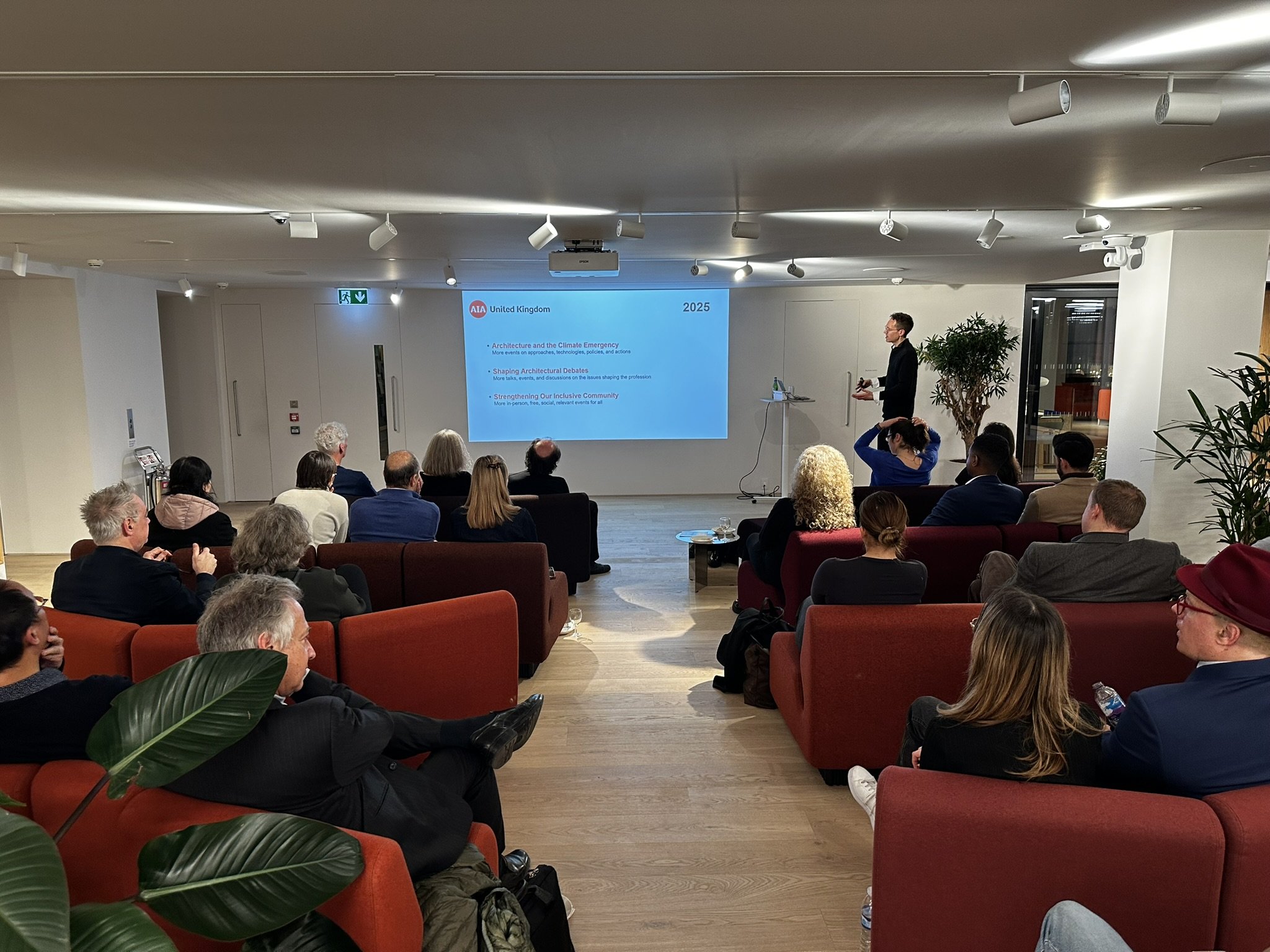
The 2025 President Mark E Breeze gives the ‘Year Ahead’ presentation
This year’s Annual General Meeting was held on 16 January 2025 at the Herman Miller London showrooms. Following a tradition starting in 1994, Herman Miller - our long-standing sponsor - treated us to an educational presentation by MillerKnoll representative, Mark Catchlove, called The Rise of Relationship-Based Work. The 2024 President, Taylor Rogers, AIA, followed with a comprehensive Year in Review Presentation.
The formal part of the AGM dealt with the election of the 2025 Officers and Board of Directors, an annual Membership report and mandatory review of the financial accounts. The complete list of new Officers and Directors can be found here. Finally, the newly elected 2025 President, Mark E Breeze, AIA, gave a Year Ahead Presentation for the upcoming year, which are:
Architecture and the climate emergency
More events on approaches, technologies, policies, and actions
Shaping architectural debates
More talks, events, and discussions on the issues shaping the profession
Strengthening our inclusive community
More in-person, free, social, relevant events for all
We closed the meeting by honouring 30+ year AIA UK Board Director, Michael Lischer, for his dedication to our Chapter. We wish him all the best on his new adventure back across the pond - we will miss you, Michael!
Written by Anna Foden, Associate AIA
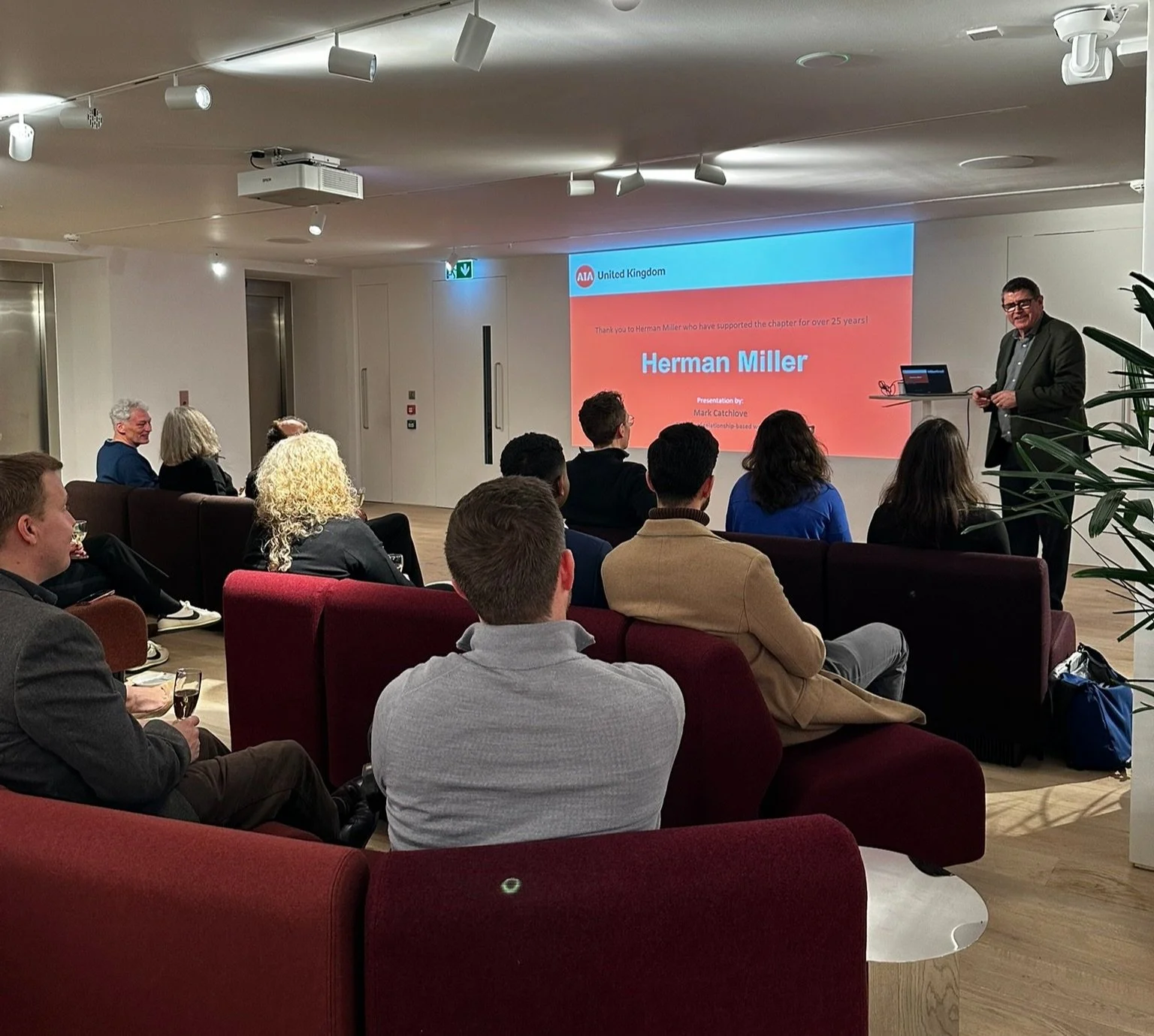
Mark Catchlove’s presentation The Rise of Relationship-Based Work
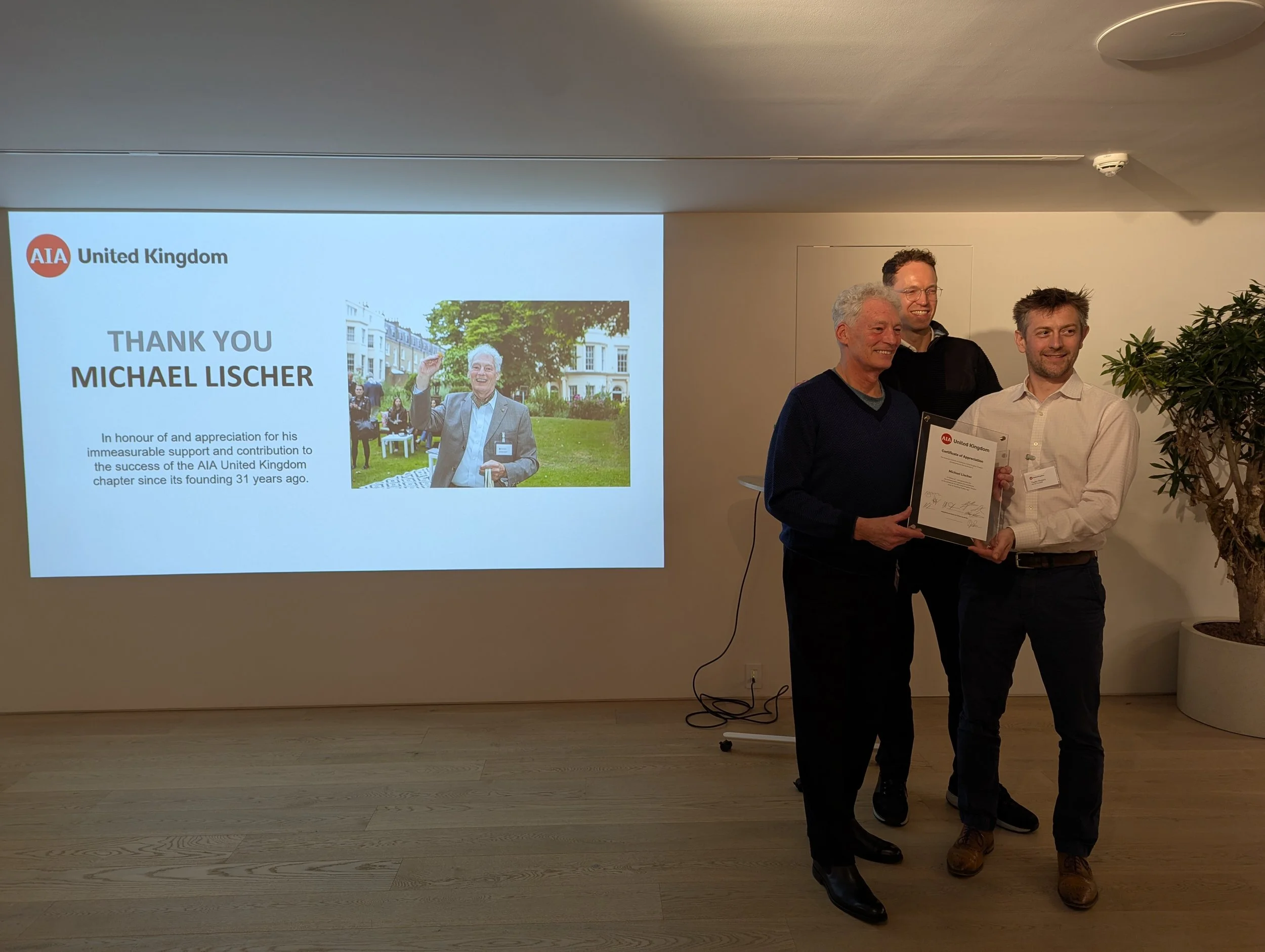
Honoring founding board member Michael Lischer’s 30+ years of contribution to the chapter
Movie Night - New England Modernism
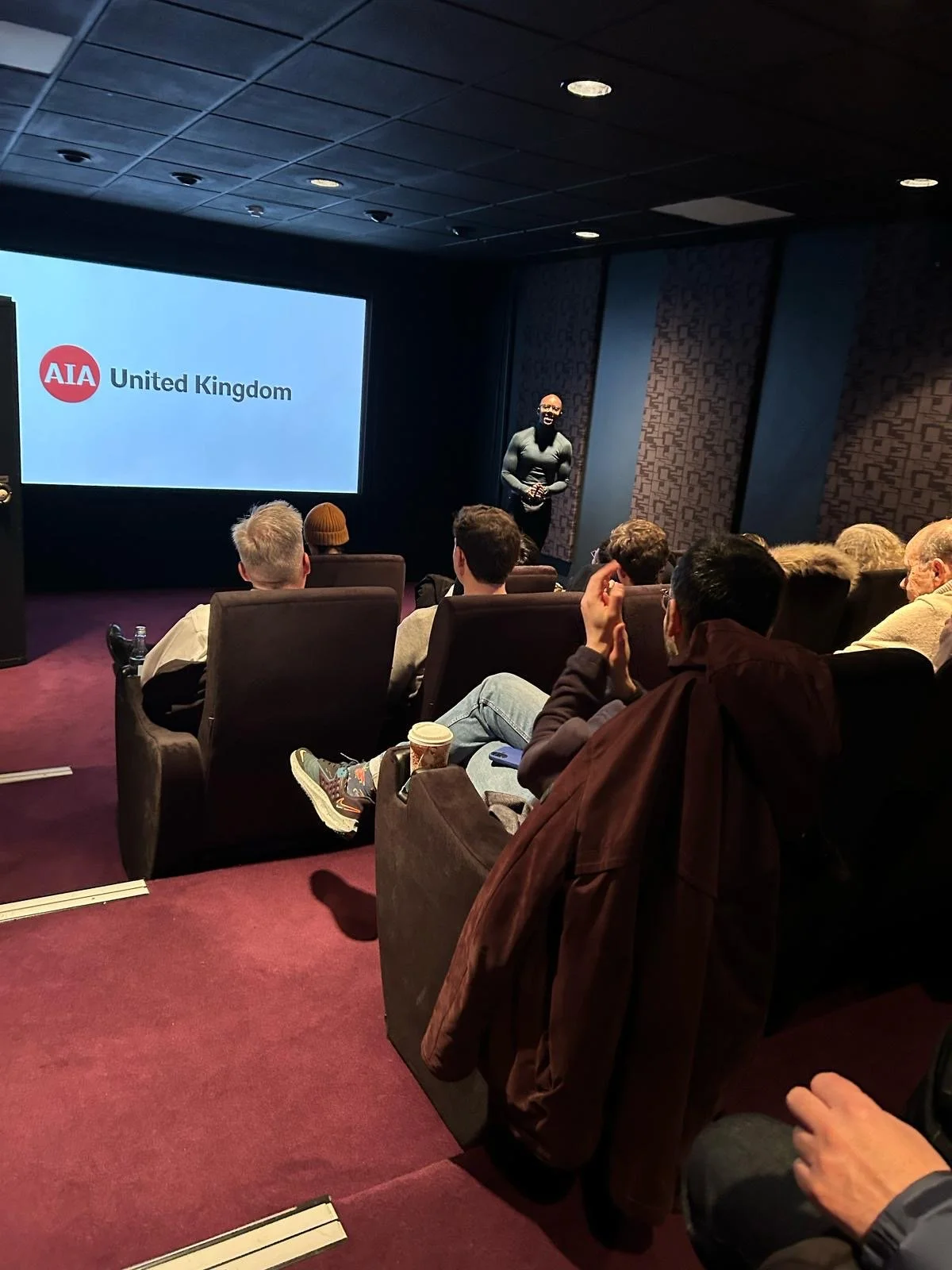
Chris Musangi introduces New England Modernism. Photo by Lana Kustrak.
The grey and dark London winter days call for a visit to the cinema, and those who joined us for our first screening of 2025 definitely had some warmth added to the cold February days. We kicked off this year with a sold-out screening of ‘New England Modernism,’ a compelling documentary that traces the evolution of Modernist architecture in the American Northeast.
The film masterfully chronicles how the United States experienced a dramatic transformation in architectural design between the 1930s and 1970s. Through carefully curated archival footage and stunning contemporary photography, we witness how European Modernism took root in New England soil, beginning with pioneering works like William Lescaze's Field House in New Hartford, Connecticut, and Albert Frey's Ralph- Barbarin House in Stamford.
The documentary's narrative heart centers on the remarkable concentration of talent that emerged in New Canaan, Connecticut during the 1940s. Here, the legendary "Harvard Five" - Marcel Breuer, Landis Gores, John Johansen, Philip Johnson, and Eliot Noyes - established what would become a crucible of Modernist innovation. Their presence attracted other visionary architects including Victor Christ-Janer, Andrew Geller, and Edward Durell Stone, whose collective work would reshape the architectural landscape of New England and beyond.
What makes this film particularly poignant is its exploration of preservation versus progress. While celebrating these revolutionary designs that still inspire architects worldwide, it also confronts the ongoing challenges these architectural treasures face from redevelopment pressures. The documentary serves as both a celebration of this remarkable period and a call to protect its legacy.
The film was well received and the debate that followed was engaging. Some sentiments were that it would be important for the public to see this documentary, a coffee table book of all the featured buildings and their architects would be nice, and it was interesting to see modernist buildings from the context of high-end residences, as opposed to social housing as is common in the UK.
One of the questions asked during the discussion was about the length, which was longer than our usual screenings, and if this documentary was a series. As a follow up, Director Jake Gorst responded:
“Regarding the length, this film was originally going to be a miniseries, but due to a 2-year COVID production shutdown and discussions with the executive producer it was decided that we would make it one solid feature-length documentary. It is lengthy, but we have been marketing it as a “deep dive” into the history of modernism in New England. Believe it or not, we’ve had people complaining about things we left out!
I had actually trimmed about a half hour out of the original cut to get the film to the length it is now. And I’m taking those deleted sequences and incorporating them into a short film called ‘Curating Modernism’ about various forms of preservation, which we will release later this year.“
Special thanks to Jake Gorst of Mainspring Narrative Films for making this film available to the AIA UK before its London Premiere in June this year. (Watch out for news about Curating Modernism on Mainspring Narrative’s website HERE.) Many thanks for your continued support of our movie night series, and we look forward to having you join us for our next screening: ‘Green Over Grey,’ on Tuesday 18 March.
Written by Chris Musangi, AIA
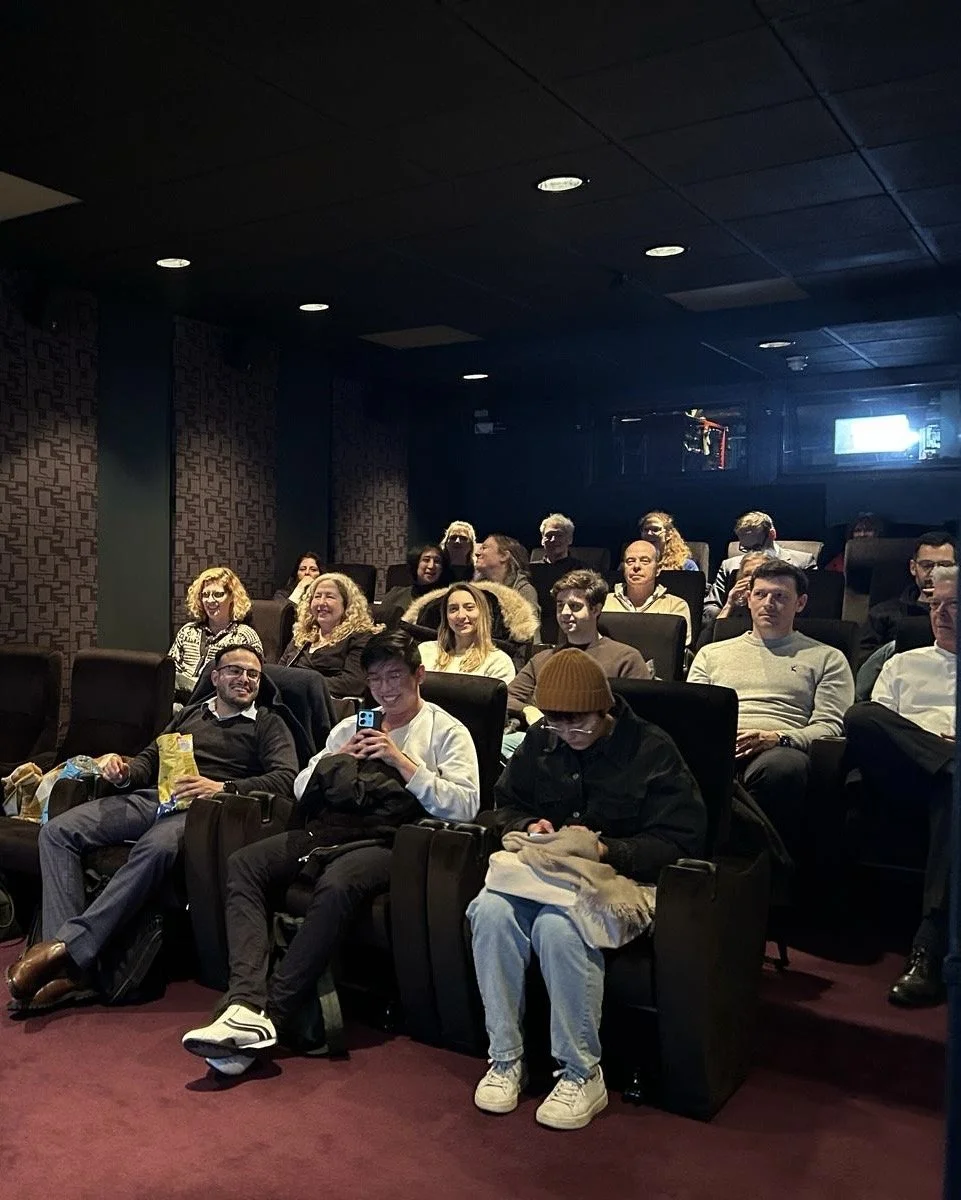
Photo by Lana Kustrak.
Movie Night - The Pavilion on the Water
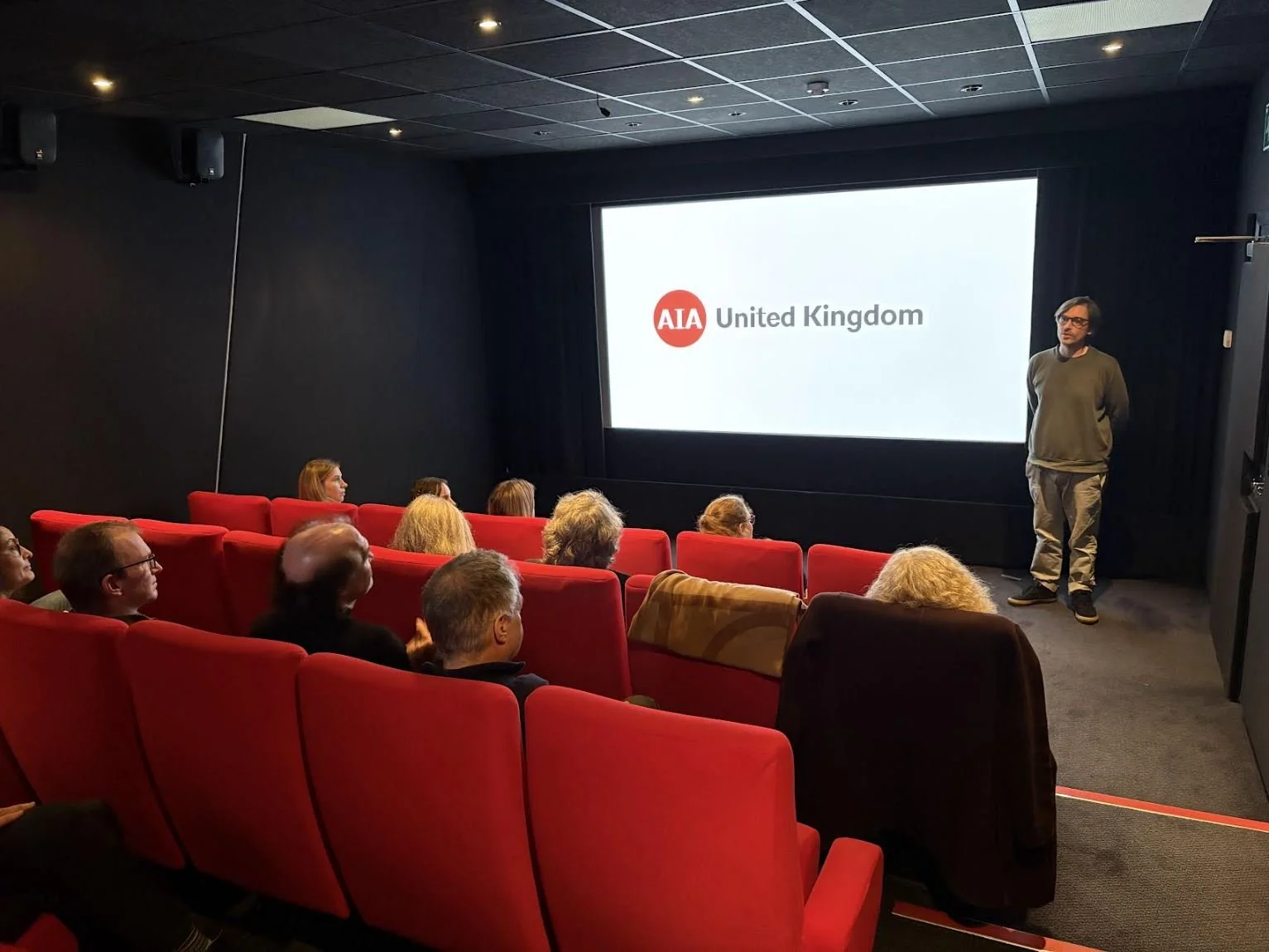
The Pavilion on the Water producer Giorgio Guernier speaks to attendees.
We returned to the BFI for our Autumn movie screening in early November. Unfortunately due to programming conflicts and cinema availability, in the Autumn of 2024 we were only able to screen one movie. We started the Autumn screenings and ended the 2024 screenings on a high note, with a screening of The Pavilion on the Water.
The film, directed by Stefano Croci and Silvia Siberini, offers an intimate exploration of renowned Venetian architect Carlo Scarpa's profound connection to Japanese culture. Through careful cinematography and thoughtful pacing, the documentary weaves together Scarpa's architectural vision with his deep appreciation for Japanese aesthetics. It's particularly poignant that Japan, which served as such a wellspring of inspiration throughout his career, would also be where his life's journey ended in 1978.
What makes this documentary especially compelling is its ability to capture the essence of artistic genesis. The filmmakers approach their subject with a gentle melancholy, acknowledging not just the loss of Scarpa himself, but also the rarity of witnessing true artistic brilliance emerge. Yet there's also celebration here – a recognition that through his masterful works, Scarpa's vision continues to captivate and inspire new generations of architects and designers.
The debate at the end of the movie was lively, and was made especially so as we were honoured to have the film producer Giorgio Guernier attend the screening, where he took over leading the discussion and answering questions after the movie.
Many thanks to all who attended our screenings in 2024, and we look forward to welcoming you back and having many more of you join our screenings in the upcoming year.
Written by Chris Musangi, AIA
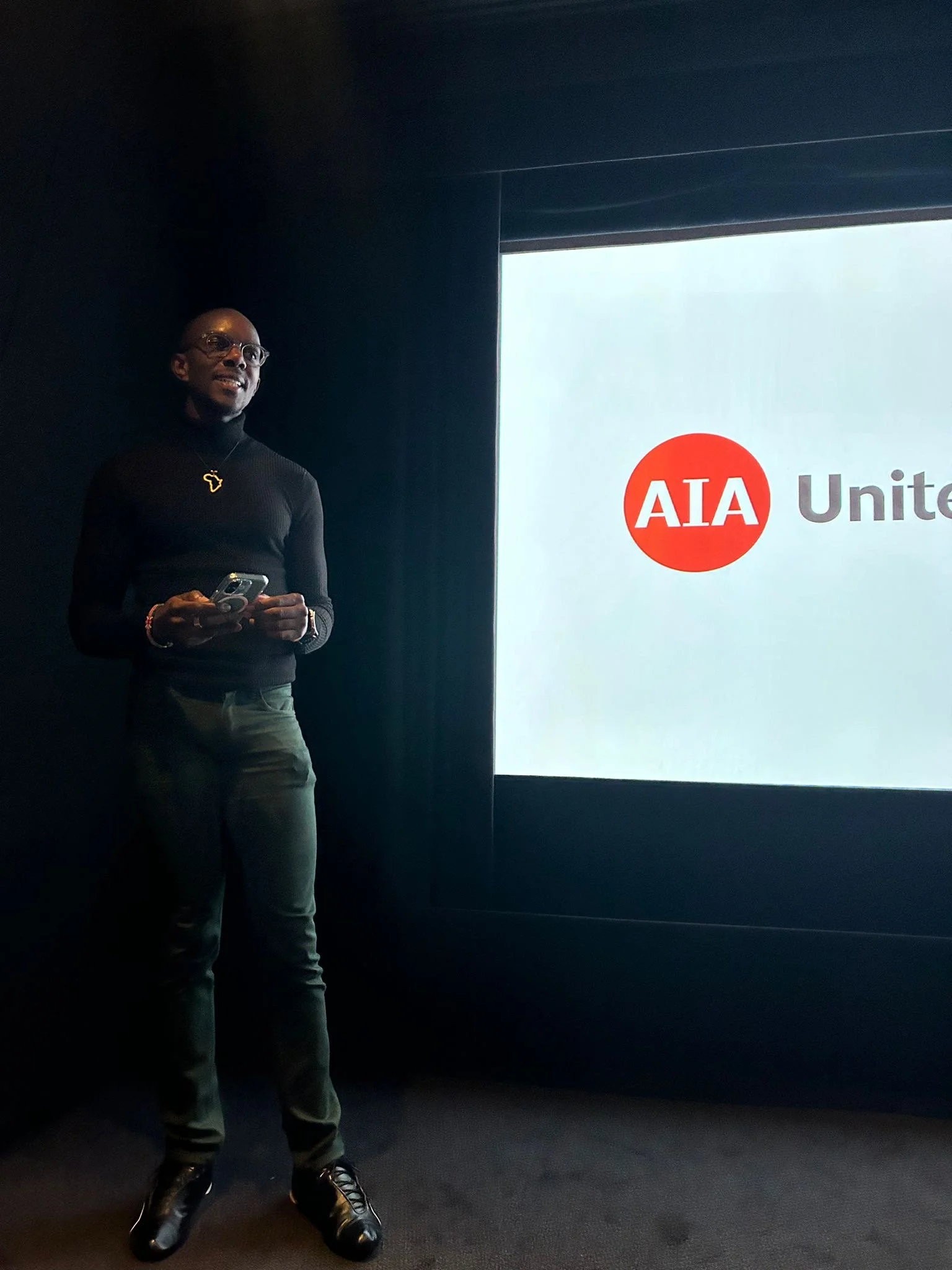
Chris Musangi introduces The Pavilion on the Water.
AI and the Future of Architecture with Neil Leach
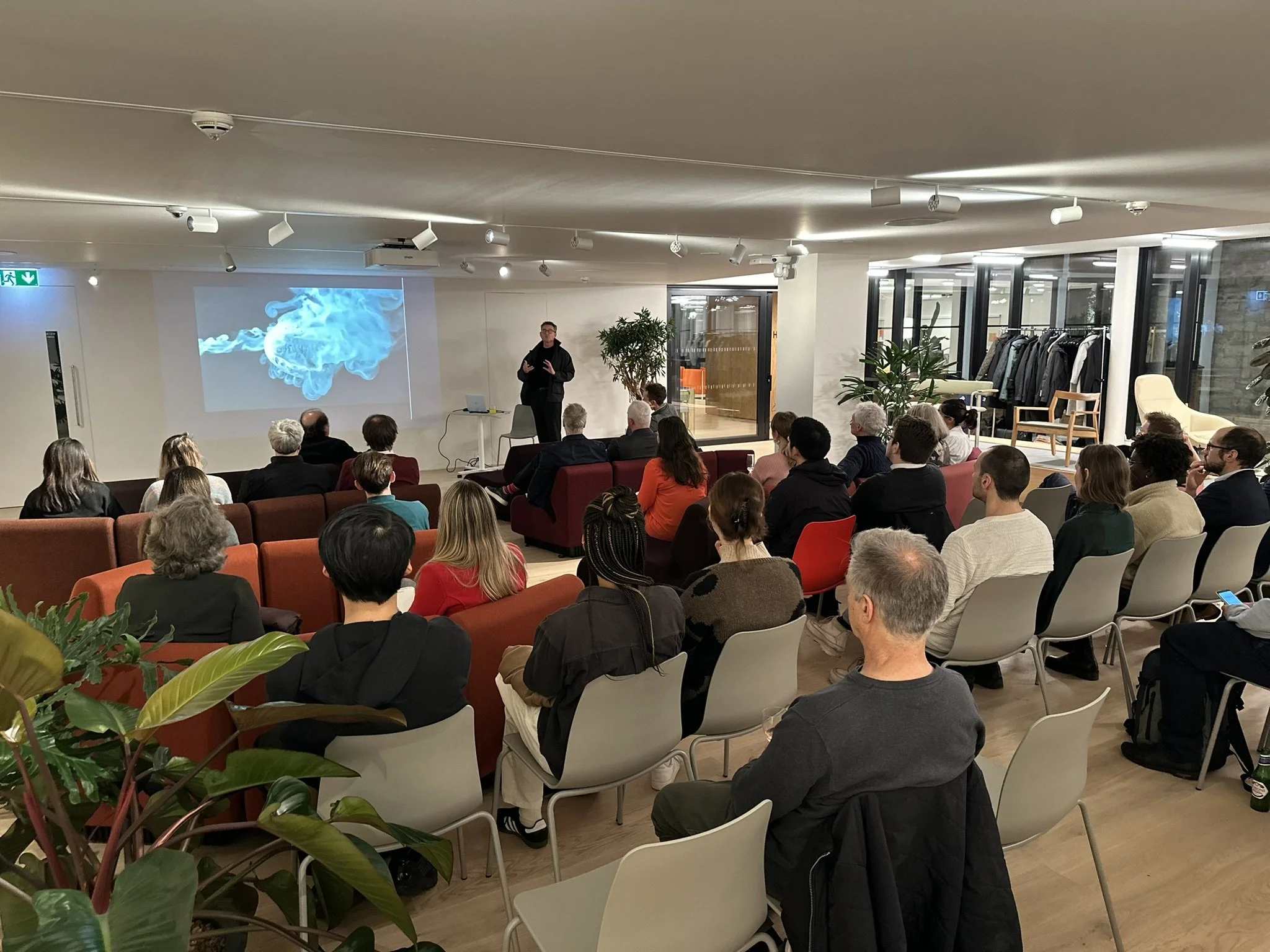
On November 18, 2024, the American Institute of Architects (AIA) UK chapter hosted a compelling lecture titled “AI and the Future of Architecture,” presented by esteemed architect and academic Neil Leach. The event took place at MillerKnoll London’s new showroom, providing an ideal setting for professionals to explore the profound implications of artificial intelligence (AI) on architectural practice.
Neil Leach, co-founder of DigitalFUTURES and a professor with extensive teaching experience at institutions such as the Architectural Association, Harvard GSD, and SCI-Arc, has been at the forefront of integrating digital technologies into architecture. His work with NASA on developing 3D printing technologies for extraterrestrial applications underscores his innovative approach to design and construction.
In his lecture, Leach embarked on an insightful exploration of AI, tracing its evolution and examining its potential to revolutionize architecture. He emphasized that AI represents a transformative force, introducing an “alien intelligence” that could surpass human capabilities and fundamentally alter the discipline. This perspective aligns with his previous discussions, where he has described AI as both “incredible and terrifying,” highlighting its dual capacity to drive innovation and pose challenges.
Leach delved into the current landscape of AI tools, noting the rapid advancements in platforms like ChatGPT and Midjourney. He observed that these tools have evolved from producing dreamlike, abstract outputs to generating images and text that are nearly indistinguishable from reality. This progression underscores AI’s accelerating development and its growing proficiency in tasks traditionally undertaken by architects.
A significant portion of the lecture was dedicated to the broader implications of AI on the architectural profession. Leach urged practitioners to move beyond a superficial engagement with AI tools and to consider the deeper, systemic changes that AI could precipitate. He raised critical questions about the future of architectural labor, professional liability, and the foundational structures of practice, academia, and licensure. These reflections are crucial as the profession grapples with the integration of AI into its workflows.
Leach also addressed the ethical considerations surrounding AI, acknowledging concerns about data bias and the potential for AI to perpetuate existing inequalities. He emphasized the importance of developing ethical frameworks to guide AI’s implementation in architecture, ensuring that its adoption promotes inclusivity and serves the broader societal good.
The lecture concluded with a thought-provoking discussion on the future trajectory of AI in architecture. Leach posited that as AI continues to advance, it will not only augment human creativity but also challenge traditional notions of authorship and design. He encouraged architects to embrace AI as a collaborative tool, one that can expand the boundaries of design and open new avenues for innovation.
Following the lecture, attendees engaged in a dynamic Q&A session, reflecting the audience’s keen interest in the subject. The event provided a platform for architects to critically assess the role of AI in their practice and to consider how they might navigate the opportunities and challenges it presents.
In summary, Neil Leach’s lecture offered a comprehensive and nuanced examination of AI’s impact on architecture. His insights underscored the necessity for the profession to proactively engage with AI, to understand its capabilities and limitations, and to shape its integration in a manner that enhances the discipline while addressing ethical considerations. As AI continues to evolve, such dialogues are essential in guiding architecture toward a future that harmoniously blends technological innovation with humanistic values.
Written by ChatGPT
AI Prompted by Lulu Yang, AIA
Photos by Taylor Rogers, AIA